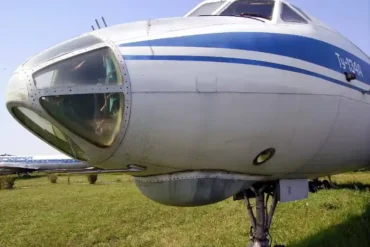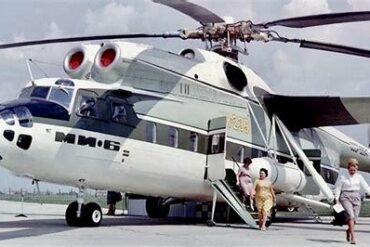
For anyone familiar with Cold War aircraft, one design feature immediately stands out: the glass nose. Large glazed sections were once a familiar sight on Soviet bombers, transports, patrol aircraft, and even passenger airliners. Aircraft such as the Tupolev Tu-95, Tupolev Tu-16, Ilyushin Il-76, Antonov An-12, and early Tu-134 could have remarkably transparent forward sections, sometimes making the aircraft look as though an entire crew compartment had been placed behind a windshield.
At first glance, the difference between Soviet and Western aircraft seems straightforward. Western aircraft increasingly replaced transparent noses with radar antennas, electronic equipment, and enclosed avionics, while Soviet designers continued to give crew members direct visibility through large windows. But the explanation is more complicated than simply saying that Soviet technology was inferior. The glass nose was the result of doctrine, geography, crew organization, aircraft roles, industrial limitations, and the gradual development of navigation technology.
In fact, Western aircraft had plenty of glass noses of their own. During the Second World War, the arrangement was almost standard on many heavy bombers because bombardiers and navigators needed an unobstructed view of the ground. The eventual disappearance of the feature in the West was therefore not a fundamental difference in aircraft philosophy from the beginning. Instead, it reflected how rapidly Western air forces transitioned from human observation toward radar, computerized navigation, and increasingly sophisticated electronic sensors.
Why World War II Bombers Had Glass Noses
The origins of the glass nose aircraft are closely connected to the technology of aerial warfare during the Second World War. Precision bombing depended heavily on people looking outside the aircraft. Bombardiers used optical bombsights to identify targets and calculate when bombs should be released, while navigators relied on landmarks, celestial observations, maps, and visual references to keep the aircraft on course.
Aircraft such as the American Boeing B-17 Flying Fortress, Consolidated B-24 Liberator, North American B-25 Mitchell, and Boeing B-29 Superfortress therefore featured glazed forward sections. The British Avro Lancaster and Handley Page Halifax followed the same broad principle, while German aircraft such as the Heinkel He 111 and Junkers Ju 88 incorporated extensive glazing to provide visibility for their crews.
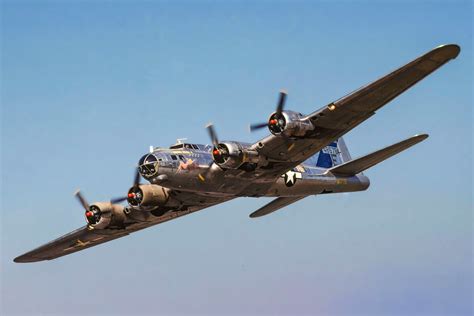
The famous nose of the Heinkel He 111 is an excellent example. Its greenhouse-style forward fuselage gave the bombardier and navigator a wide field of view, allowing them to perform their jobs without being buried inside the aircraft behind opaque structural panels. The transparent structure was not decorative. It was effectively a piece of the aircraft’s navigation and weapons system.
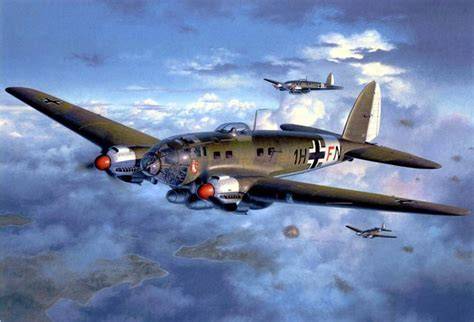
This approach made sense as long as the human eye was one of the most important sensors available to an aircraft crew. A bombardier could see a coastline, river, city, railway, or target and use that information directly. A navigator could identify landmarks or observe the stars. When the technology improved, however, aircraft designers discovered that the space occupied by the crew and windows could be used more effectively for electronics.
Western Aircraft Gradually Replaced Human Observation
The transition accelerated during the early Cold War. Radar changed what aircraft designers expected from the nose of an aircraft. Instead of giving a bombardier a clear view of the ground, designers could place a radar antenna inside an aerodynamic radome and allow electronic equipment to perform tasks that previously required direct observation.
The change can be seen in the evolution from aircraft such as the B-29 toward the Boeing B-47 Stratojet and eventually the Boeing B-52 Stratofortress. Early postwar aircraft could still retain glazed sections for navigators and bombardiers, but the trend was unmistakable. Radar bombing, electronic navigation, improved inertial navigation systems, and increasingly sophisticated computers reduced the need for a human crew member sitting behind a window.
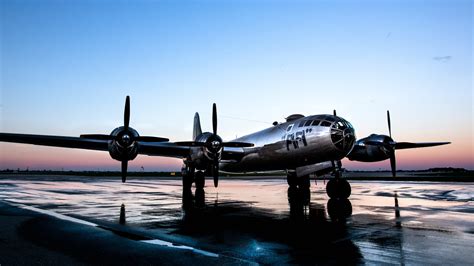
The B-52 represented the new philosophy particularly well. Designed in the late 1940s and early 1950s, it did not need the traditional World War II-style bombardier’s glass nose. Its nose became a much more valuable location for radar and other equipment. The same basic principle eventually spread across almost every generation of Western combat aircraft.
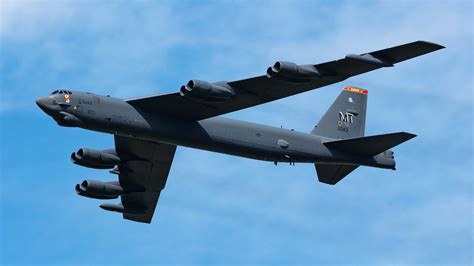
As technology advanced, the nose became an electronic workspace. Radar arrays, infrared sensors, electronic warfare equipment, computers, communications systems, and other components competed for space. A large transparent section offered little value to these systems and could actually become an obstacle.
Why Soviet Aircraft Kept Glazed Noses
The Soviet Union followed a different technological and operational path. That does not mean Soviet aircraft designers simply failed to understand radar or modern avionics. The Soviet Union produced highly capable radar systems, surface-to-air missiles, aircraft, and electronic equipment. Its aerospace industry achieved remarkable results in areas ranging from aerodynamics to propulsion and high-speed flight.
The important difference was that the Soviet Union often adopted highly integrated digital avionics and miniaturized electronics more slowly than the United States and its closest Western allies. This mattered enormously because reducing the size of electronics made it possible to remove entire crew positions and replace human observers with equipment.
Soviet aircraft frequently retained larger crews because people could provide flexibility that electronics could not always deliver. A navigator could make judgments from visual information, maintain a backup navigation method, monitor instruments, and assist with other tasks. A flight engineer could manage propulsion and systems. A bombardier or attack coordinator could directly observe the environment outside the aircraft.
This was especially useful when operating aircraft over enormous distances where infrastructure was limited. The Soviet Union stretched across thousands of miles of territory, including Siberia and the Arctic. Airfields could be primitive, navigation aids could be limited, and weather conditions could be challenging. A human navigator who could use celestial references, visual landmarks, maps, and backup instruments represented a useful layer of redundancy.
The Soviet Union’s Vast Geography Mattered
Geography is one of the most important pieces of the explanation. Soviet aircraft were frequently designed to operate in places where modern infrastructure was sparse. Siberia, the Arctic, and remote parts of Central Asia presented a very different operating environment from the heavily developed airspace around many major Western bases.
A glazed nose could provide useful visual information during low-level operations, reconnaissance, approach, or navigation. In some circumstances, crew members could inspect terrain or weather conditions directly. They could also use the stars when flying long distances away from conventional navigation infrastructure.
However, geography should not be treated as the sole reason. Western military aircraft also operated in Alaska, Greenland, Iceland, northern Canada, and Norway. The United States and its allies had plenty of experience flying in remote Arctic environments. The crucial difference was that Western forces increasingly invested in electronic systems capable of reducing dependence on visual navigation.
The Soviet approach was therefore partly a matter of technological development and partly a matter of operational philosophy. When a system could be made sufficiently reliable, the West was often willing to eliminate a crew member and replace that function with electronics. Soviet designs were more likely to retain the human capability as a backup or primary method for longer.
Soviet Bombers Made the Glass Nose Famous
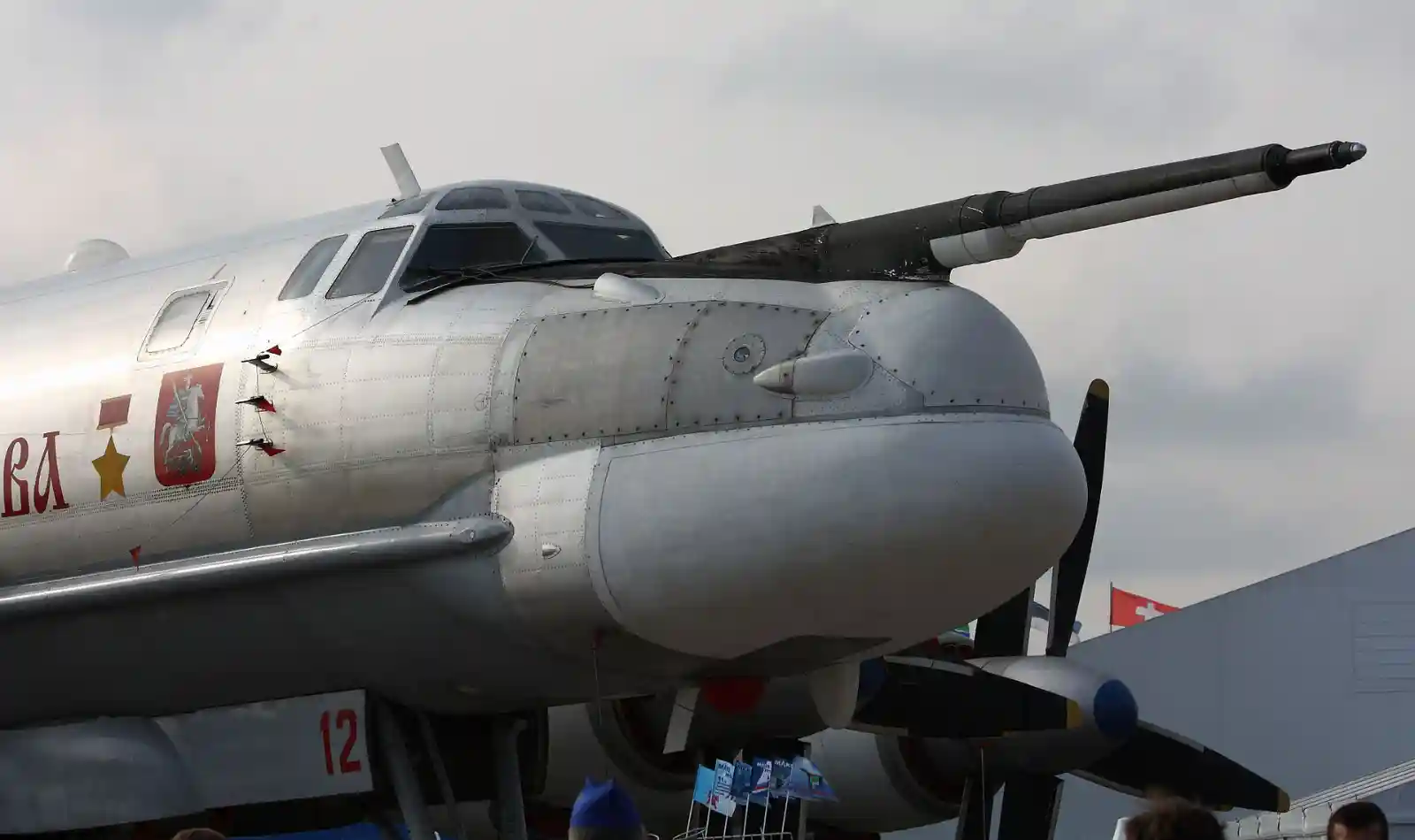
The most recognizable examples came from Soviet bombers. The Tupolev Tu-95 Bear is perhaps the best-known aircraft associated with the glazed nose. Its unusual turboprop configuration and long-range mission made it one of the most distinctive strategic aircraft of the Cold War, while different Tu-95 variants incorporated changes to their forward sections as equipment and mission requirements evolved.
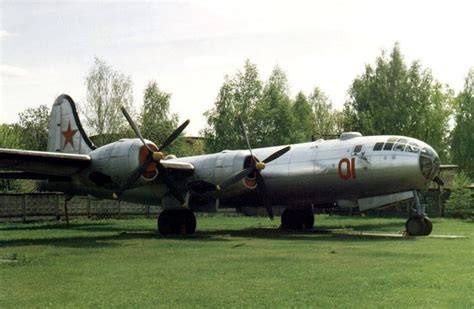
The Tupolev Tu-142 maritime patrol aircraft also retained a distinctive glazed forward section. Its mission required long-duration surveillance over enormous ocean areas, and direct observation remained useful for some tasks. Earlier Soviet bombers followed the same philosophy, including the Tupolev Tu-16 Badger and Tupolev Tu-4.
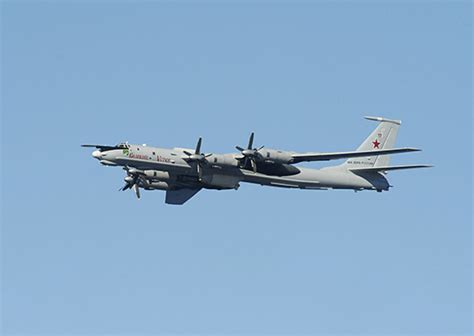
The Tu-4 is particularly interesting because it was essentially a Soviet reproduction of the American B-29. Soviet engineers reverse-engineered the aircraft after obtaining examples, reproducing many of its characteristics, including the basic glazed-nose concept. The Tu-16, meanwhile, was an indigenous Soviet design and became one of the most important jet bombers of its era.
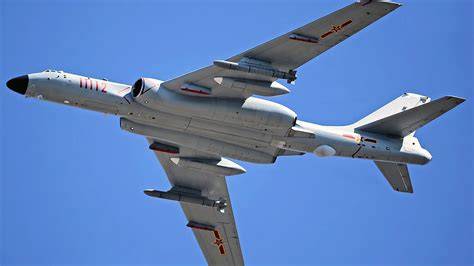
China’s Xi’an H-6 is a direct descendant of the Tu-16 family, but modern H-6 variants demonstrate how technology eventually changed the equation. Today’s heavily modernized aircraft no longer depend on the original large glazed nose because modern sensors, navigation equipment, and mission systems can perform functions that once required direct human observation.
Transport Aircraft Also Needed Human Observers
The glass nose was not limited to bombers. Soviet transport aircraft provide perhaps the clearest demonstration that the feature was connected to crew philosophy rather than simply bombing.
The Ilyushin Il-76 is one of the most recognizable examples. Its large forward glazing accommodated crew members involved in navigation and flight operations. Later Western strategic transports such as the Boeing C-17 Globemaster III and Lockheed C-5M Super Galaxy could operate with comparatively small flight crews because modern avionics consolidated many functions into integrated systems.
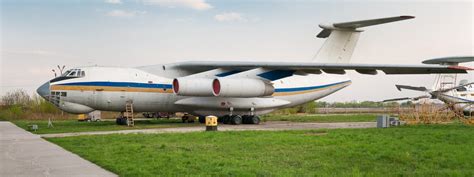
The Il-76 traditionally retained a much larger crew. Depending on the variant and mission, additional personnel could include a navigator and flight engineer alongside the two pilots. That arrangement reflects an older philosophy in which several specialists each had clearly defined responsibilities.
The same pattern appeared across the Antonov family. Aircraft including the An-8, An-12, An-22, An-24, An-26, An-32, and An-74 featured various forms of forward glazing, although configurations changed between variants and specialized derivatives. These aircraft were expected to operate from relatively austere locations and perform a wide range of military and civilian missions.
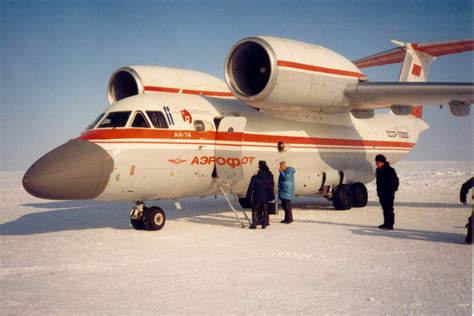
The glass nose therefore provided more than a view. It was part of a broader system that assumed the aircraft would carry additional human expertise.
Soviet Airliners Could Also Have Glass Noses
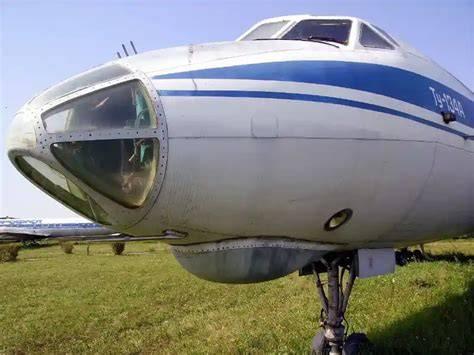
Perhaps the most surprising examples were Soviet passenger aircraft. Civilian aircraft such as early variants of the Tupolev Tu-134 incorporated a navigator’s station and glazed forward section. To modern passengers accustomed to highly automated two-pilot cockpits, this arrangement looks unusual, but it made sense within the Soviet aviation system.
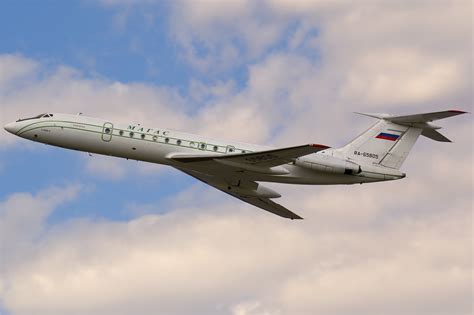
The Soviet Union treated civilian aviation as having potential strategic value. Aeroflot was not simply an airline in the Western commercial sense; its enormous fleet could also provide transportation capacity during national emergencies or military mobilization. Civilian aircraft were consequently influenced by military requirements, operating environments, and design philosophies.
Early Tu-134 aircraft retained a dedicated navigator, and the aircraft’s nose arrangement reflected that heritage. The navigator could perform tasks that later generations of airliners would increasingly automate. As navigation equipment improved, the need for such a compartment disappeared, and later aircraft could use the space much more efficiently.
Other aircraft derived from military designs also crossed the boundary between civilian and military aviation. The Tu-114 and Tu-116, based on the Tu-95 family, illustrate how closely Soviet civil and military aerospace development could be connected.
The Glass Nose Was Not Simply a Sign of Inferiority
It is tempting to look at Soviet glazed noses and conclude that they existed only because Soviet avionics were technologically inferior. That explanation is too simplistic.
The Soviet Union was behind the West in several critical areas of electronics, particularly miniaturized computing, digital avionics, sensor integration, and compact radar technology, but it was highly capable in other aerospace disciplines. Soviet engineers developed extremely effective aircraft, missiles, propulsion systems, and air-defense networks.
The better explanation is that Soviet aircraft often reached a different technological compromise. Instead of eliminating crew positions as quickly as Western designers did, Soviet aircraft could preserve people as part of the system. That increased weight and complexity, but it also provided redundancy and flexibility.
Modern Russian aircraft show how much this philosophy has changed. Newer designs increasingly use electronically scanned radars, advanced infrared systems, satellite navigation, digital displays, and integrated mission computers. The Su-57, for example, reflects a much more modern sensor and avionics architecture than aircraft from the early Cold War.
Why Western Jets Almost Completely Lost Their Glass Noses
The disappearance of the glass nose in Western military aircraft ultimately came down to electronics becoming better than human eyes for many of the tasks that mattered most.
Radar could see through darkness and poor visibility. Inertial navigation systems could determine position without visual landmarks. Terrain-following systems could help aircraft navigate at low altitude. Computers could calculate bombing solutions rapidly and consistently. Later, satellite navigation and precision-guided weapons transformed the relationship between aircraft and target.
At the same time, every kilogram of aircraft weight mattered. Removing a navigator, bombardier, or dedicated observer meant removing the person’s seat, life-support equipment, instruments, windows, structural reinforcement, and associated systems. The resulting aircraft could be lighter, carry more fuel or weapons, or use the saved space for electronics.
The nose consequently evolved from a place where humans looked outward into a place where sensors looked outward. That single change explains much of the visual difference between a World War II bomber, a Cold War Soviet aircraft, and a modern Western fighter.
The Glass Nose Is a Window Into Cold War Aviation
Soviet aircraft retained glass noses because several forces reinforced one another: older navigation doctrines, larger crews, austere operating environments, military requirements for civilian aircraft, and slower progress in certain areas of integrated avionics. None of these factors alone explains every aircraft, but together they created a recognizable design tradition.
The West went through the same process earlier. American, British, and German bombers once depended heavily on transparent noses, but radar and electronic navigation gradually made those spaces more valuable for equipment than people. The Soviet Union simply preserved aspects of the older arrangement for longer.
That is why the glass nose on Soviet aircraft is more than an unusual visual feature. It represents a period when navigation and attack still depended heavily on human observation. As electronics became smaller, smarter, and more capable, the person behind the window disappeared, the glass disappeared with them, and the aircraft’s nose became an electronic sensor suite instead.
The Tu-95, Il-76, and early Tu-134 therefore offer something more interesting than a Cold War curiosity. Their glazed noses reveal how different aerospace industries solved the same fundamental problem—how to navigate, observe, and fight from the air—using the technologies, doctrines, and industrial capabilities available to them at the time.