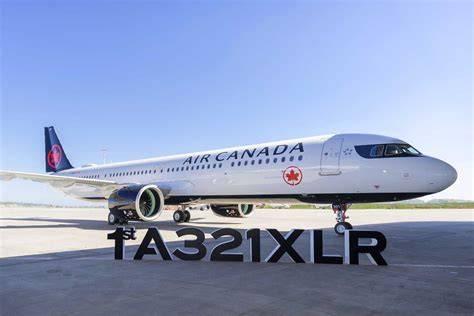
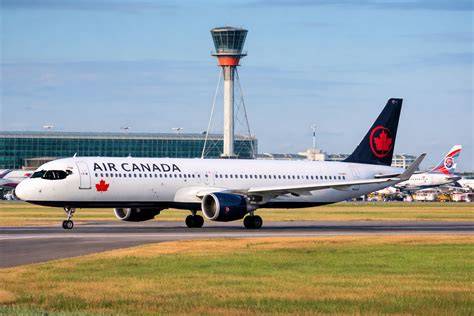
Air Canada is preparing to expand its use of the Airbus A321XLR on transatlantic services, with the aircraft scheduled to enter two additional London Heathrow routes from Canada in December 2026. The Montreal-based carrier will introduce the long-range narrowbody on flights from Ottawa International Airport (YOW) and Halifax Stanfield International Airport (YHZ), giving the aircraft a larger role in Air Canada’s European network.
The first new service is scheduled to begin on December 16, 2026, when an A321XLR will operate between Ottawa and London Heathrow. According to Cirium schedule data, the westbound Heathrow-to-Ottawa sector is planned for up to eight hours, placing the flight firmly within the type’s long-range mission profile. It will also mark the first time Air Canada deploys its A321XLR on a route to or from Ottawa.

The Ottawa-Heathrow deployment is initially designed around seasonal demand rather than year-round A321XLR operations. The aircraft is scheduled to fly the route three times per week through late March 2027. When the IATA summer schedule begins, Air Canada plans to replace it with the larger Airbus A330-300, increasing the route to four weekly flights and providing additional capacity during the stronger summer travel period.
Air Canada A321XLR Takes Over Halifax-Heathrow Route
Just one day after the Ottawa launch, Air Canada will introduce the A321XLR on its Halifax-Heathrow service. Starting December 17, the aircraft is scheduled to replace the Boeing 737 MAX 8 on the route, representing a significant increase in long-haul capability for the service.
Unlike the Ottawa operation, the Halifax deployment is currently planned as a longer-term change. Air Canada’s schedule shows the A321XLR operating between Halifax and Heathrow until at least August 2027, initially at four flights per week in each direction. Frequency will then increase to daily when the airline moves into the IATA Summer Schedule.
Halifax is particularly well suited to the A321XLR’s capabilities because it serves as a major transatlantic gateway for Atlantic Canada. The aircraft allows Air Canada to provide a genuine long-haul product without committing a larger widebody aircraft to a route that may not consistently support its additional capacity.
This illustrates one of the central advantages of the A321XLR. Rather than simply replacing a widebody with a smaller aircraft, airlines can use the type to maintain international connectivity while matching capacity more closely with demand. Its combination of range, lower operating costs and long-haul cabin configuration gives carriers considerably more flexibility when building secondary European routes.
Toronto Adds a Daytime A321XLR Heathrow Rotation
Air Canada’s A321XLR expansion at Heathrow will extend beyond Ottawa and Halifax. From March 28, 2027, the aircraft is scheduled to operate a daily daytime rotation between Toronto Pearson International Airport (YYZ) and London Heathrow.
The Toronto service will give passengers an alternative to the traditional overnight transatlantic schedule. During the summer peak, Air Canada expects to operate as many as five daily flights between Toronto and London, with the A321XLR operating alongside aircraft from its A330 and Boeing 777 families.
That mix demonstrates how the airline can use several aircraft sizes on the same high-demand market. Larger widebodies can handle peak traffic, while the A321XLR can add frequency without requiring every flight to carry hundreds of passengers.
Inside Air Canada’s 182-Seat A321XLR
Air Canada’s A321XLR is configured with 182 seats across two cabins. The layout includes 14 Business Class seats and 168 Economy Class seats, with the front cabin offering a notably premium configuration for a narrowbody aircraft operating across the Atlantic.
The 14 Signature Class seats are arranged in a 1-1 configuration and convert into lie-flat beds. Each suite includes a 19-inch entertainment screen and wireless charging, giving the aircraft a product designed specifically for longer international sectors rather than short-haul operations.
Economy passengers occupy Collins Aerospace Meridian+ slimline seats. Most seats provide around 31 inches of pitch, while selected rows offer additional legroom. Rows 13, 14 and 15 provide approximately 34 inches, while rows 19 and 20 offer around 35 inches.
The cabin also features 13.3-inch entertainment screens in Economy, helping Air Canada maintain a long-haul onboard experience despite using a single-aisle aircraft.
Why the A321XLR Matters to Air Canada’s European Network
Air Canada has taken delivery of three A321XLRs from an order for 30 aircraft, with Airbus delivering the carrier’s first example in April 2026. The growing fleet gives Air Canada an aircraft capable of opening or strengthening routes that sit between conventional narrowbody missions and full-scale widebody operations.
Airbus has highlighted the A321XLR’s potential to reduce fuel burn per seat by approximately 30%, while the aircraft can also operate with up to 50% sustainable aviation fuel under applicable conditions. For airlines facing fluctuating international demand, those characteristics make the aircraft particularly attractive.
Air Canada’s upcoming Heathrow schedule shows exactly how that flexibility can be used. Ottawa, Halifax and Toronto represent three different applications: a seasonal long-haul route, a longer-term replacement for a smaller narrowbody, and a high-frequency trunk market seeking another daily departure.
The result is a broader role for the A321XLR in Air Canada’s transatlantic strategy, with the aircraft connecting Canadian cities to London Heathrow while allowing the airline to adjust capacity and frequency without relying exclusively on widebody aircraft.