For years, Lufthansa’s long-haul business class was the weak link in an otherwise polished brand. The airline that pioneered so much of modern commercial aviation kept installing the same forward-facing, non-aisle-access seat from 2012 all the way to 2024, while Air France rolled out reverse herringbones and British Airways converted its widebodies to Club Suites. Allegris, the German flag carrier’s nose-to-tail cabin overhaul, is the correction. Roughly a decade in the making, it promises to turn Lufthansa from a laggard into one of the most thoughtful premium cabins in the sky.
What Allegris Actually Is and Why It Took So Long
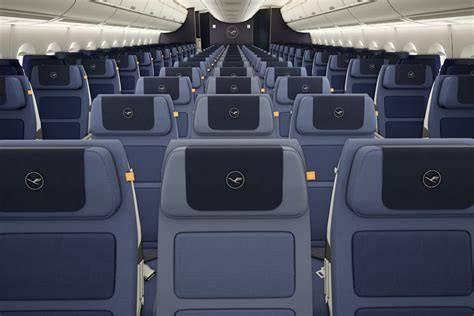
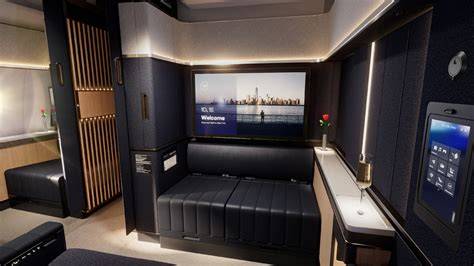
Allegris is the umbrella name for Lufthansa’s next-generation long-haul cabins, first unveiled in 2017 with a planned 2020 debut on the Boeing 777-9. Deliveries of that aircraft slipped, and the seat industrialisation lagged too, so the product eventually entered service in 2024 aboard the Airbus A350-900 instead. The programme touches every cabin. Recaro supplies new economy seats, ZIM Aircraft Seating builds fixed-shell premium economy, and Collins Aerospace provides a first-class suite with near-ceiling-height privacy partitions. But the real story sits in the middle of the aircraft, where Lufthansa bought itself aisle access at last.
The Business Class Seat That Ends a Long Wait
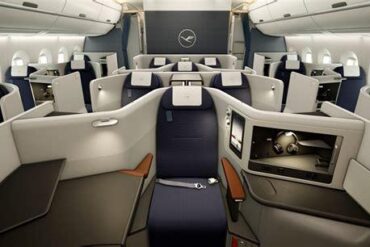
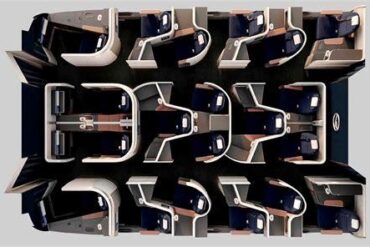
The new business class seat is based on the Safran Optima platform already flying with United Airlines, Air France, Ethiopian Airlines and El Al, but Lufthansa’s versions are custom builds split across suppliers: Collins Aerospace for the A330 and 787, Stelia Aerospace for the A350 and 747, and Thompson Aero Seating for the 777. Every seat now offers direct aisle access, a baseline improvement that competitors delivered more than a decade ago. That alone would have been enough to retire the Diamond seat gracefully. Lufthansa went further by building five distinct products into one cabin and charging passengers to choose among them.
Five Seat Types, One Cabin: The Allegris Monetisation Model
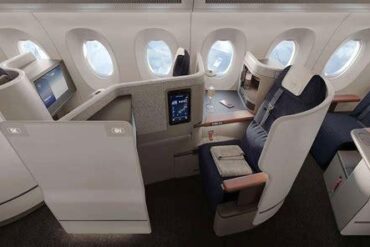
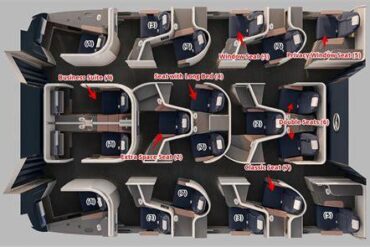
At the heart of the Allegris philosophy is seat choice as a revenue stream. On the A350 and 787, Classic seats angle toward the aisle and form the no-extra-cost baseline. Centre-section Extra Long Bed seats convert into sleeping surfaces beyond two metres. Middle-section centre seats become Extra Space seats, window positions earn the Privacy label, and the front row offers true Suites with taller partitions, additional room and a sliding door. Feedback has been mixed precisely because most of these labels carry a surcharge, and even a “free” seat at the back of the cabin feels different from the suite advertised in the brochure.
Comfort, Technology and the Tablet That Runs Your Seat
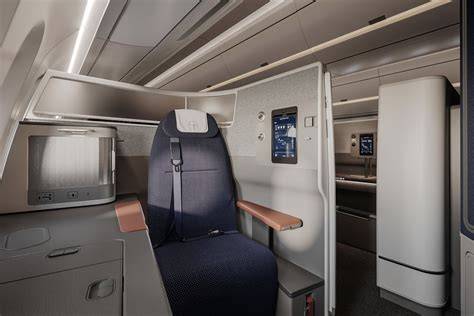
Beyond geometry, the Allegris hardware is genuinely contemporary. Every seat carries a large, high-resolution screen, multiple charging options and an in-seat climate system operated from a tablet, letting passengers cool or warm their own seat rather than waiting on cabin air. The front-row Suites are widely regarded as among the best business class products anywhere, and analysts note the cabin as a whole is revolutionary for Lufthansa. The seats are most impressive on the A350, where a whisper-quiet cabin compounds the sense of a product finally matching the airline’s reputation.
Which Aircraft Fly Allegris in 2026 and Which Still Wait
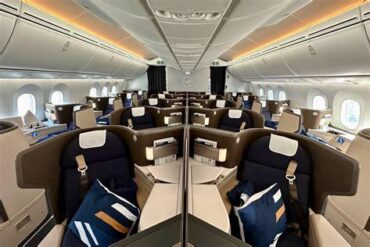
This is where the shine dulls. Lufthansa currently offers Allegris on roughly 28 aircraft, having added Boeing 787-9s alongside the A350s, though the Dreamliners arrive without first class. Including seven second-hand widebodies with non-standard aisle-access interiors, about 38 aircraft offer direct aisle access, leaving 65 still flying the old Diamond seats. Lufthansa has not retrofitted Allegris onto a single aircraft yet; progress has come almost entirely from retiring older planes while accepting new ones. The eight A380s receive a different, off-the-shelf business seat, with three already converted, and all 17 Boeing 747-8s will be retrofitted in a two-stage process that starts with main-deck business class before the rest of the cabin. Retrofitting the 17 A350-900s still carrying Diamond seats begins in 2027. The airline is also removing all A330s, A340s and 747-400s from the fleet, and future A350-1000s and 777-9s will arrive Allegris-ready from the factory.
Measuring Allegris Against Air France and British Airways
Context matters. Of Air France’s 121 widebodies, only five A330-200s lack direct aisle access in business, and 45 already feature the airline’s latest interiors. British Airways still flies its ancient Club World product on 35 of 132 widebodies but is actively converting A380s and the 11 787-9s with old cabins to Club Suites, while Gatwick-based 777s will be replaced by 787-10s rather than retrofitted. Against that benchmark, Lufthansa’s 103-widebody fleet of three A330-300s, eleven A340-300s, 31 A350-900s, eight A380s, eight 747-400s, 17 747-8s and 21 787-9s finally has a product worth defending, and in the front-row Suite it arguably leads.
FOX: The $70 Million Soft Product That Completes the Cabin
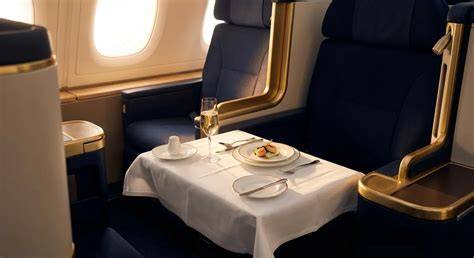
Hardware is only half the overhaul. In 2026 Lufthansa launched FOX, the Future Onboard eXperience, a $70 million programme that rebuilt service, amenities and catering. Menus were fully redesigned, premium cabins gained additional meal and beverage options, all passengers now receive printed menus, and business class second-meal timing became flexible. Combined with Allegris, the effect is that a passenger moving from seat to plate to service feels a consistent step change rather than a headline cabin wrapped around familiar catering.
SWISS Senses and the Limits of Allegris Across the Group
Lufthansa Group is not distributing Allegris evenly. SWISS introduced virtually identical cabins under the SWISS Senses brand with its own styling, deploying them on A350-900s with retrofits planned for A330-300s and 777-300ERs, though its A340s will be retired. Austrian Airlines will not receive Allegris; its future 787s will be the second-hand Dreamliners currently flown by Lufthansa. The second-hand A350s move to Discover Airlines, and Allegris will not appear at Brussels Airlines, Eurowings or any other group carrier. The logic is straightforward: SWISS serves a wealthy home market and earns priority, while smaller subsidiaries sit far down the capital-allocation queue.
What Allegris Means for Passenger Choice on Long-Haul Routes
For travellers, the practical question is route-by-route rather than brand-wide. Booking a US route on an A350 is now the surest way to sample the full product, including first class where installed, while a 747-8 or A380 booking may still deliver the older Diamond seat well into 2027. Passengers chasing the Suite should verify aircraft type and cabin layout at booking, since seat maps visibly distinguish the five categories. For its part, Lufthansa gains something it had lacked for more than ten years: a business class that no longer needs an apologetic explanation at check-in, and, in the front row, one worth paying extra to reserve.
The Verdict: World-Class Product, Uneven Rollout
Allegris is unquestionably the most consequential change to Lufthansa’s long-haul offering in a generation. The seats, the climate control, the suites and the FOX service overhaul together produce an experience that stands with the best in Europe and, in specific configurations, beyond it. The caveat is availability. With 65 aircraft still carrying Diamond seats and retrofits not beginning until 2027, the gap between the advertiseable product and the typical booking will persist for years. Lufthansa has built a genuinely elite cabin. Making it the default rather than the exception is now the hard part.