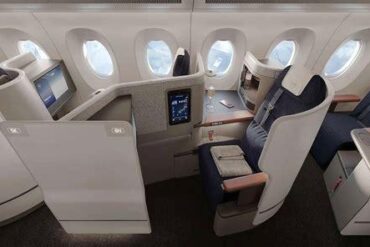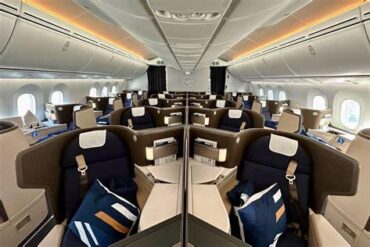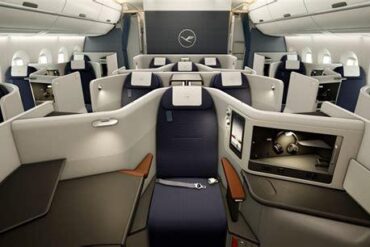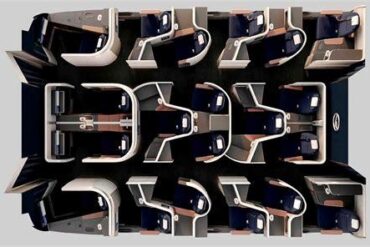
Lufthansa’s Allegris Business Class was marketed as a revolution — a bold, customer-centric leap into a future of personalized premium travel. Five distinct seat types. Tailored comfort. Elevated privacy. Choice, everywhere. On paper, it reads like a design manifesto written by someone who believes more options automatically equal more happiness.
But when families step into this carefully constructed ecosystem of personalization, something curious happens. The promise of choice narrows into a maze of restrictions, diagrams, and seat assignment flowcharts that feel less like hospitality and more like a geometry exam at 35,000 feet.
The result? A family seating policy that is so intricate, so oddly specific, it borders on satire — except it’s entirely real.
The Allegris Concept: Choice Taken to Extremes
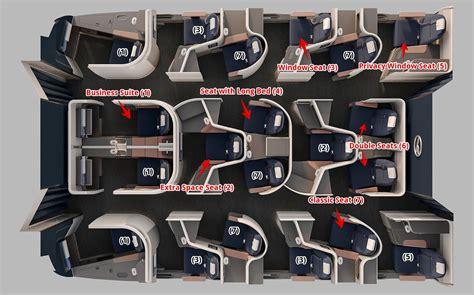
Lufthansa has proudly emphasized that Allegris Business Class offers multiple seat variations designed to satisfy different traveler preferences. Privacy seekers can cocoon themselves in single window seats. Solo flyers can choose throne-style arrangements. Premium passengers can opt for enclosed Business Class Suites at additional cost.
In isolation, this sounds impressive. In execution, the cabin becomes a staggered mosaic of asymmetry.
All window seats are single. In the center section, rows alternate between a single seat and two seats — yet those paired seats are positioned farther apart rather than closer together. These are not the classic “honeymoon seats” designed for couples. They are separated enough to discourage shared movie watching, whispered conversation, or passing a snack without choreography.
For solo travelers, this configuration may feel delightfully private. For couples and parents traveling with children, it quickly becomes awkward.
Why Allegris Is Surprisingly Unfriendly to Families
Despite the marketing narrative of customization, Lufthansa Allegris Business Class offers remarkably few seats that genuinely accommodate families sitting together.
The only seats that truly allow close proximity are the Business Class Suites located in the first row of each cabin section. These suites feature sliding doors and expanded space — and they also command a significant premium surcharge.
Outside of those suites, families are left navigating staggered seat logic that was clearly optimized for individual privacy rather than shared travel experiences.
Parents booking tickets often assume that business class naturally ensures adjacency. In Allegris, that assumption dissolves quickly. Instead of choosing seats based on preference, families must choose based on compliance.
The Seating Rules: Structured Like a Technical Manual
Here is where the situation moves from inconvenient to astonishingly bureaucratic.
Lufthansa has issued formal documentation outlining permitted seating configurations when one adult travels with one or two children aged 2 to 11. Not recommended configurations. Not suggested placements. Permitted ones.
Even more striking: each adult may travel with no more than two children in Allegris Business Class. Three or more children per adult are explicitly not permitted in this cabin.
This limitation raises eyebrows. Most airlines allow adults to book multiple children in premium cabins so long as each child has a paid seat. Lufthansa’s rule introduces a structural boundary that feels less about safety and more about managing seat geometry constraints.
Then comes the seating chart itself — a visual guide specifying exactly which seat numbers may be assigned when traveling with children. The instructions are precise. If one adult travels with one child, certain staggered positions are allowed. If traveling with two children, another subset of seats must be selected.
The logic is not intuitive. It is procedural.
Free Child Seat Reservations — With a Catch
To Lufthansa’s credit, seat reservations for children in Allegris Business Class are generally free of charge. The exception? The Business Class Suites.
This detail matters. The only truly family-friendly seating option — the enclosed suites positioned together — carries an additional fee. The free assignments apply to standard seats, which, by design, are not particularly well suited for close family interaction.
In effect, families can secure compliant seating without extra cost. But they cannot secure ideal seating without paying more.
That distinction is subtle yet powerful. It transforms Allegris from a customizable luxury experience into a tiered system where proximity becomes a premium feature.
Engineering Versus Experience
Allegris has frequently been described as over-engineered, and nowhere is that more visible than in its family seating policy.
The staggered layout maximizes personal space and aisle access. It introduces variety and monetizable seat types. It creates a differentiated product Lufthansa can market aggressively.
But aircraft cabins are not abstract design studios. They are social environments. Families do not experience flights as isolated pods; they experience them collectively.
A parent helping a child with a meal, adjusting a blanket, or offering reassurance during turbulence requires more than diagrammatic proximity. It requires practical adjacency. When seating configurations become rigidly controlled by policy, the cabin starts to resemble a compliance puzzle rather than a premium retreat.
The Business Suite Dilemma
The Business Class Suite stands as the paradox at the heart of Allegris.
It is the one configuration that genuinely supports family travel within business class. It offers privacy, space, and closeness. It resolves nearly all adjacency concerns.
It is also the most expensive seat in the cabin.
From a commercial standpoint, this is clever segmentation. From a customer-experience perspective, it feels like engineered scarcity. Families who want comfort without logistical gymnastics must upgrade further within an already premium cabin.
That dynamic shifts Allegris from a story about choice to a story about gated convenience.
A Policy Unlike the Industry Norm
Complicated seating logistics are not unheard of in aviation. Aircraft layouts vary. Safety regulations apply. Bassinet placements are restricted.
Yet formal documentation dictating exactly which seat numbers may be assigned to adults traveling with children in business class is unusual.
Most airlines operating staggered layouts still offer pairs of seats designed for couples. Many center sections are intentionally arranged with closer adjacency for shared travel. Lufthansa’s alternating one-and-two seat design eliminates that natural pairing in favor of structural variation.
The irony is unmistakable. An airline promoting personalization has produced a business-class cabin that functions best for solo travelers and least effectively for those traveling together.
The Broader Implication for Premium Travel
Allegris reflects a broader industry trend: hyper-segmentation of premium cabins. Airlines are increasingly differentiating seat types within the same class to generate ancillary revenue and upsell opportunities.
This strategy works when differentiation enhances comfort without fragmenting usability. It falters when differentiation complicates basic social travel needs.
Families represent a valuable premium segment. They are willing to invest in comfort, stability, and shared experience. A cabin optimized primarily for monetized privacy risks alienating that demographic.
Luxury, at its best, simplifies life. When premium seating policies require explanatory charts, something fundamental has drifted off course.
Final Analysis: Innovation or Overreach?
Lufthansa’s Allegris Business Class Family Seating Policy is not inherently malicious. It is the predictable byproduct of a cabin designed with architectural ambition and commercial creativity.
But ambition without ergonomic empathy creates friction.
Choice is powerful when it empowers. It becomes exhausting when it demands compliance. Families booking Allegris are not seeking a lesson in spatial optimization; they are seeking shared comfort.
In the pursuit of customization, Lufthansa engineered a cabin that excels at serving individuals. In doing so, it unintentionally complicated the very human act of traveling together.
Aviation design thrives on balancing efficiency, profitability, and experience. When one variable dominates, the cabin tells the story. In Allegris, the story is unmistakable: brilliance in concept, bewilderment in family execution.
And that tension is what makes this seating policy not just complicated — but memorably, almost comically so.