Delta Air Lines’ A350-1000 Asia Bet: Seoul, Korean Air, and a 787-10 Gap That Runs to 2031
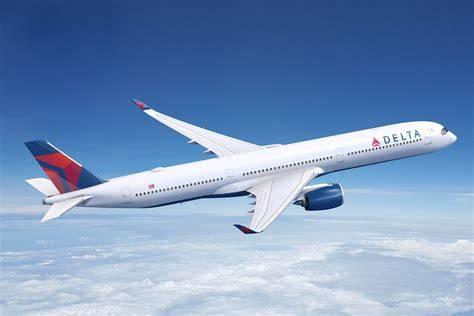
Delta Air Lines is not waiting for its Boeing 787-10 order to salvage its transpacific ambitions. Faced with a Dreamliner delivery timeline that now stretches to 2031, the carrier has quietly reorganized its entire Asian strategy around a single Airbus widebody family, and the stakes of that decision are enormous. Twenty Airbus A350-1000 airframes, due to enter revenue service in early 2027, will absorb the full weight of Delta’s premium-heavy expansion toward Asia for at least four years, while a 30-aircraft 787-10 order sits dormant in Boeing’s production backlog. The result is a fleet plan in which the A350-1000 is not merely a new flagship, but the sole instrument of Delta’s long-haul growth across the Pacific, the Atlantic, and any secondary market management dares to launch.
Delta is constructing a premium-dense flagship operation anchored on Seoul Incheon International Airport (ICN) and its foundational joint venture with Korean Air, an arrangement that reframes Incheon as a genuine mid-Pacific connecting hub rather than a destination. The newly ordered Boeing 787-10 fleet will not arrive until 2031, and so the A350-1000 must carry that complex commercial strategy entirely on its own for years, essentially acting as Delta’s entire late-2020s narrative in Asia. The question that matters is not whether Delta ordered the right aircraft, but whether twenty airframes — delivered in instalments that appear to include only eight in 2027 — can hold the joint venture together while Boeing gets its act together.
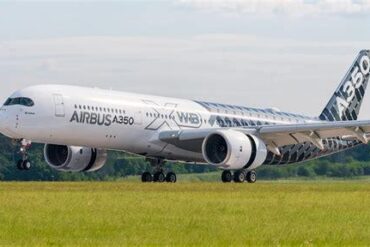
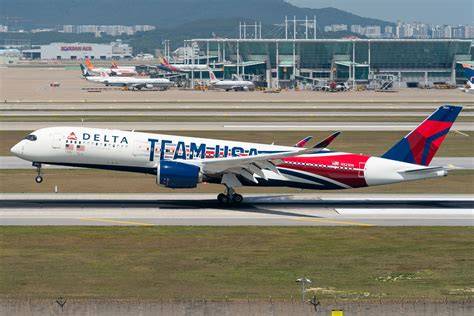
Delta is confirmed to debut its flagship Airbus A350-1000 in early 2027, deploying the widebodies on high-demand routes connecting Hartsfield-Jackson Atlanta International Airport (ATL) to ICN and Detroit Metropolitan Wayne County Airport (DTW) to ICN. The deployment formalizes a major strategic shift, leveraging Delta’s joint venture with Korean Air to cement ICN as its principal Asian transit point. By funneling connecting traffic through Incheon rather than the traditional Tokyo gateways of Narita and Haneda, Delta gains more efficient access to secondary markets across East Asia and Southeast Asia, including cities that neither Delta nor Korean Air could justify serving nonstop from the United States on their own.
Delta’s New Asian Base Hinges on the Korean Air Joint Venture
The Korean Air joint venture functions as an integrated commercial engine, aligning schedules, pricing, and frequent flyer benefits to capture high-yield corporate traffic moving between North American financial centers and Asian hubs. Passengers arriving at Incheon on Delta flights can connect seamlessly to Korean Air’s extensive regional network, bypassing the friction of multi-carrier itineraries, separate tickets, and the baggage and rechecking delays that plague interline connections. This partnership is central to Delta’s transpacific profitability because every widebody departing a US mega-hub is backed by robust feed from both sides of the Pacific, and the joint venture converts what would otherwise be point-to-point flying into a true network product.
That integrated model explains why Incheon has emerged as the linchpin of Delta’s long-haul roadmap while Tokyo retains a more limited role. Korean Air’s regional network reaches deeper into Southeast Asia and secondary Northeast Asian markets than most US legacy counterparts can access profitably, and the joint venture structure allows Delta to sell those connections under its own flight numbers while sharing revenue and cost. For corporate accounts that demand both breadth of coverage and a consistent premium product, the Delta-Korean Air combination across Incheon offers an alternative to one-stop routings through Japan or the Gulf.
To support these high-frequency transpacific rotations, Delta is banking on sophisticated interior engineering capable of sustaining passenger comfort across ultra-long-haul durations. As the A350-1000 enters service, cabin layout directly influences passenger acquisition and retention among high-paying business travelers who routinely weigh legacy carriers against joint venture alternatives, and Delta has clearly designed the aircraft to win that comparison rather than merely compete in it.
A Premium Cabin Built Around Delta One Suites and Multi-Orbit Connectivity
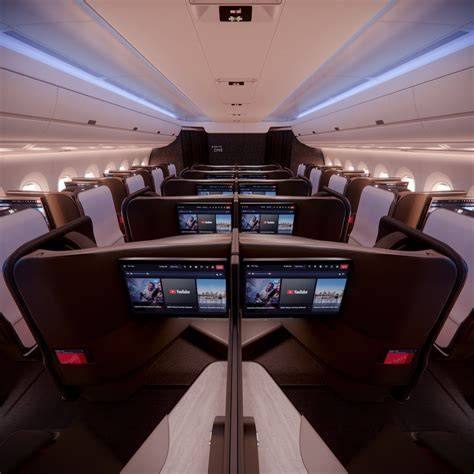
To capture maximum revenue on transpacific routes, Delta designed its A350-1000 cabin around unprecedented premium density. The aircraft features 53 Delta One Suites and 48 Premium Select seats, dedicating more than 40% of total floor space to premium passengers. This heavy premium concentration reflects management’s bet that corporate travel demand across the Pacific will continue to prioritize upgraded space, privacy, and door-closing suites over sheer economy volume, a wager that also protects yields if business travel growth slows.
Inside the cabin, the A350-1000 introduces Delta’s next-generation Delta One Suite, with fully flat beds measuring 6.5 feet (1.98 meters) long and personal entertainment screens using 24-inch 4K QLED technology. The 20 A350-1000s will also be equipped with a first-of-its-kind multi-orbit inflight connectivity solution, combining Hughes low-earth-orbit and geosynchronous-earth-orbit technology through Airbus HBCplus, giving passengers uninterrupted high-speed internet throughout transoceanic flights. In an era when business travelers treat connectivity as non-negotiable, a flagship that cannot sustain video calls over the Pacific is a flagship that loses corporate contracts.
Integrating these amenities aligns directly with Delta’s broader widebody modernization strategy. By outfitting its flagship fleet with next-generation suites and high-speed multi-orbit connectivity, the carrier can offer a standardized luxury product that reinforces its competitive edge in both corporate and premium leisure markets, and it can market that product consistently across Atlanta, Detroit, and Incheon without the cabin inconsistencies that plague mixed-generation fleets.
Inside Delta’s Record 95-Aircraft Widebody Modernization
Delta kicked off a massive widebody modernization campaign in the first half of 2026, placing firm orders for 95 new aircraft to replace aging twinjets across its international network. The order spree followed a phenomenal 2025, during which the carrier generated $5 billion in pre-tax profit on $63.4 billion in operating revenue. The order book includes 30 firm 787-10s alongside 30 options, 16 A330-900neos, 15 A350-900s, and 34 A321neos, a mix that segments the network with unusual precision.
Network planners intend to deploy the A350-1000s and A350-900s on ultra-long-haul transpacific sectors and high-demand Middle Eastern corridors such as Riyadh Airport (RUH), though the debut of that specific route has been delayed amid regional safety concerns. The incoming A330-900neos will primarily serve transatlantic markets and South American routes, while the 787-10s, when they eventually arrive, are earmarked for long-haul domestic trunks and transatlantic missions. This division ensures that each variant operates within its optimal range and payload envelope, maximizing fuel efficiency and reducing unit operating costs across distinct geographic regions.
The A350-900s and A330neos handle core international growth in the near term, but the delayed arrival of the 787-10 fleet shifts the real heavy lifting onto the A350-1000 program, turning it into the central pillar of Delta’s long-haul evolution. That is a role the airline did not necessarily envisage when the -1000 variant entered its fleet plans, and it is a role that leaves Delta with remarkably little slack in the event of engine issues, cabin supply shortfalls, or route demand surprises.
The Delivery Gap: Rolling the A350-1000 Into Service While Waiting for the 787-10
The scheduled arrival of Delta’s 30 firm 787-10s beginning in 2031 has created a significant operational timeline gap. Manufacturing backlogs and production slot allocations pushed the first Dreamliner deliveries five years out from the initial order announcement. Consequently, Delta must rely entirely on Airbus widebody deliveries to bridge the gap between retiring older 767s and 777s and the eventual arrival of the Dreamliner fleet, which leaves the carrier with one narrow path to growth and no real alternative if Airbus slips.
From an operating economics standpoint, the A350-1000 brings immediate relief through advanced propulsion technology. Powered by Rolls-Royce Trent XWB-97 engines, the A350-1000 delivers up to 20% lower fuel burn per seat-mile compared to the older aircraft it replaces, supported by Airbus data indicating 15% to 25% lower overall seat-mile cost than legacy widebody competitors. Those figures matter on 13-to-15-hour Pacific crossings where fuel is the dominant cost line, and they let Delta open secondary Asian markets that would be marginal on the fuel-hungry widebodies now leaving the fleet.
Yet concentrating all ultra-long-haul growth onto a single Airbus flagship type exposes Delta to supply chain vulnerabilities, spare-engine availability constraints, and intensive maintenance scheduling pressure across its Atlanta maintenance bases. Engine overhaul turnaround times for the Trent XWB remain a live industry concern, and a single shop-visit bottleneck can ground an airframe for weeks at precisely the moment Delta needs maximum utilization on Incheon corridors.
Eight A350-1000s in 2027 and the Limits of a Constrained Launch
Contractually committed delivery schedules allocate only the first eight aircraft to arrive through 2027, following earlier projections that anticipated 2026 handovers. The limited initial inventory means network planners must concentrate the new flagships strictly on core profit generators such as the ATL and DTW routes to Incheon, leaving little spare capacity for speculative route launches or seasonal experimentation. Eight airframes across two hubs translates into barely enough aircraft to sustain daily frequencies, let alone the spare coverage that irregular operations demand.
Expanding into emerging long-haul markets, whether launching RUH or evaluating a potential return to Indian airspace, depends entirely on subsequent A350-1000 deliveries arriving in 2028 and beyond, and on how fast those actually come in. If delivery slots slip or global supply chain snags delay airframe handovers, Delta will have little choice but to defer secondary route expansion to protect frequencies on its crucial Korean Air joint-venture corridors. Balancing high-yielding joint venture commitments against adventurous new city pairs will reveal exactly how much elasticity Delta’s narrow widebody inventory can tolerate.
Keeping these manufacturing delays under control is a genuine challenge that demands rigorous maintenance planning and careful route allocation. Network managers must extract maximum utilization from the initial A350-1000 deliveries while safeguarding spare parts inventory and pilot training pipelines, because any disruption that reaches the Incheon network has nowhere else to go. There is no 787-10 sitting idle in the desert to absorb an emergency schedule change, and there will not be one for years.
How a 2027 A350-1000 Debut Decides Delta’s Transpacific Position Through 2031
Sustaining this strategy through 2031 will be hard, requiring flawless execution from both Airbus and Rolls-Royce along with consistent corporate yields across transpacific corridors. The first A350-1000s enter service in early 2027, and at that point maintenance metrics, cabin reliability, and connection volumes at Incheon will determine whether Delta’s interim flagship can carry its Asian ambitions alone or whether the airline will need outside help to fill the gap. The delivery gap is not merely a scheduling inconvenience; it is the defining constraint of Delta’s international growth for half a decade, and the A350-1000 is the only aircraft capable of loosening it.