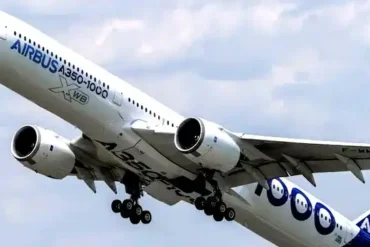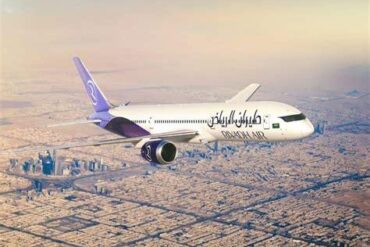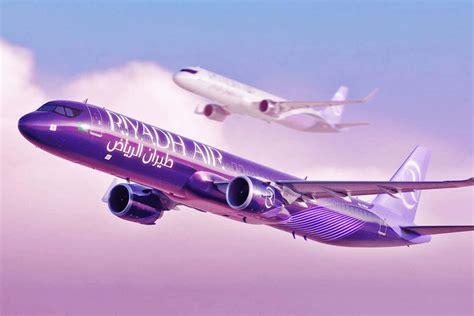
Riyadh Air’s selection of the Airbus A350-1000 marks one of the most ambitious fleet investments in the modern aviation landscape, positioning Saudi Arabia’s newest flag carrier to compete aggressively across long-haul markets. The airline, unveiled as part of the Kingdom’s broader economic transformation strategy, secured 50 A350-1000 aircraft, evenly split between firm orders and options. This monumental agreement signals a decisive step toward Riyadh Air’s commitment to connecting its capital to 100 global destinations by 2030, while building a long-range fleet with world-class efficiency and performance.
The order was formally announced during the Paris Air Show, where Riyadh Air executives joined Airbus leadership to finalize the acquisition. This deal establishes a strategic foundation that allows the airline to scale rapidly in the widebody segment, with the A350-1000 offering the optimal combination of range, capacity, and fuel efficiency for Riyadh Air’s plan to operate extensive long-haul networks. It also signals the Kingdom’s determination to position Riyadh as a major global aviation hub.
A350-1000 Order Details and Strategic Intent
Riyadh Air’s order for 25 firm A350-1000 aircraft and 25 purchase options forms a critical part of its long-term fleet strategy. Should all options be exercised, the carrier’s fleet would reach 182 aircraft, underscoring its aspiration to become one of the largest full-service airlines in the Middle East within the decade. The agreement was finalized by Chief Financial Officer Adam Boukadida and Airbus EVP Sales Benoît de Saint-Exupéry, with senior Saudi officials attending to mark the milestone.
Airbus executives spoke confidently about the partnership, emphasizing that the A350-1000 provides the performance profile required for Riyadh Air’s global ambitions. The aircraft’s ultra-long-range capability, lower fuel burn, and high-comfort cabin architecture align tightly with the airline’s mission to elevate passenger experience while maintaining operational efficiency. Riyadh Air’s leadership echoed this optimism, describing the commitment as a “statement of intent” that reinforces their momentum as the airline approaches full commercial launch.
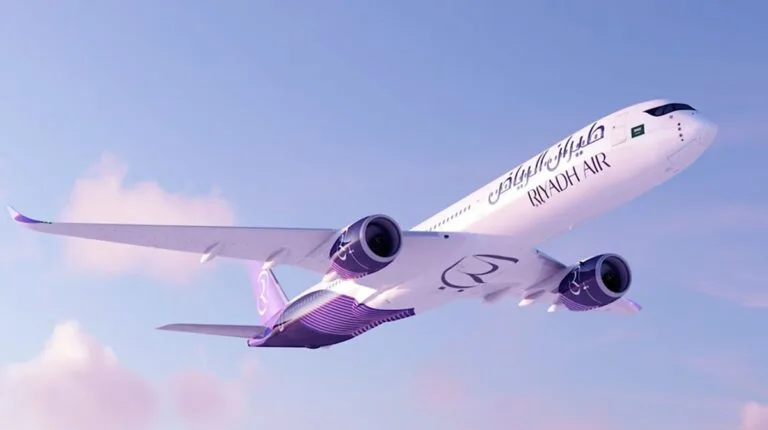
Rolls-Royce Trent XWB-97 Engines Powering the Fleet
The entire A350-1000 fleet will rely on Rolls-Royce Trent XWB-97 engines, one of the most advanced large turbofan powerplants currently in commercial service. This commitment provides Rolls-Royce with at least 50 new engine deliveries, expanding to 100 should Riyadh Air convert its options. The Trent XWB-97 stands out for delivering 97,000 pounds of thrust, a 50:1 pressure ratio, and a 9.6:1 bypass ratio, enabling exceptional fuel efficiency and long-range endurance.
Rolls-Royce has paired this delivery with a comprehensive TotalCare® services agreement, ensuring long-term maintenance, operational reliability, and optimized performance across the fleet. The manufacturer’s ongoing investment of over £1 billion into its Trent engine family will enhance durability and reduce lifecycle costs for Riyadh Air as it builds its long-haul operations.
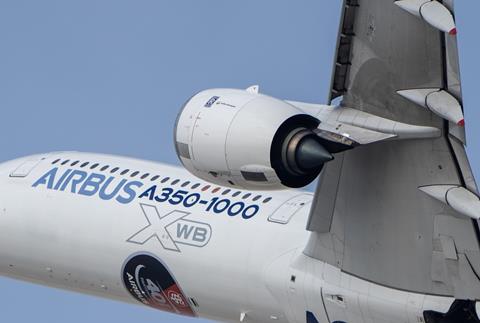
Environmental Capability and SAF Considerations
The A350-1000’s compatibility with up to 50% Sustainable Aviation Fuel (SAF) introduces an intriguing dynamic for a nation whose economy has long been defined by conventional oil. As Saudi Arabia pursues diversification and sustainable aviation initiatives, Riyadh Air’s future decisions on SAF utilization will be closely watched. The capability is built into the aircraft, and should the Kingdom scale its domestic SAF production, Riyadh Air would be positioned to implement significant emissions reductions across its long-haul network.
This duality reflects the tension and opportunity embedded in the Kingdom’s Vision 2030 program: the aircraft serves both national economic objectives and the evolving global requirement for decarbonized air travel.
The Role of Riyadh Air in Saudi Arabia’s Aviation Ambitions
Founded under the direction of Crown Prince Mohammed bin Salman and owned by the Public Investment Fund (PIF), Riyadh Air is designed to be a flagship symbol of the Kingdom’s modernization. CEO Tony Douglas, formerly of Etihad Airways, brings deep Gulf aviation experience to the airline’s leadership. Riyadh Air is building a broad web of global partnerships, including cooperation with China Eastern Airlines, Virgin Atlantic, Turkish Airlines, Singapore Airlines, and Saudia, allowing it to extend reach well before its full fleet is delivered.
The airline’s economic impact is projected to reach $20 billion in GDP contribution and create 200,000 direct and indirect jobs, making it a key pillar of the country’s non-oil economic future.
Expected A350-1000 Route Network and Deployment Strategy
Riyadh Air has not officially published its inaugural A350-1000 destinations, though early indicators suggest that the aircraft will anchor major long-haul routes across Europe and Asia. The A350-1000’s range and payload characteristics make it highly suitable for routes such as Riyadh–London, Riyadh–Frankfurt, Riyadh–Paris, Riyadh–Tokyo, Riyadh–Seoul, and Riyadh–Singapore.
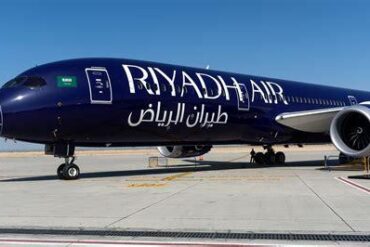
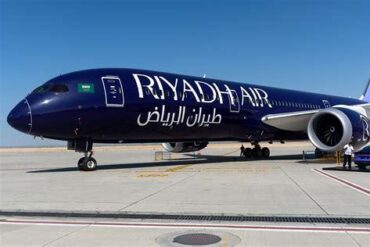
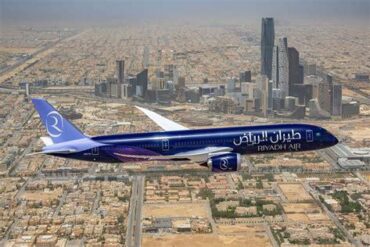
The airline’s initial global operations began with a second-hand Boeing 787-9 Dreamliner, acquired from Oman Air. These early flights focused on proving operations and securing valuable Heathrow slots, rather than commercial service. As more aircraft arrive—expected at a pace of approximately one new aircraft per month—the carrier intends to introduce two new destinations every month, scaling rapidly toward its 2030 network goals.
The A350-1000 will likely become the backbone of the airline’s ultra-long-haul missions, providing the necessary capacity as Riyadh Air competes for business travelers, premium leisure passengers, and transit connectivity in a region dominated by Emirates, Qatar Airways, and Etihad.
Riyadh Air’s First Flights and the Path Toward Full Launch
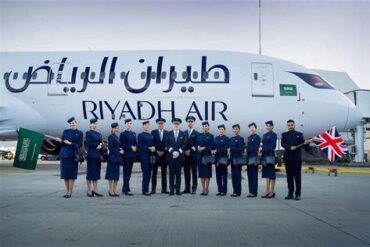
Despite delays in its custom-built 787 deliveries, Riyadh Air officially took to the skies in October 2026 with its repainted ex-Oman Air Dreamliner, marking the airline’s debut at London Heathrow. Tony Douglas emphasized a deliberate and meticulous approach, prioritizing operational refinement before beginning paid ticket sales. With four new 787s expected by the end of 2025 and subsequent A350 arrivals, Riyadh Air’s London route is poised to expand to daily operations, potentially increasing further as the airline secures additional slots.
The strategic sequencing of fleet arrivals, route launches, and partnership integrations underscores the airline’s measured yet ambitious rise onto the world stage.
A New Force in Global Aviation
Riyadh Air’s Airbus A350-1000 order represents far more than a fleet acquisition. It is a declaration of intent, a structural investment in Saudi Arabia’s future, and a pivotal move that connects technological innovation, economic diversification, and national identity. As deliveries begin over the coming years, the airline will transition from a high-profile newcomer to a major global competitor, with the A350-1000 serving as the centerpiece of its long-haul strategy.
The next phase of Riyadh Air’s growth, powered by Airbus and Rolls-Royce technology, is set to reshape long-haul connectivity into the Kingdom and redefine the competitive landscape of Middle Eastern aviation.