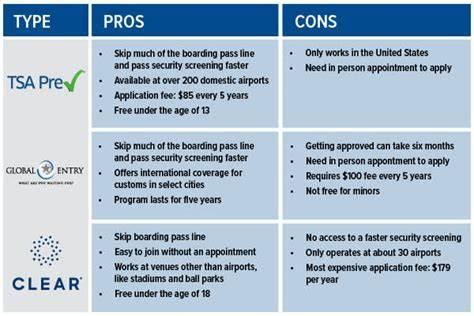
Airport security has a way of stretching a ninety-minute buffer into a tense sprint, especially on Monday morning departures, the Friday before a holiday weekend, and the peak weeks of summer. Two paid programs promise to compress that friction, and they are routinely confused with one another. TSA PreCheck is a government trusted-traveler program that changes what happens during physical screening. CLEAR+ is a privately operated biometric identity service that changes what happens before screening begins. Understanding that distinction is the foundation of every sensible buying decision in 2026, because the two products attack different chokepoints and neither one removes a single security requirement outright.
The headline prices frame the debate immediately. TSA PreCheck runs roughly $77 to $85 for a full five years, while CLEAR+ carries a standard rate of $219 per year. On arithmetic alone, the government program wins by a wide margin, working out to something near $17 annually, or about $1.42 a month at the upper price point. Yet price is only half the equation. A traveler who departs weekly from an airport where the document-check queue regularly swallows thirty minutes may find the more expensive membership repays itself in recovered time, while a leisure flyer who takes three trips a year will almost certainly never recover the annual fee. The right question is not which program is cheaper but which program saves meaningful time on the itineraries a traveler actually flies.
Identity Versus Inspection: What Each Membership Really Changes
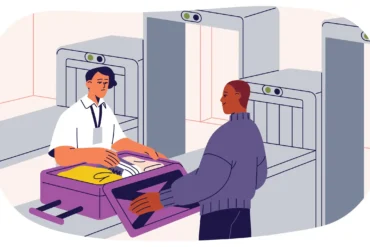
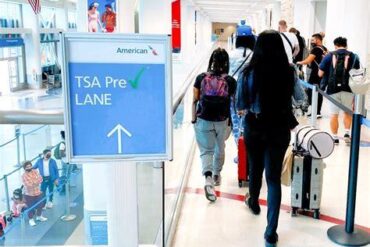
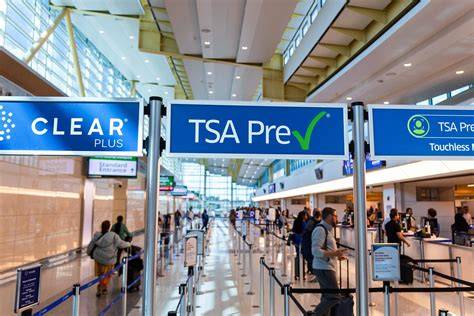
TSA PreCheck is administered by the Transportation Security Administration and grants approved members expedited screening at participating checkpoints whenever their boarding pass carries the PreCheck indicator. The practical relief is familiar to anyone who has held it: shoes stay on, belts and light jackets stay on, laptops remain in their cases, and compliant small-liquid bags no longer need to be fished out and repacked in a separate bin. Screening still occurs, and TSA retains full authority to route any passenger to additional inspection, but the ritual of disrobing and unpacking at the bin stack largely disappears.
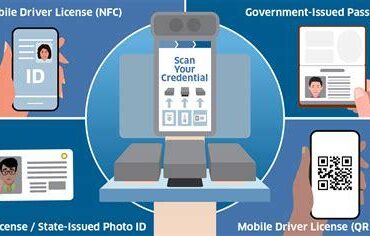
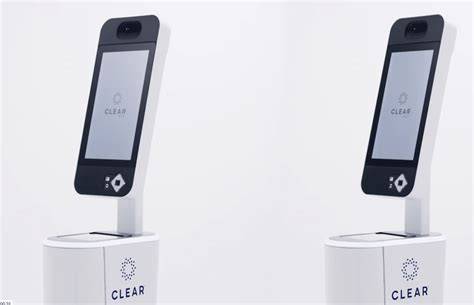
CLEAR+ occupies an entirely different stage of the journey. Members verify their identity through biometric technology, including facial and iris recognition, at dedicated CLEAR lanes, bypassing the conventional transaction of handing a license or passport to an officer. What follows that verification is ordinary TSA screening, which means a CLEAR+ member without PreCheck still removes shoes, separates electronics, and follows standard checkpoint instructions. The service shortens the line to prove who you are, not the line to prove what you are carrying.
This is why the two programs combine so naturally. A traveler holding both uses CLEAR+ to clear identity verification in seconds and then walks into the PreCheck lane for a lighter physical inspection. That pairing addresses two separate sources of delay and typically outperforms either membership alone. It is also why neither product guarantees speed. A short standard queue can render CLEAR+ redundant on a quiet Tuesday afternoon, and a closed or understaffed PreCheck lane can neutralize the government benefit just as thoroughly. Checkpoint layout, staffing levels, passenger volume, and random additional screening all sit outside any member’s control.
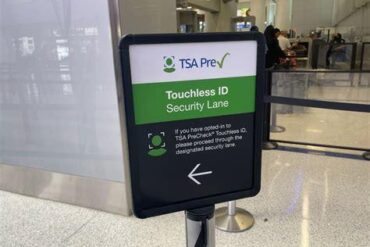
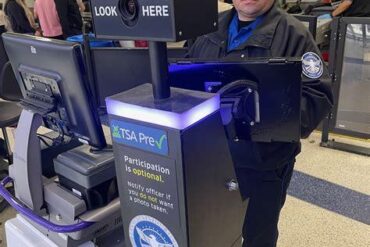
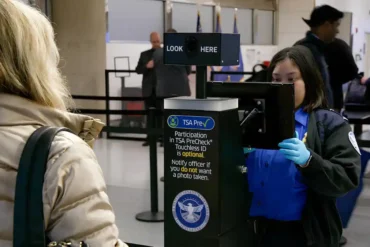
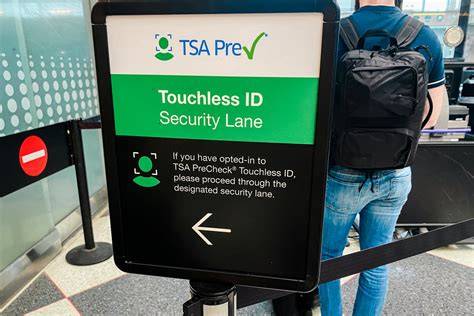
There is a second layer to the PreCheck story that frequent travelers increasingly encounter: TSA PreCheck Touchless ID, now deployed at dozens of airports and supported by a growing roster of participating airlines, including a Google Wallet option for digital credential storage. Touchless ID lets enrolled travelers pass through a dedicated photo-based lane without presenting a physical document at all, which narrows the identity-check gap between PreCheck and CLEAR+ for members who opt in.
Why TSA PreCheck Wins On Value For The Typical Traveler
The case for PreCheck as a first purchase rests on three pillars: duration, coverage, and price. A single enrollment covers five years, available at approximately 200 US airports and honored by participating airlines, which means the benefit follows the traveler rather than a single home hub. Someone who lives in Chicago but flies regularly out of Denver, Atlanta, and Seattle gets the same relaxed screening at each, provided the airline participates and the boarding pass carries the designation. Regional and leisure carriers have joined the program steadily, and the roster now covers the overwhelming majority of domestic itineraries.
The cost comparison is stark when extended across the membership term. Five years of PreCheck at the top published rate totals $85, while five annual CLEAR+ renewals at the standard rate would total $1,095 before any credits or discounts. Even a traveler who flies only four or five times a year benefits from skipping the shoe-and-laptop routine repeatedly, and the fee is small enough to fold into a travel budget alongside baggage charges and seat selection without a second thought.
Families and leisure travelers extract disproportionate value here. Children traveling on the same reservation as an enrolled parent or guardian may qualify to accompany them through PreCheck under TSA rules, depending on age and circumstances, which means one $85 enrollment can lighten the checkpoint experience for an entire household. The tradeoffs are modest. Applicants must complete an application, provide fingerprints and documentation, and pass a security assessment, and approval is not instant. Membership also does not guarantee expedited screening on every single flight, since the indicator is not always printed. Yet for anyone not yet enrolled in either program, PreCheck is the obvious starting point, and the enrollment process itself has become easier, with walk-in and online-renewal options reducing the old appointment bottleneck.
When CLEAR+ Earns Its $219 Annual Fee
CLEAR+ becomes defensible under a narrower but very real set of conditions: a frequent flyer whose home airport has persistently slow identity-check queues and whose terminal operates CLEAR lanes. The company’s published network spans roughly 62 airports, concentrated in the largest hubs and busiest terminals, so the service is less about breadth and more about depth at the places that generate the worst delays.
At a congested airport, identity verification can consume a substantial share of the total security wait, particularly during the early-morning bank when business travelers converge on the checkpoint simultaneously. CLEAR+ moves members past that stage using biometric verification, delivering them to physical screening sooner. Someone flying several round trips a month gains a compounding benefit, because predictable access matters more to a traveler who faces the same queue twice a week than to one who encounters it twice a year. Business travelers whose schedules punish unpredictability often value the service for that reliability as much as for the raw minutes saved.
The advantage is genuinely conditional, though. It depends on the length of the CLEAR line itself, the availability of staffed lanes and functioning equipment, and the queue members meet after identity verification. On a slow afternoon, the paid shortcut may save almost nothing. And because CLEAR+ alone drops members into standard physical screening, a frequent flyer who buys only CLEAR+ still faces the full unpacking ritual, which is precisely why most serious users pair it with PreCheck rather than choosing between them.
How Bundling and Credit Card Credits Change the Math
CLEAR has made the decision harder with a combined enrollment offer for travelers who apply for TSA PreCheck through its authorized enrollment process. Under the published terms, an eligible new applicant pays $85 for five years of PreCheck and receives a promotional first year of CLEAR+ at $134, bringing the initial combined outlay to $219, exactly the price of a standalone annual CLEAR+ membership. A slightly different breakdown applies to qualifying online renewals, with roughly $73 for PreCheck and $146 for the first year of CLEAR+. The promotion carries conditions, including use of the designated enrollment path and a promotional code.
For someone already leaning toward CLEAR+, this is close to a free upgrade: the government screening benefit arrives at no additional initial cost. The trap is treating the bundle as a permanent price. CLEAR+ renews annually at its standard rate unless the member qualifies for a discount or new promotion, while PreCheck remains valid for five years, so the two memberships follow different renewal clocks. After year one, the traveler must decide all over again whether CLEAR+ is still saving enough time to justify another payment, and that reassessment should be based on actual experience rather than the marketing narrative.
Loyalty programs and premium credit cards further distort the comparison. Several travel cards offer CLEAR+ statement credits or reduced membership pricing, and a handful extend credits toward PreCheck fees. These benefits lower the effective cost, sometimes to zero, and frequently tip the decision for cardholders who already hold the card for lounge access, transfer partners, or other perks. A credit is only true savings when the card was worth keeping on its own merits; it becomes a marketing nudge when it prompts someone to buy a product they would never otherwise consider. The disciplined approach is to compare the amount actually paid after credits against the time genuinely saved, not against the advertised sticker price.
Availability, Outages, and Privacy All Deserve a Hard Look
Neither membership insulates travelers from operational reality. During the partial federal government shutdown in early 2026, severe TSA staffing shortages forced Houston’s George Bush Intercontinental Airport to suspend both TSA PreCheck and CLEAR+ at some checkpoints, a vivid illustration that a privatized identity service cannot function independently of the broader screening operation it feeds into. Houston Airports later confirmed that availability would track staffing conditions. The episode was not evidence of routine unreliability, but it did demonstrate that both products depend on infrastructure and decisions beyond any individual member’s control.
Privacy deserves comparable scrutiny. CLEAR+ relies on biometric identity verification, so prospective members should read the company’s current disclosures carefully and understand how facial or iris data is collected, stored, used, and protected. PreCheck also requires applicants to submit personal information for eligibility screening, but it does not compel the use of a commercial biometric service. For some travelers, that distinction alone settles the question, independent of price and convenience. Neither membership, meanwhile, replaces the obligation to carry an acceptable travel document or to follow officer instructions, and travelers with accessibility needs or specific medical circumstances should consult TSA guidance directly rather than assume an expedited lane eliminates every step.
One final practical test cuts through most of the debate. Map the membership against the airports and terminals actually used. A program that performs beautifully at a home hub may offer nothing at a regional airport without CLEAR lanes, and a PreCheck membership is only as useful as the participating airlines and checkpoint hours at the airports on the itinerary.
The Verdict For 2026: Buy In Layers, Not In Haste
For most travelers in 2026, TSA PreCheck remains the stronger value: inexpensive, durable across five years, effective at roughly 200 airports, and transformative for the physical screening experience that frustrates travelers most. CLEAR+ is best understood as an optional second layer for frequent flyers whose usual airports carry persistent identity-check queues, ideally acquired through the combined offer or a card credit that reduces the sticker shock. The bundle makes the initial year genuinely attractive, but the annual renewal remains the hinge on which the long-term decision turns.
Looking forward, the balance will shift with the technology. As biometric verification spreads into standard lanes through Touchless ID and similar deployments, the incremental edge of a paid identity shortcut could narrow. If congestion continues to concentrate at document checks in the largest hubs, CLEAR+ will keep earning its fee for the travelers who pass through them most. PreCheck’s appeal will depend on how consistently expedited screening is delivered and how widely participation extends.
The smartest sequence is straightforward: start with the low-cost, long-lasting government benefit, then add the expensive recurring service only when repeated airport experience justifies it. Check the airports actually flown, observe real queue conditions, and revisit the decision whenever prices, credits, or travel habits change. The best security shortcut is not the one with the most polished marketing, but the one that reliably returns time on a traveler’s own itineraries.