Air travel has long been defined by friction: document checks, security bottlenecks, and the ritual of patting every pocket to confirm a passport is still there. The Transportation Security Administration is now nudging that experience into the biometric age by allowing travelers to upload their passport to CLEAR ID, a mobile identity platform positioned as an alternative to Apple Wallet’s digital ID ecosystem. The move signals a broader institutional comfort with app-based identity verification inside U.S. airports.
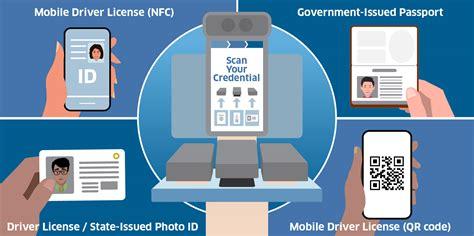
Unlike experimental pilots of the past, this rollout arrives with operational teeth. Travelers can store passport credentials directly in the CLEAR ID app and present them at participating TSA checkpoints without producing the physical document. The objective is not just convenience but throughput—reducing document handling while integrating biometric verification layers already embedded in CLEAR’s infrastructure.
How CLEAR ID Passport Storage Works at TSA Checkpoints
CLEAR ID functions as a secure digital vault. After a user uploads their passport, the app transmits encrypted identity data to verification partners that authenticate the document and confirm device legitimacy. This dual validation process is designed to prevent spoofing, synthetic identity uploads, or compromised device submissions.
Despite the digital shift, the TSA still requires travelers to carry a REAL ID-compliant physical identification. The difference is behavioral rather than regulatory: your passport can remain in your bag unless specifically requested. At the checkpoint, facial biometrics and app credentials handle the front-line identity confirmation.
This hybrid model reflects aviation security’s incremental philosophy—layer digital convenience atop physical redundancy rather than replacing it outright.
Airport Availability and Adoption Footprint
Digital ID programs live or die by network effect. CLEAR ID is currently accepted at 60 U.S. airports, a footprint that covers many high-traffic hubs but still leaves notable gaps. Travelers must confirm compatibility before departure through CLEAR’s official platform.
Beyond aviation, the identity system extends into large-venue security, operating across 150+ stadiums and arenas. This cross-sector adoption hints at a future where a single biometric credential navigates airports, sports venues, and potentially border control environments.
The technological logic is straightforward: once identity is verified at high assurance, it can be reused across controlled access ecosystems.
CLEAR+ Membership: Speed, Cost, and Friction
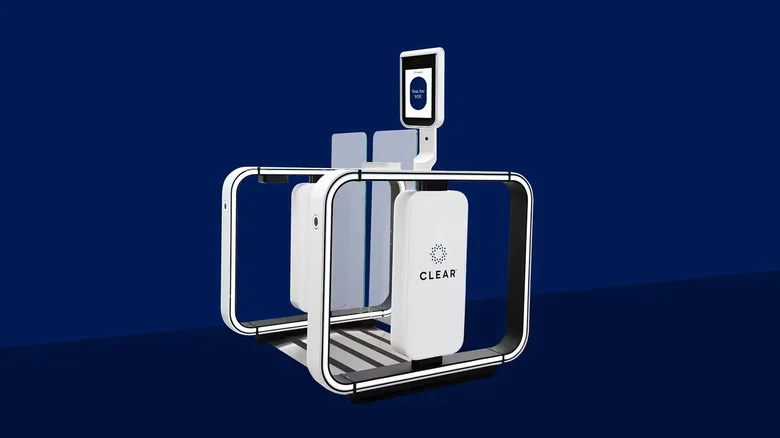
While CLEAR ID itself is free, the ecosystem’s premium layer—CLEAR+—introduces a subscription model priced at just over $200 annually. Membership grants access to dedicated screening corridors known as CLEAR Pods, where biometric verification occurs before passengers proceed to physical security screening.
On paper, the value proposition is velocity. In practice, traveler feedback paints a more complex kinetic picture. Many frequent fliers report that although CLEAR+ lines are shorter, processing speed can lag behind TSA PreCheck lanes. Biometric scans, ambassador assistance, and device interactions sometimes slow throughput despite lower passenger volume.
Another operational caveat: without PreCheck, CLEAR+ users must still remove shoes, laptops, and liquids—diluting the time savings once they reach standard screening.
When CLEAR+ Delivers Real Time Savings
The premium service proves most effective during peak congestion events. Holiday surges, weather delays, and hub airport choke points can produce security lines stretching hundreds of passengers deep. In these edge cases, jumping to the front of the queue via CLEAR+ can compress wait times dramatically, even if pod processing is slower per traveler.
For aviation road warriors—consultants, transcontinental commuters, elite status flyers—the annual fee often amortizes quickly. Occasional travelers, however, may struggle to extract proportional value from the subscription.
Digital Identity and the Future of Airport Security
Passport integration into CLEAR ID represents more than a convenience feature; it is a structural preview of identity’s dematerialized future. Airports are evolving into biometric corridors where face, device, and credential converge into a single authentication event.
Apple Wallet, Google Wallet, and CLEAR are effectively running parallel experiments in portable identity. The TSA’s willingness to accept multiple platforms suggests an interoperability endgame rather than a winner-take-all ecosystem.
As verification migrates from paper to encrypted silicon, the airport experience inches toward something once confined to speculative fiction: frictionless passage governed not by documents you carry, but by identity you inherently are.