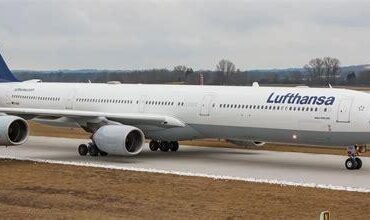
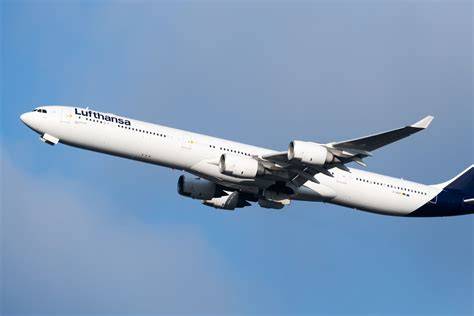
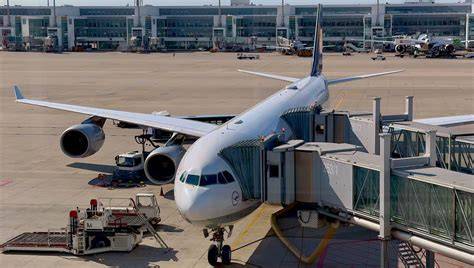
Lufthansa’s final Airbus A340-600 passenger service landed at Frankfurt Airport just after dawn on October 19, closing a chapter that had run for 23 years and, in a single night, erased the last scheduled A340-600 operation anywhere in Europe or North America. Flight LH419 lifted off from Washington Dulles International Airport the evening before, carrying passengers who had, without any particular ceremony, bought seats on the last four-engine long-haul Airbus most of them would ever board. The airline had taken delivery of 24 A340-600s between 2003 and 2008 and still had only four flying in the final months, a fleet that had quietly shrunk from a flagship formation into a maintenance burden. For anyone who tracks airframes by registration and tail number, the map of where to find this aircraft did not disappear. It contracted sharply, drawn now into a handful of airports where the type clings to schedules that exist for reasons more circumstantial than commercial.
The A340’s story has always been one of a magnificent misfit. When the -600 entered service in 2003, it held the title of the world’s longest passenger jet until the Boeing 747-8 arrived, and Lufthansa fitted its examples with 281 seats spread across four cabins, a configuration that spoke to a moment when airlines believed premium-heavy long-haul flying would remain the backbone of the business. That belief did not survive the rise of efficient twinjets. A modern Boeing 787 or Airbus A350 carries a comparable payload on a fraction of the fuel, and the economics of four engines stopped making sense the moment pairs could do the same work. The core reason the A340 is vanishing is not that it failed as an aircraft but that it succeeded in a world that moved on without it.
What kept Lufthansa’s A340s flying for years beyond their planned exit was not sentiment but supply chain delay. The airline intended to retire the fleet when the pandemic collapsed demand, yet delivery slippage on the Boeing 777X, the Airbus A350 and the Boeing 787 left holes in the long-haul schedule that only the old four-engine jets could fill. The A340 stayed because its replacements were late, and it will leave because those replacements are finally arriving, with Lufthansa’s first A350-1000s due from this month. That single thread of delayed deliveries explains almost everything about the timeline described below, including why Frankfurt will keep an A340-300 longer than anyone expected while the more glamorous -600 is already gone.
Zurich Airport Is Now The Best Place In The World To See An A340
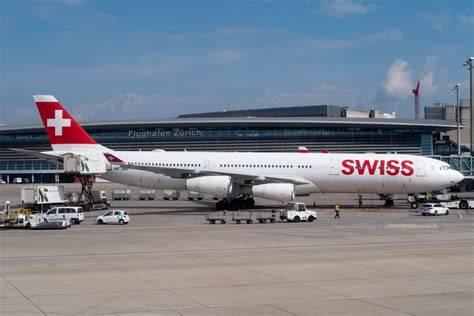
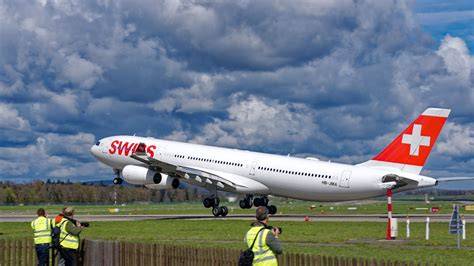
Zurich Airport has become the undisputed capital of the remaining A340 passenger fleet, and it earned that position by default as much as by design. Two Lufthansa Group carriers base the type at the airport: SWISS International Air Lines flies three active A340-300s with a fourth parked, while Edelweiss Air, the group’s leisure arm, operates five of its own. That makes Zurich the only airport on earth with two A340 operators based at the same field, and it gives anyone with a connecting itinerary through Switzerland a realistic chance of flying one without detouring through a sanctions regime.
The two fleets are intertwined in ways that matter to travelers rather than accountants. Some Edelweiss aircraft are loaned directly from SWISS, and Edelweiss operates the Zurich to Montreal route on behalf of SWISS under a wet-lease arrangement, so a passenger booking through SWISS can board an Edelweiss airframe without knowing it. The practical consequence for anyone chasing the type is that the Edelweiss timetable is far richer than it looks on paper. Travel-Dealz reported that Edelweiss will serve twelve destinations with the A340 in 2026, making it the second-largest A340 operator by destinations served after Lufthansa itself, despite a fleet that is smaller than the type’s European heyday ever suggested.
One imminent opportunity is worth marking in the calendar. Dubai International Airport returns to the SWISS network on October 27, with the daily Zurich service planned to be operated mainly by the A340-300 through the winter season. That is a rare gift for photographers, since Dubai offers year-round sunshine, predictable approach paths and a premium carrier operating a four-engine Airbus on a conventional long-haul schedule. For anyone who wants to log the type in a cabin rather than through a telephoto lens, the Zurich to Dubai flight is the most accessible opportunity on the planet this winter.
The clock on Zurich is nonetheless ticking loudly. SWISS has confirmed that its remaining A340-300s will be gone by early 2028, with Shanghai Pudong and Johannesburg both transitioning to the A350-900 across the winter 2026/27 timetable. Edelweiss is replacing its five aircraft with six A350-900s and ferried its first A340 to storage at Teruel in October 2025, a Spanish facility that has become the quiet graveyard for European quadjets. The window in Switzerland is measured in seasons now, not years.
Frankfurt Keeps Lufthansa’s A340-300 Fleet Into 2027
Frankfurt’s A340 story did not end on October 18, and that is the detail most coverage of Lufthansa’s final -600 flight missed. Nearly a dozen A340-300s remain in the Lufthansa fleet and are expected to be retired during 2027, which means the airport that just lost the world’s longest passenger jet remains one of the best places on earth to watch a four-engine Airbus operate a scheduled passenger service. The -300 is the shorter, older variant, and Lufthansa has flown it considerably longer than the -600 ever managed, largely because its mission profile as a versatile mid-capacity long-haul aircraft suited a fleet that needed flexibility more than range.
The aircraft still flying at Frankfurt are among the oldest widebodies in regular European service, and their persistence is a small monument to the pandemic-era supply crunch. Lufthansa meant to retire the whole A340 fleet when demand collapsed in 2020, but the delivery delays to the 777X, A350 and 787 forced a rethink. The type outlived its planned exit date by several years, and those years produced precisely the spotting opportunities that enthusiasts now have a limited time to exploit.
Frankfurt is unusually generous to anyone intending to photograph or fly these aircraft. The airport’s terminal structure, its long parallel runways and its density of Lufthansa long-haul departures mean an A340-300 is rarely hard to find on a given day, and its routes span the Americas, Asia and Africa. The terminal itself offers sightlines from public areas that many major hubs do not, so a visitor with a morning free can combine a departure with a connection and come away with the type logged. When the last Frankfurt A340 leaves during 2027, the most convenient place in the world to see Lufthansa’s quadjet heritage goes with it.
The A340-600 Now Survives Only In Tehran And Caracas
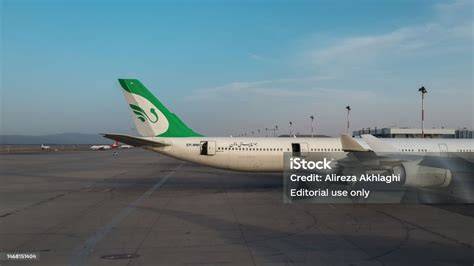
Two airlines continue to operate the A340-600 on scheduled passenger service, and between them they hold everything that remains of the variant in regular commercial use. Mahan Air flies from Tehran and Conviasa flies from Caracas, and neither is a straightforward destination for most travelers. Mahan Air has been subject to long-standing international sanctions that curtail its access to Western aircraft, parts and finance, and Travel-Dealz noted that simply obtaining a ticket with the airline can be difficult. Conviasa faces comparable constraints in Venezuela, where currency controls and sanctions make fleet renewal nearly impossible.
Mahan Air is the more compelling of the two for anyone cataloging variants. The carrier operates both the A340-300 and the A340-600 and, according to Travel-Dealz, still flies the A340-200, the short-fuselage version that Airbus built in only small numbers. Mahan uses that rare variant occasionally, and few airlines anywhere have flown it in recent years, while fewer still operate all three members of the family alongside one another. For a serious aviation enthusiast, Tehran represents one of the last places where the A340’s full lineage can be seen in a single fleet.
These aircraft survive for exactly the reason they are hard to board. The sanctions that restrict access to Western airframes and spares also remove any commercial pressure to retire older types, because no straightforward replacement can be purchased at any price. The logic clearing A340s out of European fleets, where newer twinjets cut fuel burn substantially on identical routes, simply does not apply to an airline that cannot buy an A350. Travel-Dealz observed that the A340s may therefore remain in service long term, and that assessment is difficult to argue with. An airline unable to renew has no reason to retire.
What Remains After 2027
The A340’s European presence now has a defined end date. Lufthansa’s remaining A340-300s are expected to leave the fleet during 2027, SWISS will retire its last aircraft by early 2028 as its two long-haul A340 routes move to the A350-900, and Edelweiss is completing its own replacement with six A350-900s. When that final transition is finished, scheduled A340 passenger service in Western Europe ends entirely, and the type becomes an aircraft found almost exclusively in markets most readers cannot easily book.
What survives afterward sits largely outside reach of ordinary ticketing. Mahan Air and Conviasa will hold the remaining aircraft, both operating under sanctions regimes that make ticketing difficult and fleet renewal nearly impossible. Those same conditions are what keep the aircraft flying, which produces an uncomfortable final irony: the A340’s last passenger years will likely be spent in the places it is hardest to reach rather than where it was most common. The type that once connected Frankfurt to Washington and Zurich to Johannesburg will finish its career on routes that demand patience, paperwork and a tolerance for uncertainty.
For anyone wanting to fly one, the window is measured in months rather than years. Zurich offers the most options, with SWISS and Edelweiss both operating from the airport and the Dubai route running on the A340-300 through the coming winter. Frankfurt keeps the A340-300 into 2027 and remains the most convenient observation point in Europe. And at least one aircraft will outlast its fleet in a different form: SWISS and the Swiss Museum of Transport announced in September that the airline’s final A340-300 will be preserved as a permanent exhibit in Lucerne, with the airframe due to arrive by early 2028.
That preservation decision matters more than it might appear. A museum aircraft is a static memorial, not a living schedule, and once the Lucerne A340 is on display the type’s flying days in Europe are over for good. The last chance to see one move on its own power, to hear four engines spool up on a runway at sunrise, and to watch a quadjet climb out of Zurich or Frankfurt will have passed. Anyone who has postponed a trip to catch the A340 now has a shrinking set of dates, airports and airlines to work with, and the sensible move is to book the Dubai rotation, study the Edelweiss timetable and treat Frankfurt’s remaining years as a countdown rather than an open invitation.