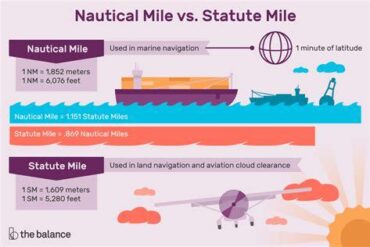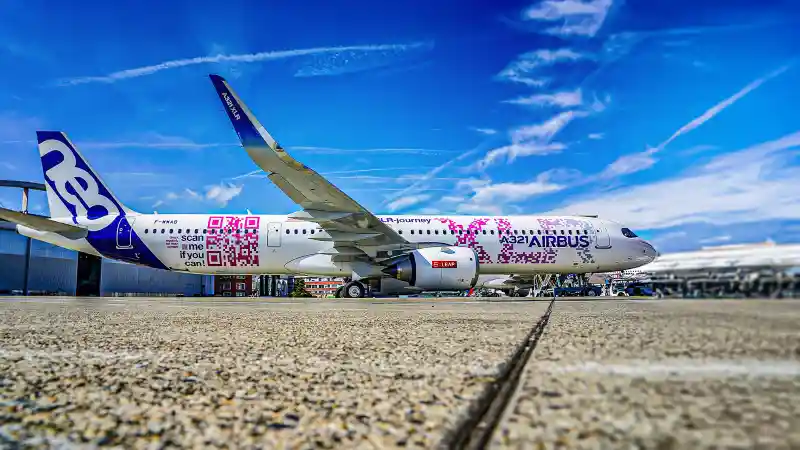
The Airbus A321XLR carries the most aggressive range claim ever attached to a single-aisle airframe: 4,700 nautical miles on the brochure page. Spotters read that number and picture nonstop narrowbody flights between continents. Network planners read the same number and immediately start subtracting. In the schedules airlines actually publish, the aircraft’s longest missions cluster between 3,400 and 4,000 nautical miles, and several high-profile routes sit well under 3,400. The gap between the specification sheet and the timetable is not a marketing deception or an operational failure. It is the predictable output of a narrowbody pushed to the boundary of physics, where fuel, cabin weight, reserves and wind each take a bite out of the advertised ceiling before the first passenger boards.
That gap matters because the A321XLR is now the only active production aircraft in the long-range single-aisle category after Boeing declined to build a direct successor to its 757. Airbus owns this niche outright, and the way airlines are using the type reveals how the niche actually behaves in service. Roughly 70% to 80% of the certified maximum is what carriers are deploying, which means the flagship range figure describes a possible aircraft rather than the aircraft each operator ordered.
The commercial logic of every A321XLR deployment resolves into a choice between two business models. Airlines can optimize for high-yield premium passengers on long, thin routes, treating the jet as a small widebody with an unbeatable trip cost. Or they can maximize seat density to drive low unit costs on medium-range legs, replacing inefficient twin-aisles on trunk routes. Because the narrowbody is smaller than even the smallest widebody, it delivers lower fuel burn per seat and dramatically lower trip costs in either configuration. What changes is the mission distance each configuration can support.
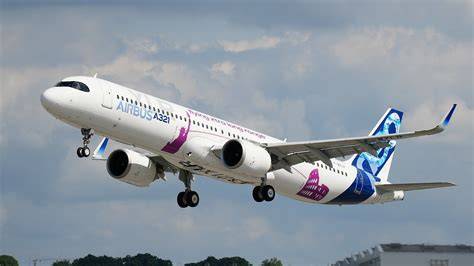
What The 4,700 Nautical Mile Specification Really Means
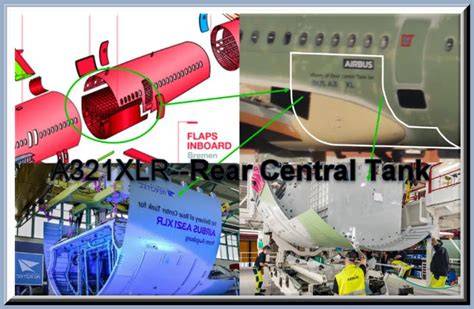
The A321XLR reaches its headline range through hardware that has almost nothing to do with the cabin passengers see. Airbus installed a 3,408-gallon permanent rear center fuel tank (RCT) under the floor of the aft fuselage and strengthened the airframe to raise maximum takeoff weight to 101 tons. Those changes push the jet roughly 700 nautical miles beyond the older A321LR, which reaches 4,000 nautical miles using removable cargo-hold tanks. The permanent tank is the decisive design decision, and it also becomes the source of the aircraft’s biggest commercial constraint, since the space it occupies can never again carry freight.
That architecture explains the peculiar arithmetic of the brochure. The published ceiling of 4,700 nautical miles and the maximum of 244 seats describe the aircraft under two entirely different circumstances, not its standard configuration. Range figures in Airbus documentation are computed at reduced payload assumptions; seat counts assume short-sector missions where fuel weight is irrelevant. No airline can collect both at once, because every seat occupied and every bag loaded competes for the same kilogram of takeoff weight. The aircraft is best understood as a payload-range envelope, a sliding scale rather than a fixed capability, and the position an airline chooses on that scale defines its entire business model.
A high-density layout packing 180 to 220 seats into a standard two-class or all-economy cabin turns the jet into a volume machine for market share. A premium layout with lie-flat suites and a premium economy section sacrifices capacity to command higher ticket prices while keeping passenger payload lighter. Those two configurations do not merely differ in comfort; they produce different maximum ranges on the same airframe.
Reserves And Winds Shrink The Usable Distance
Iberia offers the clearest documented case of what configuration does to range. Its A321XLRs carry 168 economy seats and 14 business suites, a 182-seat layout that supports a realistic range of 3,920 nautical miles — roughly 780 nautical miles below the marketing limit. Iberia achieved that figure by omitting premium economy entirely and fitting lightweight slimline seats across most of the cabin, minimizing operating empty weight (OEW). Every kilogram saved in furnishings becomes a kilogram available for fuel, which translates directly into distance.
Cabin weight is only the beginning. Network planners must also absorb the North Atlantic jet stream, where winter westbound headwinds routinely exceed 100 knots. Sustained headwinds raise baseline fuel burn on the whole sector and simultaneously inflate the fuel buffer required for diversion and holding. International instrument flight rules mandate contingency fuel for an alternate airport plus a holding reserve, so the fuel an aircraft must carry climbs faster than the distance it can cover. The usable distance therefore falls further than a simple fuel-burn calculation suggests.
Iberia deploys its jets on transatlantic sectors such as Madrid to Boston at 3,230 nautical miles and Madrid to Toronto at 3,280 nautical miles. Both routes leave a substantial fuel surplus, which matters more than paper range during a winter crossing. When headwinds peak, surplus fuel is the difference between an economical flight and a technical stop.

Cabin Layout Changes What The Same Airframe Can Do
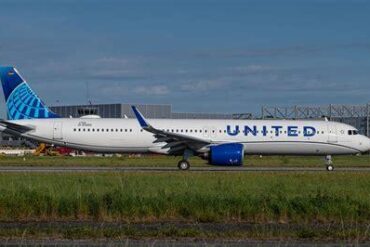
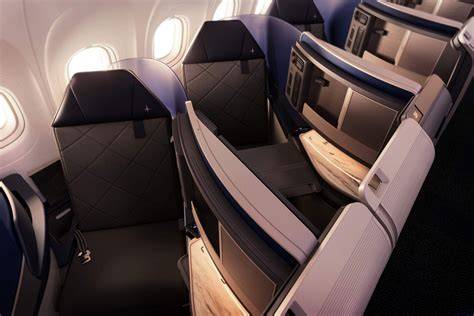
United Airlines approached the A321XLR from the opposite direction, prioritizing premium continuity over capacity. Its three-class, 150-seat layout opens with 20 Polaris business suites fitted with privacy doors, followed by 12 Premium Plus seats and Economy Plus rows. Compensating for the weight of all that furniture required removing 32 seats from the potential maximum. The lighter passenger count is the price of a cabin that protects United’s premium brand across the Atlantic instead of diluting it.
That low-density layout allows United to reach deeper into Europe and to run low-traffic routes profitably on high revenue per seat. United plans to launch Newark to Luxembourg at 3,390 nautical miles and Newark to Marseille at 3,410 nautical miles. Notably, neither is meaningfully farther than Iberia’s sectors, which demonstrates that even premium-heavy configurations settle near the same practical band. The heavy, complex furnishings impose a weight penalty that partially offsets the lower headcount, so the cabin buys revenue rather than range.
Even beyond that band, United’s economics would deteriorate. A mission flown with a fraction of a twin-aisle’s customers cannot match widebody profitability at extreme distance, which is why the carrier holds back from longer Mediterranean markets such as Catania or Olbia and deploys Boeing 767s instead. The A321XLR wins on thin routes within its sweet spot and loses on ultra-long sectors where a widebody’s belly capacity and passenger volume still pay the bills.
The Longest Routes Today And Those Yet To Come
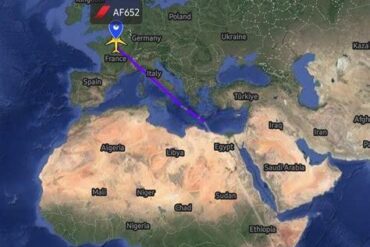
The current leaderboard of A321XLR long-haul itineraries tops out just above the 3,600-nautical-mile mark. Iberia holds the record with Madrid to Santo Domingo at approximately 3,617 nautical miles (6,699 km), with an outbound block time just over nine hours. Iberia also operates Madrid to Washington Dulles at 3,326 nautical miles (6,160 km), a sector clocking slightly more than 9.5 hours. Aer Lingus ranks high with Dublin to Nashville at roughly 3,190 nautical miles (5,908 km).
American Airlines is positioned to take the top spot. Its planned daily seasonal service between Philadelphia and Vienna, launching May 6, covers 3,755 nautical miles (6,954 km) with an anticipated westbound block time exceeding 9.5 hours. That would make it the longest scheduled A321XLR route in the world. The route forms part of a broader European expansion, with Reykjavík, Vienna and Porto joining the portfolio according to statements from American’s International Operations Vice President José A. Freig.
To make the record-setting sector work against a volatile jet stream, American will rely on fuel savings from a premium-heavy layout like United’s. Its A321XLR fleet carries 155 seats with Flagship Suite business class and a dedicated premium economy section. Despite four more seats than United, American is banking on high demand and premium fares to offset fuel costs. The schedule runs from summer through the holidays into early January, meaning the return leg to Philadelphia will encounter the season’s peak jet stream at the absolute ceiling of narrowbody transatlantic endurance.
Payload Competes With Fuel For The Same Weight
The economics of the A321XLR hinge on maximum takeoff weight as a fixed cap. Every pound of cabin luxury directly steals miles from range, so a carrier that maximizes range must accept lower payload, and a carrier that fills the cabin must accept a shorter sector. Extended-range itineraries demand that weight otherwise allocated to passengers and baggage be reserved for fuel. When the jet serves high-traffic hubs, airlines must cap fuel load to preserve takeoff weight for customers.
The permanent RCT compounds the problem by occupying underfloor space that would otherwise carry high-yield belly freight alongside passenger baggage. A widebody enjoys a spacious lower deck and dual revenue streams from passengers and cargo; the A321XLR flies on cabin revenue alone. That design constraint eliminates the traditional widebody safety net and forces the upper-deck configuration to carry the flight’s entire financial burden. On short segments, a standard single-aisle wins on lower empty weight and a twin-aisle wins on dual-source revenue, leaving the A321XLR economically viable only on medium-range to ultra-long-haul thin routes, typically between 3,000 and 4,000 nautical miles, where its fuel-burn advantage over widebodies offsets the complete loss of freight revenue.
That envelope, not the 4,700-nautical-mile brochure figure, is what airlines purchased. The A321XLR is a route-opener and a widebody replacement, and the schedules show operators extracting its trip-cost advantage across a band the airframe can serve profitably, reliably and with reserves intact.