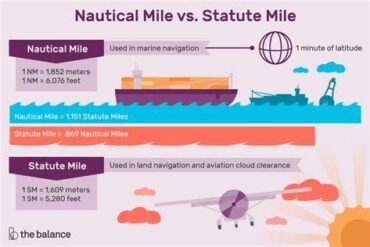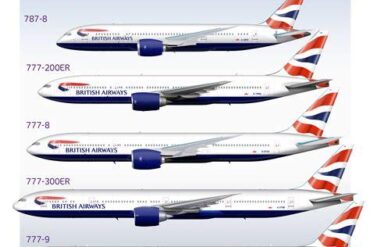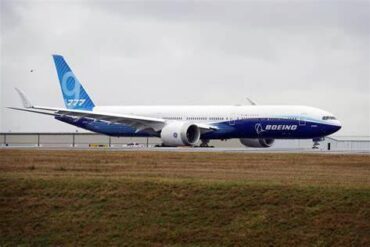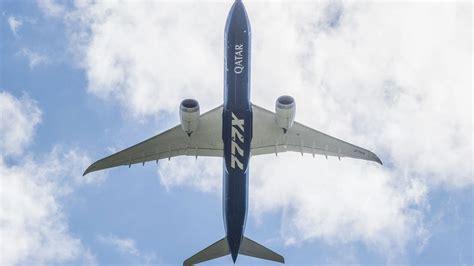
The Boeing 777-9 has quietly gained a remarkable 715 nautical miles of advertised range, at least on paper. Boeing previously listed the aircraft with a range of 7,285 nautical miles, but its official website now gives the 777-9 an “up to” range of 8,000 nautical miles. That is an increase of almost 10%, yet there has been no corresponding announcement describing a structural modification, new fuel system, major weight reduction, or other redesign that would obviously explain such a dramatic improvement.
The change is particularly interesting because the Boeing 777-9 is already one of the most closely watched widebody aircraft in the world. As the largest member of the 777X family, it is intended to replace the 777-300ER while delivering substantially better fuel efficiency, modern composite wings, and the new GE9X engines. A 715-nautical-mile increase in published range therefore raises an obvious question: did Boeing substantially improve the aircraft, or did the company simply change the assumptions behind the number?
The answer is important because advertised aircraft range is not a single immutable physical characteristic. It is a performance figure produced using a particular combination of assumptions. Payload, fuel reserves, passenger configuration, cruise speed, altitude, weather, routing and other operating conditions can all affect how far an aircraft can travel. Consequently, two range figures can describe the same airplane under different scenarios without either number being technically false.
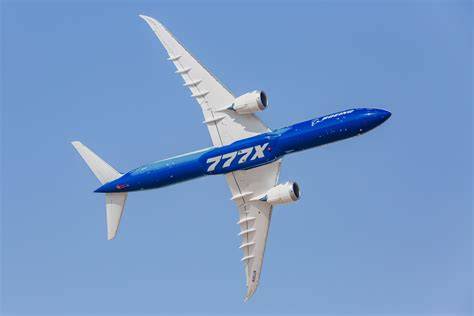
Boeing 777-9 Range Rises From 7,285 to 8,000 Nautical Miles
Boeing’s earlier published figure for the 777-9 was 7,285 nautical miles. The number was surprisingly modest when placed beside the aircraft’s predecessor. The 777-300ER, which the 777-9 is designed to replace, has commonly been advertised with a range of approximately 7,370 nautical miles. On paper, that meant the new-generation 777-9 appeared to have a slightly shorter range than the aircraft it was replacing.
That result was always somewhat counterintuitive. The 777-9 incorporates a much more efficient aerodynamic design, including an enormous composite wing, folding wingtips, and improved engines. The GE9X was developed specifically to provide major efficiency gains over previous-generation powerplants. The aircraft also benefits from extensive work on structural weight and aerodynamics. It would therefore be reasonable to expect the 777-9 to offer either greater range, lower fuel consumption, or a combination of both.
Boeing’s updated figure changes that picture. In June 2026, the company quietly increased the 777-9’s advertised range to up to 8,000 nautical miles. The difference is 715 nautical miles, representing roughly a 9.8% increase compared with the previous figure. That is not a trivial adjustment. It is enough to materially change how airlines and passengers might perceive the aircraft’s long-haul capabilities.
There is an equally interesting change elsewhere in the family. Boeing has increased the advertised range of the shorter 777-8 from 8,745 nautical miles to up to 9,500 nautical miles, an increase of approximately 8.6%. The 777-8 has always been the ultra-long-range member of the family, but the revised figure makes its capabilities even more striking. The updated numbers also demonstrate that the 777-9 change was not necessarily an isolated event.
Why Aircraft Range Numbers Can Change Without a Redesign
The most important point is that an aircraft does not have one simple “range number” that applies to every flight. When manufacturers publish a maximum range, they are describing a particular operating scenario. Change the scenario and the resulting range can change significantly.
For example, an aircraft carrying a very heavy payload needs more fuel simply to carry that payload. It may also require more fuel because of the additional thrust required during takeoff and the increased drag throughout the flight. If the manufacturer instead calculates a range using a lighter payload, the aircraft can potentially travel farther.
Fuel reserves are another major variable. Commercial aircraft cannot simply consume every kilogram of fuel in their tanks and land with nothing remaining. Regulations and operational procedures require reserves for contingencies, diversions and other circumstances. The amount of fuel retained for those purposes affects how much can theoretically be used for the planned journey.
Cruise conditions matter as well. An aircraft flying at a particular altitude and speed can have a different fuel burn from the same aircraft operating under another flight profile. Engine efficiency, atmospheric conditions, temperature and winds all influence performance. The jet stream can be particularly important on long-haul routes, because strong tailwinds can reduce the time and fuel required to cover a given ground distance.
This means Boeing could have changed the assumptions used for its published range without changing the fundamental airframe. The company’s new 8,000-nautical-mile figure may reflect greater confidence in the aircraft’s performance, a revised configuration, different reserve assumptions, or simply a more favorable set of operating conditions.
The 777-9’s GE9X and Efficiency Advantage
The GE9X remains central to understanding the 777-9’s performance. Developed by GE Aerospace for the 777X family, the engine represents a major technological step beyond the engines used by earlier 777 variants. Its large fan, advanced materials and high bypass ratio were designed to deliver lower fuel consumption while producing the enormous thrust required by the 777X.
The engine is only one part of the equation, however. The 777-9’s enormous composite wing is another major contributor to efficiency. Its folding wingtips allow Boeing to install a very large wing while keeping the aircraft within airport gate and taxiway constraints. In flight, the wing provides the aerodynamic benefits of a large span without imposing the same ground-handling limitations.
The combination of new engines and advanced aerodynamics is why the 777-9 can be substantially more efficient than earlier 777 generations even if its original advertised range appeared disappointing. An aircraft does not need to have a dramatically longer maximum range to be economically superior. It can instead use less fuel to carry the same payload over the same distance.
The revised range figure therefore should not necessarily be interpreted as evidence that Boeing suddenly discovered hundreds of extra nautical miles of hidden capability. It may simply mean that Boeing’s public performance assumptions have evolved as the 777X program has progressed through testing and certification.
The 777-9 Versus the 777-300ER
The comparison with the 777-300ER is especially revealing. The older aircraft has an advertised range of around 7,370 nautical miles, slightly greater than the 777-9’s former 7,285-nautical-mile figure. Taken literally, that could make the newer aircraft appear inferior in one of the most basic measures of long-haul capability.
But such a conclusion would be misleading.
The 777-9 was never designed simply to fly farther than the 777-300ER. Its fundamental mission is to carry a large passenger and cargo payload over long distances while consuming considerably less fuel. Airlines care about the economics of completing a mission, not merely the theoretical distance shown on a manufacturer’s website.
A more efficient aircraft can therefore be more valuable even if two aircraft have similar published ranges. If the 777-9 can carry a comparable payload while burning significantly less fuel, the airline gains lower fuel expenditure and potentially better economics. The newer aircraft also incorporates a modern cabin, updated systems and a significantly improved aerodynamic package.
The updated 8,000-nautical-mile figure nevertheless eliminates the awkward headline comparison. The 777-9 now has a published range comfortably above that of the 777-300ER, reinforcing Boeing’s argument that the new aircraft combines very large capacity with long-haul capability.
Qantas Shows Why Published Range Is Not a Hard Limit
One of the clearest real-world examples of why advertised range needs careful interpretation comes from Qantas and its Perth-London service.
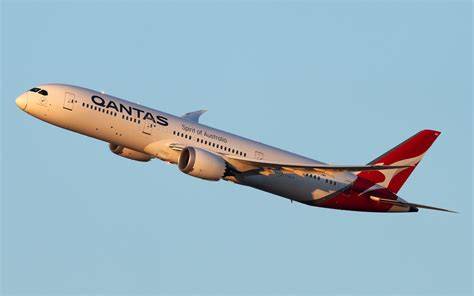
The Boeing 787-9 was previously advertised with a range of approximately 7,635 nautical miles. The straight-line distance between Perth and London is roughly 7,829 nautical miles, already around 194 nautical miles longer than the published aircraft range. Yet Qantas has operated the route commercially with 787-9 aircraft carrying passengers and baggage.
Actual flight paths can be even longer than the straight-line distance. Recorded Qantas flights on the route have reached roughly 7,930 to 8,020 nautical miles, depending on routing and conditions. Those flights are not empty ferry flights. They carry passengers, baggage and other payload, while also arriving with appropriate fuel reserves.
The example demonstrates that a published range figure is not a wall that an aircraft physically cannot cross. Instead, it represents a particular performance calculation. An aircraft capable of flying 8,000 nautical miles under one set of assumptions does not necessarily have an absolute maximum range of exactly 8,000 nautical miles.
This is precisely why Boeing’s 777-9 adjustment deserves careful interpretation. The aircraft did not necessarily acquire 715 nautical miles of physical capability overnight. Rather, Boeing changed the number it chooses to publish as its representative maximum range.
Boeing and Airbus Are Both Revising Their Range Figures
The phenomenon is not unique to Boeing. Airbus has also increased the advertised ranges of its A350 family, which makes the broader industry context even more important.
The A350-900 originally entered service with a maximum range of approximately 8,100 nautical miles, while Airbus now describes the aircraft as capable of flying up to 8,600 nautical miles in its current configuration. The A350-900ULR can go considerably farther.
The A350-1000 provides an even more striking example. Earlier figures placed its range around 7,750 to 8,100 nautical miles, depending on the configuration and source. Airbus now says the aircraft is designed to fly up to 9,100 nautical miles, with the ultra-long-range version extending farther still.
Boeing has simultaneously adjusted the 787-9’s advertised range to up to 8,300 nautical miles. These revisions show that manufacturer specifications can evolve over the life of an aircraft program. They also create a problem for anyone attempting to rank aircraft purely from published specifications.
If Boeing calculates its 777-9 range under one set of assumptions and Airbus calculates its A350-1000 range under another, the resulting numbers are not necessarily directly comparable. A 9,100-nautical-mile figure and an 8,000-nautical-mile figure may sound dramatically different, but the practical difference for a specific airline route could be much smaller.
Why Boeing 777-9 and Airbus A350-1000 Comparisons Are Difficult
The same issue applies to fuel consumption and operating costs. Boeing promotes the 777X as offering 10% lower operating costs than the competition and claims a 5% improvement in specific fuel consumption compared with the competing engine. Airbus, meanwhile, has previously promoted the A350-1000 as offering a 15% lower trip cost and a 7% lower cost per seat than the 777-9 under particular assumptions.
At first glance, those claims appear contradictory. If Boeing says the 777-9 is substantially cheaper to operate while Airbus says the A350-1000 has lower trip costs, which manufacturer is correct?
The likely answer is that the two companies are not necessarily measuring exactly the same thing.
Operating economics can depend on assumed seat count, passenger load, cargo, flight length, fuel price, aircraft utilization, maintenance costs, crew costs and the precise definition of operating cost. Even small changes in assumptions can influence the final result.
This is why airline purchasing decisions rarely depend on one glossy specification. Airlines have access to detailed performance data that goes far beyond the headline numbers displayed on a public website. They can model individual routes, payload requirements, airport restrictions, fuel prices and expected utilization before committing to an aircraft.
For passengers and aviation enthusiasts, however, manufacturer figures remain useful as long as they are treated as reference points rather than absolute truths.
What the 715-Nautical-Mile Increase Really Tells Us
The biggest lesson from Boeing’s 777-9 range revision is not that the aircraft suddenly became 715 nautical miles better. It is that aircraft performance numbers require context.
The new 8,000-nautical-mile figure could reflect improved confidence in the 777X’s certified performance, revised assumptions, configuration changes, or a combination of factors. Without Boeing providing the precise methodology behind the old and new figures, it is impossible to assign the entire 715-nautical-mile increase to a specific technical improvement.
That uncertainty does not make the new number meaningless. Quite the opposite. Boeing’s willingness to publish a higher figure suggests that the company now believes the 777-9 can credibly be marketed within that performance envelope. As the aircraft moves closer to entering commercial service, real-world airline operations will ultimately provide the most useful evidence.
The 777X’s eventual performance will be judged not by how impressive a number looks on a specification sheet, but by what airlines can actually achieve with passengers, baggage and cargo onboard. Routes, winds, payloads, reserves and operational restrictions will determine the practical answer.
The Bigger Lesson for Aircraft Performance Claims
The 777-9 is not the only aircraft whose specifications can look different depending on how they are presented. Across commercial aviation, manufacturers naturally emphasize the operating scenarios in which their products perform best. That is a normal part of selling extremely expensive aircraft.
The same caution applies even more strongly when examining military aircraft and weapons. Claims about range, speed and operating costs can involve very different definitions, making direct comparisons especially dangerous. A headline number can be technically defensible while still giving an incomplete picture of real-world capability.
For the Boeing 777-9, the revised figure is best understood as a change in the published performance envelope rather than proof of a sudden physical transformation. The aircraft remains the same basic 777X design, but Boeing’s public representation of what it can achieve has changed substantially.
Ultimately, the 715-nautical-mile increase makes the 777-9 more competitive on paper, particularly against the Airbus A350 family and the older 777-300ER. More importantly, it provides a useful reminder that aviation specifications are rarely as simple as they appear.
The real story behind the number is therefore not merely that Boeing added 715 nautical miles to the 777-9’s advertised range. It is that the meaning of an aircraft’s range depends on the assumptions hidden behind the number. Until those assumptions are understood, comparing aircraft by maximum range alone can produce a remarkably misleading picture of what modern airliners are actually capable of doing.