If there’s one phrase that strikes instant dread into the heart of any aviator mid-flight, it’s this from air traffic control: “N1234A, copy a phone number.” This seemingly innocuous message carries weight far heavier than its short length implies. It is the aviation equivalent of seeing red-and-blue flashing lights appear in your rearview mirror. For pilots, it marks the beginning of an uncertain process with potentially career-altering consequences.
The In-Flight Alarm Bell Pilots Fear Most
Hearing this message usually indicates a pilot deviation (PD) — a breach of the Federal Aviation Regulations (FARs) or an airspace infraction. Whether it stems from an unintentional altitude deviation, flying into restricted airspace, or failing to follow instructions, ATC is duty-bound to initiate an incident report. The moment a controller tells a pilot to copy a phone number, the aircraft’s crew knows they’ll soon face a post-landing conversation that’s far from routine.
This conversation doesn’t usually mean law enforcement will be waiting on the tarmac. However, it can mark the start of a formal FAA review process. The phone call typically involves a supervisor or ATC manager and is conducted over a recorded line. It could be as benign as a corrective discussion or escalate into a violation investigation. For commercial pilots, this has implications far beyond the immediate embarrassment—it could jeopardize their professional trajectory.
Deviation Triggers: The Missteps That Matter Most
Airborne deviations constitute the majority of pilot deviation cases, representing 77% of recorded incidents. These often include climbing or descending without clearance, straying from assigned headings, exceeding speed restrictions below 10,000 feet, or failing to adhere to visual flight rules (VFR) when conditions require instrument flight rules (IFR). Even something as subtle as mishearing a radio instruction or becoming distracted during a critical moment can initiate a deviation.
The remaining 23% involve surface incidents, which carry even greater risk due to the proximity of other aircraft, vehicles, and ground personnel. Among the most severe is a runway incursion—when an aircraft enters a runway without proper ATC clearance. These incidents can result from communication breakdowns, taxiing errors, or simply crossing a hold short line at the wrong time. The consequences are not only regulatory but potentially fatal.
FAA Enforcement And The Weight Of Penalty
The FAA has a full spectrum of disciplinary actions at its disposal. For minor first-time infractions, a remedial training session with a certified flight instructor might suffice. In more serious cases, a pilot may be subject to a “709 Ride”, a formal re-examination to verify proficiency. Failing that can result in certificate suspension or even revocation, effectively ending a career in aviation. Civil penalties can reach $50,000, and in egregious cases—such as flying under the influence—criminal prosecution is not off the table.
From Punishment To Prevention: The Compliance Era
Fortunately, aviation oversight has evolved. Today’s FAA emphasizes a compliance philosophy, which encourages safety through education rather than punishment. Pilots who self-report deviations via NASA’s Aviation Safety Reporting System (ASRS) are often shielded from penalties, provided the mistake wasn’t intentional or reckless. This proactive system is informally known as aviation’s “get out of jail free card.”
The intent behind asking for a phone call is not solely punitive—it serves to remove complex conversations from the crowded ATC frequencies, preserving real-time communication for operational needs. But the gravity remains. When a pilot hears that message mid-flight, they are thrust into a high-stakes reflection of everything that’s occurred in the cockpit up to that moment.
A Culture Of Redundancy And Mutual Oversight
Modern cockpits operate under strict procedural discipline, especially during critical phases like taxi, takeoff, and landing. Below 10,000 feet, a sterile cockpit rule applies, banning all non-essential communication to minimize distraction. Every action is verified, every clearance read back verbatim. Pilots employ the challenge and verify protocol, where even simple actions—like crossing a hold short line—are confirmed between both pilots.
Physical reinforcement techniques like the Five-Finger Method, where a pilot literally points to a charted taxi route or hold point, help cement situational awareness and reduce errors. It is this constant interplay of verification and redundancy that helps guard against the very deviations that lead to the dreaded ATC message.
Automation Isn’t A Shield From Accountability
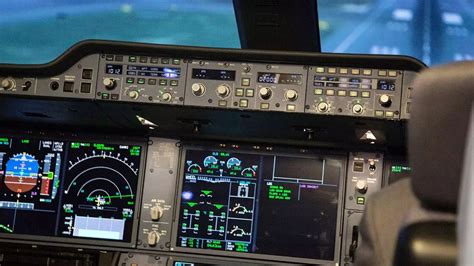
While autopilot and the Flight Management System (FMS) reduce workload, pilots are never passive. Continuous monitoring, manual inputs, and vigilant scanning remain non-negotiable. Any lapse in attention can lead to an automated system doing the wrong thing, unnoticed until it’s too late. The industry has long warned of skill atrophy due to excessive reliance on automation—a concern echoed in official FAA safety bulletins.
The 2013 Safety Alert For Operators (SAFO) noted that “continuous use of autoflight systems could lead to degradation of the pilot’s ability to quickly recover the aircraft from an undesired state.” Pilots are trained not only to fly manually but to monitor automation as if they were flying manually, a paradox that defines the demands of modern aviation.
The Weight Of Responsibility Never Lifts
Ultimately, the responsibility for safe aircraft operation lies squarely with the flight crew. Every readback, every clearance, every maneuver is scrutinized by regulators, employers, and the pilots themselves. In the airline industry, mistakes are dissected, and near-misses treated with the same intensity as accidents.
To the public, the phrase “copy a phone number” might sound harmless. To a pilot, it is the start of a process that questions their judgment, their situational awareness, and potentially their career longevity. It is a warning shot—subtle but deafening. That’s why the words are feared. And that’s why every pilot flies with an uncompromising commitment to precision.
Because in aviation, there are no small mistakes.