Flight Level 180, commonly abbreviated as FL180, is one of the most foundational terms in the world of aviation, yet for many newcomers, its meaning remains shrouded in confusion. In this article, we delve deeply into the concept of FL180, clarifying not only what it stands for, but also its significance, global variations, and the role it plays in maintaining air traffic safety. Whether you’re a budding pilot, a flight simulation enthusiast, or just a curious mind, understanding FL180 is essential to grasping how high-altitude air travel works.
What Does FL180 Mean?
FL180 stands for Flight Level 180, which equates to 18,000 feet above mean sea level (MSL) under standard atmospheric pressure conditions. The prefix “FL” is used to distinguish Flight Levels from true altitudes expressed in feet. While 18,000 feet may sound straightforward, the definition of a flight level goes beyond a simple elevation.
Flight levels are expressed in hundreds of feet. Therefore, FL180 literally translates to 18 × 100 = 18,000 feet. However, these levels are not measured in absolute terms but rather in reference to a standardized pressure setting of 1013.25 hPa (29.92 inHg), known as standard atmosphere pressure.
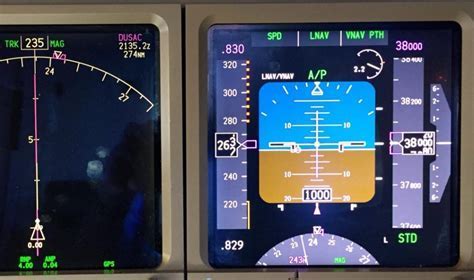
The Significance of Standard Pressure Settings
Above the transition altitude—18,000 feet in the United States—pilots reset their altimeters to the standard pressure rather than local barometric pressure. This ensures that all aircraft flying at high altitudes are on a uniform pressure plane, regardless of geographic location or local weather systems. This uniformity is essential for vertical separation between aircraft, significantly enhancing flight safety.
If pilots were to use local pressure settings at these heights, discrepancies could arise from varying meteorological conditions across regions, leading to potential altitude mismatches between aircraft. FL180 thus marks the beginning of pressure-based flight levels, forming part of the International Civil Aviation Organization (ICAO) standards.
Transition Altitude: When and Where FL180 Applies
The transition altitude is not globally fixed. In the United States, the transition altitude is exactly 18,000 feet, meaning that FL180 is the first designated flight level. But this is not universal:
- In New Zealand, the transition altitude is typically 13,000 feet.
- In many parts of Europe, it ranges from 3,000 to 6,000 feet, depending on the terrain and airspace structure.
- In mountainous regions, the transition altitude may be set even higher due to elevated terrain.
Thus, while FL180 is a standardized term, the altitude at which flight levels begin is region-dependent. Pilots must always refer to Aeronautical Information Publications (AIPs) or local ATC instructions when operating internationally.
Why FL180? The Reason Behind the Threshold
The decision to set FL180 as the transition point in the U.S. is based on practical and regulatory reasons. Below this level, aircraft altitudes are reported with reference to the local altimeter setting (QNH), which aligns altitude readings with the actual elevation of the terrain. Above FL180, the use of standard pressure (QNE) simplifies air traffic control by removing the need for continuous pressure updates as aircraft move between pressure zones.
At FL180 and above, aircraft are typically involved in longer-distance or high-performance flights, where uniform separation is critical. These levels are rarely used for short-haul flights or general aviation operations, which usually stay below the transition altitude.
Direction-Based Flight Levels: East vs. West
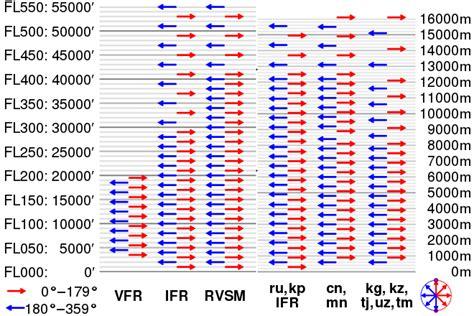
Flight levels are not arbitrarily assigned; they also incorporate directional logic to further prevent mid-air collisions. In accordance with ICAO semicircular rules, the assignment of odd and even flight levels corresponds to the aircraft’s compass heading:
- Aircraft flying eastbound (0° to 179°) use even-numbered flight levels (e.g., FL180, FL200, FL220).
- Aircraft flying westbound (180° to 359°) use odd-numbered flight levels (e.g., FL190, FL210, FL230).
This system ensures that opposing traffic is naturally separated vertically by at least 1,000 feet, further enhancing aeronautical safety without reliance on onboard collision avoidance systems alone.
Flight Levels vs. Altitudes: Understanding the Distinction
The terms “altitude” and “flight level” are often mistakenly interchanged. However, the difference is vital:
- Altitude refers to a height above mean sea level (MSL) and is read with a local pressure setting.
- Flight Level refers to a standardized pressure-based altitude, used above the transition altitude.
For instance, if a pilot is flying at 18,000 feet using local pressure (say, 30.05 inHg), their indicated altitude would differ from another pilot using the standard 29.92 inHg. This difference can create potential conflicts. By using flight levels like FL180, pilots standardize altitude reporting for safer separation.
FL180 and Flight Simulation Enthusiasts
For those involved in flight simulation, understanding FL180 is pivotal for realism and accuracy. Whether using Microsoft Flight Simulator, X-Plane, or any other platform, setting your altimeter to 29.92 inHg at FL180 is necessary when climbing through the transition altitude, especially when using ATC plugins or networks like VATSIM or IVAO. Failing to do so may cause altitude discrepancies and confusion among virtual controllers and fellow pilots.
Moreover, understanding when to switch to flight levels versus staying at true altitudes plays a major role in filed flight plans, cruise performance calculations, and navigation system inputs. Realistic operation demands adherence to these protocols.
Myths and Misconceptions About FL180
There are a few persistent myths about flight levels, particularly FL180:
- Myth: Flight levels are only used in large commercial jets.
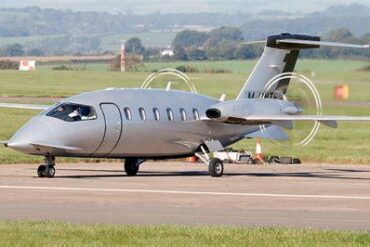
Fact: Any aircraft that climbs above the transition altitude must operate using flight levels, including corporate jets and some turboprops.
- Myth: FL180 is the same altitude globally.
Fact: While FL180 equals 18,000 feet, its designation as the first flight level varies based on local transition altitudes.
- Myth: Flight levels apply only above 10,000 feet.
Fact: In some countries, flight levels are used as low as 3,000 feet.
These misconceptions stem from localized flying habits and simplified training material. However, accurate knowledge becomes especially important during international operations or simulator realism settings.
The Legacy and Future of Flight Levels
The use of flight levels, including FL180, dates back decades and is deeply embedded in aviation regulations and international agreements. However, advancements in technology are gradually influencing change. With the advent of Performance-Based Navigation (PBN), ADS-B, and dynamic airspace allocation, some aviation authorities are exploring more flexible altitude systems.
Still, FL180 remains an industry standard, and its clarity and simplicity ensure it continues to be used across general aviation and commercial sectors alike. It represents a universal checkpoint, where pilots and controllers align on a shared standard, ensuring coherence in the skies.
Conclusion: FL180 as a Cornerstone of Controlled Flight
Understanding FL180 is not simply a matter of knowing it’s 18,000 feet. It involves grasping the interplay between standard pressure, regional transition altitudes, and international flight protocols. For pilots, controllers, and simulation hobbyists, FL180 is far more than just a number—it’s a threshold that marks entry into a more standardized, highly regulated zone of flight.
In the crowded and high-speed environment of high-altitude flight, clarity and consistency are non-negotiable, and FL180 plays a vital role in ensuring both. As aviation continues to evolve, the principles behind FL180 will likely remain unchanged: unified standards for unified safety.