Air travel has trained millions of passengers to move instinctively: shoes off, laptops out, pockets empty. Yet when a Transportation Security Administration officer pauses and gently swabs your phone or laptop, the routine suddenly feels less ordinary. The small cloth swipe across your device is not random theater. It is a targeted chemical screening designed to detect microscopic traces of explosive compounds. Understanding what this procedure means — and what it does not mean — can replace anxiety with clarity.
Why the TSA Swabs Phones and Laptops
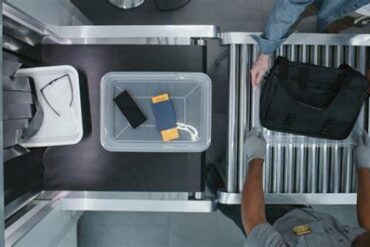
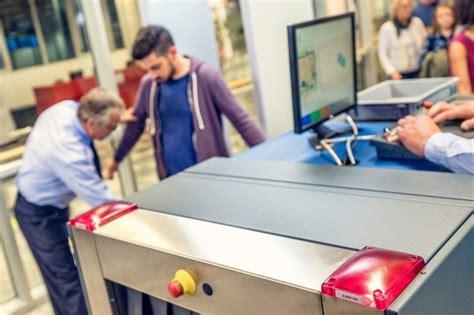
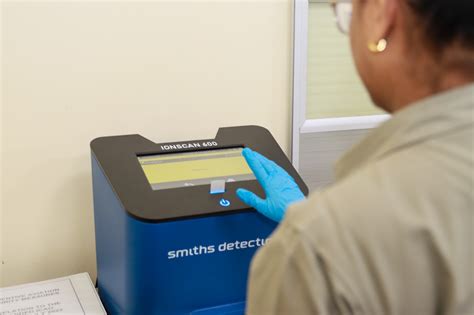
Airport security operates on layered defense. Metal detectors identify metallic threats. X-ray scanners visualize dense objects. Chemical swabbing adds another layer: trace detection. The swab collects invisible particles from surfaces and feeds them into a machine known as an Explosive Trace Detection system, often abbreviated as ETD. This device analyzes chemical signatures in seconds.
The goal is specific. Officers are looking for compounds commonly associated with explosives, including nitrates and glycerin-based substances. These are known as “precursor chemicals,” ingredients that can be used in improvised explosive devices. The presence of such residues does not automatically indicate wrongdoing, but it does trigger closer examination.
TSA policies evolve over time, and electronics are routinely screened because they can conceal components or substances internally. Additionally, devices frequently travel through varied environments, increasing the likelihood of trace contamination.
What the Swab Actually Detects
The swab itself is deceptively simple. It is a small, sterile cloth that wipes across your device, hands, or bag. Once inserted into the ETD machine, the system uses ion mobility spectrometry, a technique that identifies molecules by how they move in an electric field. It sounds like laboratory science because it is.
The system is sensitive enough to detect minuscule amounts of explosive-related chemicals — quantities invisible to the human eye. Nitrates are common targets because they are core ingredients in many explosive formulations. Glycerin is another compound sometimes flagged, and here the situation becomes interesting. Glycerin also appears in everyday products such as lotions and hand sanitizers. A passenger who recently applied sanitizer may unknowingly carry trace residues.
This explains why swabs are not proof of criminal behavior. They are preliminary screening tools. The machine is designed to err on the side of caution.
Random Selection vs. Behavioral Screening
In many cases, the swab is random. Randomized procedures strengthen security by making patterns unpredictable. However, an officer may also initiate a swab if something appears irregular during the X-ray scan or if behavior raises additional screening criteria.
Behavioral detection is not about intimidation; it is about observation. Officers are trained to look for inconsistencies, unusual nervousness, or discrepancies in screening results. That does not mean anxiety equals guilt. Airports are stressful environments, and security personnel are aware of that. The swab functions as a clarifying tool, not an accusation.
What Happens If You’re Selected
The most important action is simple: follow instructions calmly. Non-compliance can result in a civil notice of violation and substantial fines. Cooperation streamlines the process and prevents escalation.
If the public setting feels uncomfortable, you may request a private screening. This option exists precisely to respect passenger dignity. It may extend the process slightly, but it remains a standard accommodation.
Once the swab is processed, outcomes fall into two categories. A negative result means you proceed normally. A positive result — which can occur due to benign contamination — leads to additional screening. Officers may ask questions, inspect bags more closely, or repeat the test. False positives are not rare. Security systems are calibrated to detect potential risk first and sort context second.
Powering On Electronics: The Overlooked Rule
Beyond chemical swabs, one electronics rule can significantly impact your screening experience: ensure your device powers on. Officers may request that you turn on your phone or laptop to confirm it functions as a legitimate device rather than a disguised container. A dead battery introduces delay and scrutiny.
This requirement highlights the broader principle behind TSA procedures. Security is not about inconvenience for its own sake. It is about verification. Devices must be operational. Surfaces must be free of explosive residue. Each step reduces uncertainty in a high-risk environment.
Perspective: Routine, Not Personal
Being swabbed does not mean you are under suspicion in a criminal sense. It means your screening process included an additional safety layer. Modern air travel depends on systems designed to catch rare but severe threats. Chemical trace detection is one of those systems.
Airports are ecosystems of friction and efficiency, caution and motion. The small swipe across your phone is part of a global security architecture built on chemistry, physics, and probability. When viewed through that lens, the process shifts from alarming to understandable — a brief scientific checkpoint in the journey from departure gate to destination.