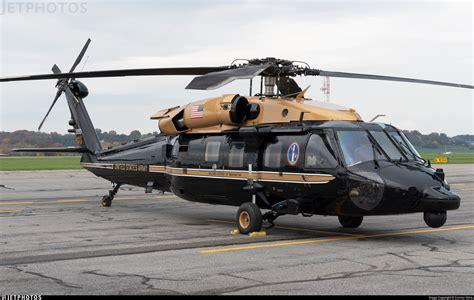
In the intricate world of military aviation, few terms spark as much curiosity among civilians and even some defense enthusiasts as the callsign ‘PAT 25’. To the untrained eye, it might appear to be a helicopter model, a tail number, or a classified operation identifier. In reality, the truth is far more nuanced, rooted in the U.S. Army’s elite Priority Air Transport (PAT) system, a framework that plays a critical role in swiftly moving key personnel and time-sensitive cargo across strategic locations.
The emergence of ‘PAT 25’ in recent news coverage surrounding the Washington D.C. helicopter and aircraft incident has brought the designation into the public spotlight. Contrary to speculation, PAT 25 is not the name of a helicopter—it’s a callsign, a temporary yet significant radio identifier assigned to a particular military flight.
Understanding the Meaning Behind ‘PAT’
The acronym ‘PAT’ stands for Priority Air Transport, a status used by the U.S. military to designate flights carrying VIPs, high-ranking officials, urgent cargo, or mission-critical assets. These aren’t your typical supply drops or standard troop movements. Rather, PAT flights occupy a unique tier in military logistics—where time, discretion, and security take absolute precedence.
Flights labeled with PAT designations are operated under specialized protocols. They typically involve aircraft from Operational Support Airlift (OSA) commands, most notably the 12th Aviation Battalion, which provides transportation services for senior U.S. Army personnel and government leaders. The aircraft involved can be fixed-wing or rotary-wing, depending on the nature of the mission and the geography involved.
Crucially, the number that follows the ‘PAT’ prefix—in this case, ’25’—serves merely as a flight sequence identifier. It’s not a reference to an aircraft model like the UH-60 Black Hawk or AH-64 Apache, nor is it linked to a tail number or tactical squadron code. Instead, it functions as a unique flight reference for air traffic control, ground support crews, and command centers monitoring the mission.
The Operational Role of PAT Flights
What distinguishes a PAT flight from a routine military mission is its level of urgency and classification. These flights may carry:
- Generals and high-level commanders en route to strategic briefings or active conflict zones.
- Senior civilian officials or diplomats involved in defense operations.
- Sensitive or classified materials, such as encrypted communications devices or field command packages.
- Medical evacuations involving critical personnel requiring discreet, rapid transport.
PAT missions are treated with exceptional priority in both planning and execution. They often receive:
- Dedicated airspace corridors to avoid delays or detours.
- Immediate ground clearance at departure and destination zones.
- Secure landing zones with enhanced security protocols.
These flights can also override other non-essential air traffic, especially when operating near military bases, defense installations, or embassy compounds.
Callsigns and Radio Protocols: Why ‘PAT 25’ Matters
To those unfamiliar with military aviation terminology, a callsign may seem like an abstract or trivial label. But in military logistics, a callsign like PAT 25 serves as a real-time command flag. It informs air traffic control towers, runway crews, and other aircraft in the airspace that this mission demands priority handling.
Once air traffic controllers see a PAT identifier, they immediately understand that this flight carries elevated operational importance. The system ensures that these missions are conducted with minimal delay, maximum discretion, and top-tier logistical support.
In fact, PAT callsigns are among the few military identifiers that sometimes appear in civil aviation monitoring systems, although with limited detail. The callsign itself offers no public hint of who or what is onboard, maintaining strict operational security (OPSEC).
Can You Track PAT Flights Like PAT 25?
One of the most common questions regarding military flights is whether they can be tracked using civilian flight tracking tools like FlightRadar24, ADS-B Exchange, or FlightAware. The short answer: it depends.
If a PAT flight is operating in non-classified airspace and has its transponder active, it may briefly appear on public tracking websites. These instances are usually rare and carefully controlled. In such cases, observers might see:
- The PAT callsign, such as PAT 25, in the flight information.
- Altitude and speed, along with general heading.
- Departure or arrival data, especially if the destination is a known military base or airstrip.
However, most military aircraft flying on PAT missions operate “dark”—meaning they disable transponders or encrypt their signals to avoid detection. This helps protect the mission’s confidentiality, prevents interference, and ensures the safety of high-ranking passengers.
There have been instances where aviation hobbyists or amateur spotters have managed to glimpse PAT flights by chance. But even then, what they see is limited and often inconclusive. The payload, passenger list, and exact mission purpose remain undisclosed, as is standard protocol.
Aircraft Typically Assigned to PAT Missions
PAT flights are not tied to a specific aircraft model, but rather to the mission type. That said, certain aircraft are frequently used due to their size, versatility, and range. These include:
- Cessna UC-35: A small jet ideal for transporting VIPs quickly across regional or continental distances.
- Beechcraft C-12 Huron: A twin turboprop aircraft used by various branches of the U.S. military for personnel and light cargo.
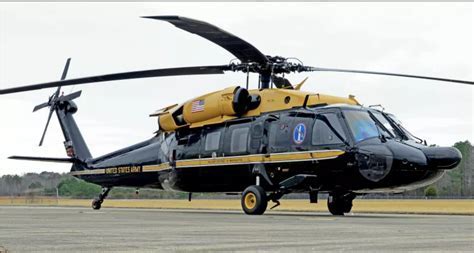
- UH-60 Black Hawk: Though more commonly seen in combat support roles, it’s also used for urgent short-range transport missions when rotary capabilities are essential.
- CH-47 Chinook: In rare cases, when heavy or bulky equipment must be moved discreetly and fast.
All these aircraft can be assigned the PAT callsign designation, depending on the urgency and security level of the flight.
How PAT Flights Fit Into U.S. Military Strategy
The existence of the Priority Air Transport system is not just logistical—it’s strategic. In an age where military and diplomatic maneuvers must often be executed with extreme speed and precision, PAT flights allow the Department of Defense (DoD) and allied agencies to move chess pieces across the board without bureaucratic bottlenecks.
It ensures that when a high-ranking commander needs to inspect forward operating bases, or when classified equipment needs to be hand-delivered from a defense contractor to a secure facility, there is an established, protected, and prioritized channel to do so. PAT callsigns communicate to every support node in the chain that this is not a routine mission—it’s critical.
Additionally, PAT operations frequently intersect with inter-agency missions involving the CIA, NSA, State Department, or Homeland Security, particularly when foreign operations or international travel are involved. This multi-agency coordination relies heavily on PAT flights for timing-sensitive deployments that can’t afford civilian transit risks.
The Discreet Nature of PAT Flights
Unlike the grand visibility of presidential or VIP convoys, PAT flights are purposefully inconspicuous. They don’t arrive with flashing lights or broadcast their arrival. Instead, these aircraft land at secluded military strips or designated airfields near government buildings, often with classified flight manifests and unmarked transport units waiting on the ground.
This layer of discretion is crucial, especially when the nature of the cargo or personnel could become a security risk if exposed. PAT flights minimize digital footprints, limit personnel access, and rely on rapid execution from the moment engines start to final wheels-down.
Final Thoughts: More Than Just a Callsign
To the average observer, ‘PAT 25’ may seem like an arbitrary military code. But within the framework of U.S. defense operations, it’s a precision tool—a symbol of urgency, authority, and high-level logistics. It stands not for the aircraft, but for the mission it represents. Whether it’s ferrying a general to a frontline coordination site, delivering a secure comms unit to a foreign outpost, or transporting policy advisors to a black site, PAT flights ensure the U.S. military stays fast, agile, and secure.
So the next time you see a military helicopter labeled PAT 25 cruising quietly over the horizon, know that you’re witnessing a part of a far larger, faster-moving system—one designed to keep the gears of global defense running smoothly under the radar.