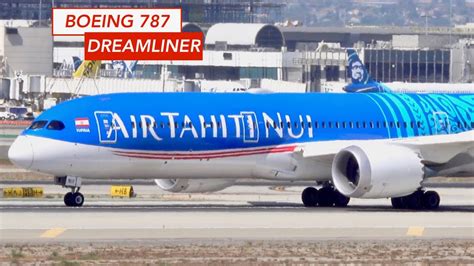
The Boeing 787 Dreamliner has secured a pivotal enhancement that reshapes its operational potential, as the Federal Aviation Administration (FAA) officially approves an increased maximum takeoff weight (iMTOW) upgrade. This technical evolution translates directly into roughly 400 additional miles of range, giving airlines newfound flexibility to extend routes, increase payloads, or optimize both simultaneously without compromising efficiency.
This approval is not a theoretical improvement but an immediately actionable one. Boeing has already begun progressing aircraft equipped with the upgraded specifications through final delivery stages, signaling a rapid transition from certification to real-world deployment. The decision reflects a clear alignment between manufacturer innovation and airline demand, where operational versatility has become the defining currency of modern long-haul aviation.
Engineering the Extra Miles: How iMTOW Transforms Performance
At the heart of the upgrade lies a structural refinement that allows the 787-9 and 787-10 variants to carry significantly more weight. For the 787-9, that increase reaches approximately 10,000 pounds, while the larger 787-10 gains up to 14,000 pounds of additional capacity. This extra weight can be allocated dynamically—either as additional fuel for longer routes or as increased passenger and cargo loads for higher revenue potential.
The implications are immediate and tangible. Airlines can now push the Dreamliner deeper into ultra-long-haul territory or enhance profitability on existing routes by maximizing load factors. Rather than forcing a trade-off between range and payload, the upgrade dissolves that limitation, effectively expanding the aircraft’s mission envelope.
This shift also reflects Boeing’s responsiveness to direct airline feedback. Carriers have consistently emphasized the need for greater operational flexibility, particularly as global travel demand becomes less predictable and more segmented. The iMTOW upgrade answers that call with precision.
Airline Strategy Unlocked: New Routes, Stronger Networks
For airlines like Air New Zealand, the first to adopt the enhanced 787-9, the upgrade represents more than incremental improvement—it’s a strategic enabler. With longer reach and higher payload capacity, the airline can strengthen its ultra-long-haul network, connecting distant markets with fewer compromises.
The added capability supports not only passenger travel but also high-value cargo operations, a growing revenue stream in long-distance aviation. By extending range without sacrificing efficiency, airlines can open previously unviable routes or reinforce existing ones with better economics.
Network planners now gain a powerful tool: the ability to fine-tune routes based on seasonal demand, shifting capacity between passengers and freight as market conditions evolve. This adaptability is especially critical in regions where traffic volumes fluctuate but long-distance connectivity remains essential.
Dreamliner Legacy: Efficiency That Redefined Aviation
The Dreamliner’s dominance is rooted in its exceptional fuel efficiency, delivering approximately 25% lower fuel consumption compared to the aircraft it replaced. This efficiency has enabled over 530 new nonstop routes worldwide, many of which were previously considered economically impractical.
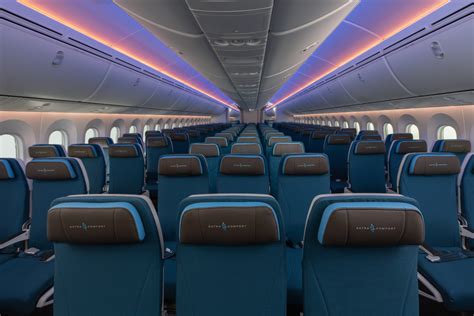
Its ability to serve “long and thin” routes—markets with modest but consistent demand—has fundamentally reshaped airline network strategies. Instead of funneling passengers through congested mega-hubs, airlines can now offer direct connections between secondary cities, improving passenger experience while reducing travel time.
The iMTOW upgrade amplifies this advantage. By extending range and payload simultaneously, the Dreamliner becomes even more capable of bridging distant city pairs, reinforcing its role as the most adaptable widebody aircraft in service today.
Market Impact: Strengthening Boeing’s Flagship Widebody
With more than 1,200 deliveries and a backlog stretching into the thousands, the 787 already holds the title of the best-selling widebody aircraft in history. This latest enhancement only strengthens its position, particularly as competition with the Airbus A350 intensifies.
The A350, while technologically advanced, operates at a larger capacity bracket. The upgraded 787—especially the 787-10—now moves closer to parity in capability while retaining its advantage in operational efficiency and route flexibility. This balance makes it an increasingly attractive option for airlines seeking to optimize both scale and cost.
Recent orders underscore this momentum. Major commitments, including Qatar Airways’ substantial 2025 order and Delta Air Lines’ first-ever Dreamliner purchase in 2026, highlight sustained confidence in the platform. The iMTOW upgrade adds another compelling reason for airlines to invest in the program.
A Future-Proof Workhorse for a Changing Industry
Fifteen years after its debut, the Dreamliner continues to evolve in ways that keep it firmly aligned with industry needs. The FAA-approved weight increase is not merely a technical milestone—it is a strategic upgrade that reinforces the aircraft’s relevance in an era defined by efficiency, flexibility, and network innovation.
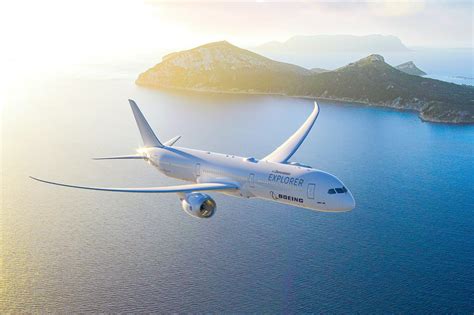
As airlines navigate shifting demand patterns, geopolitical uncertainties, and sustainability pressures, aircraft that can adapt quickly hold a decisive advantage. The enhanced 787 delivers exactly that: a platform capable of stretching farther, carrying more, and operating smarter.
In practical terms, those extra 400 miles represent far more than distance. They symbolize a broader expansion of possibility—new routes, stronger economics, and a future where long-haul travel is not just longer, but significantly more efficient and connected.