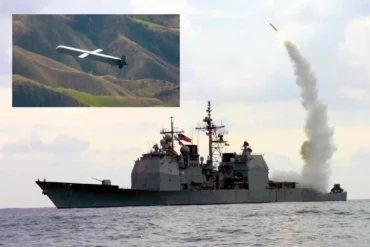
The U.S. Navy has formally approved a major expansion of the Tomahawk cruise missile modernization and recertification program, locking in long-range strike relevance well into the next decade. Backed by a $380.8 million contract modification awarded to Raytheon Technologies, the decision underscores a strategic truth shaping modern naval warfare: munitions depth and adaptability now matter as much as platforms themselves. By extending the life, reliability, and combat relevance of existing Tomahawk inventories through 2029, the Navy is reinforcing its ability to deliver precision effects on day one of any high-end conflict.
This contract modification, confirmed on January 21, 2026, was issued by Naval Air Systems Command under an existing agreement with Raytheon in Tucson, Arizona. Identified as modification P00010 under contract N0001925C0071, the award expands previously authorized work and raises the total definitized contract value to approximately $476.5 million. The scope includes Lot Five and Lot Six Tomahawk recertification and modernization, depot-level maintenance, replacement hardware, and associated spares, including rotable pool assets. All work is scheduled for completion by April 2029, aligning with broader Navy and joint-force modernization timelines.
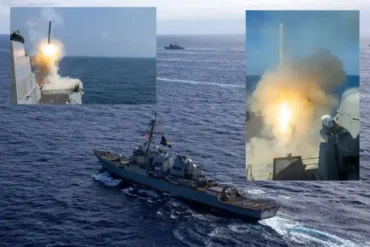
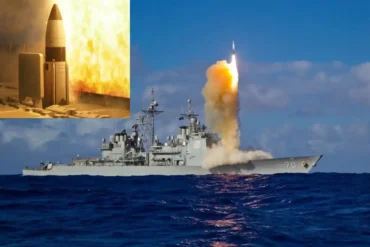
At its core, the program is about sustaining credible mass. The Tomahawk Land Attack Missile has long been the Navy’s primary standoff weapon for deep strike, launched from surface combatants and submarines across both the U.S. Navy and the United Kingdom’s Royal Navy. In an era defined by contested logistics and stretched industrial capacity, the ability to refresh and extend existing missile stocks offers a decisive operational hedge. Rather than waiting solely on new-production weapons, the Navy is ensuring that thousands of proven rounds remain viable, upgradeable, and immediately employable.
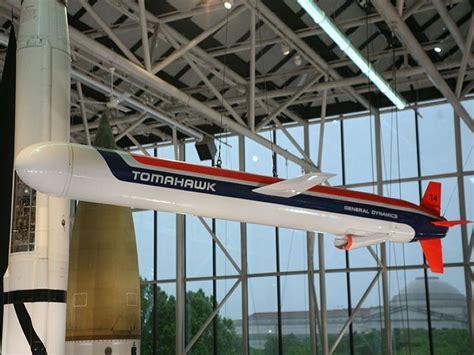
Tomahawk’s enduring value lies in its design philosophy. It is a subsonic, all-weather cruise missile optimized for low-altitude penetration and long-range precision, capable of navigating complex routes to evade defenses. After launch via a solid-propellant booster, a turbofan engine sustains cruise flight over hundreds of nautical miles. Guidance blends inertial navigation, terrain contour matching, scene matching, and GPS, creating a layered approach that enhances survivability and accuracy. Block IV and Block V variants are assessed by the Navy at ranges of roughly 900 nautical miles, placing critical targets far from relative safety.
One of Tomahawk’s most consequential features is its two-way satellite communications link, introduced with Block IV. This capability allows in-flight retargeting, loitering over an area of operations, and post-strike battle damage assessment using an onboard camera. These are not incremental upgrades; they fundamentally change how commanders think about strike weapons, turning them into responsive assets rather than fire-and-forget munitions. As maritime and joint operating pictures evolve in real time, Tomahawk can evolve with them.
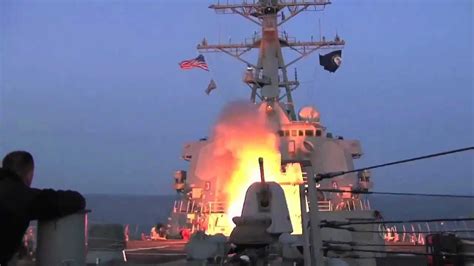
The current modernization effort is centered on mid-life recertification. At this point in the missile’s service life, critical components are replaced, restoring reliability and unlocking approximately 15 additional years of operational use. Recertification also provides the opportunity to insert Block V enhancements. Early Block V missiles have already been modernized from existing Block IV rounds, and the Navy plans to bring the entire Block IV inventory through the same pipeline. This approach effectively converts legacy stock into a more capable force without the delays inherent in full new production.
Block V improvements focus heavily on resilience. Navigation and communications upgrades are designed to deliver more robust performance in environments saturated with electronic warfare, jamming, and spoofing. These threats are no longer theoretical; they are baseline assumptions in peer and near-peer conflict planning. By hardening Tomahawk’s ability to navigate and communicate under pressure, the Navy is preserving its confidence that the missile will reach its target even in heavily contested battlespaces.
Two Block V sub-variants define Tomahawk’s expanded mission set. The first, Maritime Strike Tomahawk, or Block Va, introduces a seeker capable of engaging moving ships at sea. This restores a long-range, over-the-horizon anti-surface capability that forces adversary naval forces to operate under constant threat, well beyond the reach of most shipboard weapons. The second, Block Vb, replaces the legacy warhead with the Joint Multiple Effects Warhead System, broadening effectiveness against hardened and complex targets while retaining a single-missile standoff profile. Together, these variants significantly widen the tactical and strategic utility of the Tomahawk family.
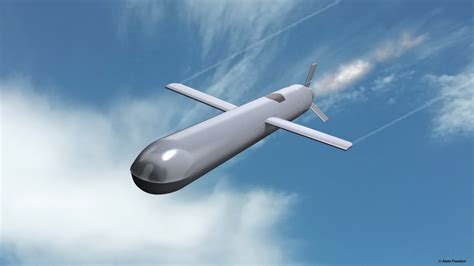
The January 2026 contract award also highlights how deeply Tomahawk is woven into joint and allied force design. Funding associated with the modification spans Navy weapons procurement, Army missile procurement, and Marine Corps procurement accounts, along with nearly $100 million in Foreign Military Sales funding. This reflects the missile’s expanding role beyond traditional naval launch platforms. The U.S. Army’s Typhon Mid-Range Capability has already demonstrated land-based Tomahawk launches, giving combatant commanders a distributed, mobile strike option that complicates adversary targeting and defense planning.
Foreign Military Sales funding further reinforces the missile’s role as a cornerstone of allied interoperability. By sustaining partner inventories within the same modernization and depot ecosystem, the United States reduces the risk that allies face readiness shortfalls during prolonged crises. It also ensures that coalition strike planning rests on a shared, trusted weapon system with common capabilities and upgrade paths.
By approving expanded Tomahawk modernization through 2029, the U.S. Navy is making a calculated, pragmatic investment. Rather than chasing novelty for its own sake, it is doubling down on a combat-proven system, updating it to survive and thrive in the most demanding threat environments. The result is a long-range strike force that remains flexible, scalable, and immediately relevant, a quiet but formidable pillar of maritime power in an increasingly volatile world.