
Air France has quietly redrawn a significant part of its international map, and the changes are far more sweeping than a routine seasonal adjustment would suggest. A detailed schedule comparison between the airline’s network in early 2026 and its planned operations from November 2026 onward reveals that the French flag carrier has eliminated every remaining flight to seven airports across three continents. For passengers who had grown accustomed to these connections, the closures represent the disappearance of routes that once felt permanent, from a long-standing African capital link to a short-lived Colorado experiment. The carrier remains France’s dominant operator, holding roughly 24% of the nation’s total flights in 2026 according to OAG data, a share that climbs to 37% of all Paris activity and an imposing 58% at its Paris Charles de Gaulle Airport (CDG) hub. That scale makes every deletion notable, because CDG is the third-largest European hub by flights this year, trailing only Turkish Airlines at Istanbul Airport and sibling KLM at Amsterdam, while British Airways at London Heathrow and Lufthansa at Frankfurt follow behind. Even for an airline of that magnitude, pruning seven destinations in a single year signals deliberate strategic discipline rather than accidental attrition.
The Seven Destinations Air France Has Stopped Flying
The seven withdrawals span an unusually wide geography, and each carries its own commercial logic. The first to fall was Bangui, the capital of the Central African Republic, where flights had long been tagged with a stop in Yaoundé and operated with Boeing 777-200ER equipment; the route disappeared in January 2026. Cardiff followed in February 2026 after a remarkably brief appearance on the network, served from CDG with Airbus A320ceo aircraft. March 2026 proved the busiest month of cuts, removing three markets at once: Havana, flown with the Boeing 787-9 as Cuba struggled with fuel shortages and rolling blackouts; Kittilä in Finnish Lapland, operated with A320ceo and A321ceo narrowbodies during the winter season; and Stuttgart, where Air France Hop’s Embraer E170 and E190 aircraft gave way partly to the competitive pressure of high-speed rail connections between Paris and southwest Germany. Tbilisi completed the March wave, with the Georgian capital now served instead by partner Transavia, allowing the group to retain market presence without committing mainline capacity. The final and most consequential departure came in October 2026, when Denver left the map after five years of 777-200ER service.

Why Bangui and Havana Proved Impossible to Sustain
The Bangui withdrawal illustrates how layered a single route decision can be. Insufficient yields, elevated fuel prices, and the inability to overfly Niger combined to stretch flight times and inflate operating costs beyond anything the market could support. Those obstacles were compounded by Air France’s growing partnerships with Afrijet and FlyGabon, which offered the group alternative ways to reach Central and West Africa without absorbing mainline risk. Havana tells a similarly stark story. Cuba’s fuel shortage, widespread blackouts, and broader economic difficulties made reliable operations unrealistic, and Air France was hardly alone in retreating; Air Canada and WestJet also suspended service. Because the underlying conditions remain volatile, a future return cannot be ruled out entirely, but no flights are currently bookable on any of the seven routes, and travelers should treat the closures as firm for now.
Denver: How United Airlines Ended the Colorado Experiment
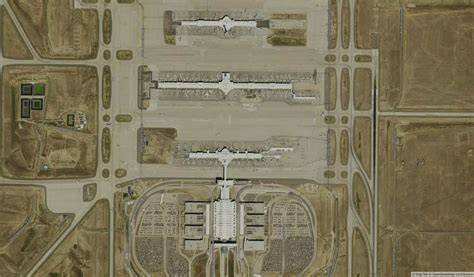
Air France arrived at Denver International Airport (DEN) in 2021, becoming the second carrier to attempt CDG-DEN service after Norwegian’s 2018 and 2019 trial. Its approach was visibly unsettled, shifting between year-round and seasonal operation, adjusting frequency, and rotating equipment in a persistent search for a workable formula. Eventually the airline settled on fewer flights, lower total capacity, a shorter operating window, and more economy-heavy cabins. When United Airlines announced its own DEN-CDG service for next year, Air France elected not to compete, becoming the third European carrier to abandon Denver after Edelweiss in 2025 and Aer Lingus in 2026. Given how frequently the airline revised the route while flying it alone, continuing alongside a dominant hub carrier was never a realistic outcome.
Two New Routes Replacing the Lost Capacity
The retrenchment has been paired with selective expansion, and only two additions have been confirmed so far. On May 14, 2027, Air France will launch CDG to Nashville International Airport (BNA) with three weekly flights aboard the Airbus A350-900, making it the fourth European operator on the route alongside Aer Lingus, British Airways, and Icelandair. Three days later, on May 17, the carrier will begin regular service to San Diego International Airport (SAN), also three weekly with the A350-900. Air France has flown to San Diego before, but only for major conferences such as the American Society of Hematology gathering; a scheduled operation now places it in direct coexistence with British Airways, KLM, and Lufthansa. Together these two launches suggest a network focused on high-value transatlantic markets where premium demand justifies widebody deployment, rather than on thin routes dependent on a single carrier’s persistence.
What the Shrinking Map Means for Travelers
For travelers, the practical consequences are immediate and specific. Anyone holding plans built around Denver, Havana, Tbilisi, Stuttgart, Kittilä, Cardiff, or Bangui must rebook through alternative gateways, often involving partner carriers or connections via other European hubs. Air France’s refusal to defend Denver against United reflects a broader industry pattern in which hub carriers inevitably win their home markets, while the Stuttgart exit hints that short-haul routes within easy high-speed rail range will keep eroding. The Bangui case demonstrates how geopolitical constraints such as airspace closures can silently price a route out of existence. None of this suggests Air France is retreating globally; the airline remains the anchor of French aviation and a pillar of the SkyTeam alliance. It is simply choosing where to fight, and the full list of seven cancelled destinations now stands as the clearest evidence of that calculus.