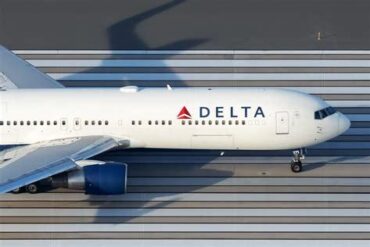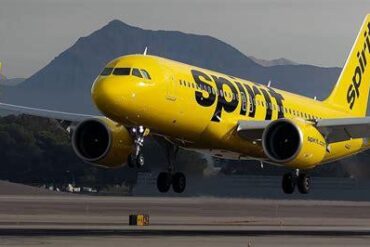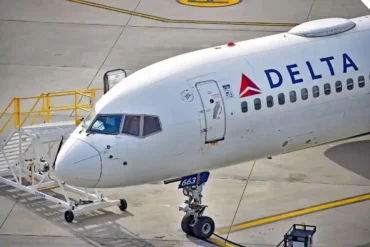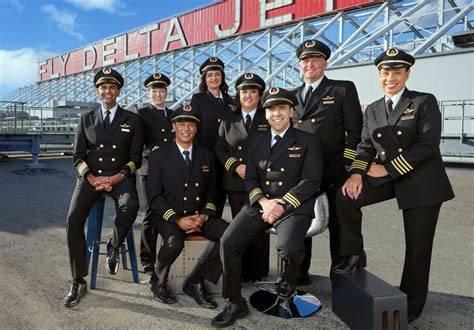
Delta Air Lines has added 66 pilots to its ranks, and the composition of that group tells the story of an industry in swift transition: 16 of the new hires, nearly a quarter of the class, previously flew for Spirit Airlines. The onboarding of this cadre on October 20 marks one of the clearest signs yet that the collapse of Spirit has begun reshaping flight decks at the nation’s largest network carriers, handing Delta a windfall of already-qualified aviators at precisely the moment it needs them.
The Air Line Pilots Association has described the group as the leading edge of a “bow wave” of former Spirit crew members moving into new carriers. That framing reflects both the scale and the speed of the migration. When Spirit ceased operations on May 2, roughly 2,000 highly experienced pilots were displaced overnight, and the union responded by activating a contractual clause granting those aviators preferential interview status. Delta’s pilot leadership then accelerated its review of those applications, a decision that allowed the airline to absorb a large bloc of fully certified pilots without the long lead times that typically govern hiring from regional partners. What makes the October group especially notable is what it lacked: not a single candidate came from the regional carriers represented by ALPA that operate under the Delta Connection banner, a break from the traditional pipeline that has historically fed the mainline seniority list.
The Struggle Behind the Opportunity: Seniority Reset and A320 Readiness
For the former Spirit pilots, the transition is not without a steep cost. The hardest adjustment is almost certainly a reset to the bottom of Delta’s seniority list, a demotion in practical terms that affects scheduling, base preference, aircraft bidding, and long-term earnings potential. Pilots who once held comfortable positions at a low-cost carrier now find themselves rebuilding their careers from the entry point, trading accumulated standing for stability and the prospect of a long runway at a legacy airline. That trade-off is the quiet arithmetic underlying the “bow wave,” and it explains why so many displaced aviators have pursued legacy carriers despite the reset.
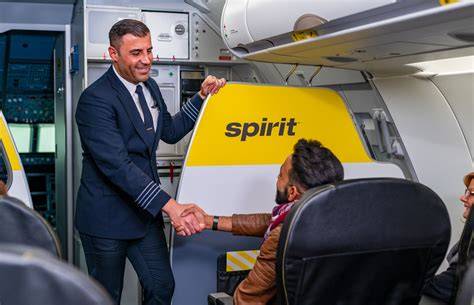
The operational benefit for Delta is equally concrete. The sudden availability of thousands of Airbus A320-family qualified pilots has allowed major network carriers to backfill mandatory retirement gaps far more efficiently than in previous cycles. Retraining a pilot onto a new type rating consumes months of simulator time and instructor capacity, so hiring aviators who already hold A320 experience compresses the path from offer letter to line flying. Delta’s ability to slot former Spirit crews directly into its narrowbody operation has effectively converted a competitor’s failure into a staffing solution, easing pressure on a training pipeline that had become a bottleneck across the industry.
Flight Deck Assignments: New York Leads a Coast-to-Coast Distribution
Delta’s pilot management team shared the initial assignments for the new class on X, revealing a distribution weighted heavily toward the carrier’s most important international gateway. New York received the largest share, with 17 Airbus A320 slots, 11 Boeing 737 positions, and 13 awards on the Boeing 767 widebody, a combination that reflects both the depth of New York’s narrowbody flying and the appeal of widebody bids among new hires. Minneapolis picked up eight Airbus A220 positions, while 717 and 737 crews were directed to Atlanta, Detroit, and Los Angeles.
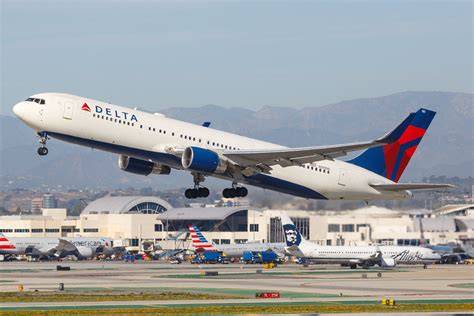
The widebody awards deserve particular attention. A new hire assigned to the 767 is not merely flying a larger aircraft; they are entering the segment of the operation that serves transatlantic routes, the kind of assignment that has historically required years of seniority to secure. The presence of 13 such awards in a single class underscores how aggressively Delta is staffing its international network and how the retirement wave has shortened the traditional queue.
The Year in Numbers: 1,746 Hires and an Aggressive Rebound
The October group brings Delta’s calendar-year total to 1,746 pilots hired against a projected target of 2,168. In its post, Delta Pilots noted that the new class has logged an average of 5,100 flight hours, with individual experience ranging from the 1,550-hour minimum to an outlier of 22,300 hours. Military hires make up 10% of the cadre, and that cohort likely includes the most seasoned aviator in the group. The former-carrier table is a cross-section of the broader industry: six pilots arrived from Envoy Air, five from Frontier, PSA, and the U.S. Air Force respectively, three from Horizon Air, and pairs from Allegiant, Avelo, corporate aviation, Piedmont, SkyWest, Sun Country, and United, with single hires from Breeze, CommuteAir, DHL, EVA Air, GoJet, JetBlue, Kalitta Air, National, Republic, UPS, and the U.S. Navy.
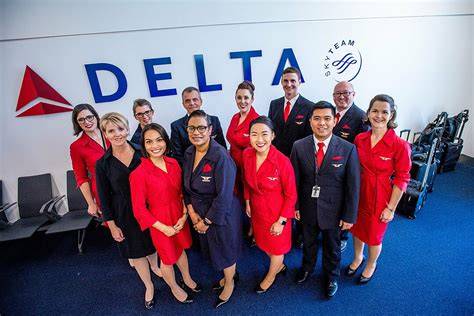
The pace marks a sharp reversal from the industry-wide slowdown in 2025, when Delta added only about 600 pilots. The urgency is driven by demographics: 1,847 Delta captains reached the mandatory retirement age between 2024 and 2026, and the Federal Aviation Administration’s strict age-65 limit for Part 121 operations leaves legacy carriers facing continuous vacancies. Delta, United, and American are projected to onboard more than 6,000 pilots combined by year’s end, a hiring wave that is simultaneously replenishing ranks and reordering the career timelines of an entire generation of aviators.
Why Aviators Choose Delta: Pay, Widebodies, and a Faster Path to Captain
Competition for qualified crews remains fierce, yet a clear preference has emerged among professional pilots favoring Delta over its legacy peers. The carrier’s profit-sharing payouts have surpassed the combined distributions of nearly all its competitors, providing an income stream on top of standard hourly rates, and its career trajectory remains uniquely desirable for aviators who want to fly widebody jets on international routes. The retirement wave, paired with fleet expansion, has created conditions in which new hires can realistically project a path to widebody captain far faster than the historical 20-year industry average.
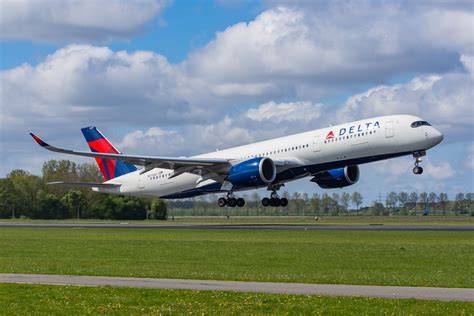
That path is anchored in a diversified widebody fleet of more than 160 active twin-aisle aircraft, the fourth-largest such portfolio in the world. The international network’s cornerstone is a 35-aircraft flightline of Airbus A350-900s, while transatlantic operations rely on a subfleet of 60 Boeing 767 jetliners. Delta is also expanding its Airbus A330neo fleet alongside forward-looking orders for the A350-1000 and Boeing 787-10, commitments that guarantee widebody seats will keep multiplying. For the 16 former Spirit pilots now beginning at the bottom of the list, that growth is the real prize: a seniority number that, in time, will carry them from the A320 to the flight decks of intercontinental jets.