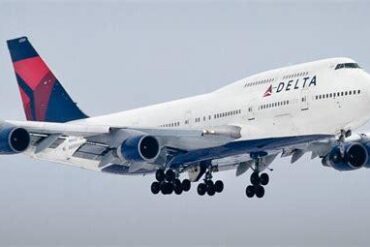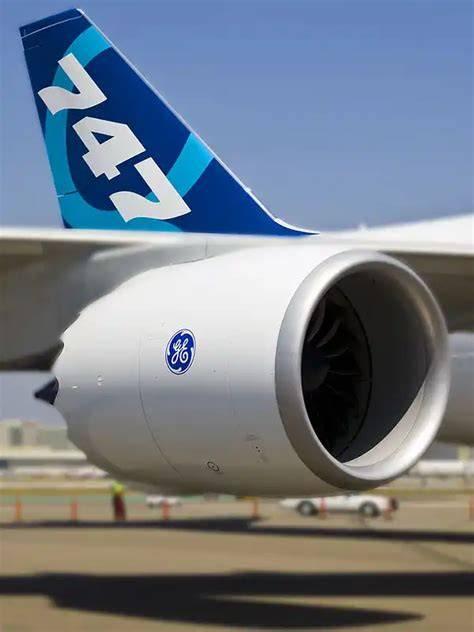
The turbofan hanging beneath a 747’s wing is, financially speaking, the most consequential component of the entire aircraft. Airframe values on the secondhand market have collapsed into a narrow band that barely reflects the metal, wiring and systems bolted together at Everett, yet the four powerplants that make the jumbo jet fly can collectively be worth more than the aircraft they are attached to. Any operator weighing a purchase, a lease extension or a mid-life freighter conversion confronts the same question first: what does a Boeing 747 engine actually cost, and what drives that number up or down by tens of millions of dollars between one airframe and the next?
That question has no single answer because the 747 engine market is genuinely two markets. One is anchored to the 747-8, a production-fresh generation whose powerplants remain frontline technology with decades of service ahead. The other is anchored to the 747-400, a fleet that has drifted into specialist cargo work where every maintenance decision is a calculation about how much value can still be extracted before the airframe becomes uneconomic. The spread between a new GEnx-2B67 and a high-cycle PW4056 is not a rounding error. It is the difference between an industrial investment and a salvage operation, and understanding why that gap exists is the foundation of every sound acquisition decision in the jumbo-jet world.
Why 747 Engine Prices Split Into Two Separate Markets
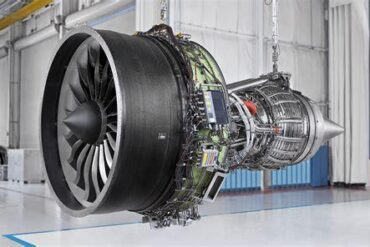
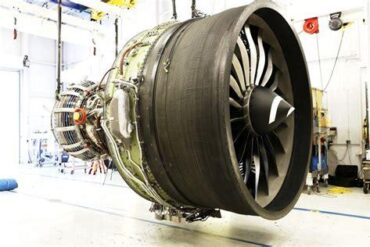
A factory-new GEnx-2B67, the exclusive powerplant of the 747-8, carries a list price of roughly $25 million to $30 million per unit according to figures widely cited from industry discussion. Multiply that across the four pylons of a freighter and the engine package alone represents an outlay north of $100 million, a sum approaching a quarter of what the aircraft itself is worth. That figure is not an abstraction confined to glossy brochures. It defines the capital structure of every 747-8 operation, because an airline that buys four engines at that level is committing to a maintenance philosophy built around protecting and extending the life of an asset whose core alone is worth more than most regional airliners.
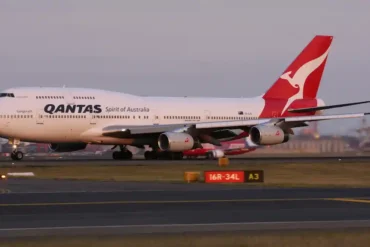
The 747-400 tells a completely different story. A used but airworthy CF6-80C2 or PW4000 series engine typically trades between $2 million and $8 million on the secondary market, and the low end of that band is occupied by powerplants with significant cycle consumption behind them. The appeal is obvious: a cargo operator that needs lift quickly can assemble an engine set for a fraction of the price of a single modern turbofan. The trade-off is equally obvious, buried in fuel burn, reliability statistics and the looming question of when the next shop visit falls due.
The 1970s Baseline and the Real-Term Leap in Engine Cost
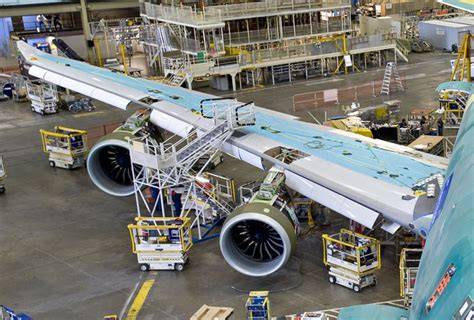
Perspective arrives when the current numbers are set against the aircraft’s origins. In the early 1970s a Pratt & Whitney JT9D for the original 747-100 cost approximately $1 million, which translates to roughly $7 million in today’s money once inflation is accounted for. The fact that a modern GEnx-2B commands three to four times that amount in real terms speaks to an extraordinary escalation in engineering complexity. Carbon-fibre fan blades, ceramic matrix composites in the hot section, and additively manufactured 3D-printed alloy components have all pushed costs upward at a rate that outpaces general inflation, because the performance demanded by contemporary emissions and fuel-efficiency standards simply cannot be met by cheaper architectures.
That escalation is not merely a story about materials. It is a story about what airlines are actually buying. The GEnx-2B delivers roughly a 15% fuel-efficiency advantage over legacy 747-400 powerplants, a margin that compounds across tens of thousands of flight hours and increasingly becomes the deciding variable as emissions regulation tightens. An operator flying long-haul cargo out of European or North American hubs cannot treat that advantage as a nice-to-have; it is the licence to keep operating within environmental boundaries that older engines struggle to satisfy.
What Actually Determines the Final Invoice for a 747 Engine
Raw purchase price is only the entry ticket. The dominant variable in any engine valuation is time since overhaul and the remaining cycles on life-limited parts, because the engine’s economic life is consumed every time it starts and shuts down. Each start-stop cycle marches the discs, shafts and turbine components closer to the moment when a total teardown becomes mandatory, and that teardown can exceed $5 million for a single unit. An engine with generous “green time” remaining is worth dramatically more than an identical model that is only a few hundred cycles from a shop visit, which is why valuation specialists scrutinise cycle counts, shop visit records and back-to-birth traceability before signing off on any price.
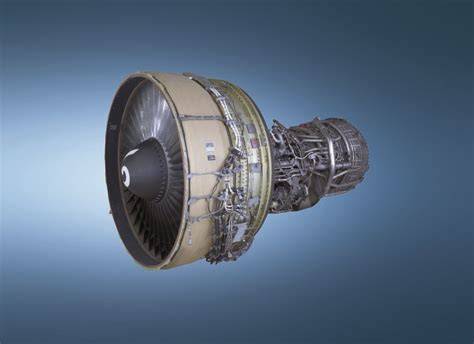
Thrust rating also moves the needle. Engines certified for higher thrust limits to support heavy cargo payloads command premiums over derated units, because the certification itself represents additional capability that operators cannot simply add later. Documentation matters just as much: a complete maintenance history authenticated by factory-authorised repair centres can lift the price of a used engine by a meaningful margin, while an incomplete paper trail forces a discount that reflects the buyer’s assumption of hidden risk.
The pricing landscape for the principal 747 powerplants can be summarised as follows:
| Engine Model | Primary 747 Variant | Condition | Estimated Price (USD) |
|---|---|---|---|
| GEnx-2B67 | 747-8 | New (List Price) | $25M – $30M |
| GEnx-2B67 | 747-8 | Used (Mid-Life) | $12M – $18M |
| CF6-80C2 | 747-400 | Used (Airworthy) | $3M – $8M |
| PW4056 | 747-400 | Used (High Cycle) | $1M – $2.5M |
| RB211-524 | 747-400 | Used (Limited Supply) | $4M – $6M |
Power-by-the-Hour and the Financial Engineering Behind Engine Ownership
The headline acquisition price is increasingly irrelevant to how modern operators actually pay for propulsion. Under power-by-the-hour agreements, airlines pay a fixed fee, frequently somewhere between $250 and $450 per engine flight hour, directly to the manufacturer or a maintenance provider. The arrangement shifts the risk of a sudden, multi-million-dollar repair onto the engine maker’s balance sheet and converts a volatile capital expenditure into a predictable monthly line item. For cargo carriers whose revenue fluctuates with global trade volumes, that predictability is often worth more than a lower sticker price, because it allows route planning and fleet utilisation to proceed without the threat of an unforecast shop visit wrecking quarterly results.
The model changes behaviour in subtle ways. Operators on long-term agreements tend to follow maintenance recommendations more closely, because the manufacturer now has a direct financial interest in avoiding premature wear. Engines are also managed as fleet assets rather than individual units, allowing a powerplant approaching its limits to be pulled and rotated onto a less demanding route profile. This is a genuinely different way of thinking about the cost of a 747 engine, focused on cost per flight hour rather than cost per unit of metal.
Lufthansa Technik, GE Aerospace and the Rise of Part-Out Economics
For the 747-400 fleet, the secondary market has become progressively part-out driven. Rather than spend $6 million overhauling a tired engine, many carriers buy a used unit with green time remaining for around $4 million and scrap the old powerplant for its serviceable components. Specialists at facilities such as Lufthansa Technik and GE Aerospace have built substantial capabilities around this teardown trade, harvesting high-pressure turbine blades, fan blades, accessory gearboxes and engine control units that feed a supply chain with no new-manufacture alternative. This disposable approach to older engines stands in sharp contrast to the way the GEnx-2B is managed, where every maintenance decision is oriented toward extending the life of the core for as long as possible.
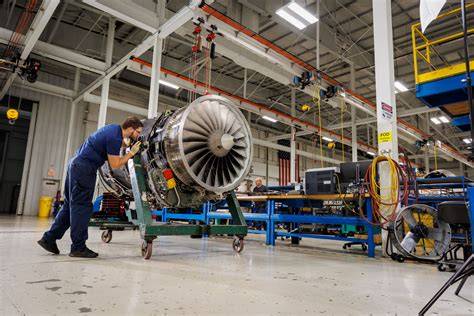
The strategy works only while harvestable material remains available. As the supply of high-quality used CF6 engines dwindles, the operational economics of the 747-400 will eventually reach a cliff edge where the cost of sourcing another engine can no longer be justified by the aircraft’s remaining revenue potential. Operators watching that curve are already planning fleet exit decisions years in advance.
Green-Time Engines, Exchange Fees and the $8–12 Million Middle Path
There is a third route between buying new and buying used: the engine exchange. An airline hands over a timed-out unit and receives a freshly overhauled powerplant from a third-party provider, paying an exchange fee plus a core charge that commonly totals $8 million to $12 million. This avoids the $25 million price tag of a new GEnx while delivering an engine with verified life remaining, and it has become the standard mechanism by which smaller cargo airlines keep 747-400s flying without the capital required for outright acquisition. The value proposition hinges on the quality of the overhaul and the traceability of the returned core, which is why the exchange market rewards operators who maintain meticulous records.
Atlas Air, the GEnx-2B and the Calculus of Long-Term Reliability
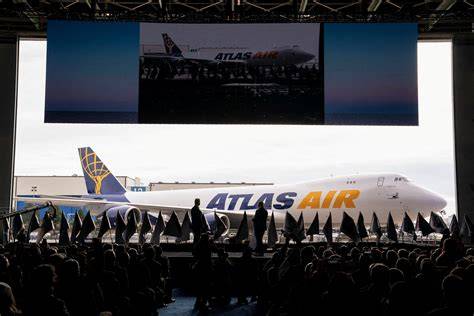
Industry executives frequently describe the engine, rather than the airframe, as the true heart of the asset. For Atlas Air, which operates the world’s largest 747 fleet, the decision to invest in the 747-8 was driven substantially by the long-term reliability of the GEnx engine. Executives have noted that while the initial outlay is steep, the reduction in unscheduled maintenance events and the superior fuel burn make the powerplant a more predictable financial instrument than the older 747-400 engines that dominate the secondhand market. Predictability matters enormously in cargo, where an aircraft on the ground represents lost revenue that no insurance policy fully recovers.
That logic also explains why the GEnx-2B is effectively a slightly de-rated derivative of the engine fitted to the 787 Dreamliner, a design decision that spreads development costs across a far larger production base and keeps the unit price below the record-breaking powerplants found on the newest long-haul twins. The comparison is instructive: a single GE9X for the Boeing 777X can cost around $45 million, more than even the most advanced 747-8 engine, because a twinjet powerplant must be capable of carrying the entire aircraft on one engine in an emergency. The 747, for all its four-engine redundancy, does not actually use the most expensive turbofans in the world. It simply uses four of them.
Three-Engine Ferry Flights, Borescope Plugs and the Hidden Cost of Failure
The real cost of an engine failure is never just the price of the metal. One of the more sobering risks for 747-8 operators surfaced through the much-discussed Atlas Air engine fire in late 2024, where a borescope plug left improperly secured during a routine inspection contributed to an uncontained fire that can destroy a $25 million asset in seconds. Such incidents illustrate why top-tier airlines pay a premium to use only factory-authorised repair centres, treating the additional maintenance cost as insurance against catastrophic loss.
A 747 can technically be ferry-flown on three engines to a maintenance base, but the logistical cost of the resulting disruption is punishing. Grounded cargo capacity and the leasing of a replacement engine can cost an operator upwards of $50,000 per day, which is precisely why many 747 operators keep at least one spare engine in inventory despite tying up millions of dollars in capital that generates no revenue while it sits in a crate. As the global fleet shrinks, the supply of specialised parts such as high-pressure turbine blades continues to tighten, and a carrier that suffers a sudden failure without access to a green-time replacement may find itself forced to retire the entire aircraft.
What the 747 Engine Price Tag Really Tells Operators
Across every variant and every market condition, the cost of a 747 engine remains the single most revealing indicator of the aircraft’s remaining economic life. For the 747-8, a $25 million to $30 million investment per unit buys world-class efficiency and an operational horizon measured in decades. For the 747-400, the $2 million to $8 million used market represents a race against time in which the next major engine fault may be the financial trigger for permanent retirement. The airframe supplies the capacity, but the turbofans dictate the fuel bill, the maintenance schedule and ultimately the profitability of every flight. As more of these quad-jets are repurposed for heavy lifting and specialised cargo, the engine market around them will remain a hazardous environment where a single maintenance error or a shift in fuel prices can move an airline’s bottom line by millions, and where the price of propulsion is, in the end, the price of staying in the sky.