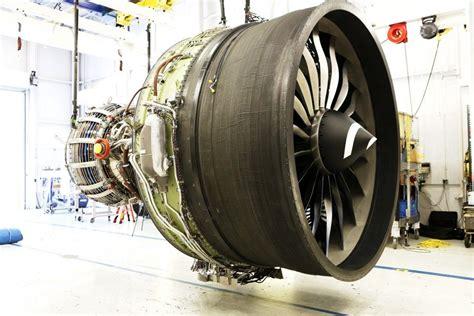
United Airlines has made a decisive move to standardize the power behind its rapidly expanding Boeing 787 Dreamliner fleet—and the choice reinforces a relationship that has defined widebody propulsion for decades. By selecting GE Aerospace’s GEnx engines to power all new 787 deliveries, United is not merely ordering hardware. It is doubling down on performance consistency, operational economics, and long-term fleet strategy.
The agreement adds more than 300 additional GEnx engines, including spares, to support United’s incoming Dreamliners. This expands on the airline’s existing base of over 200 GEnx-powered 787 aircraft. When complete, United will stand as the largest GEnx operator in the world, a position that underscores both scale and confidence in the engine platform.
This decision arrives as United prepares to take delivery of another 140 Boeing 787 aircraft over the coming decade. With 84 additional 787-9s and 56 787-10s on order, the airline is executing one of the most ambitious long-haul fleet renewal programs in North America. Engine commonality is not a minor detail in that equation—it is central to cost control, reliability, and operational resilience.
A Strategic Expansion Anchored in Engine Commonality
United’s current fleet already includes more than 81 active Boeing 787s, spanning all three variants: 787-8, 787-9, and 787-10. The 787-9 forms the backbone with 48 aircraft, complemented by 21 787-10s and 12 787-8s. Standardizing on the GEnx across future deliveries simplifies everything from maintenance scheduling to spare parts logistics and pilot training alignment.
Engine commonality translates into measurable efficiencies. Fewer engine types reduce inventory complexity, streamline technician certification requirements, and allow predictive maintenance systems to operate across a unified data set. For a global carrier running ultra-long-haul routes, those efficiencies compound rapidly.
United’s relationship with GE Aerospace dates back to 1968. Over the decades, the airline has operated multiple GE-powered platforms, including the CF6, GE90, CFM56-7B, LEAP, CF34, and GEnx. That history builds institutional familiarity—not just with the engines themselves but with GE’s support ecosystem, digital diagnostics platforms, and overhaul networks.
GEnx Performance: Reliability That Drives Global Operations
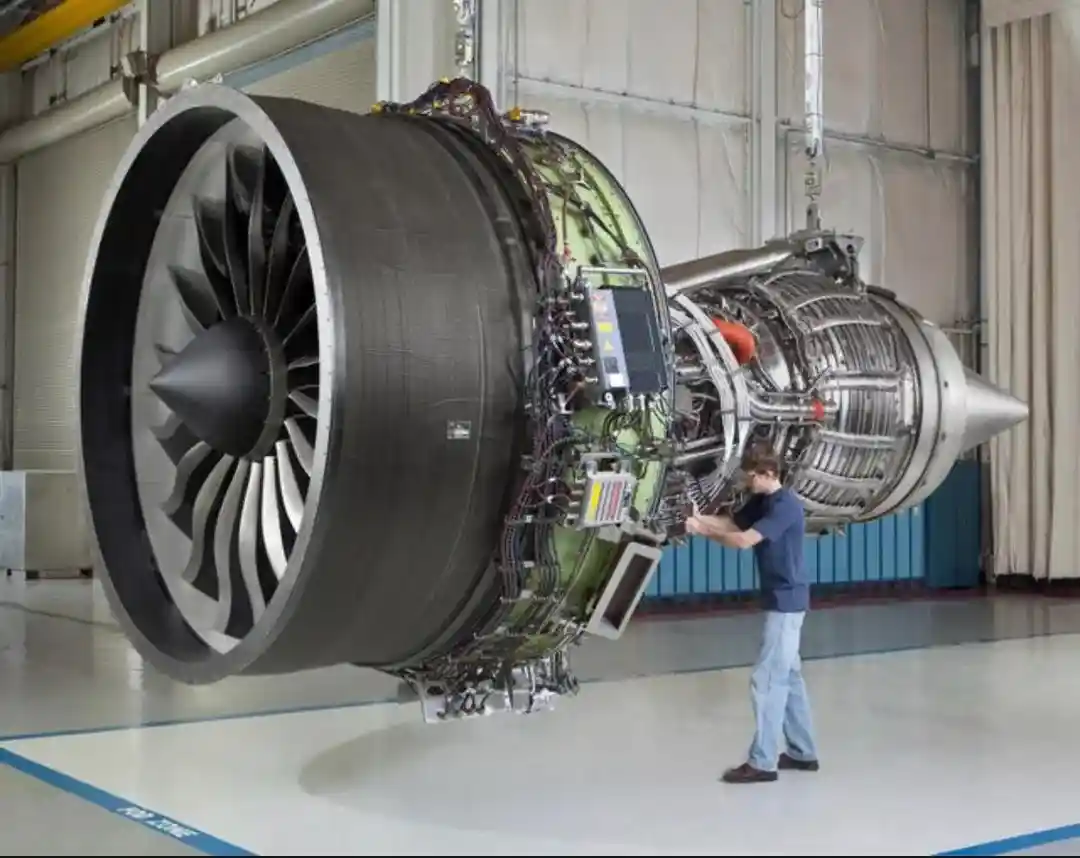
The GEnx engine is not simply a popular choice; it dominates the 787 landscape. More than two-thirds of all active Boeing 787 aircraft worldwide are powered by GEnx engines. It also serves as the exclusive engine for the Boeing 747-8, reinforcing its capability in high-thrust, long-haul environments.
Operational reliability is where the GEnx truly differentiates itself. The engine delivers a dispatch reliability rate exceeding 99.98%, a critical metric in long-haul aviation. Dispatch reliability measures the percentage of flights that depart without delay due to mechanical issues. In practical terms, it means fewer disruptions, tighter schedule adherence, and stronger passenger confidence.
Globally, the GEnx fleet has accumulated more than 70 million flight hours, demonstrating maturity and proven durability. Airlines value engines not just for raw thrust but for how long they remain “on wing”—the duration between major maintenance removals. GE reports that the GEnx offers more than three times the lifespan on wing compared to earlier-generation designs, alongside three times fewer significant defect events.
For an airline operating some of the world’s longest Dreamliner routes, durability is not optional. Every additional day an aircraft remains operational without unscheduled maintenance contributes directly to revenue stability.
Fuel Efficiency and Environmental Performance Advantages
Beyond reliability, United’s decision aligns with efficiency and sustainability targets. On a typical 3,000 nautical mile mission, the GEnx delivers approximately 1.4% lower CO₂ emissions annually compared to its closest competitor. In aviation economics, a percentage point improvement in fuel burn can translate into millions of dollars in savings across a large fleet.
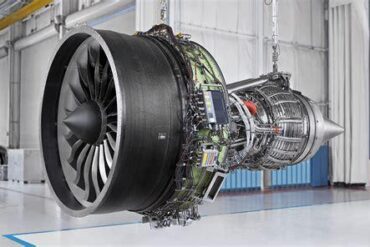
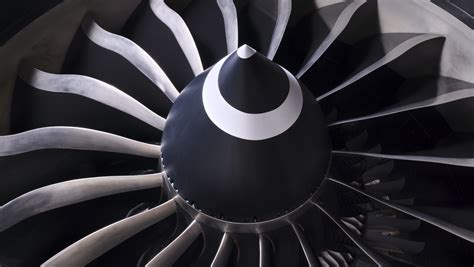
The engine achieves this performance through advanced materials and aerodynamic refinements. It incorporates carbon fiber composite fan blades, reducing blade count to 18 while maintaining structural strength. Composite materials decrease weight and improve aerodynamic efficiency, contributing to lower fuel consumption.
Weight reduction is another subtle but meaningful factor. The GEnx is approximately 300 pounds lighter than competing designs in its class. While 300 pounds may seem modest in isolation, multiply that savings across hundreds of aircraft and thousands of annual flight cycles, and the operational impact becomes substantial.
The engine also features the first FAA-approved 3D-printed component in a commercial jet engine—the power door opening system (PDOS) bracket. Additive manufacturing allows optimized geometries that traditional machining cannot easily produce, improving durability while reducing part complexity.
Supporting United’s Premium Long-Haul Vision
United’s new 787 deliveries will introduce enhanced Polaris business class cabins and some of the largest seat-back entertainment screens in commercial aviation. These cabin investments signal a long-term commitment to premium international travel. Engines, in this context, are not merely mechanical components—they are enablers of network expansion and customer experience reliability.
Higher annual utilization is another advantage. The GEnx provides approximately 3% greater annual utilization, equating to about seven additional days of aircraft availability per year. For a widebody jet generating significant daily revenue on transpacific and transatlantic routes, seven extra days per aircraft is economically powerful.
With more than 1,800 future GEnx deliveries globally, including spares, the engine’s production pipeline reflects sustained industry confidence. That scale ensures continued investment in support infrastructure, digital monitoring tools, and long-term parts availability—factors airlines evaluate carefully when committing to multi-decade fleet plans.
Why GE Aerospace Was the Logical Choice
United’s decision rests on a convergence of factors: operational reliability, lifecycle cost efficiency, environmental performance, and historical partnership strength. The GEnx is not an experimental platform; it is a mature, globally dominant engine with deep data validation across tens of millions of flight hours.
Becoming the largest GEnx operator globally further strengthens United’s bargaining power in maintenance contracts and support agreements. Scale enhances leverage, and leverage improves long-term cost predictability.
In an era when airlines are optimizing fleets for fuel efficiency, range flexibility, and premium passenger demand, the propulsion system becomes a strategic asset. By selecting GE Aerospace’s GEnx engines to power its growing Boeing 787 Dreamliner fleet, United has chosen technological consistency over fragmentation—and operational certainty over experimentation.
That clarity of direction signals more than an engine order. It reflects a calculated commitment to powering the next decade of long-haul growth with proven performance at its core.