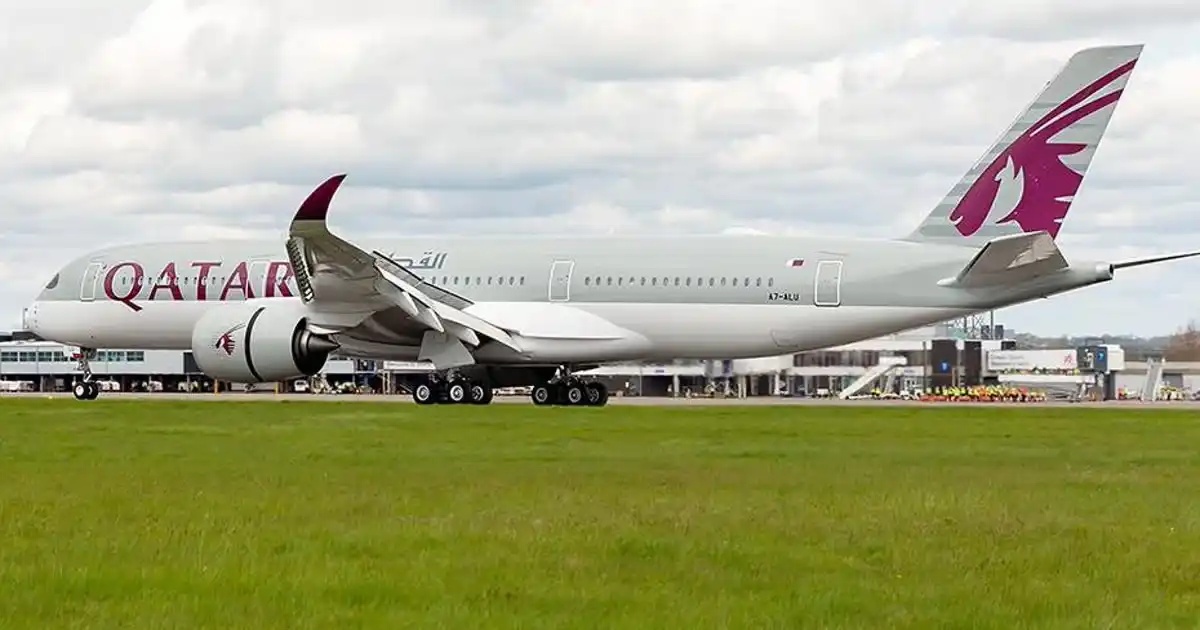
When Qatar Airways announced nonstop flights between Doha Hamad International Airport (DOH) and Cardiff Airport (CWL) in 2018, the aviation industry reacted with genuine surprise. At the time, Cardiff ranked only as the 19th busiest airport in the United Kingdom, far behind giants such as London Heathrow, Manchester, Gatwick, Birmingham, and Edinburgh. Launching a long-haul service with a state-of-the-art Boeing 787-8 Dreamliner into such a comparatively small market appeared to defy conventional airline strategy.
Yet the decision was far from impulsive. It represented a carefully calculated attempt to unlock an underserved region, strengthen Wales’ global connectivity, and establish Qatar Airways as the first Gulf carrier to serve the Welsh capital directly. Although the route ultimately disappeared after only two years, its brief existence remains one of the most fascinating experiments in modern European aviation.
By examining the commercial strategy, government involvement, passenger demand, and changing post-pandemic realities, it becomes clear why Qatar Airways flew to Cardiff—and why the route ultimately failed to survive.
A Bold Expansion Beyond Britain’s Largest Airports
For decades, Qatar Airways concentrated its UK operations around Britain’s strongest aviation markets. London Heathrow naturally became the airline’s flagship destination, while Manchester, Birmingham, Edinburgh, and later London Gatwick developed into successful regional gateways.
Cardiff stood apart from every one of these cities.
Unlike England’s largest metropolitan areas, South Wales possessed no direct long-haul links to the Middle East, Asia, Australia, or much of Africa. Travelers typically began international journeys by driving across the border to Bristol Airport or making the longer trip to Heathrow.
Qatar Airways identified an opportunity to eliminate that inconvenience.
Instead of forcing Welsh travelers to begin their journeys elsewhere, the airline envisioned Cardiff becoming a direct gateway into its rapidly expanding Doha hub, where passengers could connect seamlessly to destinations throughout Asia-Pacific, the Indian subcontinent, the Middle East, and Africa.
For Welsh businesses and leisure travelers alike, the route promised dramatically shorter overall journey times.
Although Cardiff itself generated relatively modest passenger numbers, Qatar Airways believed the wider catchment area of South Wales might sustain an intercontinental service.
Government Incentives Made the Route Possible
The commercial case alone probably would not have justified launching the service.
Instead, one of the biggest factors behind Qatar Airways’ decision was substantial financial support from the Welsh Government together with Cardiff Airport.
Officials viewed the airline as more than simply another carrier—they saw it as a strategic investment in Wales’ economic future.
The objectives extended well beyond aviation.
Government planners hoped direct flights would:
- Increase inbound tourism
- Attract international investment
- Strengthen business links
- Improve Wales’ global profile
- Reduce dependence on English airports
Although the precise value of the incentive package was never publicly disclosed, multiple reports confirmed that financial assistance played a significant role in persuading Qatar Airways to establish the route.
The strategy mirrored similar incentive programs across Europe, where regional governments frequently subsidize airlines to stimulate economic development rather than simply maximize airport traffic.
After all, one successful international route can generate benefits extending far beyond airline ticket sales.
The Boeing 787 Dreamliner Was an Ideal Aircraft
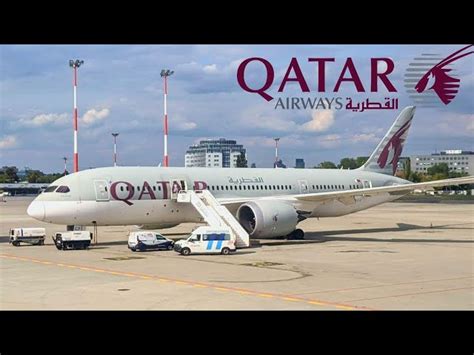
Rather than deploying one of its larger aircraft, Qatar Airways selected the 254-seat Boeing 787-8 Dreamliner.
The aircraft offered several advantages.
Its advanced composite construction significantly reduced fuel consumption compared with older widebody aircraft, while its range comfortably covered the approximately 3,300-mile journey between Doha and Cardiff.
Equally important, the Dreamliner carried fewer passengers than larger aircraft like the Boeing 777 or Airbus A380, making it theoretically better suited to developing markets.
Initially, flights operated daily before settling into a schedule of up to five weekly services, balancing operational efficiency with anticipated demand.
Passengers also benefited from one of the world’s most modern cabins, featuring lower cabin altitude, larger windows, quieter interiors, and Qatar Airways’ renowned premium service.
For travelers departing Wales, the experience rivaled what was available at much larger airports.
Passenger Numbers Were Respectable—but Not Enough
At first glance, the route appeared reasonably healthy.
During 2019, approximately 90,700 round-trip passengers used Qatar Airways’ Cardiff service.
For an airport of Cardiff’s size, that represented a meaningful contribution to annual traffic.
However, airlines measure success using far more than passenger totals.
The statistic that mattered most was the load factor, representing the percentage of seats actually occupied.
In Cardiff’s case, average seat occupancy reached only 59%.
That meant more than four out of every ten seats departed empty throughout the year.
Long-haul operations involve substantial fixed costs including fuel, crew salaries, aircraft ownership, airport fees, maintenance, and catering. Even an efficient aircraft like the Dreamliner struggles to generate sustainable profits when such a large proportion of seats remain unsold.
Premium cabin demand presented another challenge.
Business Class passengers typically contribute disproportionately to airline profitability. Cardiff’s market generated respectable leisure traffic but comparatively limited premium corporate demand, making revenue even harder to maximize.
Competition From Nearby Airports Limited Growth
One obstacle proved especially difficult to overcome: geography.
Although Cardiff served Wales, many potential customers had already become accustomed to flying from larger English airports.
Bristol Airport sits only a relatively short drive away for many South Wales residents, while Heathrow offers an enormous selection of nonstop international destinations.
Those airports presented several competitive advantages:
- Higher flight frequencies
- More airline choices
- Additional alliance connections
- Greater schedule flexibility
- Lower risk of disruption through multiple daily departures
Changing long-established passenger habits proved much harder than simply introducing a new route.
Even travelers living within Cardiff’s catchment area often continued choosing larger airports because they offered more departure times and greater overall flexibility.
Consequently, Qatar Airways found itself competing not only against rival airlines but against established travel behavior.

COVID-19 Ended the Experiment
Like countless aviation stories worldwide, Cardiff’s connection to Doha came to an abrupt halt during the COVID-19 pandemic.
International travel collapsed throughout early 2020 as border restrictions spread across the globe.
Qatar Airways suspended numerous destinations, including Cardiff.
The crucial difference emerged during the recovery.
Routes serving Heathrow, Manchester, Birmingham, Edinburgh, and Gatwick eventually returned as passenger demand rebounded.
Cardiff never did.
Post-pandemic network planning emphasized concentrating aircraft where demand remained strongest. Airlines worldwide adopted more disciplined capacity management, focusing on routes capable of consistently delivering strong financial returns.
For Qatar Airways, restoring Cardiff simply no longer fit that strategy.
Although occasional speculation surfaced regarding a possible comeback, no scheduled services have resumed.
Cardiff’s Long-Haul Landscape Changed Dramatically
Today, Cardiff Airport presents a very different picture.
Its only scheduled long-haul service is WestJet’s seasonal route to Toronto Pearson, introduced in 2026.
The contrast illustrates just how unusual Qatar Airways’ presence truly was.
Direct links between Wales and one of the world’s leading global aviation hubs remain absent.
Instead, most Welsh travelers once again begin long-haul journeys by driving into England before connecting through larger airports.
While disappointing for many loyal passengers, the outcome reflects broader realities of airline economics rather than shortcomings in service quality.
Indeed, many frequent travelers praised the Cardiff route during its operation and even supported campaigns advocating its return.
Unfortunately, customer enthusiasm alone could not overcome persistent commercial challenges.
Qatar Airways Concentrated on Britain’s Strongest Markets
Since withdrawing from Cardiff, Qatar Airways has continued expanding across Britain’s most profitable airports.
London Heathrow now receives multiple daily departures operated by aircraft including the Airbus A350-900, Airbus A350-1000, Airbus A380, Boeing 777-200LR, and Boeing 777-300ER.
Manchester has grown into the airline’s second-largest UK operation, while Edinburgh enjoys twice-daily Dreamliner services despite Scotland’s relatively modest population.
This evolution highlights a broader shift in network planning.
Rather than pursuing smaller regional experiments, Qatar Airways increasingly concentrates capacity where passenger demand, premium traffic, and connecting opportunities consistently justify widebody operations.
The strategy maximizes aircraft utilization while improving overall network profitability.
Why the Cardiff Route Remains an Important Aviation Case Study
Although Qatar Airways served Cardiff for only a brief period, the route continues to provide valuable lessons for airports, governments, and airlines worldwide.
Its launch demonstrated that financial incentives can successfully attract prestigious international carriers and dramatically improve regional connectivity. However, subsidies alone cannot create sustainable long-term demand if underlying market fundamentals remain insufficient.
The Cardiff experiment also illustrated the delicate balance between political ambition and commercial reality. Wales gained unprecedented global access through Doha, offering travelers convenient one-stop connections to hundreds of destinations. Yet maintaining an intercontinental route required consistently strong passenger numbers, healthy premium demand, and high seat occupancy—conditions that ultimately proved difficult to achieve.
Today, Qatar Airways’ brief Welsh chapter stands as one of the most unusual episodes in recent British aviation history. It showcased bold strategic thinking from both the airline and the Welsh Government while reinforcing an enduring lesson of the airline industry: successful long-haul routes depend not only on vision and investment but on sustained, profitable demand that can support operations long after launch incentives have disappeared.