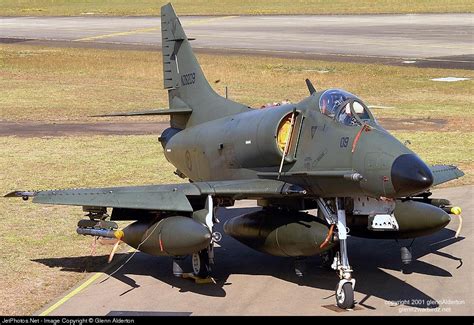
New Zealand once operated a small but credible fighter force, but that capability disappeared more than two decades ago. The Royal New Zealand Air Force (RNZAF) retired its A-4K Skyhawks and Aermacchi MB-339 trainers in 2001, ending the country’s ability to operate conventional fighter aircraft. The decision reflected the strategic environment of the time: the Cold War had ended, defense budgets were constrained, and Wellington believed its security could be supported more efficiently through maritime surveillance, transport, peacekeeping, and close cooperation with Australia and other allies.
That decision has become more interesting as New Zealand’s strategic environment changes. Defense spending is moving toward 2% of GDP, the Asia-Pacific is becoming more contested, and Wellington is increasingly discussing capabilities that provide greater lethality and longer-range effects. Yet none of this currently means that New Zealand is preparing to buy fighter jets. In fact, rebuilding an air combat force would be one of the most difficult and expensive defense projects the country could undertake because it would have to recreate almost the entire supporting structure from scratch.
The question, therefore, is not simply whether New Zealand could afford to buy fighters. It is whether the country could justify the enormous infrastructure, personnel, training, weapons, maintenance, and operational commitments required to make those fighters genuinely useful. In principle, the answer is yes. In practical terms, however, it would take a dramatic deterioration in the regional security environment to make such a decision politically and strategically attractive.
New Zealand Once Came Close to Buying 28 F-16 Fighters
The most important precedent for understanding New Zealand’s potential return to fighter aviation is the F-16 deal that was canceled in 2000. During the late 1990s, Wellington was searching for a replacement for its aging A-4K Skyhawk fleet. The United States offered 28 F-16A/B Fighting Falcons that had originally been built for Pakistan but remained in storage at Davis-Monthan Air Force Base after an American arms embargo prevented their delivery.
The proposed arrangement was relatively attractive. New Zealand would lease the aircraft for ten years and then purchase them for approximately $120 million. The fleet consisted of 13 single-seat F-16As and 15 two-seat F-16Bs, providing enough aircraft to equip two squadrons. The plan also contemplated selling the existing Skyhawks to the Philippines, helping offset part of the financial burden associated with the new fighters.
However, the political situation changed after the Labour Party won the 1999 election. Its government had campaigned against the F-16 arrangement, and in March 2000 Prime Minister Helen Clark announced that New Zealand would not proceed with the lease and purchase. The government argued that upgrading the air combat force could not be treated as a priority while other defense requirements remained under financial pressure.
The Skyhawks were subsequently retired in 2001 rather than being maintained as an interim capability. That decision effectively closed the door on New Zealand’s fighter aviation for the next quarter-century. What had initially been a procurement decision became a fundamental change in the country’s defense philosophy.
Why New Zealand Abandoned Its Fighter Force
The decision made considerably more sense within the strategic circumstances of the early 2000s than it might appear today. New Zealand is geographically isolated, has no land borders, and historically faced a relatively limited direct military threat. Its defense establishment could therefore concentrate on capabilities that supported the country’s wider responsibilities rather than maintaining a sophisticated high-end fighter fleet.
The RNZAF shifted toward maritime patrol, airlift, helicopters, training, and surveillance. Those missions aligned closely with New Zealand’s geography. The country possesses a huge exclusive economic zone, extensive maritime approaches, important fishing interests, and responsibilities connected with the South Pacific and Antarctica. Aircraft capable of remaining airborne for long periods and monitoring enormous areas could provide more direct value to Wellington than a small number of fighters waiting for a conflict that appeared unlikely.
The alliance relationship with Australia also mattered enormously. New Zealand and Australia have developed one of the world’s closest bilateral defense relationships, and their forces increasingly operate as an integrated strategic partnership. If Australia already possessed advanced fighter aircraft, Wellington could devote its limited resources to capabilities that complemented Australian air power instead of duplicating it.
That logic remains central to New Zealand’s defense planning today. Rebuilding fighters would not simply add several dozen aircraft to the inventory. It would create a new force structure that would have to coexist with an existing defense model built around maritime surveillance, transport, logistics, special operations, and coalition operations.
New Zealand Would Have to Rebuild Much More Than Fighter Squadrons
Buying fighter aircraft is arguably the easiest part of creating a modern air combat force. The much harder task would be developing the ecosystem surrounding them.
A modern fighter squadron requires trained pilots, weapons officers, engineers, maintainers, instructors, mission planners, air traffic specialists, intelligence personnel, ground crews, and a large logistical organization. New Zealand would need facilities capable of supporting high-performance combat aircraft, secure weapons storage, sophisticated maintenance equipment, simulators, training ranges, spare engines, electronic warfare support, and a substantial stockpile of air-to-air and air-to-surface weapons.
The personnel challenge could be particularly serious. New Zealand has a population of roughly 5.5 million, meaning its military manpower pool is relatively small. Training fighter pilots takes years, and the same personnel would need regular flying hours to maintain proficiency. A fleet of only a handful of aircraft might be affordable on paper but could be operationally inefficient if Wellington could not sustain enough pilots and maintainers to generate useful combat availability.
There would also be a major training burden. New Zealand has not operated fighter aircraft since the Skyhawks disappeared, so much of the institutional knowledge associated with fighter operations would have to be reconstructed. Some expertise could be obtained through cooperation with Australia and the United States, but Wellington would still need to create its own command structure and long-term career pipeline.
The Current RNZAF Is Moving in a Different Direction
New Zealand’s current aircraft procurement strategy demonstrates that Wellington is strengthening its air force without attempting to recreate the Cold War-era fighter force.
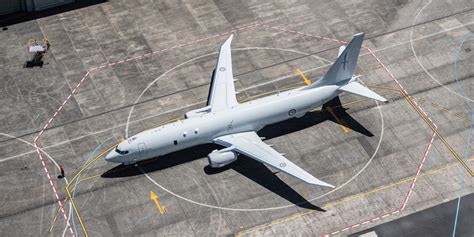
The RNZAF has completed the acquisition of four Boeing P-8A Poseidon maritime patrol aircraft and five C-130J Super Hercules airlifters. Two Airbus A321XLRs are being introduced to replace the aging Boeing 757 fleet, while five MH-60R Seahawks are being acquired to replace the SH-2G(I) Super Seasprite helicopters.
This is a force designed primarily around mobility, surveillance, maritime security, and support for joint operations. The P-8 is particularly important because it gives New Zealand a sophisticated platform capable of monitoring vast ocean areas while also providing a foundation for a more capable strike mission.
In July 2026, a New Zealand P-8A demonstrated this potential by launching two AGM-84 Harpoon missiles against a decommissioned target ship during a multinational exercise. The Harpoons were loaned by Australia, and New Zealand had not yet purchased its own missiles for the aircraft. Nevertheless, the demonstration was significant because it showed how Wellington can add offensive capability to existing aircraft without buying a dedicated fighter fleet.
Long-Range Drones Could Fill Part of the Gap
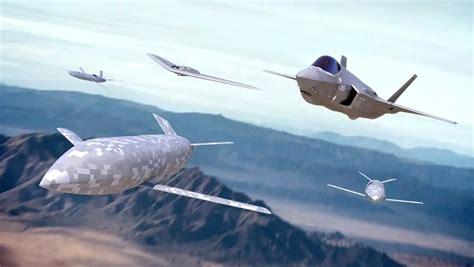
The most revealing development may be New Zealand’s increasing interest in autonomous and uncrewed systems. In 2026, reporting indicated that Wellington planned to purchase long-range one-way strike drones, with local suppliers preferred where possible.
That direction fits the country’s circumstances unusually well. Uncrewed aircraft can provide surveillance, targeting, and strike effects without requiring New Zealand to establish a large fighter pilot training system. They can also potentially be purchased and deployed faster than a complete fighter force.
The 2025 Defence Capability Plan introduced language concerning enhanced strike capabilities, greater lethality, long-range aerospace effects, and autonomous systems. Those terms suggest that New Zealand is not abandoning offensive military capability altogether. Instead, it appears to be searching for ways to achieve useful long-range effects without accepting the enormous cost of maintaining traditional fighter aviation.
This could eventually include larger uncrewed combat aircraft, maritime drones, long-range strike systems, and other autonomous platforms. Such systems would not completely replace fighters, particularly in air superiority and air defense, but they could give New Zealand capabilities that were previously unavailable.
Could New Zealand Buy the F-35A?
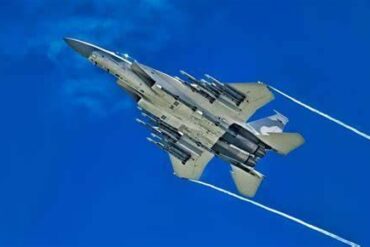
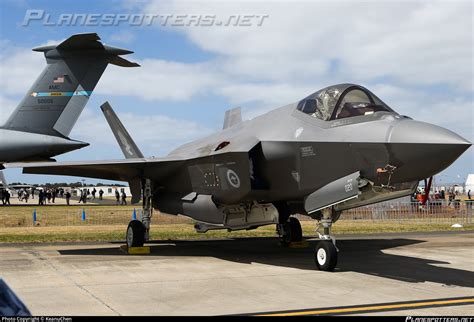
If circumstances changed dramatically and Wellington decided that it needed a genuine fighter capability, the Lockheed Martin F-35A would be one of the most logical candidates. Australia already operates the F-35A, and the United States and other close partners use the aircraft extensively throughout the Pacific.
Interoperability would be a major advantage. New Zealand would not have to build an isolated fighter doctrine around an aircraft completely unfamiliar to its closest partners. Training, logistics, weapons, communications, and operational procedures could potentially be integrated with Australian and American forces.
There is also a strategic argument for choosing the F-35 rather than an older fourth-generation aircraft. If New Zealand were spending the enormous sums required to rebuild fighter aviation after decades without it, buying an aircraft with advanced sensors, stealth characteristics, electronic warfare capabilities, and network-centric combat systems would make more sense than purchasing an obsolete platform simply because it was cheaper.
A fleet of two or three squadrons could theoretically provide a meaningful capability, although the actual number required would depend heavily on operational requirements. Even then, New Zealand would probably need extensive Australian and American assistance during the transition.
An F-16 Fleet Would Be Cheaper but Still Difficult
A less expensive alternative could involve modern F-16 Block 70/72 aircraft. The F-16 remains one of the world’s most widely operated fighter aircraft, and its enormous international user community provides a mature training, maintenance, weapons, and logistics ecosystem.
For New Zealand, however, choosing the F-16 simply because it costs less than an F-35 would not eliminate the underlying problem. The country would still have to build bases, recruit and train personnel, purchase weapons, establish maintenance systems, and maintain enough aircraft to sustain meaningful readiness.
There is also the question of future relevance. If New Zealand were responding to a severe deterioration in the Asia-Pacific security environment, it might want an aircraft capable of surviving and contributing in a heavily contested battlespace. That could make the F-35A considerably more attractive despite its higher acquisition and operating costs.
Australia’s own fleet structure would also influence Wellington’s decision. The Royal Australian Air Force operates both F-35As and F/A-18F Super Hornets, but Super Hornet production is nearing its end. Second-hand aircraft could theoretically appear, but relying on used Australian fighters would be a temporary solution rather than an obvious long-term strategy.
Australia Would Probably Be Central to Any Rebuild
If New Zealand ever returned to fighter aviation, Australia would almost certainly be at the center of the process. The two countries already cooperate closely, and the idea of an increasingly integrated Anzac force is becoming more important as regional security concerns increase.
This could affect everything from pilot training to weapons procurement. New Zealand could potentially send trainee pilots to Australian facilities, participate in Australian exercises, use shared logistics arrangements, and integrate its aircraft into wider Australian and allied operational networks.
Such cooperation would make a small New Zealand fighter fleet more useful than its raw numbers might suggest. A dozen or two dozen aircraft operating as part of a larger Australian-US coalition would have considerably more value than an isolated national force of similar size.
The first Australian F-35s visiting New Zealand in 2026 was therefore symbolically interesting, even though it did not represent the beginning of a New Zealand fighter program. It demonstrated how advanced allied aircraft can operate within New Zealand’s environment and highlighted the interoperability Wellington could exploit without necessarily owning such aircraft itself.
A Crisis Could Change the Calculation
The strongest argument for rebuilding a fighter fleet would be a fundamental transformation of the Asia-Pacific security environment. A major regional war, a severe crisis involving Taiwan, or a dramatic expansion of Chinese military power could force New Zealand to reconsider assumptions that have guided defense policy since 2001.
Under such circumstances, the argument for fighters would become much stronger. Maritime patrol aircraft and drones could provide surveillance and strike capabilities, but they could not perform every mission required of a modern air force. Fighters could provide air defense, escort, interception, offensive counter-air operations, and protection for high-value aircraft.
The timing would be crucial. If New Zealand believed it had only five years to prepare for a major conflict, rebuilding a fighter force from almost nothing would be extraordinarily difficult. If Wellington had ten years or more, however, it could gradually establish training pipelines, infrastructure, procurement contracts, and operational doctrine.
Even in that situation, fighters would probably compete with ships, submarines, maritime patrol aircraft, air defenses, drones, and long-range missiles for limited resources. A fighter fleet would not automatically become the highest priority.
New Zealand’s More Likely Future Is a Hybrid Force
For now, the evidence points toward a hybrid approach rather than a return to fighter jets. New Zealand is increasing its ability to conduct long-range surveillance and strike missions while investing in modern airlift, maritime helicopters, and autonomous systems.
That approach is also consistent with its geography. New Zealand does not need to defend a land border, but it does need to monitor an enormous maritime area and remain capable of supporting partners across the Pacific. P-8 Poseidons, C-130Js, Seahawks, drones, and long-range weapons can address many of those requirements without the enormous institutional burden of fighter aviation.
Yet the possibility of a fighter comeback should not be dismissed entirely. New Zealand has the economic capacity to create such a force if its government decides that the strategic environment justifies the expenditure. Its population and GDP are comparable in broad terms to countries that operate sophisticated fighter fleets, demonstrating that the obstacle is not simply national wealth.
The real issue is strategic priority. As long as Wellington believes Australia and the United States can provide much of the high-end air combat capability needed in a crisis, New Zealand has strong reasons to spend its limited defense budget elsewhere. If that assumption ever stops looking safe, the calculation could change rapidly.
A future New Zealand fighter fleet is therefore possible, but it would probably take an extraordinary event to make it politically acceptable. The country is not currently rebuilding the air combat force it abandoned in 2001. Instead, it is quietly assembling something different: a more capable maritime force supported by long-range weapons, modern transport aircraft, advanced surveillance platforms, and increasingly sophisticated autonomous systems.
If the strategic environment deteriorates sharply enough, fighters could return. But if New Zealand can achieve its defense objectives through P-8 Poseidons, long-range strike systems, drones, and close integration with Australia, another generation may pass before a fighter roundel appears on an RNZAF combat aircraft again.