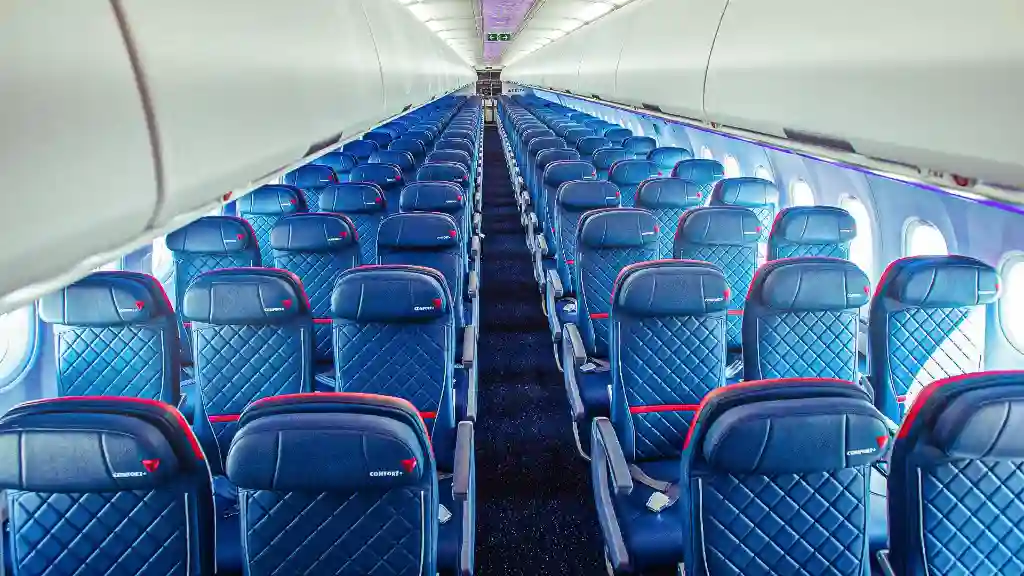
The Airbus A320neo and Boeing 737 MAX occupy the same basic market, perform many of the same missions, and both carry six passengers across in a typical economy-class configuration. Yet passengers stepping from one aircraft to the other can notice a meaningful difference in how much space surrounds those six seats. The reason is not simply the seats themselves. It comes from the fundamental dimensions of the aircraft fuselages, which trace back to design decisions made decades apart.
The A320 family has an internal cabin width of approximately 12 feet 2 inches (3.70 meters), while the Boeing 737 family has an internal width of around 11 feet 7 inches (3.54 meters). That produces a difference of roughly 7 inches, or 16 centimeters, across the cabin. On paper, that may not sound dramatic. Inside a crowded six-abreast economy cabin, however, those additional inches can influence aisle width, shoulder clearance, seat geometry, and the overall sense of openness.
The difference becomes even more interesting because neither aircraft is a clean-sheet design from the modern era. The A320 entered service in the 1980s, while the original 737 dates back to the 1960s. Airbus therefore designed its narrowbody with a wider cross-section from the beginning, while Boeing’s basic fuselage dimensions were established when airport infrastructure, engines, seating expectations, and passenger requirements were very different.
Airbus A320neo Cabin Width vs Boeing 737 MAX
The most important figure is the internal cabin width. The A320 family measures approximately 12 feet 2 inches (3.70 meters) inside the passenger cabin. Its external fuselage width is about 13 feet, or 3.95 meters. The Boeing 737, by contrast, has an internal cabin width of approximately 11 feet 7 inches (3.54 meters) and an external fuselage width of about 12 feet 4 inches.
That means the Boeing 737 is approximately 8 inches narrower externally and around 7 to 9 inches narrower internally, depending on precisely where and how the dimensions are measured. The important point for passengers is that both aircraft retain six-abreast seating in economy, so Airbus has more cabin width to distribute among the same number of passengers.
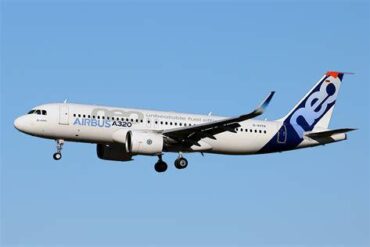
The A320neo did not receive a wider fuselage when Airbus developed the neo generation. The basic cross-section remains essentially the same as the original A320 family. This is significant because the advantage is not a new feature created specifically for the A320neo. Instead, passengers are benefiting from a dimensional decision made when Airbus designed the A320 in the 1980s.
The same principle applies across the A319, A320, and A321 families. Although these aircraft have different fuselage lengths and seating capacities, their basic cabin width is essentially the same. The A321neo and A321XLR therefore retain the same fundamental width advantage over the 737 MAX, even though their much longer fuselages allow them to carry considerably more passengers.
Why the A320neo Can Feel More Spacious
A wider cabin does not automatically mean an airline installs seats that are dramatically wider. This is one of the most important distinctions when discussing A320neo cabin width.
On many low-cost carriers, A320-family economy seats are around 17.5 to 18 inches wide, while 737 economy seats can be approximately 17 to 17.5 inches wide. The difference may amount to only around half an inch. That is nowhere near the seven-inch difference in total cabin width.
Where does the rest of the space go? Some of it is used by the aisle, while some is affected by the curvature and construction of the sidewalls. Seat shells, armrests, tray tables, structural elements, and interior panels also consume space. As a result, the additional width does not simply become a seven-inch-wide bonus distributed equally among six passengers.
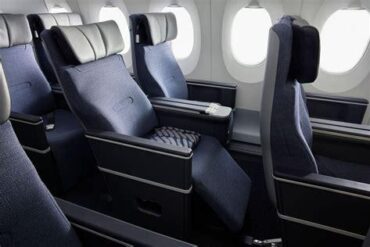
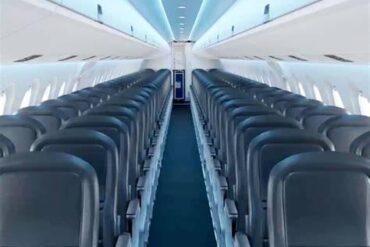
Nevertheless, the extra cabin width has practical consequences. A320-family cabins can accommodate a wider aisle, particularly in high-density configurations. On low-cost carriers, an A320 aisle may be around 19 to 20 inches wide, while a 737 aisle can be closer to 18 to 19 inches.
That difference matters during boarding, meal service, and disembarkation. It also changes how passengers perceive the cabin when they are standing or moving through it. A slightly wider aisle can make an aircraft feel less compressed even if the actual seat width has barely changed.
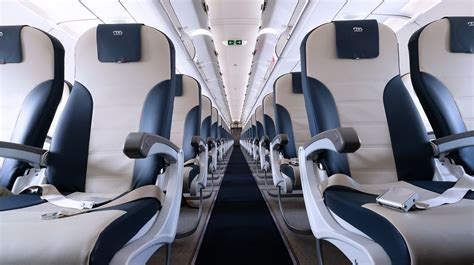
Sidewalls Make a Bigger Difference Than The Numbers Suggest
Another factor is the shape of the cabin itself. The A320’s interior uses relatively flat and sculpted sidewall panels, which help preserve usable space around passengers’ shoulders and heads. The 737’s narrower fuselage and more pronounced curvature can make the cabin feel more enclosed.
This is a subtle distinction, but passenger comfort is not determined by seat width alone. A seat can have the same nominal width while feeling different depending on the space around its upper body, the shape of its sidewalls, and the position of its window.
The A320’s larger cross-section also allows its windows and surrounding panels to feel somewhat less intrusive. Passengers sitting beside the window can benefit from additional clearance around their shoulders and head. The effect is especially noticeable when comparing two otherwise similar economy cabins.
Airlines can also configure their cabins differently, so there is no universal A320neo passenger experience. A full-service airline may install wider seats and provide more generous spacing, while a low-cost carrier may use a dense seating arrangement designed to maximize capacity. Consequently, the aircraft’s structural dimensions establish a starting point, but the airline determines how much of that potential becomes passenger space.
Six-Abreast Seating Is The Key To The 737’s Problem
The fundamental problem for the Boeing 737 MAX cabin is not that the aircraft is unusually small in every dimension. Its fuselage was simply optimized around a very old set of requirements.
When the original 737 was developed in the 1960s, Boeing wanted a compact aircraft capable of carrying six passengers across while operating from airports with relatively limited infrastructure. The aircraft was designed with a low fuselage and short landing gear, helping passengers board from ground level and reducing the size and weight of airport equipment required for operation.
At that time, the decision to make the fuselage as narrow as practical while still accommodating six-abreast seating was logical. 17-inch seats were normal, and passenger expectations were different from those of today’s travelers.
The difficulty is that fuselage width is one of the hardest characteristics to change during an aircraft’s evolution. Boeing has repeatedly updated the 737’s engines, wings, avionics, landing systems, interiors, and aerodynamics. The 737 Classic, Next Generation, and MAX are highly evolved aircraft compared with the original.
Yet the fundamental fuselage diameter has remained.
Changing it would effectively mean creating a new aircraft rather than another derivative. A wider fuselage would affect structure, aerodynamics, weight, systems integration, landing gear, production tooling, airport compatibility, and certification. The economic consequences would be enormous.
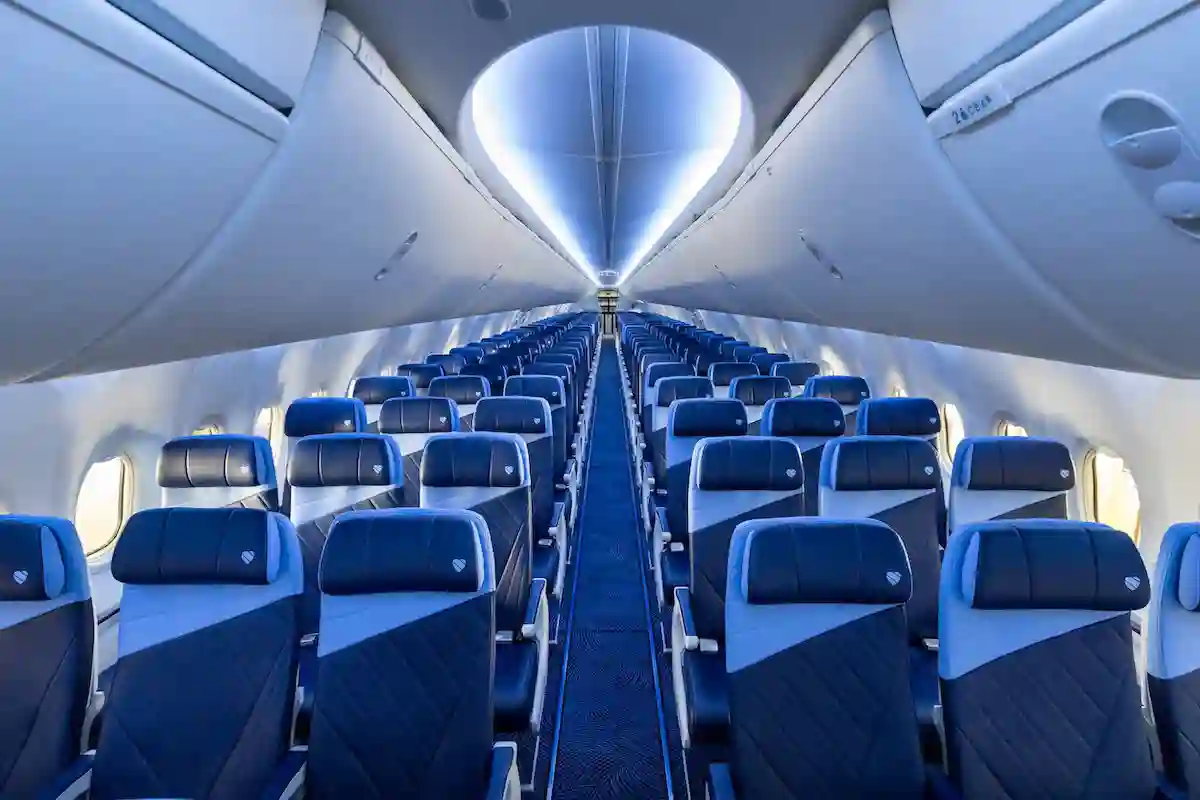
The 737 MAX Cannot Simply Be Made Wider
This explains why the 737 MAX continues to have a narrower cabin despite decades of technological development.
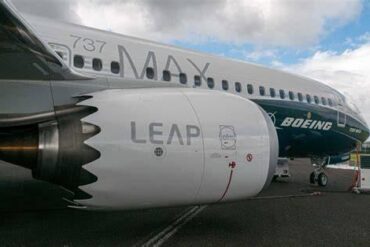
Boeing has improved the passenger environment through features such as its Sky Interior, redesigned overhead bins, modern lighting, and updated sidewall treatments. These changes can make the aircraft feel considerably more modern than early 737s. They do not, however, fundamentally alter the cabin’s width.
The A320 family faces a similar structural constraint. Airbus cannot simply make today’s A320neo several inches wider without turning the project into something approaching a clean-sheet aircraft. Airbus has instead refined the interior through improved sidewall panels, cabin fittings, lighting, overhead storage, and other changes.
This distinction explains why the A320neo’s width advantage is persistent. It is not a temporary feature created by one particular cabin product. It is built into the aircraft’s architecture.
How the A320 Compares With Other Narrowbody Aircraft
The A320’s dimensions become even more interesting when other narrowbody aircraft are considered. The Embraer E-Jet has an internal cabin width of roughly 9 feet (2.74 meters) and normally seats four passengers across. The Airbus A220 has a cabin width of around 10 feet 9 inches (3.28 meters) and uses five-abreast seating.
The Boeing 737 sits at approximately 11 feet 7 inches, while the A320 reaches around 12 feet 2 inches. The older Boeing 757 has a similar internal width of roughly 12 feet 4 inches.
However, several newer aircraft go significantly further. The COMAC C919 has a cabin width of approximately 13 feet, or 3.96 meters. Russia’s MC-21 was designed with a similarly expansive cabin, measuring approximately 13 feet 4 inches, or around 4.06 meters, depending on the measurement reference.
Those dimensions show how the industry could move beyond the traditional six-abreast narrowbody standard. A clean-sheet aircraft does not have to inherit the dimensional compromises of a design created half a century earlier.
The MC-21 and C919 Highlight The Design Trade-Off
The MC-21 is particularly interesting because its designers deliberately targeted the A320 and 737 market with a wider cabin. Its structure was designed around a much broader fuselage, allowing the aircraft to offer 18- to 18.5-inch seats while retaining six-abreast seating.
A wider fuselage naturally introduces penalties. More structure and additional aerodynamic surface can increase weight and drag. The MC-21 attempted to offset some of those penalties through extensive use of lightweight composite materials.
The C919 similarly demonstrates that a modern six-abreast aircraft can provide a wider cabin than both the A320 and 737. Its commercial impact, however, remains much smaller than that of the established Airbus and Boeing families.
For airlines, cabin comfort is only one part of the equation. Aircraft price, fuel efficiency, maintenance support, reliability, airport compatibility, pilot availability, financing, residual value, and global support networks can all matter more than several inches of cabin width.
A320neo Range Adds Another Advantage
The A320neo family also has an important advantage in range, although range figures must be interpreted carefully. The A321neo is generally advertised with a range of around 4,000 nautical miles, while the A321XLR can reach approximately 4,700 nautical miles under specified operating conditions.
The Boeing 737 MAX family has a range of up to around 3,800 nautical miles for the MAX 7, while the MAX 8, the longest-range version currently in widespread service, is generally quoted at around 3,500 nautical miles.
Actual airline operations can differ substantially from advertised maximums. Payload, winds, reserves, routing, temperature, airport elevation, and other operational factors all influence how far an aircraft can actually fly on a particular mission.
Still, the combination of a wider cabin and strong range capability has helped make the A320neo family highly competitive in the global narrowbody market.
Why The A320neo’s Seven-Inch Advantage Matters
A difference of roughly seven inches across an entire cabin sounds modest until it is considered in the context of six-abreast seating. Every inch has to be allocated among seats, armrests, aisles, sidewalls, service areas, and structural components.
The A320 does not transform those seven inches into dramatically wider seats. Instead, the additional space is distributed throughout the cabin architecture. Passengers may notice it through slightly wider seats, a wider aisle, more comfortable shoulder clearance, and a less constricted feeling near the sidewalls.
That is why the difference can be more noticeable than the raw seat-width numbers suggest.
The 737 MAX remains a highly capable narrowbody aircraft, and its cabin is a product of an exceptionally long development history. But its basic dimensions are ultimately constrained by an airframe conceived in the 1960s. Airbus, by introducing the A320 in the 1980s, created a wider six-abreast platform that remains competitive more than four decades later.
The next generation of single-aisle aircraft will eventually have an opportunity to reset those standards. Until then, the Airbus A320neo retains a clear cabin-width advantage over the Boeing 737 MAX, with approximately 12 feet 2 inches of internal width compared with about 11 feet 7 inches for the 737 family. The difference is only a handful of inches, but inside a six-abreast aircraft, those inches are valuable.