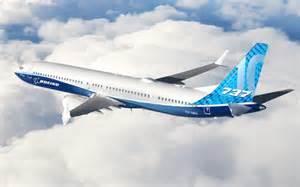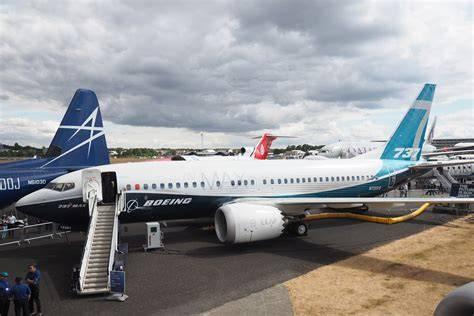
The Boeing 737 MAX 7 has finally cleared one of the most important hurdles in its long and unusually complicated development. Nearly a decade after Boeing launched the MAX family, the smallest variant has received FAA type certification, bringing an end to years of testing, redesigns, regulatory scrutiny, and shifting airline plans. Yet certification is not the finish line. It is the point at which the real commercial test begins.
The MAX 7 was originally supposed to become a relatively straightforward addition to Boeing’s narrowbody family. Instead, its journey has been shaped by the wider crisis surrounding the 737 MAX, stricter oversight from regulators, production-quality concerns, and a technical problem involving the aircraft’s engine anti-ice system. While larger MAX variants have accumulated hundreds or even thousands of orders, the MAX 7 has remained a much smaller program.
Boeing launched the 737 MAX program in 2011 as its response to the Airbus A320neo family. The manufacturer retained the basic 737 architecture while introducing more efficient CFM LEAP-1B engines, aerodynamic improvements, and the Boeing Advanced Technology winglet. Together, these changes helped the MAX family deliver significantly lower fuel consumption and emissions than the Next-Generation 737 aircraft it was designed to replace.
The MAX 8 entered commercial service in 2017, followed by the MAX 9 in 2018. Then the program was transformed by two fatal MAX 8 crashes in Indonesia and Ethiopia. The resulting worldwide grounding forced Boeing and regulators to conduct an extensive review of the aircraft, its systems, certification process, and the manufacturer’s wider safety culture. The consequences did not disappear when the MAX returned to service. Every subsequent variant faced an environment of substantially greater regulatory scrutiny.
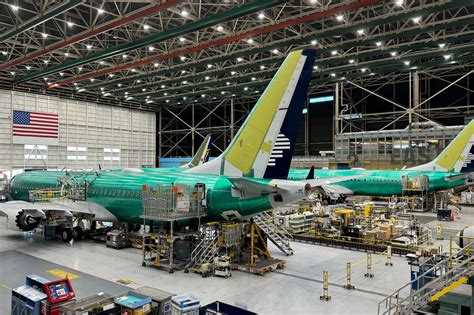
Boeing 737 MAX 7 Certification Takes Nearly a Decade
The 737 MAX 7 was originally expected to enter service in 2019. Instead, the aircraft spent years moving through a certification process that became progressively more demanding. Boeing had to demonstrate that the shortened MAX variant met applicable requirements while addressing additional questions arising from the broader regulatory examination of the MAX program.
The delay became especially significant because the MAX 7 is not simply a smaller version in commercial terms. Its business case depends on offering airlines a useful combination of relatively low capacity, low operating costs, and unusually long range for its size. Every year spent waiting for certification gave airlines more time to reconsider whether that combination remained attractive.
On August 3, Boeing announced that the FAA had granted type certification to the smallest member of the family. The aircraft typically accommodates 135 to 160 passengers in a two-class configuration and has a maximum range of approximately 3,800 nautical miles, or 7,038 kilometers. Like other members of the MAX family, it is designed to reduce fuel consumption and carbon dioxide emissions by about 20% compared with the aircraft it typically replaces, while also producing a substantially smaller noise footprint.
Certification was particularly important because the MAX 7 had encountered its own technical challenge during development. In 2023, Boeing identified an issue with the LEAP-1B engine anti-ice system that could result in engine overheating during continuous operation. Resolving that problem became an important part of the aircraft’s path toward certification.
The issue illustrates why the MAX 7 program took so long. Certification is not simply about demonstrating that an airplane can fly. Regulators must establish that its systems, structures, software, engines, operating procedures, and failure responses meet the required safety standards. Following the MAX crashes, the FAA was understandably unwilling to treat these questions as routine.
The January 2024 Alaska Airlines 737 MAX 9 door-plug incident added another layer of scrutiny to Boeing’s production and quality systems. Although the event involved a different MAX variant, it reinforced concerns about manufacturing discipline and regulatory oversight. Consequently, the MAX 7’s certification occurred within a much more demanding environment than Boeing originally anticipated when the aircraft was launched.
Certification Does Not Mean Immediate Passenger Flights
The FAA certificate removes the largest regulatory barrier, but passengers will not immediately begin boarding MAX 7 aircraft. Boeing still has substantial work to complete before the first deliveries can take place.
Around 30 MAX 7 aircraft have already been assembled and are awaiting delivery. Because some of these aircraft were produced before the final certification configuration was established, Boeing must update them where necessary, conduct inspections, and prepare each aircraft for its individual airworthiness certification.
That process is particularly important for the first aircraft destined for Southwest Airlines, the launch customer for the MAX 7. Southwest has spent years planning around the aircraft, but certification does not automatically place it into the airline’s operating fleet. The carrier must incorporate the new model into its operational specifications, finalize manuals and maintenance procedures, and train its pilots and other relevant personnel.
Southwest has indicated that it expects to require roughly six months after certification to complete these preparations. The airline is targeting the first quarter of 2027 for the MAX 7’s entry into revenue service.
That timing is significant because Southwest’s fleet strategy has been built around the 737 for decades. The MAX 7 was intended primarily to replace older 737-700s, allowing the carrier to maintain a common aircraft family while improving fuel efficiency and reducing the average age of its fleet.
At one stage, Southwest had approximately 300 MAX 7 aircraft on order. Certification delays, however, forced the airline to adjust part of that commitment toward the larger MAX 8. The carrier still has roughly 256 MAX 7s on firm order, making it by far the aircraft’s largest customer.
Southwest’s importance to the MAX 7 program therefore extends well beyond being the launch operator. The airline’s deployment strategy will provide one of the clearest demonstrations of whether Boeing’s smallest MAX can deliver the economics and operational flexibility that originally made it attractive.
Which Airlines Are Still Waiting for the MAX 7?
The MAX 7’s customer base looks considerably different from what Boeing might have expected when the aircraft was launched.
Southwest dominates the order book, while Allegiant Air is the other major U.S. customer, with approximately 24 MAX 7s currently on order. Allegiant originally ordered 50 aircraft and held options for another 50, but subsequently changed its plans.
Several other airlines have retained smaller commitments. Luxair has four aircraft listed, while Ruili Airlines and SkyUp Airlines each have two. Boeing also lists 16 aircraft for an unidentified customer.
The relatively modest order book is partly a consequence of the aircraft’s unusually long certification delay. Airlines that once viewed the MAX 7 as a useful solution had to make fleet decisions without knowing exactly when the aircraft would become available.
United Airlines and WestJet, for example, originally selected the MAX 7 but later moved their orders to the larger MAX 8. That decision reflects a broader trend across the narrowbody market. Airlines have increasingly preferred aircraft that can spread fixed operating costs across more seats, particularly as demand for air travel has recovered and strengthened.
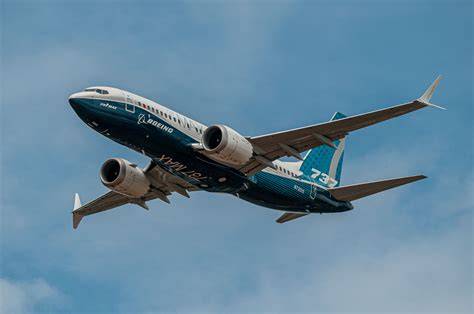
Can the Boeing 737 MAX 7 Compete With Larger Narrowbodies?
The MAX 7 now faces an intriguing commercial question: does the market still need it in large numbers?
The aircraft has a genuine advantage in range. Its approximately 3,800-nautical-mile capability makes it the longest-range variant of the 737 MAX family. That could make it particularly useful on routes where demand is insufficient for a larger aircraft but where an airline still wants to operate relatively long sectors.
However, range alone does not determine an aircraft’s economics. The MAX 7 still requires pilots, airport infrastructure, maintenance support, and other resources that are not dramatically cheaper simply because the aircraft carries fewer passengers. If an airline can fill a larger MAX 8 on the same route, the bigger aircraft can often produce a lower cost per available seat.
This is the central challenge facing the MAX 7.
Airlines have increasingly moved toward larger narrowbody aircraft because they can carry more passengers without proportionally increasing many operating expenses. The result is a difficult environment for aircraft positioned between traditional smaller narrowbodies and larger high-capacity models.
Boeing’s smallest MAX also faces competition from the Airbus A220, a clean-sheet aircraft originally developed by Bombardier. The A220 was designed specifically for the lower-capacity end of the modern narrowbody market and offers a newer cabin and aerodynamic architecture. Its passenger appeal and operating economics have allowed it to establish a meaningful position among airlines looking for smaller jets.
Airbus experienced its own challenge at this end of the market with the A319neo, which has attracted relatively few orders compared with the A320neo and A321neo. That demonstrates how difficult the smaller end of the narrowbody market has become.
The MAX 7 nevertheless has one powerful advantage: it belongs to the enormous 737 ecosystem. Airlines already operating 737 aircraft can potentially introduce the type without creating an entirely separate fleet family. For carriers such as Southwest, that commonality is particularly valuable.
Why Southwest Could Make or Break the MAX 7
Southwest represents the strongest case for the aircraft’s existence.
The airline’s fleet strategy is unusually concentrated around the Boeing 737, and its extensive network includes many markets where capacity and range need to be balanced carefully. A MAX 7 can provide a smaller aircraft than the MAX 8 while retaining the commonality that Southwest values.
Replacing older 737-700 aircraft with MAX 7s could also produce meaningful efficiency improvements. The new aircraft offers modern engines, updated aerodynamics, and lower fuel consumption while preserving the operational familiarity of the 737 platform.
The key question will be how Southwest actually deploys the aircraft. If the MAX 7 proves effective on thinner routes and provides useful scheduling flexibility, other airlines may reconsider the aircraft. If its economics consistently favor the larger MAX 8, however, Boeing could struggle to expand the customer base beyond the airlines already committed.
The first years of Southwest MAX 7 operations will therefore be watched closely by the industry. Actual fuel burn, maintenance costs, passenger demand, route performance, and fleet utilization will provide much more persuasive evidence than theoretical specifications.
Boeing 737 MAX 10 Is Waiting in the Wings
With the MAX 7 certified, Boeing can turn greater attention toward the 737 MAX 10, the largest member of the family and arguably the more important aircraft commercially.
The MAX 10 is designed to compete at the upper end of the single-aisle market, particularly against the Airbus A321neo. Unlike the MAX 7, which has a relatively limited order book, the MAX 10 has more than 1,500 orders worldwide.
That difference explains why MAX 10 certification matters so much to Boeing. The company needs the aircraft to strengthen its position in a market where Airbus has enjoyed enormous success with the A321neo.
Boeing has completed the final planned certification flight for the MAX 10 and is working through the remaining development assurance reviews and system safety assessments required before submitting the final certification documentation. The aircraft also incorporates an enhanced angle-of-attack system that will be available on the MAX 7.
The MAX 10 was originally expected to enter service in 2020. Its development and certification schedule subsequently slipped by several years, with testing beginning in 2021 and earlier delivery targets moving repeatedly.
Boeing has been aiming for certification later in 2026, followed by deliveries in 2027. If achieved, that would finally bring the two delayed members of the MAX family much closer to full commercial deployment.
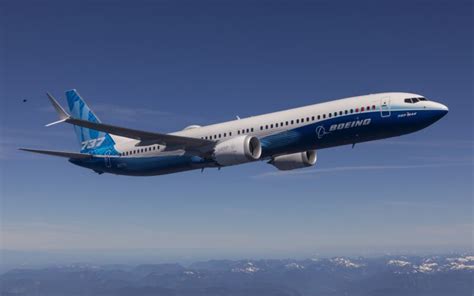
What the MAX 7 Certification Means for Boeing
The certification of the Boeing 737 MAX 7 represents more than the arrival of another aircraft variant. It closes one of the longest-running unfinished chapters in Boeing’s narrowbody program.
The aircraft took dramatically longer to certify than Boeing originally planned, and the reasons extend from the aftermath of two fatal crashes to technical changes, regulatory scrutiny, and concerns surrounding the manufacturer’s production processes. The journey has exposed how difficult it can be to introduce even a derivative aircraft when regulators demand extensive evidence and confidence.
Commercially, however, certification is only the beginning.
The MAX 7 has a clear technical proposition: relatively low capacity, strong range, modern efficiency, and the advantages of belonging to the 737 family. Those characteristics could make it valuable for airlines operating thinner routes or replacing older smaller 737s.
At the same time, the aircraft enters a market that has shifted toward larger narrowbodies. Airlines have already demonstrated that preference by moving some MAX 7 orders to the MAX 8. The presence of the A220 adds another competitive challenge, while the economic advantages of larger aircraft continue to influence fleet decisions.
For Boeing, the most realistic outcome may therefore be a successful but niche MAX 7 rather than another blockbuster aircraft. Southwest will remain the central operator, while Allegiant and several international customers provide additional exposure.
The bigger strategic prize is the MAX 10. If Boeing can complete its certification and begin deliveries in 2027, the company will finally have its full delayed MAX lineup in place. The MAX 7 may never match the sales volume of the MAX 8, but its certification removes a major unresolved issue and gives Boeing another tool for airlines that value range without needing maximum narrowbody capacity.
After nearly a decade of waiting, the smallest 737 MAX has finally crossed the regulatory finish line. Now comes the harder question: whether airlines still want the aircraft Boeing designed all those years ago.