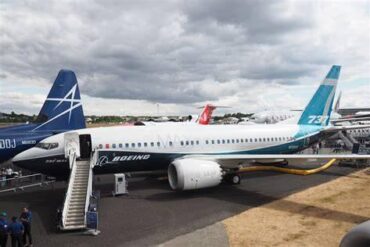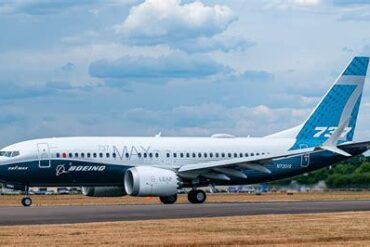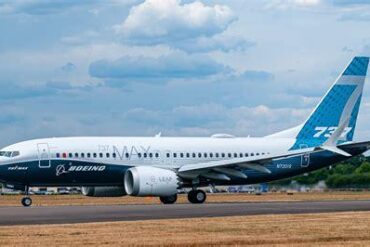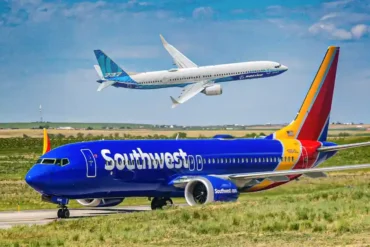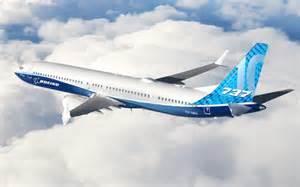
The question hanging over the global narrowbody market is no longer whether airlines want the Boeing 737 MAX 10, but whether regulators will allow it to fly passengers this year. As Boeing’s largest single-aisle aircraft, the MAX 10 was designed to sit at the sweet spot of high-density, short- and medium-haul flying, where capacity, turnaround speed, and seat economics matter more than range theatrics. Instead, it has become a symbol of how profoundly aircraft certification has changed in the post-MAX-crisis era.
The MAX 10’s delayed journey is not just another program running late. It is a case study in how safety oversight, corporate recovery, and airline fleet strategy now intersect in ways that make timelines unpredictable and outcomes harder to forecast. Airlines placed their bets years ago, slotting the MAX 10 into future schedules and growth plans. Boeing built it as a direct counter to Airbus’ expanding A321neo dominance. Regulators, however, now operate in a world where proof replaces trust, and assumptions are no longer acceptable.
As 2026 unfolds, the certification of the Boeing 737 MAX 10 remains one of the most consequential unresolved questions in commercial aviation. The answer will shape airline capacity decisions, manufacturer market share, and Boeing’s credibility for years to come.
By the time Boeing formally launched the MAX 10, the logic seemed airtight. Airports around the world were becoming increasingly slot-constrained. Airlines wanted more seats per movement without stepping up to widebody aircraft that brought higher acquisition and operating costs. The MAX 10 promised to stretch the proven 737 platform to its practical limit, offering high-capacity single-aisle economics on routes where every additional seat translated into revenue leverage.
Then reality intervened. What began as a derivative program evolved into a prolonged regulatory marathon, slowed by shifting certification standards, heightened scrutiny, and unresolved technical concerns. Today, the MAX 10 remains grounded, despite more than 1,200 firm orders and years of development effort.
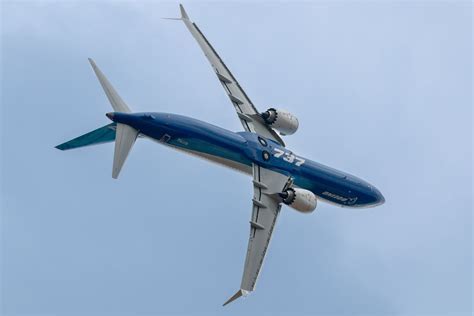
A Program That Carries Outsized Strategic Weight
Within Boeing’s narrowbody family, the MAX 10 occupies a uniquely sensitive position. Smaller variants like the MAX 8 and MAX 9 are already flying passengers worldwide, steadily rebuilding trust and generating cash. The MAX 7, while also delayed, serves a narrower market segment. The MAX 10, by contrast, targets the most lucrative end of the single-aisle spectrum, where airlines fight for marginal gains in capacity and cost efficiency.
This matters because the upper single-aisle segment has become one of the most competitive battlegrounds in aviation. Airbus’ A321neo and its longer-range derivatives have captured airline attention by offering flexibility, payload capability, and immediate availability. Without the MAX 10, Boeing lacks a certified aircraft that can truly match that offering on dense short- and medium-haul routes.
The delay is therefore not merely technical. It is strategic. Every quarter without certification increases the risk that airlines recalibrate future growth toward Airbus, locking in long-term fleet decisions that are difficult and expensive to reverse.
FAA Phase Two Approval Signals Movement, Not Momentum
After a long stretch of regulatory silence, January 2026 brought the first tangible sign of progress. The US Federal Aviation Administration approved the 737 MAX 10 to enter Phase Two of certification flight testing, expanding the scope of tests Boeing is allowed to conduct under the Type Inspection Authorization framework.
This phase focuses on how systems interact across a wide range of operating conditions, rather than isolated performance checks. Avionics integration, propulsion behavior, and system redundancy all come under closer scrutiny. In the current regulatory climate, this kind of integrated testing is where programs either prove their readiness or expose lingering weaknesses.
The approval matters because it indicates that the FAA sees enough maturity in the program to justify broader data collection. It does not, however, imply proximity to final certification. Neither the FAA nor Boeing has committed to a target date, reflecting a deliberate move away from schedule-driven certification that once defined aircraft development.
Notably, this approval applied only to the MAX 10. The smaller MAX 7, which faces its own certification challenges, was not included. That distinction underscores how variant-specific the process has become and how little momentum transfers automatically from one model to another.
The Engine Anti-Ice Issue That Refuses to Go Away
At the heart of the MAX 10’s certification struggle lies a single, stubborn technical challenge: the engine inlet anti-ice system. Under certain rare icing conditions, regulators are concerned that ice accumulation could affect engine components or reduce thrust margins, creating unacceptable safety risks.
On paper, anti-ice systems are routine features on modern jetliners. In practice, the FAA now demands far more exhaustive proof than in the past. Boeing must demonstrate that the system performs reliably across a wide spectrum of conditions without relying on procedural mitigations or pilot intervention as a fallback.
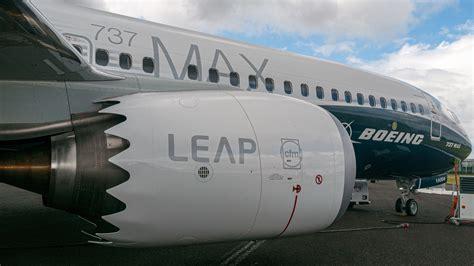
This requirement reflects lessons learned from earlier phases of the MAX saga, where assumptions about system behavior proved dangerously optimistic. The FAA’s current posture prioritizes demonstrable robustness, not engineering intent. Software adjustments, design refinements, and extensive testing are all on the table, but nothing moves forward without data that convinces regulators the risk has been eliminated.
Until this issue is resolved to the FAA’s satisfaction, every other area of progress remains provisional.
Why the MAX 10 Delay Hurts More Than Other Variants
Delays are not created equal. The MAX 8 and MAX 9, already in service, continue to accumulate flight hours and operational data. Airlines have integrated them into schedules, training pipelines, and maintenance programs. Their reliability is no longer theoretical.
The MAX 10’s absence, however, leaves a capacity gap that smaller variants cannot fill. Airlines operating slot-constrained airports cannot simply add frequencies. They need more seats per departure. Without the MAX 10, they face an uncomfortable choice: accept lower capacity with the MAX 9, or turn to a competitor that can deliver immediately.
This is why the MAX 10 delay is commercially more damaging than the MAX 7’s. The lost opportunity cost is highest at the top end of the single-aisle market, where demand is strong and margins are often better protected against fuel price swings and economic cycles.
Airlines Caught in the Middle of Uncertainty
For airlines, the prolonged delay has translated into strategic friction. Fleet planning operates on timelines measured in decades, not quarters. Aircraft orders are placed years in advance, with delivery slots carefully aligned to route launches, retirements, and growth phases.
Without the MAX 10, many carriers have been forced to extend the life of older aircraft, absorb rising maintenance costs, or lease lift on the secondary market at premium rates. None of these options is optimal. All of them erode the efficiency gains the MAX 10 was supposed to deliver.
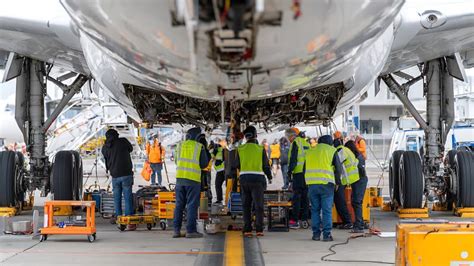
The ripple effects extend into training and operations. Pilot qualification programs, simulator investments, and technical documentation are often deferred when fleet timelines slip. Even airlines that remain publicly confident in the MAX 10’s long-term value have already adjusted short-term strategies, changes that may persist even after certification.
Production, Deliveries, and the Cash Flow Reality
For Boeing, certification is not an abstract milestone. It is directly tied to production stability and financial recovery. Deliveries, not orders, generate cash. In 2025, Boeing delivered roughly 600 aircraft, while Airbus delivered 793, widening a gap that reflects execution as much as demand.
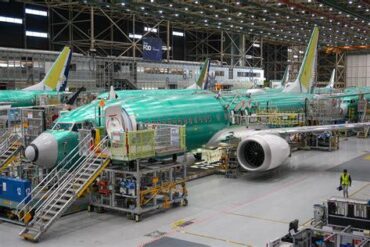
The MAX 10’s uncertified status prevents Boeing from fully utilizing its approved 737 production rate of 42 aircraft per month. Without the ability to deliver its largest single-aisle variant, the production mix remains constrained, limiting flexibility and revenue conversion.
Certification would allow Boeing to activate its MAX 10 assembly plans, rebalance output, and improve delivery predictability. It would also send a powerful signal that the company’s narrowbody program has moved beyond crisis management and into sustained execution.
Current 737 MAX 10 Order Snapshot
| Airline / Operator | MAX 10 Orders |
|---|---|
| United Airlines | 167 |
| Alaska Airlines | 105 |
| Ryanair | 150 |
| Lion Air | 50 |
| Leasing firms & others | 800+ |
| Total | 1,200+ |
Airbus Advances While Boeing Waits
While Boeing navigates regulatory headwinds, Airbus has continued to deliver at scale. The A321neo has become a workhorse for airlines needing immediate capacity on dense routes. In some periods, Airbus has delivered multiple A321neos in a single day, underscoring a level of production rhythm Boeing has yet to regain.
This matters because fleet decisions create inertia. Once airlines commit to a manufacturer’s ecosystem, including training, maintenance, and spare parts, switching becomes costly. Every delay in MAX 10 certification increases the likelihood that airlines deepen their reliance on Airbus for future growth.
Certification would not reverse Airbus’ advantage overnight, but it could slow further erosion by keeping Boeing relevant in a segment that increasingly defines narrowbody competition.
Can the Boeing 737 MAX 10 Be Certified in 2026?
Taken together, certification in 2026 is possible but far from guaranteed. The FAA’s Phase Two approval demonstrates renewed movement and suggests the program is no longer stalled. Flight testing is expanding. Engagement between Boeing and regulators appears more structured than in previous years.
Yet the engine anti-ice issue remains a decisive hurdle, not a procedural formality. The FAA has been explicit that safety requirements will not be softened to accommodate commercial pressure. Data, not deadlines, will determine the outcome.
If certification is achieved this year, the effects will be immediate and far-reaching. Deliveries would begin. Cash flow would improve. Airlines would regain confidence in long-term fleet plans. Boeing’s competitive position in the high-capacity single-aisle market would stabilize.
If certification slips again, the consequences compound. Airbus’ market position strengthens. Airlines adjust strategies further away from Boeing. The MAX 10 risks becoming a case where technical capability exists, but timing undermines impact.
As 2026 progresses, the Boeing 737 MAX 10 stands closer to certification than it has in years, yet still within a regulatory environment that demands absolute proof before approval. The outcome will not hinge on optimism or intent, but on whether Boeing can conclusively demonstrate that its largest single-aisle aircraft meets the most demanding safety standards in modern aviation history.