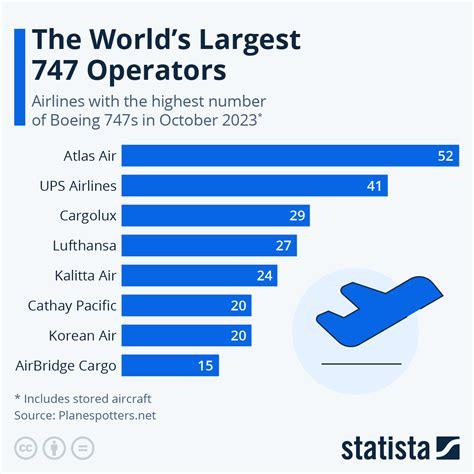
The Boeing 747-400F remains one of the last living embodiments of the four-engine cargo era. While passenger variants of the 747 have largely faded into aviation history, the freighter version continues to haul everything from pharmaceuticals to oversized industrial machinery across continents. In 2026, the question is no longer whether the aircraft is iconic. It is how many of these workhorses are still airborne — and for how much longer.
As of early 2026, 42 Boeing 747-400F aircraft remain operational worldwide, distributed across 15 cargo operators. For an aircraft type introduced more than three decades ago, that number is remarkable. Yet it also signals an unmistakable transition. The fleet is aging, environmental pressure is mounting, and twin-engine freighters are sharpening their competitive edge.
The 747-400F’s endurance in cargo aviation is not an accident. It is the result of payload physics, structural durability, and market timing. Understanding why 42 aircraft still fly requires examining their distribution, technical capabilities, and the strategic calculations of cargo carriers who continue to rely on them.
Global Boeing 747-400F Fleet In 2026: 42 Aircraft Across 15 Operators
Aircraft data confirms that 42 active 747-400Fs remain in commercial service. The fleet’s average age stands at 33.2 years, placing most airframes well into the later stages of their operational lifespan. The youngest aircraft is approximately 26.5 years old, while the oldest approaches 36.5 years.
This is not a young fleet. It is a veteran fleet.
Of these 42 aircraft, 38 are converted freighters, designated as BCF (Boeing Converted Freighter) or BDSF (Bedek Special Freighter). These airframes were originally built as passenger aircraft before undergoing structural modification to carry cargo. The remaining examples were delivered as factory-built freighters.
Converted aircraft are common in cargo aviation because economics function differently than in passenger service. Passenger airlines prioritize fuel efficiency, cabin product, and lifecycle cost. Cargo carriers prioritize structural integrity, payload capability, and acquisition cost. A 30-year-old aircraft that is uneconomical for passengers can still generate profit hauling freight — especially on high-yield, time-sensitive routes.
The 747-400F occupies a particular niche. It offers nose-door loading capability, substantial internal volume, and the ability to carry outsized freight that twin-engine alternatives sometimes cannot accommodate in the same way.
The United States: The Epicenter Of 747-400F Operations
More than half of the world’s active 747-400F fleet is based in the United States. 23 out of 42 aircraft — roughly 54.8% — operate with US-based carriers.
The breakdown among American operators is as follows:
- Atlas Air – 8 aircraft
- Kalitta Air – 6 aircraft
- National Airlines – 6 aircraft
- UPS – 1 aircraft
- Western Global – 2 aircraft
Atlas Air holds the largest individual subfleet. The carrier operates both the 747-400F and its successor, the Boeing 747-8F, as well as VIP-configured 747-400 passenger variants. Its business model — combining ACMI leasing, charter, and cargo contracts — aligns well with the 747’s large-capacity profile.
Kalitta Air and National Airlines continue to deploy the aircraft on long-haul routes requiring high payload density. UPS maintains a minimal presence with a single 747-400F, focusing more heavily on the newer 747-8F.
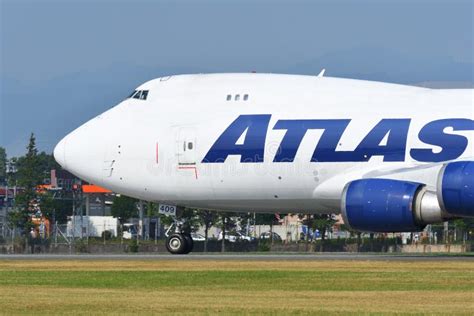
The US dominance is logical. American cargo carriers manage global networks, military charters, e-commerce logistics, and industrial freight contracts. The 747-400F’s payload and nose-door access provide flexibility in handling oversized or irregular cargo.
Outside the United States, the remaining aircraft are spread across Europe, Asia, and smaller cargo specialists. Operators such as Air Atlanta, AirZeta, and ROMCargo maintain multiple units, while others — including Aerotranscargo, Suparna Airlines, Terra Avia, One Air, Challenge Airlines, and Martinair — operate single examples.
The distribution underscores a broader industry reality: the 747-400F has transitioned from mainstream backbone to specialized asset.
Technical Capabilities: Why The 747-400F Still Matters
An aircraft survives in cargo markets because it can lift weight efficiently across distance. The 747-400F was engineered precisely for that mission.
The aircraft was offered with three engine families:
- Pratt & Whitney PW4056 / PW4062
- General Electric CF6-80C2
- Rolls-Royce RB211-524
Depending on engine selection and configuration, the aircraft’s maximum revenue payload ranges between approximately 247,000 and 272,600 pounds (112–123 metric tons). Operational range with maximum payload varies between roughly 2,300 and 4,455 nautical miles, with extended-range (ER) versions capable of reaching nearly 4,985 nautical miles.
Cargo volume remains constant regardless of engine type. The 747-400F accommodates:
- 30 main-deck pallets
- 9 lower-deck pallets
- 2 additional LD containers
Total cargo volume measures approximately 26,045 cubic feet (737.5 cubic meters).
These figures explain the aircraft’s longevity. The freighter can carry heavy loads over intercontinental distances without requiring ultra-long-range performance. Many cargo missions are volume-limited rather than range-limited, and the 747-400F delivers substantial cubic capacity.
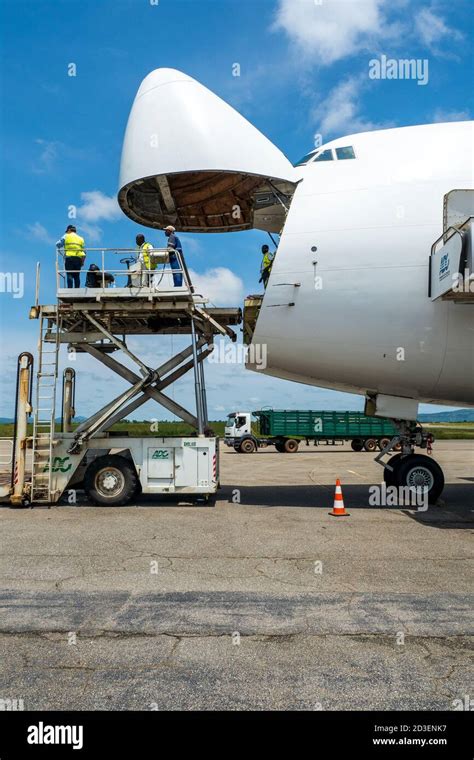
Another structural advantage is the hinged nose door. Few aircraft offer this loading configuration. It enables straight-in loading of oversized items such as aircraft engines, helicopters, industrial turbines, and large machinery components. In specialized cargo segments, this feature remains valuable.
However, physics is unforgiving. Four engines burn more fuel than two. Maintenance complexity is higher. Environmental regulations grow stricter. Economics inevitably shift.
How The Boeing 747-8F Compares In 2026
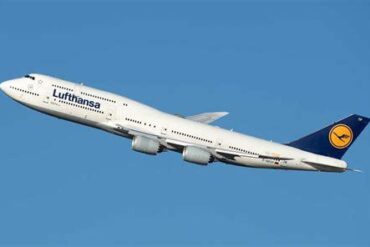
The natural successor to the 747-400F is the Boeing 747-8F. Boeing produced 107 freighter variants of the 747-8, and approximately 95 remain active as of late 2025 data.
The 747-8F delivers measurable performance improvements:
- Maximum revenue payload: 292,400 lbs (132,620 kg)
- Cargo volume: 30,266 cubic feet (857 cubic meters)
- Maximum range: 4,340 nautical miles
Compared with the 747-400F, the newer model offers roughly 17% more payload capacity and 16% greater cargo volume, while sacrificing only about 2–3% in range.
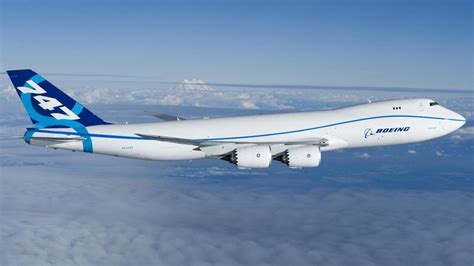
This improvement is significant. More cargo per flight translates to lower unit costs per ton transported. The 747-8F also benefits from improved avionics, aerodynamic refinements, and updated engines.
Yet the 747-8 program never reached the production scale of the -400 series. Only 138 commercial 747-8 aircraft were built in total, including passenger variants. The market had already begun pivoting toward large twin-engine aircraft.
The Age Factor: Can The 747-400F Continue Beyond 2030?
With an average fleet age exceeding 33 years, the 747-400F stands at a strategic crossroads. Heavy maintenance checks grow more expensive as aircraft age. Component obsolescence becomes a concern. Emissions and noise regulations tighten, particularly in Europe and parts of Asia.
That said, cargo markets are cyclical. During supply chain disruptions or unexpected capacity shortages, older freighters often reenter service. The COVID-19 pandemic demonstrated that air cargo demand can surge rapidly, temporarily extending the life of aging aircraft.
In purely economic terms, an older aircraft can remain viable if:
- Acquisition costs are low.
- Fuel prices remain manageable.
- Maintenance programs are optimized.
- Cargo yields justify operating costs.
The 747-400F still satisfies those conditions in certain niche operations, especially for charter missions or routes requiring nose-door capability.
The Coming Replacements: Airbus A350F And Boeing 777-8F
The future of long-haul cargo aviation is twin-engine.
Airbus is developing the A350F, derived from the successful A350 passenger platform. Manufacturer data indicates:
- Maximum payload: 244,700 lbs (110,994 kg)
- Range: 4,700 nautical miles
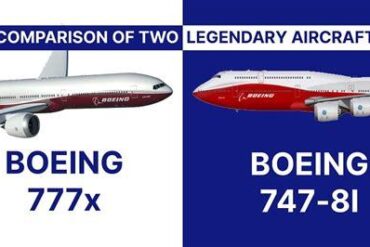
Boeing’s response is the 777-8F, part of the 777X family:
- Maximum payload: 247,500 lbs (112,264 kg)
- Range: 4,410 nautical miles
While these aircraft do not match the 747-8F’s peak payload, they deliver similar or better range with two engines instead of four. Reduced fuel burn, lower maintenance burden, and improved emissions performance give them a decisive economic advantage.
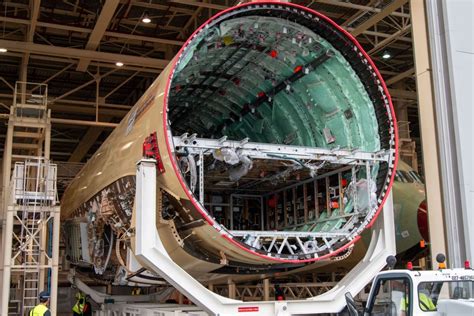
Cargo operators increasingly favor efficiency over raw size. The market is shifting from “biggest possible aircraft” to “most efficient per ton-mile.” The 747-400F was engineered in an era when fuel economics and environmental constraints were less restrictive.
The next decade will likely see accelerated retirements of the remaining -400Fs as A350Fs and 777-8Fs enter service in larger numbers.
Why The Boeing 747-400F Still Flies In 2026
Despite everything — age, fuel burn, regulatory pressure — 42 Boeing 747-400Fs remain active in 2026 because they continue to fulfill specific logistical roles:
- High-volume cargo corridors
- Military and government charters
- Oversized freight requiring nose loading
- Markets where capital expenditure on new aircraft is constrained
The aircraft’s structural durability is a testament to its engineering. Designed in the late 20th century, it still generates revenue in the third decade of the 21st.
However, this chapter is finite. As new-generation twin-engine freighters scale up production, the 747-400F will gradually transition from frontline hauler to specialized reserve asset.
The number — 42 aircraft worldwide — is more than a statistic. It represents the final operational cohort of a design philosophy built around four engines, massive lift capability, and global reach without compromise.
The 747-400F is no longer the undisputed queen of cargo aviation. But in 2026, it still rules enough skies to matter.