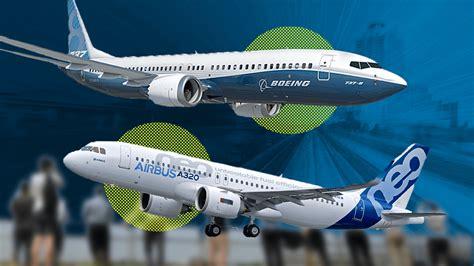
When evaluating commercial fleet expansion, the choice between the Boeing 737 MAX and the Airbus A320neo is among the most consequential decisions for an airline’s operational and financial trajectory. These two narrowbody aircraft define the heart of short-to-medium-haul air travel, with hundreds of global carriers relying on their efficiency, performance, and flexibility. But beneath the headlines and marketing gloss, the cost of these aircraft—real cost, not just list prices—carries enormous weight in shaping purchase decisions.
List Price vs. Real Transaction Value: A Misleading Benchmark
Publicly quoted list prices suggest the Boeing 737 MAX 8 costs $117.1 million, while the Airbus A320neo comes in at $110.6 million. However, industry insiders dismiss these figures outright. These catalog prices are largely symbolic, serving as a negotiation reference point. In practice, discounts of 40–60% are standard, depending on order volume, delivery timing, and customer loyalty.
Real-world market data, such as Ishka Global’s 2023–2024 aircraft valuations, offers a clearer window. According to their benchmarks:
- Airbus A320neo: ~$58 million (nearly new)
- Boeing 737 MAX 8: ~$52 million (nearly new)
These differences reflect not only manufacturer pricing strategy but also engine choice, cabin configurations, and backlog constraints.

Variant Complexity and Configuration Costs
The term “A320neo” or “737 MAX” is a simplification of a much broader family. Each includes multiple variants with distinct capacities and missions. For instance:
- Airbus A319neo: 120–150 seats – suited for lower-demand routes
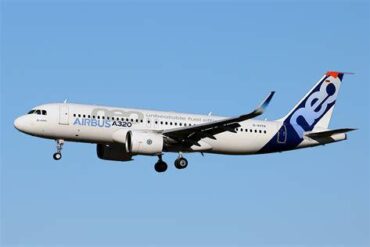
- Airbus A320neo: 150–180 seats – standard configuration
- Airbus A321neo/XLR: 180–244 seats – long-range and high-capacity missions
- Boeing 737 MAX 7: 138–153 seats – niche operator base
- Boeing 737 MAX 8: 160–178 seats – backbone model
- Boeing 737 MAX 9/10: Up to 230 seats – designed for dense markets
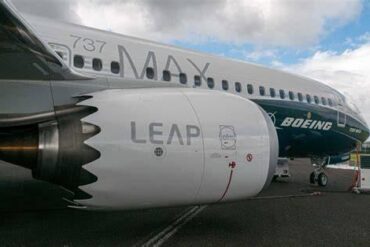
These variants exhibit price spreads of several million dollars. Engine selection also plays a pivotal role. The A320neo offers CFM LEAP-1A or Pratt & Whitney PW1100G, each with different upfront costs and maintenance profiles. Meanwhile, the 737 MAX series relies on the LEAP-1B, standardized across the lineup.
Delivery Timing: The Premium of Urgency
With delivery backlogs stretching well into the 2030s, airlines needing aircraft sooner must often pay a delivery premium. For those who can wait, steeper discounts are negotiable. In some cases, urgent deliveries can add $5–10 million to the price of a jet.
This creates an environment where availability, not list price, dictates deal attractiveness. Airlines with fleet flexibility hold the upper hand; those under growth or replacement pressure are often price-takers.
Lifecycle Cost: More Than Just the Sticker Price
Aircraft cost is rarely about acquisition alone. Airlines operate these jets for 20 to 30 years, so what matters most is total cost of ownership:
- Fuel Burn: The largest operational cost driver. Both jets offer ~15–20% efficiency gains over predecessors. Differences between the A320neo and MAX 8 are marginal.
- Maintenance: The Pratt & Whitney PW1100G has faced reliability issues, affecting shop visit frequency. The CFM LEAP series has proven more stable, though not perfect.
- Pilot Training: Fleet commonality saves millions annually. Airlines heavily invested in Airbus avoid retraining with the A320neo. Boeing operators benefit similarly with the MAX—except for post-MCAS changes.
- Residual Value: Historically, Airbus holds slightly higher resale value, buoyed by A321neo’s leasing strength.
- Spare Parts & Fleet Compatibility: Operational alignment with existing aircraft reduces transition costs significantly.
Fleet Legacy: A Major Cost Lever
Fleet composition can dramatically alter aircraft economics. A carrier with an all-Airbus fleet will find substantial cost savings in sticking with the A320neo due to pilot type rating continuity, shared spares, and consistent maintenance. The same holds true for Boeing operators.
However, Boeing’s 737 MAX program faced a setback when its MCAS system contributed to two fatal crashes. Though addressed, the result was that pilots previously trained on 737NG aircraft now required additional simulator time, cutting into Boeing’s advantage of transition simplicity.
For airlines like Southwest or Ryanair, with deep Boeing integration, the MAX remains optimal. Conversely, IndiGo, JetBlue, and Wizz Air favor Airbus due to long-standing fleet commitments. These dynamics often override even sizable cost differences in acquisition.
Leasing Market Realities and Pricing Convergence
Aircraft lessors are key players in modern fleet planning, and their assessments of residual value and lease rates matter greatly. Recent leasing rates show the A320neo and 737 MAX 8 closely aligned: $400,000/month lease rate for new examples (both models)
This parity confirms market confidence in both aircraft families. However, some lessors prefer Airbus slightly due to stronger A321neo residual demand. That said, Boeing’s production recovery and demand resurgence are helping it regain pricing strength.
Regional Trends and Airline Behavior
Aircraft preferences also follow regional and strategic patterns:
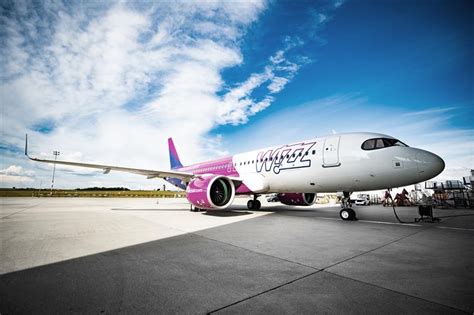
- Europe: Airlines like easyJet and Wizz Air lean heavily toward the A320neo family.
- North America: A mixed picture—JetBlue favors Airbus; Southwest is loyal to Boeing.
- Asia: IndiGo (Airbus) vs. Lion Air (Boeing) show how different strategies drive different alignments.
For many of these carriers, fleet standardization saves more money over time than a small discount on the sticker price.
A321neo and MAX 10: Shaping Future Value
The popularity of the A321neo and its XLR variant further reinforces Airbus’ upper hand in value retention. Boeing’s closest response, the 737 MAX 10, remains uncertified, limiting airline planning confidence.
This lack of a direct A321XLR competitor leaves Boeing with a strategic disadvantage in the high-capacity, long-range narrowbody space. Consequently, this influences how financiers assess value across the broader MAX series.
The Cost Summary: Not Just About the Aircraft
Ultimately, real aircraft cost depends on a matrix of interconnected factors:
- List Price: Not reflective of reality. Expect deep discounts.
- Net Acquisition Cost: A320neo (~$58M), 737 MAX 8 (~$52M)
- Delivery Timing: Urgency costs extra—millions more per jet
- Configuration: Engines, cabin layout, avionics, and fuel tanks shift price materially
- Operating Costs: Fuel, maintenance, crew training
- Fleet Compatibility: Huge leverage in pilot and parts costs
- Residual Value: Slight Airbus lead, depending on region and variant
- Leasing Confidence: Both are considered stable, with minor Airbus advantage
Final Take: Strategy Over Sticker
For airlines, the choice is rarely about which aircraft is better in abstract terms—it’s about which aircraft fits their unique system better. The MAX and A320neo families offer broadly equivalent economics, but nuanced distinctions in delivery timing, pilot training, reliability, and resale value push airlines in one direction or the other. Cost differences do exist. But they’re often dwarfed by the cost advantages of consistency. Airlines like Frontier or JetBlue see cost alignment in Airbus fleets. Southwest and flydubai find that same value in Boeing.
In 2025 and beyond, with production lines full, financing conditions tight, and sustainability mandates rising, airlines must make fleet decisions with surgical precision. It’s not enough to pick the aircraft with the lower net price. It’s about picking the one that costs less to own, operate, and integrate. And that is why two seemingly similar aircraft, sitting side-by-side on a runway, can represent vastly different strategic bets.