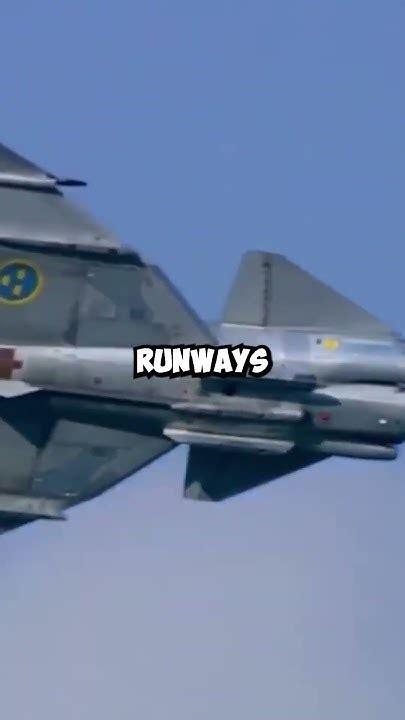
Modern fighter jets are marvels of engineering, built not only for speed and stealth but for executing some of the most gravity-defying maneuvers imaginable. Flying backwards, an ability that sounds more like science fiction than aviation reality, is one of the rarest and most visually astonishing feats a jet can perform. But it isn’t just about spectacle — this maneuver reveals a lot about the design, engineering, and tactical flexibility of the aircraft involved. While most jets are designed with forward motion in mind, a select few can perform controlled reverse movements under specific conditions.
The Harrier Jump Jet: A VTOL Pioneer
The AV-8B Harrier II stands out as the most iconic aircraft capable of true backward flight. Introduced by McDonnell Douglas and later developed further by Boeing and BAE Systems, the Harrier is equipped with vectored-thrust turbofan engines, enabling vertical and short takeoffs and landings (V/STOL). This technology is what grants the Harrier its unique aerial agility.
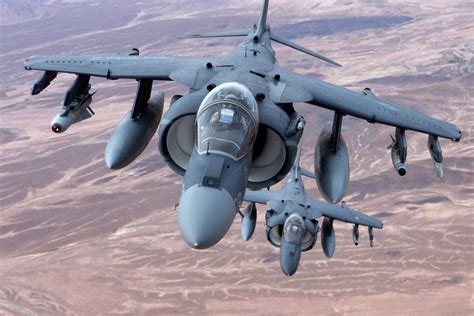
The Harrier’s Rolls-Royce Pegasus engine can redirect thrust downward or even slightly backward, letting the aircraft hover in place or drift in reverse. Unlike helicopters, which rely on spinning rotors to remain airborne, the Harrier’s lift comes from its powerful engine nozzles, which rotate to direct exhaust in various directions. These adjustable nozzles give the jet the power to take off vertically, land without a runway, or perform stationary hovering and backward glides — an ability that has proven critical during carrier operations and in combat zones with limited infrastructure.
In combat, the Harrier’s agility is not just a stunt; it provides life-saving tactical options, allowing the aircraft to operate in dense urban environments or forward operating bases where runways are impractical. It also enables rapid repositioning in mid-air, giving pilots a critical edge in both dogfighting and ground attack missions.
The F-35B Lightning II: A Technological Successor
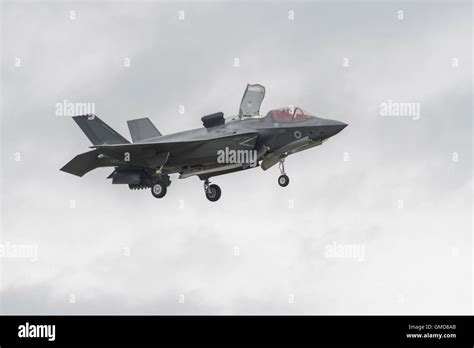
The Lockheed Martin F-35B Lightning II, part of the Joint Strike Fighter program, is the spiritual successor to the Harrier. Designed with advanced stealth, avionics, and multirole capability, the F-35B brings with it the ability to hover and, under specific conditions, fly backwards.
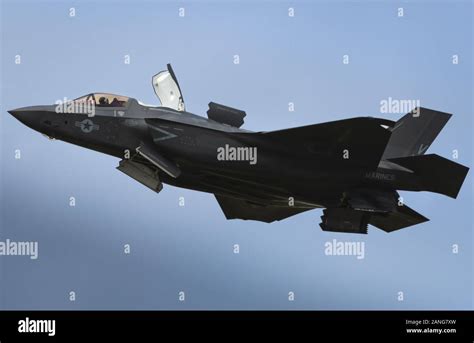
A defining moment came in 2018, when a Royal Air Force test pilot landed an F-35B backwards on the HMS Queen Elizabeth aircraft carrier. This demonstration wasn’t just a technical showcase — it was a signal to the world that the next generation of VTOL aircraft was fully operational. Like the Harrier, the F-35B uses vectored thrust, particularly through a LiftFan system combined with a swiveling rear exhaust nozzle. This system provides over 40,000 pounds of vertical thrust, allowing for hovering, vertical takeoff/landing, and limited backward motion.
Beyond the mechanics, this capability adds operational depth. In the chaos of combat, where runways may be compromised or ship decks under threat, having the ability to reverse-hover or conduct emergency backward landings can mean the difference between mission success and aircraft loss.
The F-22 Raptor: Thrust Vectoring vs True Backward Flight
The Lockheed Martin F-22 Raptor, a fifth-generation air superiority fighter, does not possess VTOL capabilities but can still exhibit behavior that resembles backward flight. The key lies in its thrust-vectoring nozzles, which allow the Raptor to manipulate the direction of its exhaust to perform radical maneuvers.
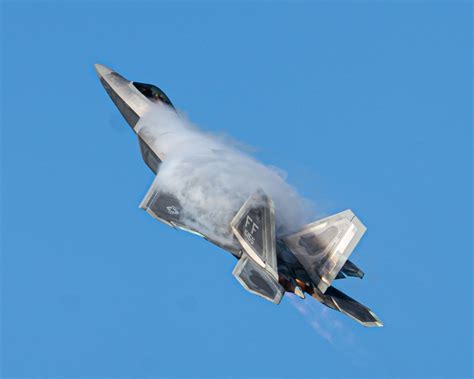
During post-stall maneuvers like the J-turn or Herbst maneuver, the F-22 can briefly fly tail-first through the air, appearing to drift backwards before regaining forward flight. This isn’t sustained backward flight like the Harrier or F-35B, but a short-term aerial dynamic enabled by the Raptor’s unmatched agility and engine control.
What makes this significant is that in a dogfight scenario, the ability to momentarily fly backward allows the F-22 to radically change its orientation and positioning, evading pursuers or setting up offensive opportunities. This combination of stealth, supercruise, and dynamic thrust manipulation makes it a dominant force in modern aerial warfare.
The Antonov An-2: Reverse in a Headwind
The Antonov An-2, a Soviet-era biplane, may seem out of place in a discussion about fighter jets, but it deserves mention due to its low-speed flying characteristics. Built for versatility, the An-2 can operate from short, unprepared airfields and is often used for parachute drops, agricultural work, and bush flying.
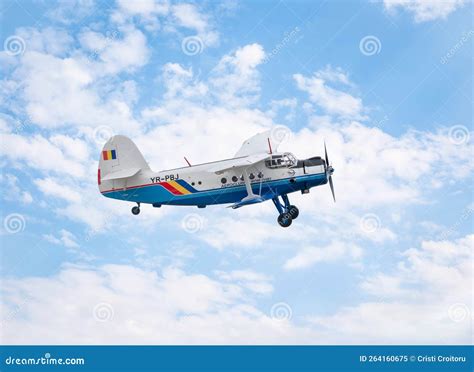
Its unique wing design and high-lift control surfaces allow it to fly at extremely low speeds — as slow as 30 mph. In the right wind conditions, particularly a strong headwind, the An-2 can hover in place or even appear to drift backward, though this is more an illusion caused by wind speed exceeding aircraft velocity than true reverse propulsion. Despite its simplicity, the An-2 showcases how aerodynamics and environmental conditions can produce phenomena similar to backward flight.
The CV-22 Osprey: Tiltrotor Versatility
The Bell Boeing CV-22 Osprey represents a hybrid between fixed-wing aircraft and helicopters. As a tiltrotor aircraft, it can rotate its nacelles (which house the engines and rotors) to transition between vertical and horizontal flight. This configuration allows for VTOL operations and helicopter-like maneuverability.
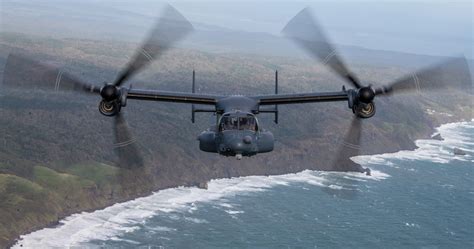
By tilting its rotors past the vertical axis, the Osprey can fly backward, hover in place, or descend vertically. Although not a traditional fighter jet, the Osprey plays a crucial role in special operations missions, where quick insertions and extractions are vital. Its ability to fly backward enhances its capacity to operate in tight landing zones or retreat without needing to turn around.
Helicopters and Rotorcraft: Naturally Backward-Capable
While the focus is on jets, it’s important to acknowledge that helicopters inherently possess the ability to fly in any direction — forward, sideways, and backward — due to the nature of their rotating main rotor. Aircraft like the AH-64 Apache, UH-60 Black Hawk, and even smaller choppers like the OH-6 Cayuse rely on rotor-generated lift and can change direction mid-air without needing forward momentum.
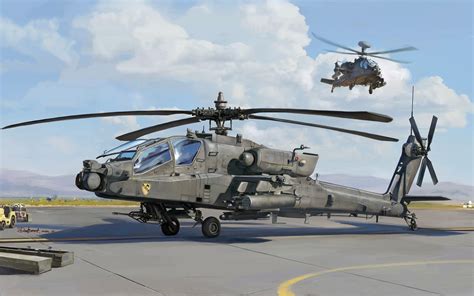
This omnidirectional control gives helicopters unmatched flexibility in close-quarters operations, such as urban warfare, jungle insertions, or search and rescue missions. The limitation, of course, is speed and range — jets outperform helicopters in those areas. But in terms of multidirectional control, rotorcraft remain the gold standard.
Understanding the Limits: Why Don’t All Jets Fly Backwards?
Despite how visually impressive backward flight may seem, it’s not a necessary or practical feature for most fighter aircraft. The complexities of thrust vectoring, weight distribution, and the loss of aerodynamic stability make sustained reverse flight both energy-intensive and tactically limited. For fixed-wing jets, lift is normally generated through forward motion, and reversing that can mean losing control, altitude, or both.
Most modern fighters prioritize speed, stealth, radar signature management, and combat efficiency. Designing for full reverse capability often comes with compromises in these areas. That’s why only specific aircraft — like VTOL jets or experimental planes — are built with true backward flight in mind.
Future Trends: Will Backward Flight Become Common?
As aerospace technologies continue to evolve, features like 3D thrust vectoring, adaptive airframes, and advanced flight control systems are increasingly common. However, backward flight is unlikely to become standard. Instead, designers will continue focusing on maneuverability, autonomy, and multi-domain operability.
Still, the legacy of aircraft like the Harrier and the emerging capabilities of the F-35B remind us that sometimes, flying backward is the best way forward.