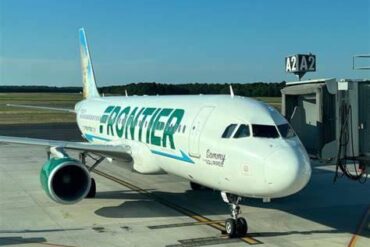
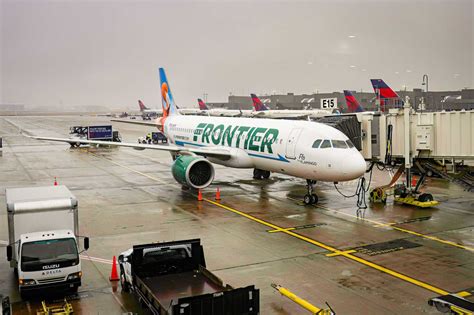
Passengers aboard Frontier Airlines Flight 1447 from Hartsfield-Jackson Atlanta International Airport (ATL) to San Francisco International Airport (SFO) faced an unexpected disruption when the aircraft had to be cleared after a passenger became disruptive and initially refused to leave. Early reports described the man as having a fake boarding pass, raising concerns about how an unauthorized traveler could have reached the aircraft. Frontier Airlines has since disputed that description, saying the passenger was a legitimate customer who was simply sitting in the wrong seat.
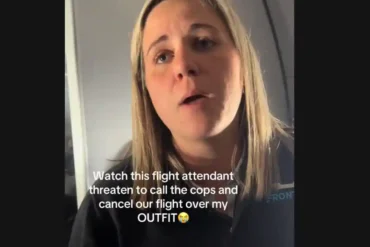
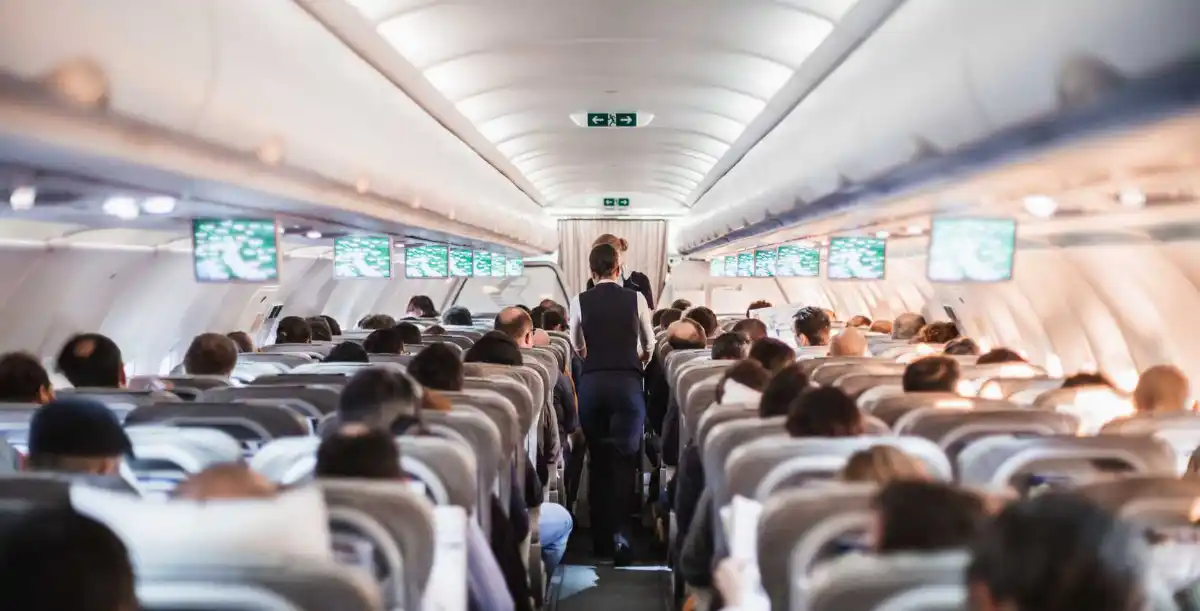
The incident occurred in Atlanta last week and attracted attention after passenger Kathryn Johnson recorded video inside the aircraft. The footage showed law enforcement officers moving through the cabin while passengers gathered their belongings and exited. What initially appeared to be a potential aviation security incident was subsequently clarified by Frontier as a case involving a wrong-seat dispute that escalated into disruptive behavior.
The distinction is important because a passenger sitting in the wrong seat presents a very different security scenario from someone entering an aircraft with a fraudulent boarding pass. Frontier said there was no evidence that the man had bypassed airport security, evaded boarding controls, or boarded the aircraft without authorization. Instead, the airline said the customer became disruptive while crew members were dealing with the seating issue.
Frontier Airlines Says There Was No Fake Boarding Pass
Passenger accounts circulating online initially characterized the incident as involving a man with a fake boarding pass who refused to leave the aircraft. Those reports were based on information provided by Johnson, whose video helped bring the incident to wider attention. Several aviation outlets subsequently reported the same basic account before Frontier supplied additional information about what had actually happened.
Frontier later told Simple Flying that the fake boarding pass claim was incorrect. The airline explained that the customer was in the wrong seat and became disruptive during his interaction with the crew. Because of his behavior, employees instructed him to deplane. He initially refused to comply, which ultimately resulted in law enforcement becoming involved.
“There was no fake boarding pass,” a Frontier spokesperson said. The airline’s clarification changes the nature of the event considerably. Rather than being an unauthorized passenger incident, the situation involved a legitimate traveler whose conduct after the seating dispute led the crew to remove him from the aircraft.
The passenger eventually agreed to leave after interacting with law enforcement. Once he had deplaned, the aircraft could proceed with its scheduled operation. However, because officers became involved and passengers were required to leave the aircraft, the incident still created a significant operational interruption for everyone aboard.
Why A Wrong Seat Can Become a Serious Airline Disruption
Airline crews have considerable responsibility for maintaining order inside an aircraft, particularly during boarding and the final stages before departure. A disagreement over seating may appear relatively minor from the perspective of passengers watching from nearby, but the situation can become much more serious when a traveler refuses a direct instruction from the crew.
Once a passenger becomes disruptive and refuses to deplane, flight attendants may need to involve airport security or local law enforcement. The crew cannot simply proceed with a departure while an individual is refusing to follow instructions that affect the safe and orderly operation of the flight. In practical terms, that can mean delaying the entire aircraft and potentially requiring every passenger to leave while the situation is resolved.
That appears to be what happened with Flight 1447. The aircraft was cleared, officers entered the cabin, and passengers collected their belongings before exiting. Although the original dispute concerned a seat, the refusal to leave transformed the event into a much larger operational problem.
Frontier Incident Was Not an Unauthorized Passenger Case
The Atlanta incident has drawn comparisons with several cases in which passengers actually managed to board aircraft without proper authorization. Those cases can involve far more serious security concerns, but they should not be confused with what happened aboard Frontier Flight 1447.
In December 2024, for example, Delta Air Lines discovered an unticketed passenger aboard Flight 487 from Seattle to Honolulu while the Airbus A321 was preparing for departure. The aircraft returned to the gate, passengers deplaned, and additional screening was conducted. That situation involved a person who had passed through security but bypassed identity and boarding-status checks.
Another case involved a woman who reached a Delta flight from New York’s John F. Kennedy International Airport to Paris Charles de Gaulle without a valid boarding pass and visa. According to federal court documents, she initially could not pass through TSA because she lacked a boarding pass, but later entered through an employee lane and reached the gate. The problem was not discovered until the aircraft was approaching Paris.
Fake Boarding Pass Cases Can Have Wider Consequences
A more recent example occurred in Houston in May 2026, when a 25-year-old man allegedly used a fake boarding pass to board a United Airlines flight bound for Los Angeles. The passenger was eventually discovered not to be listed on the aircraft’s passenger manifest. The aircraft returned to the gate, passengers deplaned, and personnel searched the aircraft while the situation was investigated.
That case illustrates why the initial description of the Frontier incident generated so much attention. A person using fraudulent credentials to reach an aircraft could raise questions about airport security, identity verification, passenger manifests, and the effectiveness of boarding controls.
Frontier’s explanation shows that none of those circumstances applied in Atlanta. The passenger was, according to the airline, an authorized customer. His problem was not how he entered the aircraft but what happened after he was found sitting in the wrong seat.
Frontier Flight 1447 Highlights the Impact of Unruly Passengers
Even without a fake boarding pass or security breach, unruly passenger behavior can have consequences for an entire aircraft. Flight 1447 demonstrates how a seemingly ordinary seating issue can escalate when a customer refuses to cooperate with crew instructions.
For passengers, the most visible consequence was having to leave the aircraft and wait while the situation was handled. For the airline, the disruption involved crew time, law enforcement intervention, passenger handling, and the additional procedures required before the flight could depart.
Frontier’s clarification therefore provides an important correction to the original reports. The man was not a stowaway and did not board Flight 1447 using a fake boarding pass. He was a passenger who, according to the airline, was in the wrong seat, became disruptive, and initially refused to deplane. Law enforcement intervention eventually resolved the situation, allowing the Frontier flight to continue to San Francisco.