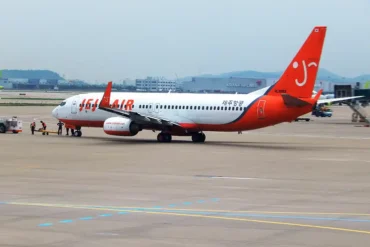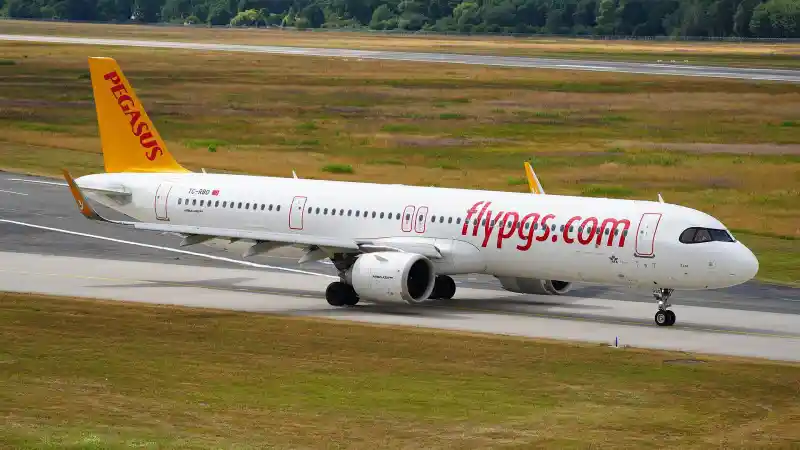
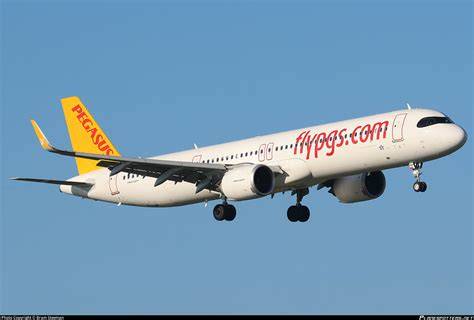
A Pegasus Airlines Airbus A321neo bound for Istanbul came to a halt on a Frankfurt runway after turning the wrong way on entry, an error the crew corrected within minutes before departing safely in the permitted direction.
Pegasus PC996’s Wrong-Way Entry on Frankfurt Runway 18
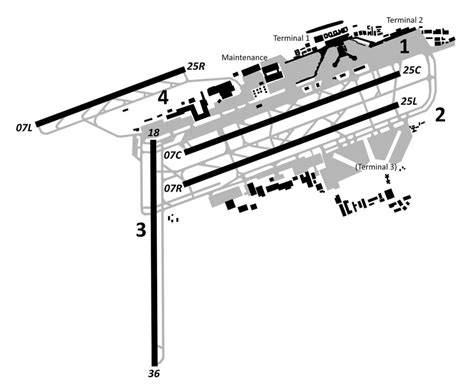
Pegasus Airlines flight PC996, a scheduled service from Frankfurt Airport (FRA) to Istanbul Sabiha Gökçen International Airport (SAW), lined up on the runway in the wrong direction on a Tuesday evening. Air traffic control had cleared the jet to enter runway 18 for a southbound takeoff, and the aircraft taxied onto the strip roughly 1,260 meters (4,134 feet) along from taxiway S. Instead of beginning its takeoff roll toward the south, the crew turned north — effectively aligning with runway 36, the reciprocal heading that is never used for departures at FRA.
The aircraft, registered TC-RDO, had reached only about 35 knots (65 km/h) when the pilots brought it to a stop, a speed low enough that the situation never approached a takeoff attempt. The flight is one of three daily Pegasus services linking Frankfurt and Sabiha Gökçen, a route sustained by Germany’s sizeable Turkish community and steady two-way demand between the two countries.
Why Frankfurt’s Runway 18 Only Permits Southbound Takeoffs
Runway 18 at Frankfurt is a single-direction departure strip, and the restriction is not administrative convenience but traffic separation. A northbound departure from the reciprocal runway 36 would send an aircraft’s climb-out path into the corridor used by arriving traffic on runway 25R, creating a conflict that controllers cannot resolve once a jet is rolling. Aircraft using runway 18 therefore depart south only, serving as an overflow option alongside the parallel 07R/25L and 07C/25C pairs when winds are not blowing predominantly east-to-west or west-to-east.
That geometry explains why the crew’s turn was caught so quickly. Controllers monitoring the surface movement had a jet pointing the wrong way on a one-way departure strip, and the pilots themselves recognized the misalignment before adding meaningful thrust. After stopping, the A321neo exited via taxiway M, about 530 meters (1,739 feet) from its entry point, returned to taxiway S, and re-entered the runway through the same taxiway roughly seven minutes later. The second attempt lined up correctly on runway 18.
Pegasus Confirms Crew Coordinated With Frankfurt Controllers
A Pegasus Airlines spokesperson confirmed the sequence of events, stating that the flight “stopped safely on the runway at Frankfurt Airport after turning in the wrong direction on entering it,” that “there was no attempt to take off,” and that the crew “identified the error and, in coordination with air traffic control, vacated the runway before re-entering it and departing safely.” The carrier added that the event had been reported under standard safety procedures and remains under review, and that nothing is more important to Pegasus than the safety of its guests and crew.
German air navigation service provider DFS confirmed the occurrence was reported to the responsible authorities, noting that any decision on whether an investigation proceeds, and at what scale, rests with the BFU, Germany’s federal aircraft accident investigation bureau. The reason the crew initially turned the wrong way has not been disclosed.
Runway Incursion Classification and the Flight’s On-Time Recovery
The event sits in a distinct category from most runway incursions reported in recent years, which typically involve aircraft entering a runway without clearance or attempting to land or take off without authorization. Here, clearance had been issued properly and the jet was lawfully on the strip; the deviation was directional, not procedural. That distinction matters for how regulators assess risk, since the exposure window lasted seconds rather than minutes and ended at taxi speed.
Tracking data showed PC996 departing Frankfurt at 6:09 PM, a 35-minute delay against its 5:35 PM schedule. The flight recovered the gap en route, touching down at Sabiha Gökçen at 9:36 PM local time — four minutes ahead of its 9:40 PM estimate — after just under two and a half hours in the air on a southeasterly track. Whether the BFU opens a formal file, and what any report concludes about cockpit orientation on entry, remains the open question.