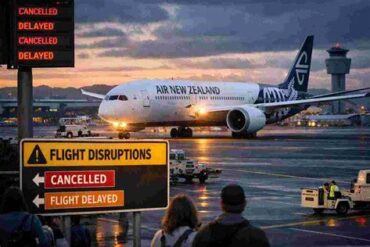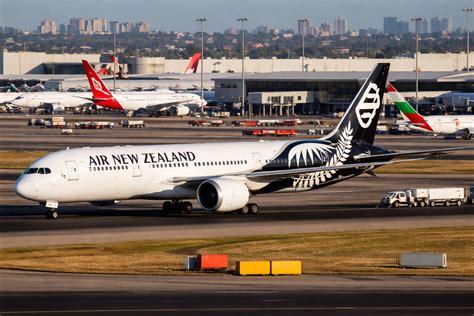
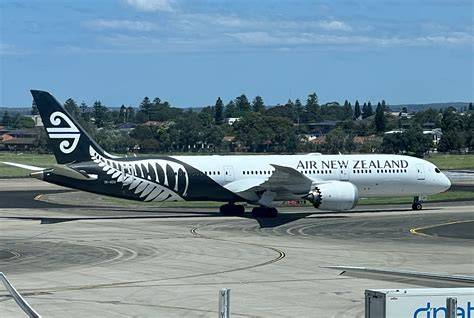
Air New Zealand has built a reputation as the principal gateway between New Zealand, the South Pacific, Asia, Australia, and North America, but its international network has changed significantly over the past decade. The carrier has withdrawn from several destinations as the airline responded to the COVID-19 pandemic, changing demand, aircraft retirements, and persistent engine availability problems. As a result, 11 airports have lost Air New Zealand service over the period covered by the airline’s recent network changes.
For travelers looking at the carrier’s current network, some of the cuts are particularly notable. Air New Zealand once connected Auckland directly with destinations as far apart as London, Buenos Aires, Chicago, Seoul, Tokyo, and Ho Chi Minh City. Several of these routes were strategically important long-haul links, while others provided unique connections that were difficult for competing airlines to replace.
The changes also show how aircraft availability can influence an airline’s route map. Air New Zealand has faced shortages linked to Rolls-Royce Trent engine issues and maintenance delays, limiting the number of aircraft available for international flying. Rather than maintaining every destination, the airline has concentrated its available capacity on routes it considers more sustainable within its wider network.
Air New Zealand No Longer Flies to Buenos Aires, Vietnam, or Seoul
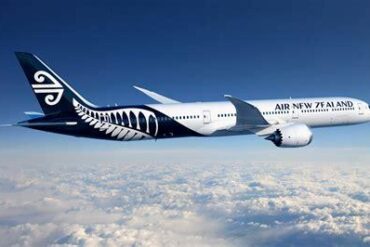
One of the most significant cuts was Auckland–Buenos Aires, which ended during the pandemic period. The route was Air New Zealand’s only nonstop connection between New Zealand and South America. It was operated using aircraft including the Boeing 777-200ER and Boeing 787-9 Dreamliner, giving passengers a direct alternative to itineraries requiring a connection elsewhere.
The loss of Buenos Aires removed an important long-distance link from Air New Zealand’s network. Today, travelers between New Zealand and South America have fewer nonstop options, with LATAM continuing to connect Auckland with Santiago. Air New Zealand has not restored its Buenos Aires service.
The airline also stopped flying to Tan Son Nhat International Airport in Ho Chi Minh City, with the last service operating in 2018. The route was particularly relevant to seasonal leisure demand because New Zealand travelers could use the service to reach warmer Southeast Asian destinations during the Southern Hemisphere winter. Air New Zealand had used both the Boeing 787-9 and Boeing 767-300ER on the route.
More recently, Seoul Incheon disappeared from the carrier’s nonstop network. Air New Zealand ended Auckland–Incheon service in 2025 as aircraft availability remained constrained. The decision means Korean Air has become the only operator on the nonstop Auckland–Seoul route, leaving Air New Zealand without a direct service to South Korea.
London and Chicago Were Major Long-Haul Route Cuts
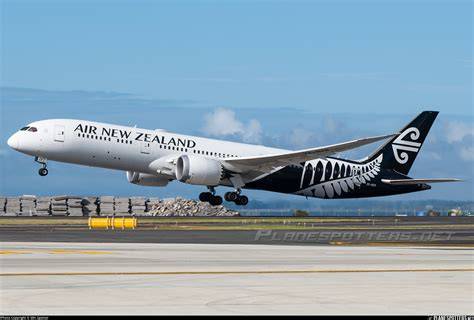
The withdrawal from London Heathrow remains one of the most recognizable changes to Air New Zealand’s network. The airline ended its Auckland–London service in 2020, marking a major shift away from the European market. Air New Zealand subsequently concentrated more heavily on the Pacific Rim and North American network.
The airline’s famous NZ1 flight number was reassigned to its New York–Auckland operation. There has also been speculation surrounding a potential return to the United Kingdom, including interest in London Gatwick slots, although the Heathrow route itself has not returned.
Chicago was another important long-haul destination removed from the schedule. Air New Zealand ended its nonstop Auckland–Chicago O’Hare service in 2024 amid continuing aircraft and engine availability challenges. The route had been one of the airline’s longest services to the United States and had been operated by the Boeing 787-9 Dreamliner.
The Chicago cancellation illustrates how route decisions are not necessarily determined by passenger demand alone. Even a strategically important destination can become difficult to sustain when an airline does not have enough aircraft available to maintain its planned schedule.
Tokyo Haneda and Osaka Were Replaced by Narita
Japan has also experienced a major restructuring within Air New Zealand’s network. The airline previously operated services to both Tokyo Haneda Airport and Osaka Kansai International Airport, but those operations were eventually removed.
The Auckland–Haneda route ended in 2018, despite Haneda’s considerable appeal to business travelers because of its proximity to central Tokyo. Air New Zealand had used the Boeing 787-9 Dreamliner on the service.
Osaka was also removed from the network in 2020. The route had been operated on a seasonal and charter basis, including Boeing 767-300ER operations. Rather than maintaining multiple Japanese gateways, Air New Zealand consolidated its Japan operations around Tokyo Narita International Airport.
This means the airline still has a presence in Japan, but its network is more concentrated. For passengers heading to Osaka or central Tokyo, that distinction can matter because Narita and Haneda serve different parts of the greater Tokyo region, while Osaka requires onward travel from the Tokyo gateway.
Air New Zealand Also Cut Four Regional Destinations
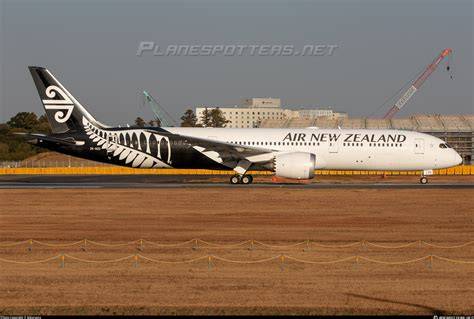
The network reductions were not limited to long-haul international routes. Air New Zealand also removed several short-haul and regional destinations, demonstrating how changes to its network have affected passengers closer to home.
The Auckland–Kapiti Coast service ended in 2018. Air Chathams later operated the route for several years before ending its own service in July 2026. This represented another example of a smaller carrier temporarily filling a gap created by Air New Zealand’s network restructuring.
Norfolk Island was another unusual destination to disappear from the Air New Zealand network. The airline operated nonstop services from Auckland for several years before ending them in 2017. It was particularly significant because the route represented the only nonstop connection between New Zealand and the Australian territory at the time. Air Chathams later operated the Auckland–Norfolk Island service before ending it in 2025.
Air New Zealand also previously served Norfolk Island from Brisbane and Sydney, although those services ended in 2021.
Port Vila and Whanganui Completed the 11-Airport List
Another notable withdrawal occurred at Bauerfield International Airport in Port Vila, Vanuatu. Air New Zealand ended its nonstop Auckland–Port Vila service in 2016 amid concerns surrounding runway quality at the airport. The route was an important connection between New Zealand and Vanuatu’s largest city, but the carrier ultimately withdrew from the market.
Solomon Airlines subsequently became the only operator on the Auckland–Port Vila route, giving the Pacific island market an alternative connection after Air New Zealand’s departure.
The final destination in the group was Whanganui, a small New Zealand city. Air New Zealand had previously operated multiple daily flights from Auckland, but eventually consolidated service around nearby Palmerston North Airport. The change reflected the carrier’s broader effort to rationalize its domestic network and concentrate operations where they could be supported more efficiently.
Taken together, these 11 airport withdrawals reveal how dramatically Air New Zealand’s network has evolved. Some cuts were driven by the pandemic, others by aircraft availability, operational considerations, airport infrastructure, or network consolidation. The airline remains a major force across the South Pacific, but its route map today is considerably more concentrated than it was before these changes.
For passengers, the biggest lesson is that an airport appearing on an older Air New Zealand route map does not necessarily represent a destination that remains available today. Buenos Aires, Ho Chi Minh City, Seoul, London, Chicago, Osaka, Haneda, Kapiti Coast, Norfolk Island, Port Vila, and Whanganui all illustrate different reasons why an established airline can ultimately withdraw from a market.