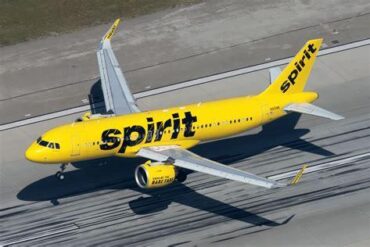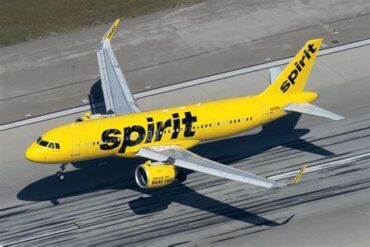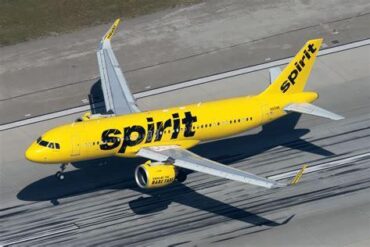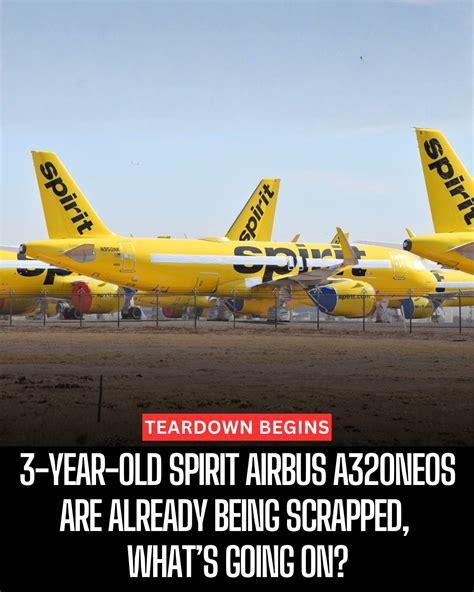
The commercial aviation industry has spent years celebrating the Airbus A320neo family as one of the greatest successes in modern aircraft manufacturing. Airlines have ordered thousands of them, lessors have competed for delivery slots, and the A321neo in particular has become one of the most sought-after commercial aircraft ever built. Yet in an extraordinary contradiction, two Spirit Airlines Airbus A320neos only around four years old were recently sent to the scrapyard, where they were dismantled rather than returned to passenger service.
The aircraft, registered N950NK and N959NK, represent an almost surreal outcome for jets belonging to a family that remains in enormous demand. One was approximately four years old when it was acquired for dismantling, while the other was only about six months older. Commercial airliners are normally expected to generate revenue for decades, and even aircraft that eventually become uneconomical to operate are usually several times older before being retired. Seeing such young A320neos dismantled therefore raises an obvious question: why would anyone scrap a nearly new Airbus A320neo when airlines are desperate for more aircraft?
The answer is closely connected to an increasingly unusual imbalance in the aircraft leasing and maintenance market. These jets were not simply worthless airframes. Their Pratt & Whitney PW1100G geared turbofan engines represented valuable assets at a time when airlines around the world have been struggling with engine shortages, inspections, repairs, and long maintenance backlogs. In this environment, an aircraft can paradoxically be worth more as a collection of components than as a complete passenger jet.
The story also illustrates how dramatically the economics of aircraft ownership can change when a critical component becomes scarce. The A320neo itself remains highly desirable, but the value of the engines installed on some examples has become so significant that relatively young airframes can be sacrificed to recover those engines. It is one of the clearest demonstrations yet that aircraft value is not always determined by the age, popularity, or replacement cost of the aircraft as a whole.
Spirit Airlines’ Collapse Put Young A320neos on the Market
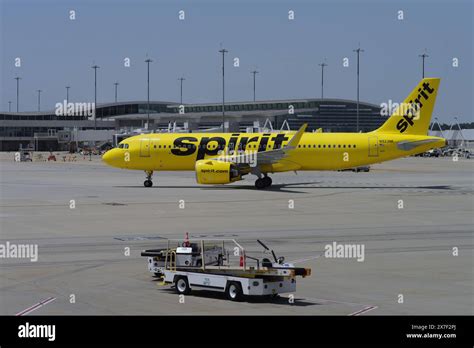
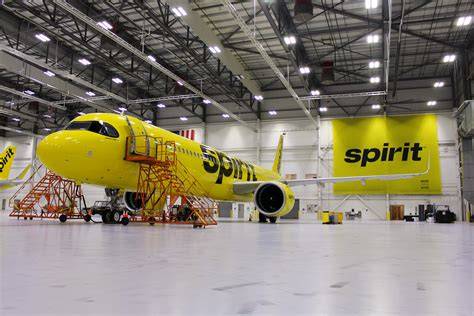
A major catalyst for this unusual situation was the collapse of Spirit Airlines. On May 2, 2026, Spirit ceased operations after years of financial pressure, fleet difficulties, and strategic challenges. The shutdown released a large number of Airbus aircraft onto the market at once, including A320s, A321s, A320neos, and A321neos.
For lessors and aircraft traders, this created a complicated situation. A sudden influx of aircraft can produce opportunities, but it can also make certain airframes difficult to place with new operators, particularly when their configuration, maintenance status, engine availability, or ownership costs do not align with current demand. Some former Spirit aircraft found new homes, demonstrating that the fleet still contained valuable assets. Others were less fortunate.
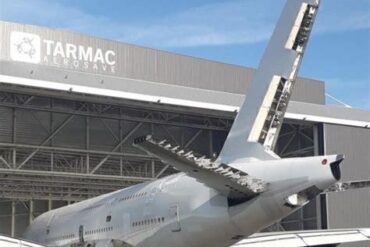
N950NK and N959NK had already been rejected by Spirit before the airline’s final shutdown. EirTrade Aviation purchased the two aircraft in February 2026 and moved them to Phoenix Goodyear Airport in Arizona, an important center for aircraft storage, maintenance, teardown, and recycling. Rather than returning to airline service, the two young A320neos entered the dismantling process.
Their fate is particularly striking because of their age. At roughly four years and three and a half years old, respectively, they became the youngest examples of the current generation of commercial airliners known to have been scrapped. That distinction would be remarkable under any circumstances, but it becomes even more extraordinary when the aircraft type involved is one of the most commercially successful aircraft families ever produced.
The A320neo is not an obsolete design waiting for replacement. Airbus continues to increase production to satisfy enormous demand, while the backlog for the A320neo family extends years into the future. Airlines and leasing companies continue to place large orders because the aircraft offers substantially improved fuel efficiency compared with earlier-generation A320-family aircraft.
Under normal market conditions, dismantling such a young aircraft would make little economic sense. The fact that it happened anyway tells us that the economics surrounding certain A320neo engines have become highly unusual.
Why the Pratt & Whitney PW1100G Changed the Economics
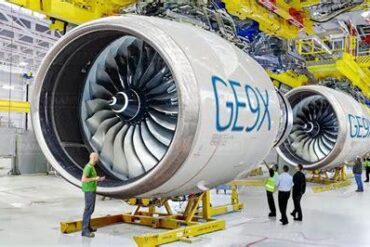
The A320neo can be powered by either the CFM International LEAP-1A or the Pratt & Whitney PW1100G. Both were developed to deliver major efficiency improvements over the previous generation of A320-family engines, but the PW1100G has encountered serious durability and maintenance challenges.
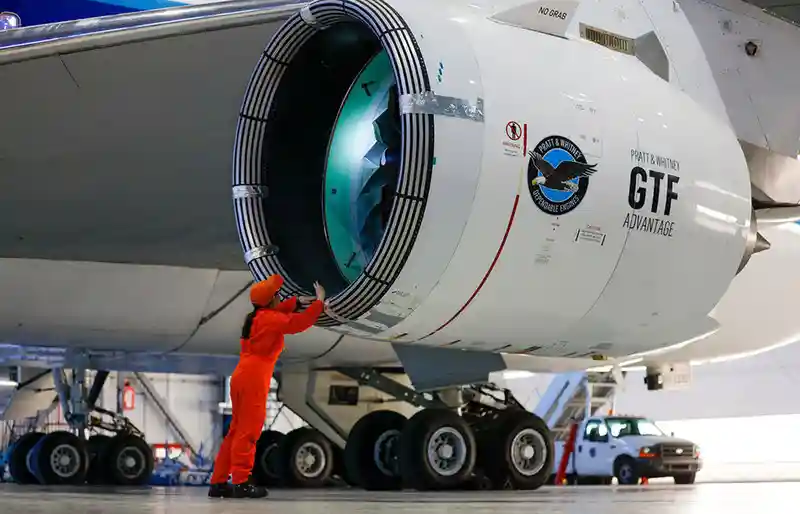
The PW1100G belongs to Pratt & Whitney’s geared turbofan family. Its defining feature is a gearbox positioned between the low-pressure turbine and the fan. Instead of forcing the fan, compressor, and turbine to operate at the same rotational speed, the gearbox allows different sections of the engine to operate closer to their ideal speeds. The result can be significant efficiency gains, particularly through reduced fuel consumption and improved overall propulsion efficiency.
The engineering concept has proven highly effective in terms of fuel economy. The problem has been durability and the enormous maintenance consequences associated with certain manufacturing and design issues. Air seal problems, knife-edge seal concerns, excessive vibration, and other technical difficulties have resulted in inspections, repairs, engine removals, and aircraft groundings.
One of the most serious developments involved contaminated metal powder used in the production of certain engine components. The issue created concerns about premature cracking and led to inspections and recalls affecting a large number of engines. Pratt & Whitney and its maintenance partners then faced the enormous challenge of processing thousands of engines through a global MRO network that was not designed to handle such a sudden workload.
That created a chain reaction throughout the airline industry. Aircraft were waiting for engines. Engines were waiting for shop visits. Maintenance facilities were waiting for parts. Airlines were waiting for repaired engines. At the same time, new aircraft deliveries could also be affected by engine availability.
The result was a situation in which an aircraft that was technically available on paper could remain grounded for months because its engine was unavailable.
The Engine Can Be Worth More Than the Airframe
This is the central reason the Spirit A320neos ended up at the scrapyard.
An airliner is not economically valued simply as one object. It is an aggregation of thousands of components, each with its own market value, maintenance condition, and demand. Engines are normally among the most valuable components on an aircraft, and that relationship becomes even more pronounced when a particular engine model is in short supply.
The PW1100G shortage effectively transformed the economics of some A320neos. An airline or lessor looking at a young aircraft could face a difficult choice: spend substantial money on reactivation, maintenance, certification, insurance, crew compatibility, cabin refurbishment, and future operating costs, or remove the engines and sell them into a market where operators are desperate for replacements.
The second option can sometimes generate a better return.
This sounds bizarre because the airframe itself may have decades of potential life remaining. But an aircraft is only useful as a complete machine if its economics make sense. If the cost of placing that aircraft back into service is high while its engines can immediately command a premium, dismantling can become rational even when the aircraft is exceptionally young.
The situation is also influenced by the difference between an engine and an airframe in the aftermarket. An engine can be removed relatively quickly and transferred into another aircraft, subject to its maintenance status and certification requirements. An airframe, by contrast, represents a much larger collection of fixed costs and operational obligations.
Once the engines have been removed, the remaining aircraft can be dismantled for landing gear, avionics, auxiliary power units, flight deck equipment, cabin components, and other usable parts. The aluminum and composite structure itself can then be recycled or sold for relatively modest value.
That makes the aircraft effectively a parts inventory with wings.
More A320neos Are Being Dismantled for Their Engines
The Spirit aircraft are remarkable, but they are not isolated cases. Other A320neo-family aircraft have followed a similar path, demonstrating that the underlying market distortion is much broader than one airline’s collapse.
N969NK, another young Spirit A320neo, was acquired by Killick Aerospace shortly after Spirit ceased operations and moved to Marana Pinal Airpark in Arizona. Like the aircraft at Goodyear, it is expected to be dismantled, with its engines representing an important part of the economic rationale.
Even before the former Spirit aircraft reached these storage facilities, nearly a dozen A320neos had reportedly been scrapped primarily to recover their engines. Two A321neos had also been dismantled despite the extraordinary demand for the larger model.
That last point is particularly revealing. The A321neo has become arguably the most commercially important single-aisle aircraft in the world, filling the gap between conventional narrowbody aircraft and smaller widebody jets on many routes. Its longer range and large passenger capacity have made it a favorite among airlines seeking to replace older 757s and operate routes that once required larger aircraft.
Yet even A321neos have been sacrificed when their engines were considered more valuable than the aircraft’s future operating potential.
Two IndiGo A321neos were reportedly parted out after completing standard six-year lease terms, with the engines becoming the principal target. In another extraordinary example, Wizz Air has parked several A321XLRs and used them as sources of GTF engines for other aircraft.
The A321XLR is one of the newest and most strategically important members of the A320neo family. Seeing aircraft of this type sidelined so early in their lives demonstrates just how seriously engine availability can affect fleet planning.
The Spirit A320neo Story Is About More Than Spirit
It would be easy to look at these aircraft and conclude that Spirit Airlines simply operated an unsuitable fleet. The reality is more complicated.
Spirit’s fleet problems were part of a much wider structural challenge affecting operators of Pratt & Whitney-powered Airbus aircraft. When a large percentage of an airline’s narrowbody fleet depends on engines experiencing widespread maintenance problems, the effect extends far beyond individual aircraft.
An airline may have aircraft on its books but lack the engines necessary to fly them. That reduces available capacity, disrupts schedules, increases reliance on wet-lease or ACMI operators, and makes aircraft utilization less predictable. It can also force airlines to postpone growth plans or retain older aircraft longer than intended.
The impact has been visible at numerous operators. Hundreds of A320neo-family aircraft have spent periods on the ground because of GTF-related issues, creating a capacity shortage that has affected airlines and leasing companies worldwide.
India’s Go First provides one of the most dramatic examples of how engine reliability problems can interact with broader financial weaknesses. The airline suspended operations in 2023 after a severe financial crisis, and it had argued that Pratt & Whitney engine problems contributed to its difficulties because a large portion of its fleet was grounded.
Spirit’s own problems cannot be attributed to one technical issue, but the broader engine shortage undoubtedly complicated the operating environment for airlines dependent on Pratt & Whitney-powered Airbus narrowbodies.
The Same Problem Has Spread to the Airbus A220
The consequences of Pratt & Whitney’s GTF problems are not limited to the A320neo family. The PW1100G is one member of the broader PW1000G engine family, which also includes the PW1500G used by the Airbus A220 and the PW1900G used by Embraer’s E2 family.
The A220 presents an even more difficult situation because airlines do not have the same engine choice available to them. Unlike the A320neo, which can be ordered with either Pratt & Whitney or CFM engines, the A220 relies on the PW1500G.
That means an A220 operator cannot simply switch to an alternative engine manufacturer if the installed powerplant becomes difficult to maintain. Any widespread engine problem therefore has a direct effect on the availability of the aircraft itself.
EgyptAir retired its A220 fleet in 2024, while Air Austral has also planned to move away from the type. SWISS has taken an especially unusual approach by retiring its smaller A220-100s and using their engines to support grounded A220-300s. The logic is straightforward: the larger A220-300 can provide better economics on many missions, so transferring scarce engines to the more useful aircraft can generate more value than keeping every airframe operational.
This illustrates an important lesson from the A320neo situation. Fuel efficiency is only valuable when an aircraft is available to fly. A theoretically economical airplane sitting on the ground because its engine is unavailable produces no revenue and saves no fuel.
Why This Probably Will Not Last Forever
The current economics should not be interpreted as evidence that the A320neo family has become undesirable. Quite the opposite is true.
The basic aircraft remains one of the strongest products in commercial aviation. Airbus continues to receive enormous orders, and airlines continue to value the A320neo family for its fuel efficiency, range, passenger capacity, and commonality with previous A320-family aircraft.
What has changed is the relative value of certain engines.
As Pratt & Whitney works through the GTF inspection and repair backlog, production and maintenance capacity improve, and more replacement engines become available, the shortage should gradually become less severe. Once airlines no longer have to compete aggressively for every serviceable PW1100G, the extraordinary premium attached to those engines should decline.
At that point, dismantling a four-year-old A320neo will become much harder to justify economically.
The airframes also retain significant value because the A320neo is not fundamentally obsolete. Its systems, cabin, avionics, landing gear, and structure are all based on a highly successful aircraft platform with a large worldwide support network. The problem is that current market conditions have temporarily distorted the relationship between the value of the complete aircraft and the value of its most important individual components.
What the Young Spirit A320neos Tell Us About Modern Aviation
The dismantling of N950NK and N959NK is ultimately a remarkable example of how the aviation industry can turn conventional assumptions about aircraft value upside down.
A four-year-old passenger jet should normally be an asset with decades of productive life ahead of it. An A320neo should be especially valuable because airlines are actively seeking more of them. Yet when the right component becomes scarce enough, the market can decide that the engine is worth more than the airplane carrying it.
That does not mean the A320neo has failed. It means the opposite: the demand for serviceable engines has become so intense that individual components can command extraordinary value. The aircraft itself becomes collateral damage in a much larger maintenance and supply-chain problem.
The Spirit aircraft therefore represent an unusual moment in commercial aviation rather than the beginning of a permanent trend. Once PW1100G availability normalizes, the incentive to sacrifice young A320neos should weaken considerably. Until then, however, aircraft storage facilities may continue to contain scenes that would have seemed almost impossible a few years ago: nearly new Airbus narrowbodies sitting without passengers, waiting to be dismantled because the most valuable thing about them is not the aircraft itself, but the engines hanging beneath their wings.