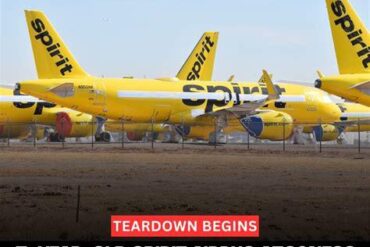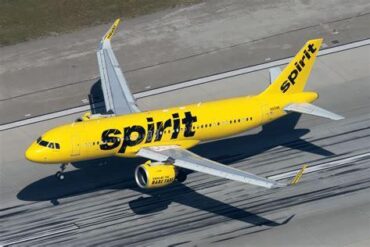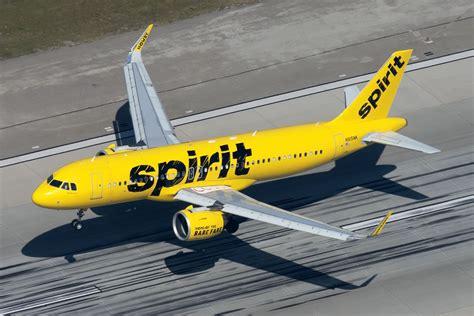
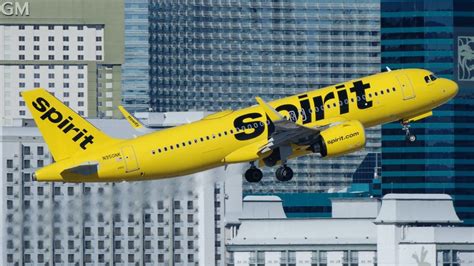
The commercial aviation industry has witnessed an extraordinary development: two Airbus A320neo aircraft, previously operated by Spirit Airlines and barely three years old, are being dismantled for parts. In a sector where narrowbody jets are typically expected to serve for two decades or more before retirement, the decision to scrap such young airframes signals a profound shift in aftermarket strategy and asset management.
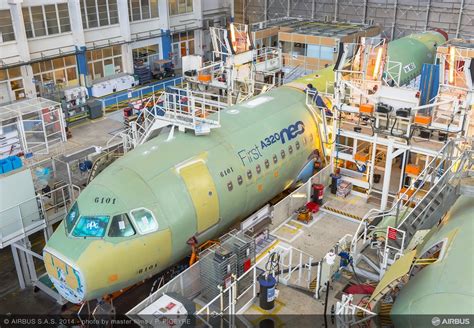
Announced through a formal release, EirTrade Aviation has partnered with RESIDCO to acquire the two aircraft—manufacturer serial numbers (MSN) 10769 and 10921, registered as N950NK and N959NK—for teardown. Disassembly operations are underway in Goodyear, Arizona, with recovered components destined for EirTrade’s Dallas parts hub. The move marks the youngest-ever Airbus A320neo aircraft to be designated for dismantling, redefining conventional lifecycle expectations for next-generation narrowbodies.
The significance of this transaction lies not in obsolescence, but in opportunity. These aircraft are not being retired due to age or technical decline. Instead, their teardown is a calculated response to global supply-chain pressures and soaring demand for high-quality used serviceable material (USM). In today’s aviation ecosystem, components can carry more strategic value than complete aircraft.
Youngest-Ever A320neo Teardown Sets Industry Benchmark
The Airbus A320neo family represents the backbone of modern short- and medium-haul aviation. With more than 4,400 aircraft currently in commercial service and approximately 7,200 additional units on order, the type dominates global narrowbody operations. When factoring in the roughly 6,500 A320ceo aircraft still flying—many sharing interchangeable components—the installed base becomes immense.
Against this backdrop, dismantling aircraft that are only four and three and a half years old is unprecedented. Traditionally, teardowns occur when aircraft reach midlife or later stages, often after 15 to 25 years of service. Early-life disassembly was once rare, typically triggered by severe damage or market collapse. Today, however, it has evolved into a strategic tool.
The two Spirit-operated A320neos will yield a wide range of high-demand rotables and components. Many of these parts are fully compatible across multiple A320 variants, significantly enhancing supply flexibility. Once processed, inspected, and certified, the components will be positioned in Dallas to serve North and South American operators with reduced lead times.
By targeting younger aircraft, EirTrade ensures that the recovered inventory aligns with the latest modification standards. This reduces compliance risk for airlines and improves maintenance turnaround times. The result is not merely parts availability—it is operational resilience.
Engine Program Dynamics Drive Strategic Decisions
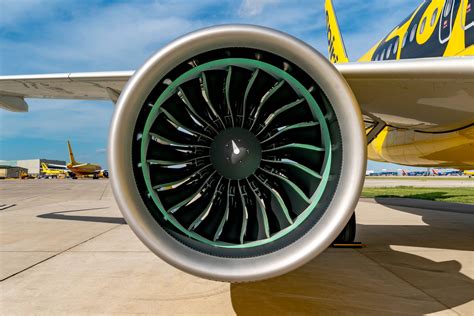
A particularly critical element of this transaction involves the Pratt & Whitney PW1100G geared turbofan (GTF) engine program. Alongside airframe material, the acquisition includes four shipsets of in-demand line replaceable units (LRUs) and buyer-furnished equipment (BFE) associated with the PW1100 platform.
The PW1100G has experienced well-documented supply and maintenance challenges in recent years. As inspection requirements intensified and shop visit volumes increased, operators faced bottlenecks in engine availability. This environment elevated the value of certified spare components dramatically.
Securing younger-generation LRUs offers a dual advantage. First, such components are more likely to incorporate updated engineering standards and service bulletins. Second, their lower time-in-service enhances reliability projections. For airlines grappling with fleet utilization pressures, access to compliant, ready-to-install components can be more valuable than retaining a complete but grounded aircraft.
In this context, dismantling relatively young airframes becomes a rational financial decision rather than an anomaly. The component-level yield may outweigh the value of the aircraft operating under constrained market conditions.
The Expanding A320 Fleet and Rising Aftermarket Demand
The scale of the A320neo orderbook underscores why USM demand is accelerating. With thousands of aircraft scheduled for delivery over the coming decade, the global fleet will continue expanding. As utilization intensifies, maintenance events will grow proportionally.
Airlines increasingly seek cost control without compromising safety or reliability. Brand-new OEM parts can involve extended lead times and premium pricing. Certified USM offers a viable alternative, particularly when sourced from young aircraft meeting current regulatory standards.
Early-life teardowns provide precisely this supply stream. Rather than waiting for aging fleets to retire, asset managers are leveraging data-driven lifecycle modeling to determine optimal value extraction points. In some cases, parting out a young aircraft mitigates market volatility risk and diversifies revenue exposure.
For lessors and financial stakeholders, flexibility has become paramount. Aircraft are no longer viewed strictly as long-term flying assets. They are portfolios of high-value components, each with its own demand curve and liquidity profile.
A Shift in Narrowbody Asset Strategy
Dismantling such young aircraft remains rare, which amplifies the strategic weight of this move. High utilization rates, evolving engine maintenance cycles, and persistent parts shortages are reshaping decision-making frameworks. Fleet complexity has grown as airlines operate mixed generations of aircraft, intensifying the need for compatible spare inventories.
The collaboration between EirTrade and RESIDCO reflects this evolving landscape. RESIDCO’s aviation vertical spans aircraft and engine leasing, teardown financing, simulator programs, and broader asset solutions. By combining origination expertise with technical execution capabilities, the partnership can respond rapidly to shifting market dynamics.
Disassembly in Goodyear is already underway, and all recovered parts are expected to be repaired, certified, and released to the market by the end of the first quarter. These components will be available for sale, exchange, and fleet support programs, reinforcing the aftermarket’s expanding strategic role.
Looking ahead, similar transactions involving newer-technology aircraft are likely to become more frequent. As airlines balance fleet renewal ambitions with disciplined capital management, the aftermarket will occupy an increasingly central position in aviation economics. The dismantling of these Spirit Airlines A320neos is not a sign of failure—it is evidence of a mature, data-informed industry extracting maximum value from every asset stage.
In an era defined by supply constraints and operational unpredictability, even three-year-old aircraft can become critical supply-chain solutions.