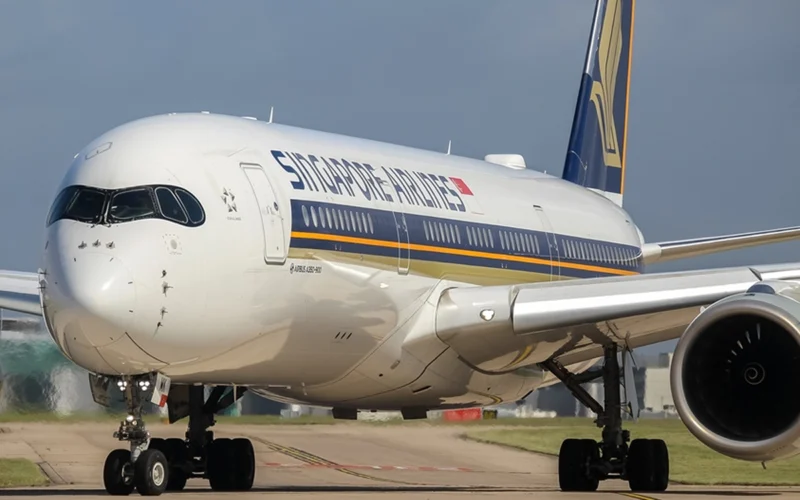
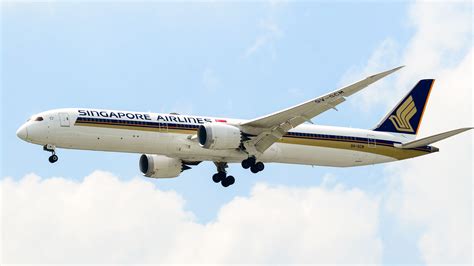
Boeing has quietly delivered one of its most strategically significant wins of the decade, not by selling new aircraft, but by locking in a record-breaking aftermarket services contract with the Singapore Airlines (SIA) Group. Announced at the Singapore Airshow on February 4, 2026, the agreement marks the largest Landing Gear Exchange (LGE) deal in Boeing’s history, covering more than 75 aircraft across the group’s Boeing 737 MAX and 787 Dreamliner fleets. The scale and structure of the deal underline a critical shift in how aircraft manufacturers drive long-term value.
This is not a splashy fleet expansion headline, yet its implications are arguably more profound. The agreement sits squarely inside Boeing Global Services, the company’s aftermarket arm, which has emerged as the manufacturer’s most consistent growth engine in recent years. Instead of tying up airline capital in spare landing gear sets, the LGE model allows Singapore Airlines to rely on exchange-ready assemblies, backed by Boeing’s global inventory and overhaul planning network. The result is lower downtime, optimized component life, and greater schedule resilience.
What makes the deal notable is its multi-fleet reach. Supporting both narrowbody and widebody aircraft under a unified service framework simplifies maintenance planning across subsidiaries and operational bases. For Boeing, it demonstrates the scalability of its services portfolio. For Singapore Airlines Group, it is a calculated bet on operational continuity in an environment where every grounded aircraft translates directly into lost revenue and disrupted passengers.
The timing also matters. Announcing the agreement in Singapore places a spotlight on Asia-Pacific, one of the fastest-growing aviation markets globally. Boeing is signaling that its future growth will not rely solely on airframe deliveries, but on embedding itself deeply into airline operations through long-term, recurring service contracts.
Boeing’s Landing Gear Exchange Model Explained
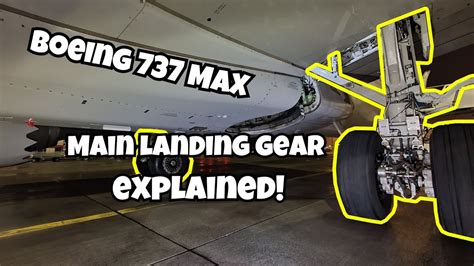
The Landing Gear Exchange program flips the traditional maintenance model on its head. Rather than airlines owning multiple spare gear sets and waiting through long overhaul cycles, Boeing provides serviceable landing gear assemblies on demand, coordinated through a managed inventory pool and certified overhaul partners. When a gear change is required, the aircraft receives an exchange unit, while the removed gear enters the overhaul pipeline without grounding the jet for extended periods.
This approach is especially valuable for high-utilization fleets such as the 737 MAX, where short-haul cycles accelerate wear, and for long-haul 787 Dreamliners, where unexpected downtime can ripple across global networks. By synchronizing overhaul planning with flight schedules, Boeing aims to compress maintenance windows and stabilize dispatch reliability, a metric airlines obsess over.
Why This Deal Matters More Than a New Aircraft Order
The headline figure here is not aircraft quantity, but service scope and duration. Aftermarket contracts like this one generate predictable, long-term revenue streams that are less vulnerable to economic cycles than aircraft sales. For Boeing, this deal reinforces a broader strategy: shifting from episodic transactions to deep, operational partnerships.
Operationally, the agreement showcases Boeing’s ability to manage a logistics-heavy global exchange network, ensuring that landing gear assemblies are positioned where aircraft actually operate. Commercially, it opens doors to adjacent offerings, including parts distribution, repair management, and data-driven maintenance analytics across the same fleets.
Boeing Global Services Vice President William Ampofo emphasized the operational core of the agreement, noting that faster access to parts closer to airline operations directly translates into reduced downtime and more consistent service delivery. In an industry where minutes matter, that promise carries real weight.
Strategic Implications for Boeing Global Services
This record-setting contract reinforces Boeing Global Services as a profit driver, not a support function. Multi-fleet agreements with premium carriers such as Singapore Airlines deepen customer lock-in and create a platform effect: once core components are managed by Boeing, expanding into additional services becomes a natural progression.
It also signals confidence in Boeing’s post-delivery ecosystem at a time when aircraft manufacturing margins remain under pressure. By monetizing the decades-long operational life of each jet, Boeing spreads value creation well beyond the delivery date. For investors and industry watchers, the message is clear: services are no longer a side business; they are central to Boeing’s future.
The Operational Upside for Singapore Airlines Group
For Singapore Airlines Group, the agreement acts as a hedge against maintenance volatility. Landing gear removals rarely follow neat schedules, and when off-cycle events occur, airlines without exchange access face prolonged aircraft-on-ground scenarios. By leaning on Boeing’s inventory pool, SIA can reduce warehousing costs, free up capital, and smooth maintenance planning across its network.
The benefits scale across both short-haul and long-haul operations. Faster gear swaps mean fewer canceled flights, tighter recovery during irregular operations, and more predictable aircraft availability. That reliability flows directly into the passenger experience, reducing missed connections and minimizing network-wide disruptions.
There is also a strategic trade-off. Increased reliance on Boeing’s execution means service-level performance becomes critical. Inventory depth, turnaround speed, and logistics precision must deliver consistently. In effect, the contract tightly aligns Boeing’s operational success with Singapore Airlines’ on-time performance metrics.
A Clear Signal to the Global Aviation Market
This landmark agreement sends a message well beyond Singapore. It illustrates how aftermarket innovation is reshaping airline-manufacturer relationships, turning suppliers into operational partners. For Boeing, shattering its own LGE record is less about scale and more about positioning. It cements the company’s intent to dominate not just the skies, but the entire lifecycle of the aircraft it builds.
As fleets grow more complex and utilization intensifies, deals like this are likely to become the norm rather than the exception. Boeing’s Singapore Airlines Group agreement stands as a textbook example of how strategic services can quietly outperform headline-grabbing aircraft orders, while reshaping the competitive landscape of global aviation.