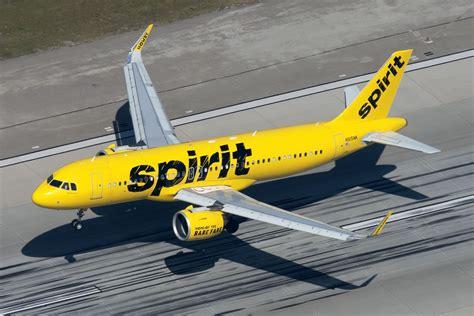
The commercial aviation industry is built on the assumption of longevity. A modern narrowbody jet is engineered to fly for two to three decades, cycling through multiple owners, operators, and market conditions. That assumption is now being violently challenged. In an outcome that would have been unthinkable just a few years ago, Spirit Airlines’ Airbus A320neos and A321neos—some barely out of their infancy—are being parked, returned, and in some cases dismantled for parts. These aircraft are not worn out, obsolete, or technologically irrelevant. They are victims of a rare convergence of financial collapse, engine failure, and ruthless market economics.
By themselves, none of these forces would normally be enough to end the life of a next-generation aircraft. Together, they have rewritten the rules of asset value in aviation, turning young jets into spare-parts goldmines and forcing airlines like Spirit to make decisions that prioritize survival over sentiment or long-term planning.
Spirit Airlines’ Financial Collapse Forced Brutal Choices
Spirit Airlines’ second Chapter 11 bankruptcy filing in less than a year marked a turning point that few airlines ever recover from intact. By late 2025, the ultra-low-cost carrier was drowning under more than $8 billion in debt, with losses exceeding $1 billion in 2024 and projections showing another $800 million-plus loss in 2025. Cash reserves were evaporating, and the business model that once thrived on dense seating and rock-bottom fares had become unsustainable in a higher-cost, lower-demand environment.
Management responded with a sweeping retrenchment. Entire cities were cut from the route map, frequencies at major hubs were slashed by more than half, and network capacity was reduced by a quarter almost overnight. Staffing reductions followed, affecting pilots, cabin crew, and ground personnel. Yet even these drastic steps barely addressed the airline’s most pressing problem: its fleet was far too large and far too expensive to support.
A Fleet Once Envied Became a Financial Liability
Only a year earlier, Spirit proudly operated one of the youngest fleets in the world, with more than 120 Airbus A320neo-family aircraft supplementing its older A320-200s and A321-200s. The neo program promised fuel efficiency, lower emissions, and reduced operating costs—exactly what an ultra-low-cost carrier needed to compete.
That advantage evaporated when bankruptcy gave Spirit a powerful but painful tool: the ability to reject aircraft leases en masse. Unlike its older A320ceo-family jets, which are largely owned outright, the A320neos and A321neos sit on long-term operating leases with significant monthly obligations. Terminating those leases immediately removed hundreds of millions of dollars in future payments from Spirit’s balance sheet.
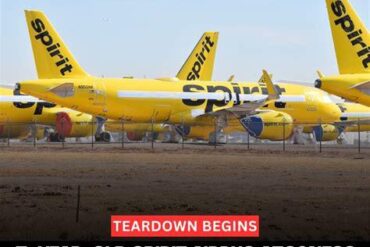
By October 2025 alone, Spirit sought court approval to reject leases on 87 aircraft, most of them A320neo-family jets. By early 2026, more than 85 of these aircraft had been moved into storage, with further reductions still expected. What looked like a modern, growth-oriented fleet just months earlier was suddenly being dismantled in pursuit of liquidity.
Why Younger Aircraft Were Targeted Instead of Older Jets
At first glance, Spirit’s strategy seems backward. The airline retained its older A320ceo aircraft, many of which are more than a decade old, while shedding far newer jets. The logic, however, is brutally simple. Owned aircraft are difficult to sell quickly without taking large write-downs, while leased aircraft can be returned with immediate financial relief. In bankruptcy, speed matters more than elegance.
Yet leases alone do not explain why some of these returned aircraft are now facing the scrapyard instead of new operators. The deeper reason lies under the wings.
The Pratt & Whitney GTF Engine Crisis Changed Everything
The Airbus A320neo family’s defining feature—the Pratt & Whitney PW1100G Geared Turbofan engine—has also become its greatest liability. Manufacturing defects tied to contaminated powdered metal used in turbine and compressor disks triggered a global inspection and recall campaign that has crippled fleets worldwide.
The consequences have been staggering. Hundreds of aircraft have been grounded simultaneously, with engine removals that were initially expected to take two months now stretching to 300 days or more. Maintenance facilities are overwhelmed, spare engines are scarce, and airlines are forced to park aircraft they cannot economically operate.
By late 2025, more than 800 aircraft globally powered by PW1000G-family engines were grounded or in long-term storage—roughly a third of the active fleet. Even optimistic forecasts suggest that hundreds will remain unavailable through 2026, despite Pratt & Whitney’s efforts to increase repair capacity and introduce the improved GTF Advantage engine.
For Spirit Airlines, already fighting for survival, this was catastrophic. Grounded aircraft still incur lease costs, require preservation maintenance, and generate no revenue. Keeping dozens of A320neos idle for nearly a year at a time was simply impossible.
Returning Aircraft Shifted the Burden to Lessors
Faced with prolonged engine downtime and crushing lease obligations, Spirit made the only viable choice: return the aircraft early and transfer the problem to the lessors. This decision stabilized Spirit’s cash flow but created a new dilemma for aircraft owners. Finding new operators willing to take GTF-powered jets—knowing the inspection backlog and operational uncertainty—has proven extremely difficult.
As a result, lessors began evaluating alternatives that would once have seemed absurd. Instead of re-leasing or selling these aircraft intact, many discovered that dismantling them generated far higher returns.
The Aftermarket Parts Boom Made Scrapping Rational
In normal conditions, parting out a six- or seven-year-old aircraft would be financial malpractice. Today, it is often the most profitable option available. The same engine crisis grounding aircraft has also created a severe shortage of serviceable engines and components, driving aftermarket prices to extraordinary levels.
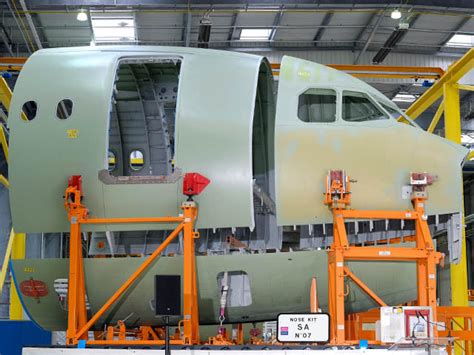
A six-year-old Airbus A321neo that once cost over $100 million now carries an estimated market value of around $42 million as a complete aircraft. By contrast, a single upgraded PW1100G engine can fetch $18–22 million, and each aircraft has two. Add avionics, landing gear, flight controls, and auxiliary systems, and the total part-out value can exceed $55 million—well above the aircraft’s resale price.
Even leasing economics favor dismantling. A whole A321neo might generate $350,000 per month in lease revenue, while leasing two engines separately can bring in $400,000 per month combined. For lessors, the arithmetic is ruthless and irresistible.
Spirit Is Not Alone in This Disruption
Spirit Airlines may be the most visible U.S. casualty, but the GTF crisis has reshaped fleets worldwide. IndiGo, Wizz Air, Volaris, Viva Aerobus, and ITA Airways have all been forced to ground significant portions of their fleets, with some carriers seeing over a quarter of their aircraft simultaneously unavailable.
In a striking example of the new reality, two of IndiGo’s A321neos—both just six years old—were sold for teardown, not because they were defective as airframes, but because their parts were worth more than their continued operation. Spirit’s returned aircraft are now entering that same ecosystem, where economic value is no longer tied to flight hours or remaining lifespan.
A Bifurcated Market With Strange Incentives
The aviation industry now finds itself in a paradoxical position. There is a global shortage of aircraft capacity, yet entirely serviceable jets sit idle while their components command record prices. Airlines struggle to grow, manufacturers face delivery delays, and lessors increasingly favor short-term monetization over long-term utilization.
For Spirit, the fleet reduction is a gamble on survival. The airline expects to emerge from bankruptcy with 100 to 120 aircraft, focusing on owned A320ceos and a small core of retained A320neo-family jets. If demand stabilizes and engine availability improves, the leaner operation may yet find profitability. If not, the current dismantling could prove to be only the first chapter in a longer contraction.
What This Means for the Future of Aircraft Longevity
The premature scrapping of nearly new Airbus A320neos marks a fundamental shift in how aircraft value is defined. Technical lifespan no longer guarantees economic lifespan. Manufacturing defects, supply chain fragility, and financial stress can now end an aircraft’s career long before corrosion or fatigue ever appear.
For lessors, the lesson is clear: flexibility and aftermarket exposure matter as much as long-term lease stability. For airlines, fleet strategy must account not just for fuel efficiency, but for engine risk and downtime resilience. And for the industry as a whole, Spirit Airlines’ A320neos stand as a stark warning that in modern aviation, economics—not age—decide when an aircraft dies.