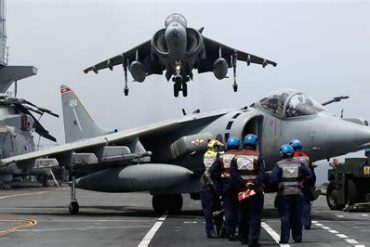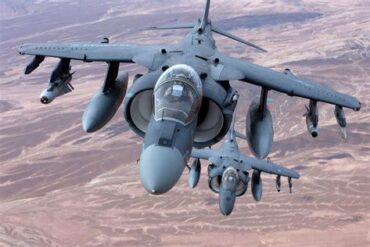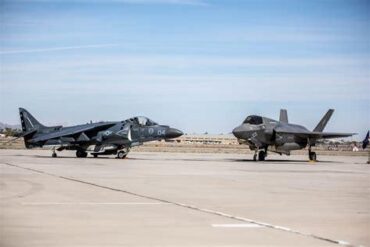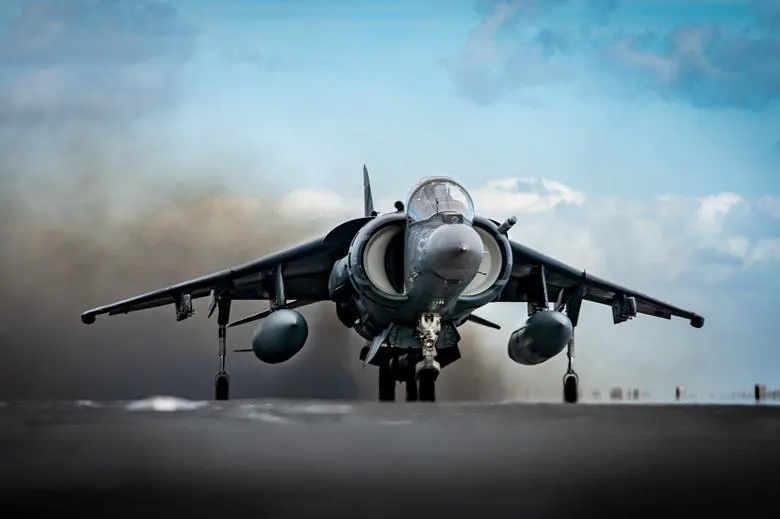
The AV-8B Harrier II, a versatile aircraft that has served in various military forces for decades, is now approaching the end of its service life. Initially introduced in the 1980s, the Harrier II was designed to offer vertical/short takeoff and landing (V/STOL) capabilities, making it a crucial asset for amphibious and expeditionary operations. However, as technology has evolved, and as new strategic priorities and operational needs emerge, the time has come for the AV-8B to be retired from active service. This article delves into the primary reasons behind this decision, examining the aircraft’s aging structure, maintenance costs, technological limitations, and the rise of its successor, the F-35B.
1. Aging Aircraft and Increasing Maintenance Costs
The AV-8B Harrier II first entered service with the United States Marine Corps (USMC) in 1985, marking the beginning of a long and distinguished operational history. However, after nearly four decades of service, the aircraft has reached the end of its useful life. The average age of existing AV-8B airframes exceeds 23 years, and the high-frequency use over the years has led to significant structural fatigue.
Aging aircraft components are more susceptible to wear and tear, leading to increased maintenance complexity and costs. Over time, the supply chain for replacement parts has become increasingly strained. The maintenance burden on military personnel has escalated as the aircraft’s reliability has decreased, resulting in reduced operational availability. The increase in upkeep costs directly impacts mission readiness and the overall combat effectiveness of the aircraft.
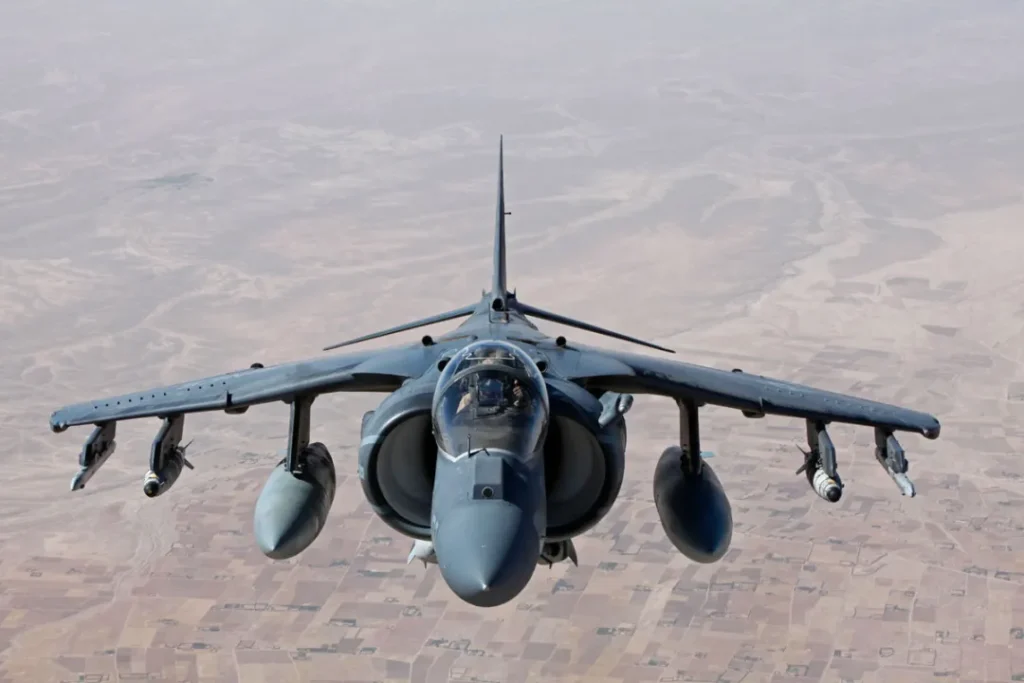
Moreover, while the Pegasus 11 engine that powers the AV-8B is known for its reliability, its technology is becoming outdated compared to modern turbofan engines. The engine’s design was cutting-edge in the 1980s, but it is no longer able to match the performance standards set by newer engines, which offer superior fuel efficiency, thrust, and maintenance intervals. This, combined with the aircraft’s vertical/short takeoff and landing (V/STOL) configuration, places an additional strain on both the airframe and engine, accelerating wear.
In 2019, the U.S. military had initially proposed extending the AV-8B’s service life until 2028. However, the mounting costs of sustaining the aging fleet, coupled with diminishing spare parts availability, made this extension untenable. As a result, the military decided to stick with the original retirement plan, which is set to see the AV-8B Harrier II retired between 2026 and 2029.
2. The Emergence of the F-35B as a Replacement
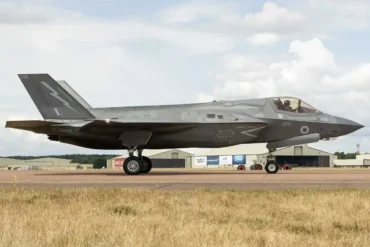
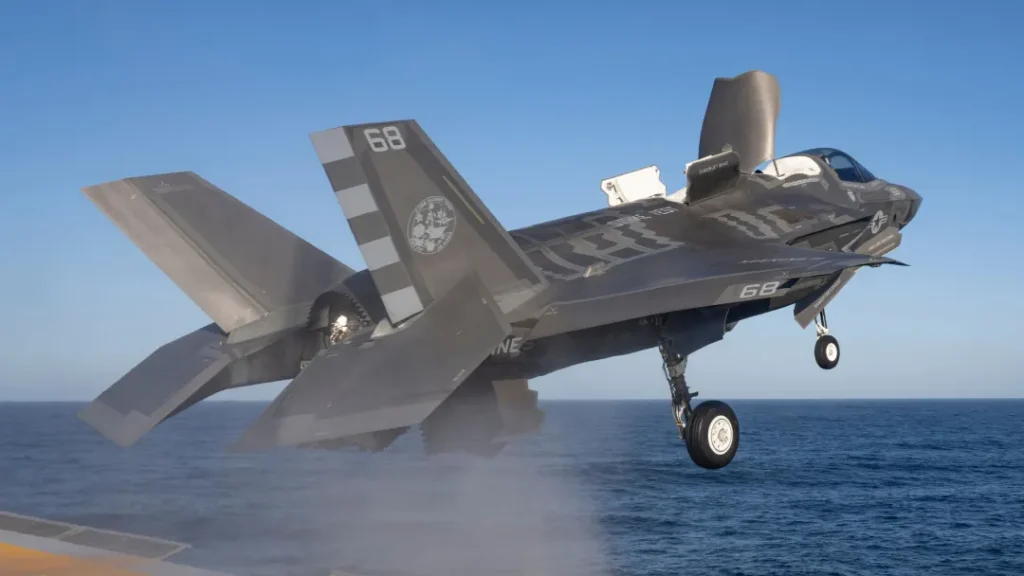
The most significant factor in the AV-8B’s retirement is the advent of its successor, the F-35B Lightning II. The F-35B is a next-generation, multirole fighter that brings superior capabilities across a wide range of operational domains. With stealth technology, advanced sensors, and longer operational range, the F-35B vastly outperforms the AV-8B in nearly every area.
Range and Payload Capacity
The F-35B offers an unparalleled combat radius of approximately 833 kilometers, significantly surpassing the AV-8B’s range of just 556 kilometers. This extended range provides much greater operational flexibility, especially in contested environments where the ability to operate far from bases is critical.
Furthermore, the F-35B’s payload capacity is another area where it excels. With a maximum load of 6.8 tons, the F-35B can carry over twice the ordnance of the AV-8B, which has a payload capacity of about 3.2 tons. This increased payload allows for a broader range of strike missions, from precision-guided munitions to anti-ship missiles.
Multirole Capability
One of the defining features of the F-35B is its multirole capability. It is capable of performing a wide array of missions, including air superiority, close air support, electronic warfare, and intelligence gathering. The AV-8B, in contrast, was primarily designed for ground attack missions and lacks the versatility of newer platforms like the F-35B, which integrates cutting-edge sensor systems and networked warfare capabilities.
The F-35B’s onboard sensors include the AN/APG-81 radar, a modern, active electronically scanned array (AESA) radar that enables superior tracking and targeting capabilities compared to the older AN/APG-65 radar used by the AV-8B. The F-35B’s radar supports longer-range missile guidance and multi-target tracking, making it far more effective in modern combat environments.
3. Technological Limitations of the AV-8B
The AV-8B Harrier II was groundbreaking for its time, thanks to its V/STOL capabilities, allowing it to operate from small aircraft carriers, amphibious assault ships, and austere airfields. However, as modern warfare has evolved, so have the technological requirements of military aircraft.
Limited Range and Payload
While the AV-8B’s V/STOL ability was revolutionary, it came at the cost of compromised performance in other areas. The aircraft’s short operational range and limited payload capacity have become significant drawbacks in contemporary military operations, where extended reach and the ability to carry more munitions are increasingly important.
The AV-8B’s maximum speed of Mach 0.89 is another limitation. In the fast-paced world of modern air combat, this relatively low top speed puts the aircraft at a disadvantage against newer, faster enemy aircraft, especially in high-intensity conflict scenarios.
Lack of Stealth
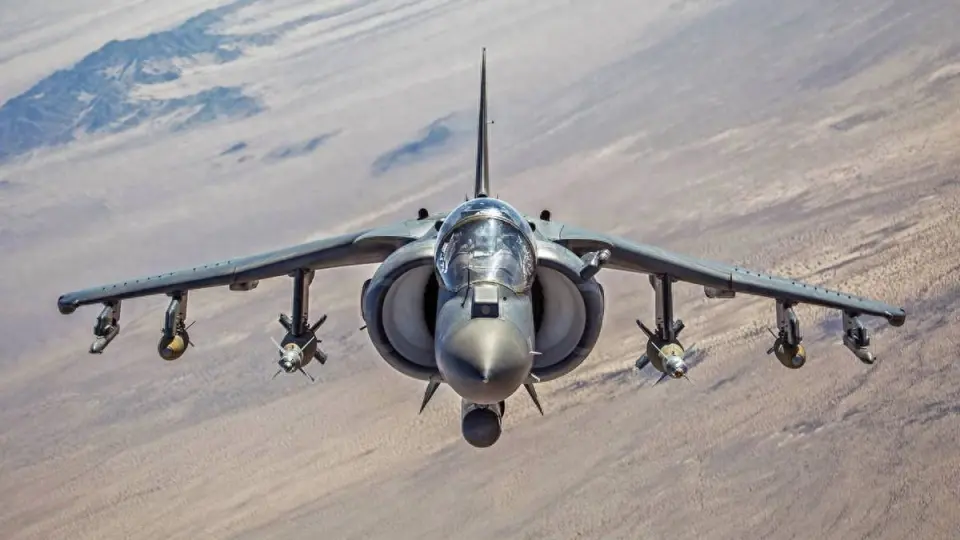
In the modern age of advanced radar systems and infrared sensors, the stealth capability of an aircraft has become a critical factor in ensuring its survivability. Unfortunately, the AV-8B is not equipped with stealth technology and is vulnerable to detection by modern radar and infrared targeting systems. This vulnerability makes it unsuitable for high-threat environments, where stealth is necessary to evade enemy detection and missile targeting.
In contrast, the F-35B incorporates stealth features that drastically reduce its radar and infrared signature, allowing it to operate in contested environments with a higher chance of survival.
High Fuel Consumption in V/STOL Mode
Another drawback of the AV-8B is its high fuel consumption when operating in V/STOL mode. While this capability is crucial for certain types of operations, such as amphibious assaults or operations in areas lacking traditional runways, it severely limits the aircraft’s operational range and mission flexibility. In modern warfare, where long-range operations and extended loiter times are often essential, the AV-8B’s fuel efficiency is a major limitation.
4. Successful Transition of Personnel and Training to the F-35B
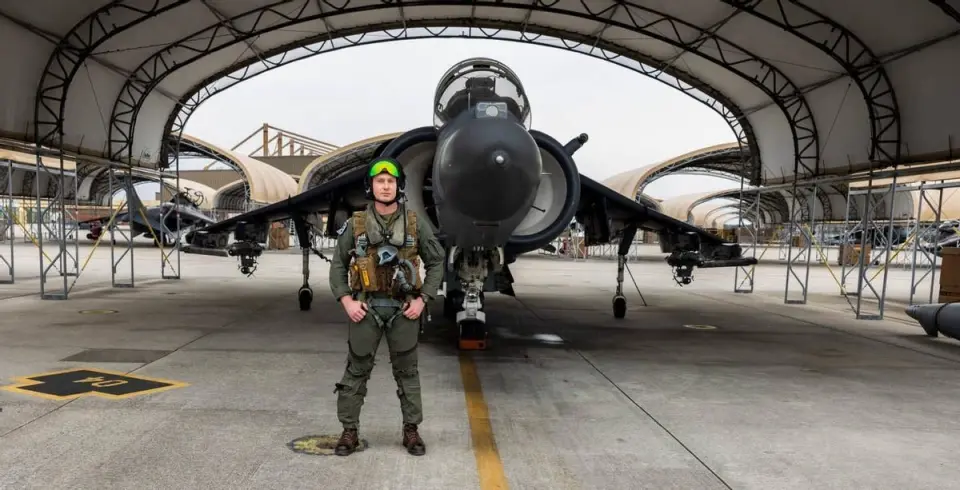
The transition from the AV-8B to the F-35B has been a gradual yet smooth process for the U.S. Marine Corps and other military forces around the world. By April 2024, the last two AV-8B pilots completed their training and were officially integrated into F-35B squadrons, marking the completion of the pilot transition to the new aircraft.
With the training pipeline for F-35B pilots now fully operational, the process of retiring the AV-8B has accelerated. The F-35B’s advanced flight systems and capabilities have made it a preferred choice for pilots who are now being trained to operate one of the most cutting-edge combat aircraft available today.
5. Shift in Strategic Focus Towards Distributed Operations
In recent years, the U.S. Marine Corps has emphasized the importance of distributed operations as part of its broader military strategy. This involves the deployment of forces in smaller, more agile units capable of operating independently across larger geographic areas.
The F-35B, with its combination of stealth, multirole capabilities, and advanced communications systems, is better suited to this strategy. The aircraft’s ability to operate from a variety of platforms—including small ships, forward bases, and land-based airfields—makes it ideal for the expeditionary nature of modern conflict.
By contrast, the AV-8B’s single-function role and lack of modern communication integration made it less adaptable to the increasingly complex and dynamic battlefield environment.
6. International Trends: Global Retirement of the AV-8B
The AV-8B Harrier II is also being retired by other nations, such as Spain and Italy, as they transition to the F-35B. For example, Italy’s Garibaldi aircraft carrier has been retired, and the new Trieste amphibious assault ship now operates the F-35B exclusively. Similarly, Spain has phased out its AV-8B fleet, aligning its operational capabilities with those of NATO allies.
This global trend underscores the aircraft’s obsolescence in the face of rapidly advancing technology and changing military needs.
Conclusion: The End of an Era for the AV-8B Harrier II
The retirement of the AV-8B Harrier II represents the end of an era for this iconic aircraft. While the Harrier II will always hold a special place in aviation history, the limitations in its technology, coupled with the emergence of more advanced platforms like the F-35B, have made it increasingly difficult for the AV-8B to meet the demands of modern warfare.
With its retirement, the F-35B takes its place as the future of vertical/short takeoff and landing (V/STOL) aviation, offering enhanced range, stealth, payload capacity, and multirole functionality. The transition to the F-35B ensures that the U.S. Marine Corps and allied forces are equipped to face the challenges of modern combat, making the AV-8B’s retirement a logical step forward in the evolution of military aviation.