A modern commercial airport is far more than a terminal building, a control tower, and a collection of aircraft gates. At the busiest international hubs, the runway system is the foundation on which almost every other operation depends. Runway capacity determines how many aircraft can arrive and depart during the most demanding periods, how effectively controllers can separate traffic, and how quickly an airport can recover when weather disrupts the normal schedule. This makes the number and arrangement of runways an important measure of an airport’s operational scale.
Passenger numbers and total land area often dominate airport rankings, but neither measurement tells the full story of how an airfield actually handles traffic. A relatively compact airport can process enormous volumes if its runways are carefully arranged, while a huge airport may have substantial unused land without equivalent operational capacity. The airports on this list stand out because they combine multiple paved runways with carefully engineered layouts designed to accommodate heavy commercial traffic, changing winds, instrument approaches, and increasingly complex ground movements.
Counting runways also requires some context. Airports can have pavement that is technically a runway but is rarely used for scheduled airline operations, while other facilities have several runways that can be used simultaneously under the right conditions. The five airports highlighted here are ranked by their active paved operational runways, with particular attention to their role in commercial aviation. Their layouts reveal why runway geometry can be just as important as runway length.
1. Chicago O’Hare International Airport Has 8 Runways
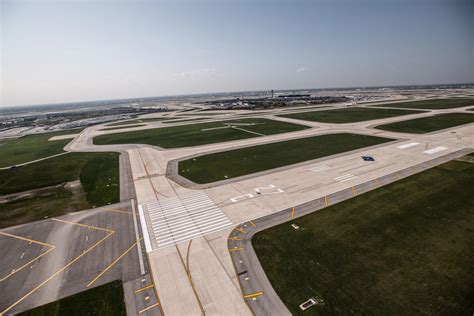
Chicago O’Hare International Airport (ORD) occupies the top position with eight active operational runways, giving it the largest runway count among the commercial airports considered here. Covering approximately 7,627 acres, O’Hare has evolved considerably from the complicated airfield configuration that once characterized the airport. Its modernization program transformed the runway network into a much more structured system dominated by parallel east-west runways, supported by diagonal crosswind runways.
The modernization was driven by a simple operational problem: O’Hare needed to move enormous numbers of aircraft while reducing the conflicts created by intersecting runway paths. Today, six major runways form the principal east-west structure, while two diagonal runways provide additional flexibility when wind conditions make the dominant orientation less suitable. This gives controllers several ways to distribute arrivals and departures instead of forcing nearly every aircraft through the same limited corridors.
The longest runway, 10L/28R, measures about 13,000 feet, or 3,962 meters. That length provides substantial performance margins for large commercial aircraft, particularly on international services where aircraft may depart with high fuel loads and substantial passenger and cargo weight. The parallel arrangement also allows multiple instrument arrival streams to operate independently, an especially important capability during Chicago’s notoriously changeable winter weather.
O’Hare’s runway count therefore matters not simply because eight strips look impressive on an airport diagram. The real advantage comes from having multiple usable paths that can be assigned according to traffic demand, wind direction, aircraft type, and weather. By separating major arrival and departure flows and reducing unnecessary runway crossings, the airport can maintain a high rate of movement even when conditions are far from ideal.
2. Dallas/Fort Worth International Airport Has 7 Runways
Dallas/Fort Worth International Airport (DFW) ranks second with seven active operational runways. The airport covers approximately 17,183 acres, creating an enormous airfield environment around one of the world’s most important airline hubs. Its runway network is built primarily around a north-south orientation, with five parallel runways supported by two diagonal crosswind runways.
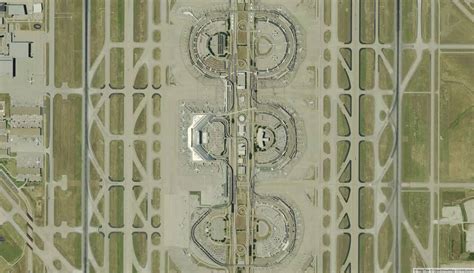
Four of DFW’s major runways—17C/35C, 17R/35L, 18L/36R, and 18R/36L—are approximately 13,400 feet long. These exceptionally long runways are particularly valuable in Texas, where intense summer temperatures can produce high density altitude. Hot air is less dense than cooler air, reducing the lift generated by the wings and the thrust available from aircraft engines. Long pavement therefore becomes an important operational asset for heavily loaded aircraft.
The airport’s scale also allows traffic controllers to divide operations among several independent runway corridors. Multiple control towers support the huge airfield, while the parallel configuration creates opportunities to conduct simultaneous approaches and dedicate other runways to departures. During peak periods, this separation can significantly improve the airport’s ability to absorb traffic without creating excessive airborne holding.
DFW also demonstrates why taxiway design matters almost as much as runway design. End-around taxiways allow aircraft to move around runway thresholds instead of crossing active departure paths. That arrangement reduces potential conflicts between arriving and departing aircraft while helping ground traffic move more efficiently. When thunderstorms or other weather disruptions affect North Texas, this flexibility becomes particularly valuable because the airport has multiple ways to reorganize traffic.
3. Detroit Metropolitan Wayne County Airport Has 6 Runways
Detroit Metropolitan Wayne County Airport (DTW) operates six active paved runways across its 4,850-acre airfield in Romulus, Michigan. As a major Delta Air Lines hub, Detroit needs a runway system capable of handling large numbers of domestic and international aircraft while also coping with the variable weather associated with the Great Lakes region.
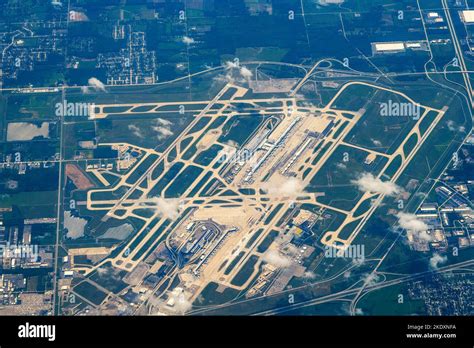
Four of DTW’s runways are aligned along the 03/21 and 04/22 directions and form the principal parallel runway system. Their lengths range from approximately 8,500 feet to 12,003 feet, with 04R/22L representing the airport’s longest runway. Two additional runways, 09L/27R and 09R/27L, provide an important crosswind capability and measure roughly 8,708 and 8,500 feet respectively.
The combination is strategically useful because wind direction can dramatically affect aircraft performance during takeoff and landing. When winds favor Detroit’s primary runway orientation, controllers can exploit the parallel configuration to maximize arrival and departure throughput. When strong winds shift toward an east-west direction, the crosswind runways provide another operating configuration instead of forcing aircraft to contend with unfavorable crosswind components.
This dual-axis arrangement makes DTW particularly well suited to a region where winter storms, rapidly changing weather systems, and strong winds can challenge airport operations. The six-runway system is therefore less about having the highest possible number of simultaneous movements and more about maintaining operational resilience across a wide range of conditions.
4. Amsterdam Schiphol Airport Has 6 Runways
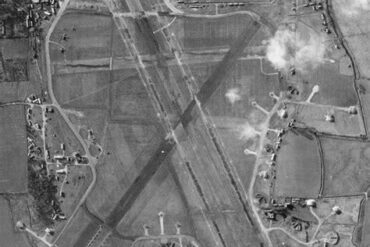
Amsterdam Schiphol Airport (AMS) also has six runways, but its airfield looks dramatically different from the highly parallel systems at airports such as DFW and O’Hare. Located below sea level, Schiphol uses a distinctive layout in which its runways extend in several directions rather than forming one simple rectangular grid. That geometry reflects the airport’s long history, local geography, surrounding communities, and the need to work with changing wind conditions.
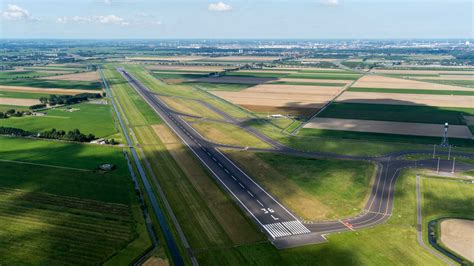
The most prominent runway is 18R/36L, better known as the Polderbaan. At approximately 12,467 feet, or 3,800 meters, it provides sufficient length for large long-haul aircraft, including high-capacity wide-body jets. Another important runway, 06/24 or the Kaagbaan, measures about 11,483 feet. Together with the Buitenveldertbaan, Aalsmeerbaan, and Zwanenburgbaan, these major runways support most of Schiphol’s scheduled commercial activity.
The sixth runway, 04/22, known as the Oostbaan, is shorter at about 6,608 feet and is more closely associated with general aviation, corporate aircraft, turboprops, and smaller regional aircraft. This illustrates an important distinction in runway-count rankings: not every runway contributes equally to an airport’s commercial capacity. A long runway used by heavily loaded wide-body aircraft has a very different operational role from a shorter strip serving smaller aircraft.
Schiphol’s runway choices are also strongly influenced by noise restrictions. Authorities use preferential runway configurations to reduce aircraft noise over populated areas, meaning the airport cannot simply select the theoretically most efficient runway combination at all times. The remote location of the Polderbaan can also produce lengthy taxi times, but the trade-off is greater flexibility in managing aircraft noise while maintaining a high level of international connectivity.
5. Denver International Airport Has 6 Runways
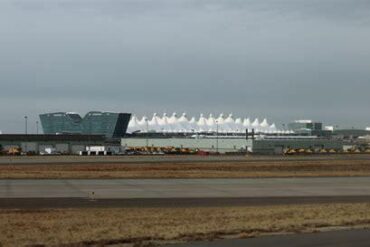
Denver International Airport (DEN) completes the list with six active non-intersecting runways spread across an enormous 33,531-acre site. The airport is already the largest commercial airport in North America by land area, but its runway system is arguably even more remarkable because it was designed around long-term capacity and expansion rather than simply the traffic requirements of its opening period.
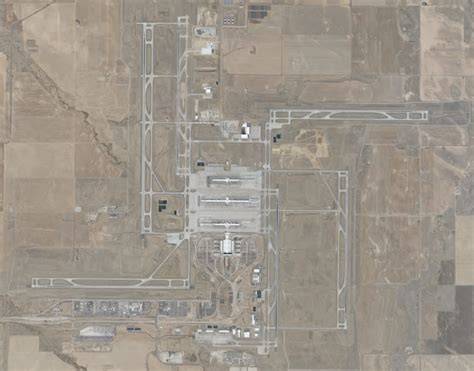
Denver’s runways are arranged in a distinctive pinwheel configuration, with four major north-south runways and two crosswind runways. Unlike older airfields where runway intersections can create complicated dependencies, Denver’s runways do not intersect. This gives controllers greater flexibility to keep aircraft moving without repeatedly waiting for another aircraft to clear an intersecting runway.
The airport’s high elevation of approximately 5,434 feet creates a unique performance challenge. At such elevation, air density is already lower than at sea-level airports, and hot summer temperatures reduce it even further. Aircraft need more runway to generate sufficient lift and accelerate to safe takeoff speeds, which explains why Denver has five runways measuring approximately 12,000 feet and one extraordinary runway extending to 16,000 feet, or 4,877 meters.
That 16,000-foot runway is one of Denver’s most important operational assets. It gives heavily loaded commercial aircraft additional performance margin when departing at high density altitude, particularly on long-haul routes. The airport’s enormous site was also selected with future growth in mind, leaving room for additional runway infrastructure as demand evolves.
Why Runway Count Does Not Tell the Whole Story
Looking at these five airports, it becomes clear that the number of runways is only the beginning of the capacity equation. O’Hare’s eight runways give it an impressive numerical advantage, but the effectiveness of those runways comes from their parallel orientation and carefully separated traffic flows. DFW’s seven runways benefit from enormous spacing, long pavement, multiple control facilities, and sophisticated taxiway infrastructure. Detroit and Schiphol demonstrate how crosswind and noise considerations can make a mixed-direction runway system more valuable than a simple collection of parallel strips.
Denver provides another lesson: runway length and separation can be just as important as runway count. Its six runways are supported by an enormous airfield footprint and unusually long pavement, allowing the airport to maintain performance despite its high elevation. In every case, the airport’s ability to handle aircraft depends on the interaction between runway configuration, air traffic control, taxiways, weather, aircraft performance, and traffic demand.
This is also why an airport with fewer runways can sometimes outperform an airport with more. London’s Gatwick, for example, has demonstrated how sophisticated scheduling and rapid aircraft movements can generate remarkably high traffic volumes from a single runway. Conversely, an airport with many runways may not use all of them simultaneously because of noise restrictions, weather, maintenance, air traffic control limitations, or local operating procedures.
The five airports ranked here nevertheless represent some of the world’s most substantial commercial airfield systems. Chicago O’Hare leads with eight runways, followed by Dallas/Fort Worth with seven, while Detroit, Amsterdam Schiphol, and Denver each operate six. Their differences are what make the ranking especially interesting: there is no single blueprint for building a high-capacity airport.
From Chicago’s modernized parallel corridors to Dallas/Fort Worth’s vast multi-runway complex, Detroit’s crosswind flexibility, Schiphol’s wind- and noise-sensitive geometry, and Denver’s enormous high-altitude airfield, each airport reflects a different solution to the same fundamental problem. Moving thousands of aircraft safely and efficiently requires more than pavement—it requires an entire operational system designed around that pavement.