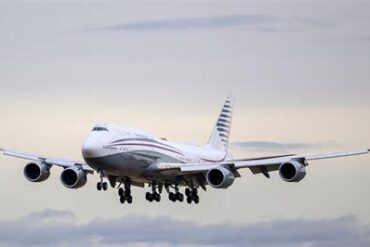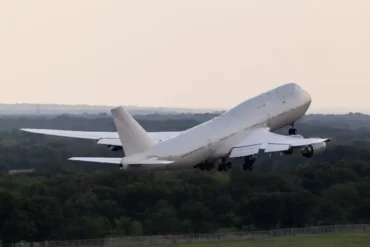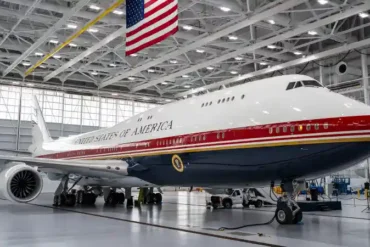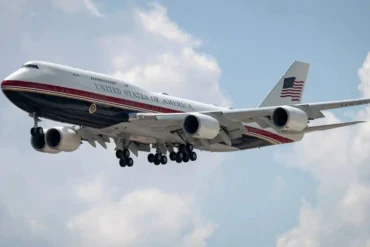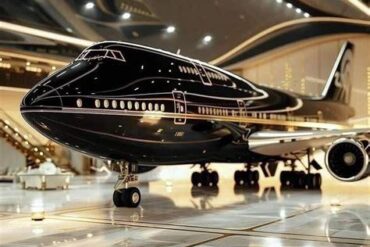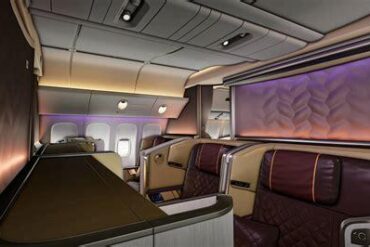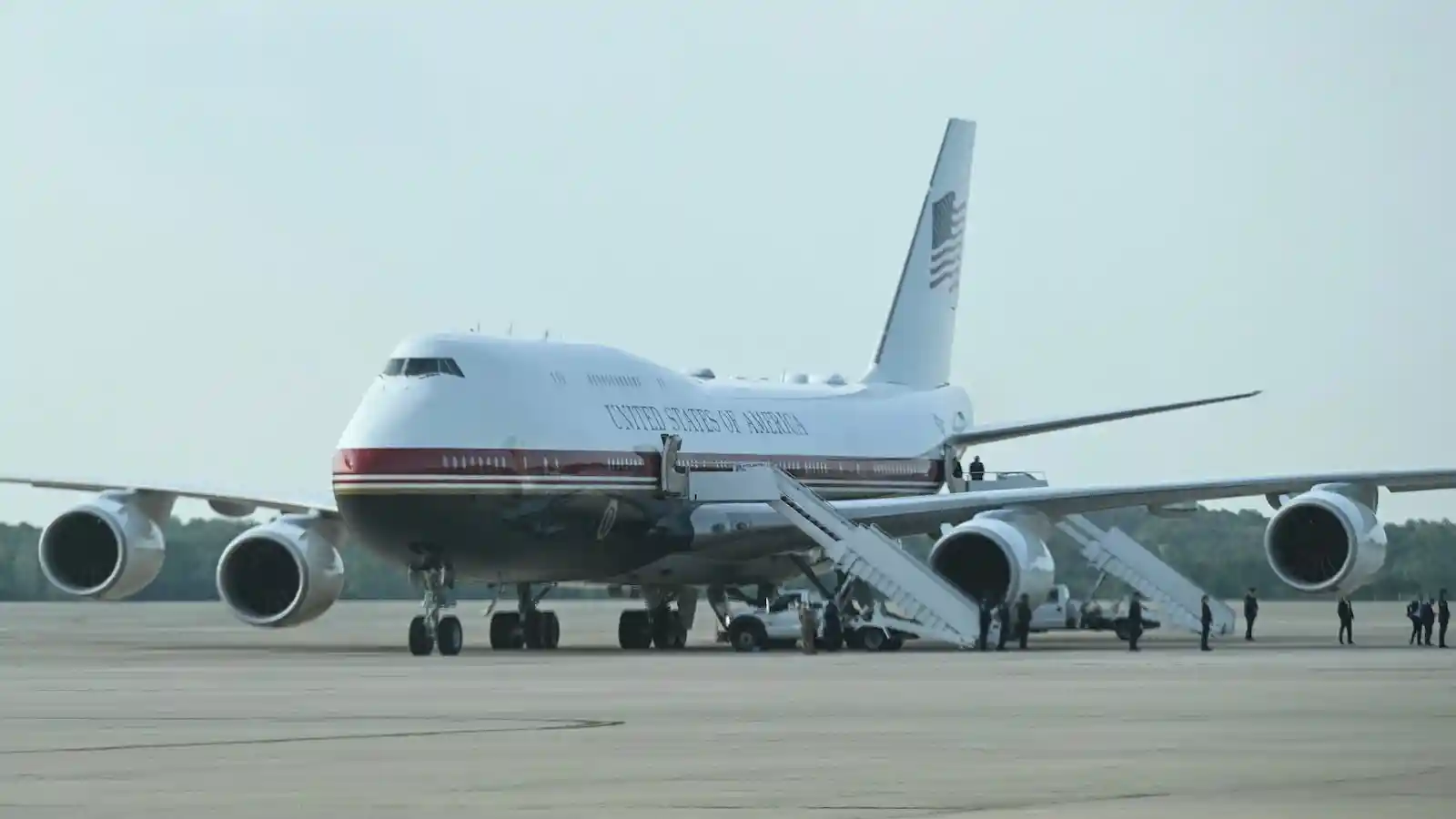
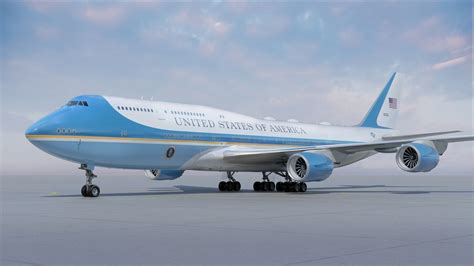
The Qatari-gifted Boeing 747-8 serving as an interim Air Force One has been temporarily removed from presidential service for what an administration source described as “cosmetic upgrades,” leaving an important security question unanswered. While the aircraft is reportedly receiving interior improvements, the White House has not publicly confirmed whether it is also being equipped with the defensive systems that distinguish a purpose-built presidential aircraft from a conventional commercial-derived airliner.
The aircraft, valued at roughly $400 million and about 14 years old, was last documented carrying President Donald Trump on September 16. Since then, Trump has returned to the older Boeing 747-200-based Air Force One aircraft for several domestic and international journeys. The White House has not provided a detailed timetable for the Qatari 747-8’s refurbishment or confirmed when it will resume presidential operations.
Qatari Boeing 747-8 Receives Interior Upgrades
The clearest information available about the current work concerns the aircraft’s interior. According to ABC News, an administration source characterized the refurbishment specifically as “cosmetic upgrades.” That wording is significant because it appears narrower than the description previously given by Trump, who had said the aircraft would be sent away for approximately 60 days to be “maxed out.”
Trump had previously described a much broader transformation, saying the aircraft would receive improvements to its interior and engines and would ultimately be capable of operating in virtually any territory. His comments suggested that the temporary presidential aircraft could undergo substantial work before returning to service.
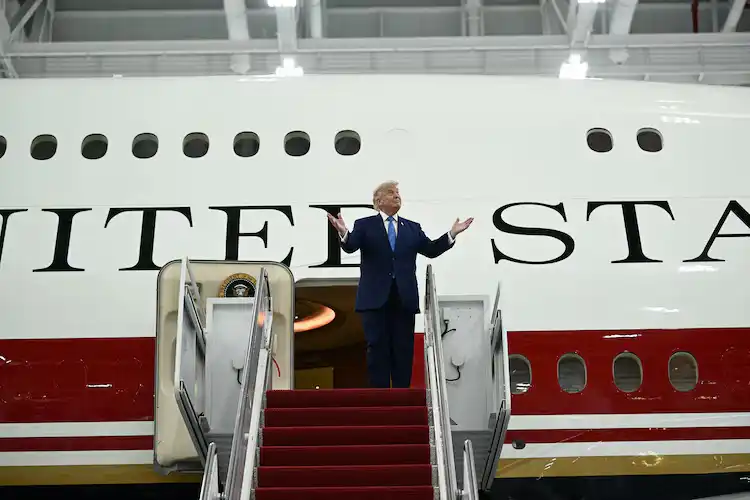
The distinction between those descriptions matters because cosmetic refurbishment and military survivability modifications are fundamentally different projects. New furnishings, finishes, communications spaces, cabin improvements and other interior work can make the aircraft more suitable for presidential travel without changing its ability to respond to external threats. Defensive systems, by contrast, address the aircraft’s vulnerability in environments where a conventional airliner would not normally operate.
That does not establish that no classified security work is taking place. Presidential aircraft modifications can involve sensitive equipment and procedures that are not publicly disclosed. However, there has been no public confirmation that the current refurbishment includes the specific missile-warning or countermeasure capabilities associated with the existing Air Force One fleet.
Missile Defense Is Still the Key Question
The uncertainty surrounding the aircraft’s defenses has been particularly noticeable because of an incident during Trump’s July trip to Turkey for the NATO summit. The president arrived aboard the Qatari 747-8 but ultimately did not use the aircraft for his return journey. Instead, he switched to the older Air Force One aircraft.
ABC News subsequently reported that Secret Service officials had urged Trump to use the older aircraft as a security precaution. Reports from ABC News and other outlets also highlighted concerns that the Qatari aircraft did not appear to possess the same self-defense configuration associated with the existing presidential fleet.
The precise capabilities of any presidential aircraft are not normally disclosed in full, making public assessments inherently limited. Nevertheless, the issue is important because Air Force One is more than a transport aircraft. Its role requires it to function as a secure command and communications platform while carrying the president through a range of potential security environments.
The existing VC-25A aircraft were developed specifically around the requirements of presidential transportation. Their specialized equipment includes secure communications and other systems that are not part of an ordinary commercial Boeing 747 configuration. The Qatari 747-8, despite being a large and highly capable widebody aircraft, began life in a fundamentally different role.
That difference explains why the defensive-equipment question has followed the aircraft since it entered US presidential service.
Why the Aircraft Was Needed as a Temporary Presidential Jet
The Qatari 747-8 was never intended to become the permanent replacement for the current Air Force One fleet. Instead, it occupies an unusual bridge role while Boeing’s next-generation presidential aircraft program progresses.
The aircraft entered presidential service in July and subsequently carried Trump on international travel, including a September trip to Ireland. Its availability provided the administration with a newer and more modern widebody aircraft while the replacement for the existing presidential fleet remains under development.
But using a commercial-origin aircraft for presidential transportation creates an unusual set of requirements. The basic airframe is capable of long-range international operations, and the 747-8 provides substantial cabin volume and range. The challenge is adapting those capabilities to the demanding security, communications and operational requirements of presidential travel.
The temporary nature of the aircraft also changes the calculation surrounding expensive modifications. Major structural or classified defensive upgrades could require significant engineering, testing and certification work. If the aircraft will only serve until the next-generation Air Force One becomes available, the government must balance the benefits of additional capability against the time and resources required to install and validate it.
Trump’s “Maxed Out” Description Raises Expectations
Trump’s earlier description of the refurbishment created expectations that the aircraft would receive considerably more than an interior makeover. He said the aircraft would be “maxed out,” referring to improvements involving the interior, engines and its ability to operate in different territories.
That description naturally raised questions about whether the 747-8 would also receive defensive improvements. Yet the latest publicly reported description from an administration source focuses only on cosmetic work.
There is an important limitation to interpreting that wording. A source describing the visible or releasable portion of an aircraft’s refurbishment would not necessarily be expected to discuss classified modifications. Similarly, the absence of a public announcement does not prove that no defensive equipment is being installed.
Still, the lack of confirmation means the central issue remains unresolved. Until the aircraft returns to presidential service, there is no public evidence establishing that its survivability configuration has been brought to the same level as the older Air Force One aircraft.
A Narrow Window for the Interim Air Force One
The timing of the refurbishment is also significant. The Qatari 747-8 is a temporary presidential aircraft, meaning its useful operational window is inherently limited. Every major modification must therefore be considered against the expected duration of its service.
The aircraft’s return will provide the clearest indication of how extensive the current project has been. If it comes back with an improved cabin but no publicly acknowledged changes to its defensive configuration, questions about its suitability for certain overseas missions are likely to remain. If additional capabilities have been incorporated but classified, the public may learn little more than that the aircraft has returned to service.
For now, the facts are relatively straightforward. The former Qatari aircraft is sidelined, interior cosmetic upgrades are underway, and the administration has not publicly confirmed that missile-defense capabilities are being added. Its earlier use by Trump demonstrated the value of having a newer 747-8 available, while the aircraft’s subsequent absence highlighted the difference between being a modern long-range airliner and being a purpose-built presidential command aircraft.
The most consequential part of the refurbishment may therefore be the part the public cannot currently see. As the interim Air Force One moves through its latest modification period, the unanswered question is not how luxurious its cabin will become, but whether its security configuration will change enough to expand where and when the president can safely use it.