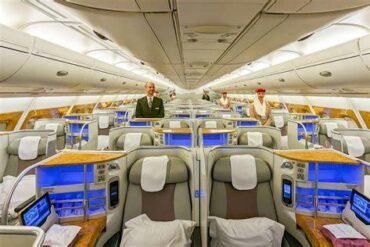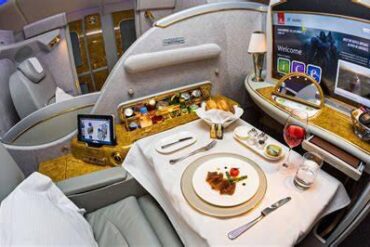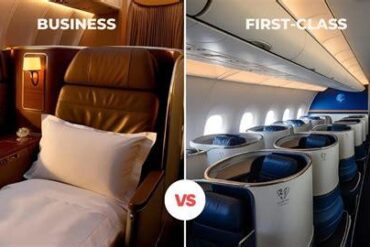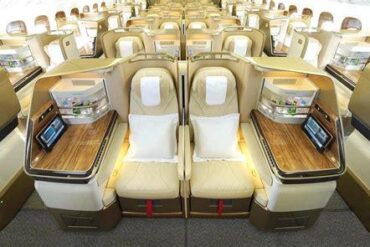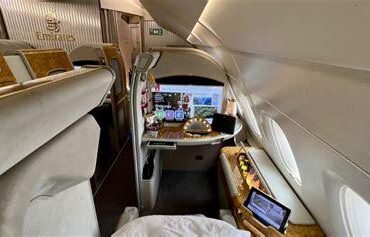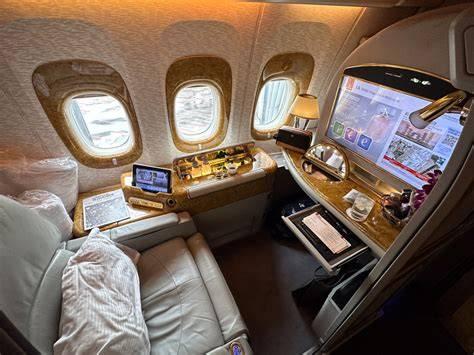
Emirates has spent decades building one of the world’s most recognizable premium-cabin products, and its Boeing 777 first class remains a major part of that strategy. The airline was an early pioneer of private first class suites, introducing fully enclosed suites in 2003 at a time when privacy in commercial first class was still relatively unusual. More than two decades later, Emirates offers several generations of first class suites, with the latest Game Changer cabin pushing the concept much further through floor-to-ceiling doors, enormous personal space, and a highly private 1-1-1 layout.
That history helps explain why an Emirates 777 first class ticket can command such a substantial premium in 2026. The price is not simply a fixed amount attached to the word “First Class.” Emirates uses different fare types, routes have very different levels of demand, and the airline’s pricing system responds to factors including travel dates, remaining inventory, seasonality, and booking timing. As a result, two passengers sitting in essentially the same type of first class suite can pay dramatically different amounts for their tickets.
For travelers paying cash, the range is particularly striking. On some shorter Emirates 777 sectors, a first class ticket can be found for roughly $2,000 to $3,000 one way, while premium long-haul routes from the United States can reach $20,000 or even $25,000 one way. That enormous gap makes the route and fare type just as important as the aircraft itself when determining how much an Emirates first class journey will cost.
Emirates 777 First Class Prices Depend on Route and Fare Type
There is no universal Emirates Boeing 777 first class price for 2026. Instead, passengers encounter different fares based on the specific origin and destination, travel date, seat availability, and the fare family offered at the time of booking. Emirates generally markets its first class tickets using Flex and Flex Plus fares, with the latter providing substantially greater flexibility.
A Flex ticket can normally be changed or canceled subject to the applicable fare conditions and fees, while Flex Plus provides a more flexible ticket structure. That additional flexibility comes at a cost, meaning passengers searching for the lowest possible cash fare may see a significant difference between the two options. The difference can amount to thousands of dollars on long-haul routes.
Dynamic pricing adds another layer to the equation. A first class seat that appears at one price several months before departure can become considerably more expensive as demand increases or cheaper fare inventory disappears. Conversely, specific flights and dates may occasionally offer more attractive fares when Emirates has greater first class availability. Consequently, published examples should be viewed as snapshots of actual fares rather than permanent price lists.
The October 2026 fares examined on Emirates’ 777 routes illustrate the scale of those differences particularly well. Depending on the market, passengers could encounter everything from approximately $5,000 in Europe to more than $24,000 on selected US routes.
London to Dubai Emirates 777 First Class Can Cost More Than $9,000
London is one of the clearest examples of how expensive Emirates first class can become even on a relatively short international route. Emirates operates an extensive network between London and Dubai, serving Heathrow, Gatwick, and Stansted. While Airbus A380 aircraft are generally associated with Heathrow services, the airline uses Boeing 777s on services from London Gatwick and London Stansted, creating opportunities to experience its 777 first class product.
On October 1, 2026, the two Emirates 777 services from London Stansted to Dubai were showing first class Flex fares of approximately $7,400 one way. The corresponding Flex Plus fare was close to $9,150. The exact flight schedule included EK66 departing Stansted in the afternoon and EK68 leaving later in the evening, with both services arriving in Dubai the following day according to their respective schedules.
The pricing was similar from London Gatwick. The available first class Flex fare was approximately $7,435, while Flex Plus was around $9,150. Availability varied by individual flight, demonstrating another important factor in Emirates’ pricing system: having a 777 on the route does not necessarily mean first class is available on every departure.
For a passenger traveling one way from London to Dubai, therefore, a realistic cash budget for an Emirates 777 first class ticket can be roughly $7,400 to $9,200, based on these October 2026 examples. A round trip can move well beyond $11,000, although the final amount depends heavily on the fare and availability on the return flight.
Emirates 777 First Class Fares Across Europe
The London market is not an isolated example. Emirates’ 777 first class fares vary considerably across its European network, with some routes offering substantially lower prices and others approaching the levels seen from Britain.
For October 2026, approximate one-way first class fares included around $6,600 to $7,500 from Amsterdam, while Barcelona was closer to $8,000 to $9,800. Frankfurt showed fares around $7,700 to $9,500, and Warsaw was approximately $6,200 to $7,200. Istanbul stood out at roughly $5,300 to $5,800, while Athens could offer first class for around $5,600.
These numbers demonstrate why simply asking how much Emirates 777 first class costs can produce a misleading answer. A traveler departing from one European city could pay thousands of dollars less than another passenger traveling on a different Emirates 777 service on the same date. The aircraft may provide a broadly similar premium experience, but the economics of each route are different.
| Emirates 777 route | Approximate one-way first class fare |
|---|---|
| Amsterdam–Dubai | $6,600–$7,500 |
| Barcelona–Dubai | $8,000–$9,800 |
| Frankfurt–Dubai | $7,700–$9,500 |
| Warsaw–Dubai | $6,200–$7,200 |
| Istanbul–Dubai | $5,300–$5,800 |
| Athens–Dubai | Around $5,600 |
These are approximate October 2026 cash fares, rather than fixed Emirates prices. The actual amount displayed to a passenger can change as inventory, demand, travel dates, and fare conditions change.
US Routes Can Push Emirates 777 First Class Above $20,000
The biggest jump comes on Emirates’ long-haul services between the United States and Dubai. The airline operates Boeing 777s on several US routes, although first class is not necessarily available on every 777 service. Where it is offered, the distance and premium demand can produce extraordinarily high cash fares.
Boston is one of the most dramatic examples. A first class Flex fare from Boston to Dubai for October 1, 2026, was approximately $16,800 one way, while Flex Plus approached $24,000. Washington Dulles was similarly expensive, with the highest quoted fare reaching approximately $24,000. Seattle was even higher in the example examined, with fares reaching approximately $25,000 one way.
Chicago O’Hare showed a range around $11,200 to $16,800, while Orlando was approximately $9,700 to $16,800. These figures make the distinction between European and US pricing especially clear: a passenger can potentially pay more than double the cost of some European departures for a single Emirates 777 first class journey to Dubai.
The approximate fares illustrate the range:
| US departure | Approximate one-way Emirates 777 first class fare |
|---|---|
| Boston | $16,800–$24,000 |
| Washington Dulles | $8,900–$24,000 |
| Seattle | $9,300–$25,000 |
| Orlando | $9,700–$16,800 |
| Chicago O’Hare | $11,200–$16,800 |
The upper end is particularly important because these are one-way fares. A traveler buying two similarly priced sectors could theoretically face a round-trip cash cost approaching or exceeding $40,000. That does not mean every Emirates first class passenger pays anything close to that amount, but it shows just how high the published cash price can climb when premium inventory is scarce.
Shorter Emirates 777 Routes Can Be Surprisingly Affordable
There is another side to the Emirates 777 first class pricing story. Passengers who are willing to fly shorter sectors can sometimes access the cabin for considerably less than the headline-grabbing US fares.
One example is Emirates’ Dubai–Lusaka–Harare service, operated with the Boeing 777-300ER. A passenger traveling all the way from Dubai to Harare could see a first class fare of around $4,800, while the shorter Lusaka-to-Harare sector could cost approximately $2,800 one way.
The airline’s Dubai–Singapore–Phnom Penh routing provides another example. A first class ticket on the Singapore-to-Phnom Penh sector could cost around $2,200, while the complete Dubai-to-Phnom Penh itinerary was approximately $4,850. The Dubai-to-Singapore sector alone could cost more than $5,100.
This means the lowest cash prices for an Emirates 777 first class experience may be found on shorter segments rather than the airline’s longest flagship routes. The underlying product is still first class, but the amount a passenger pays can be radically different because of the route’s market dynamics.
Emirates Offers Two First Class Products on the Boeing 777
Price is only half of the story. Emirates’ 777 fleet does not have one standardized first class cabin. Instead, passengers may encounter either the traditional eight-suite first class cabin or the much newer six-suite Game Changer.
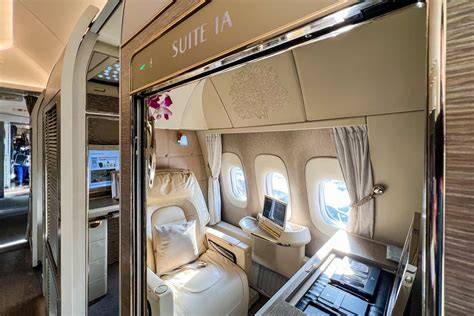
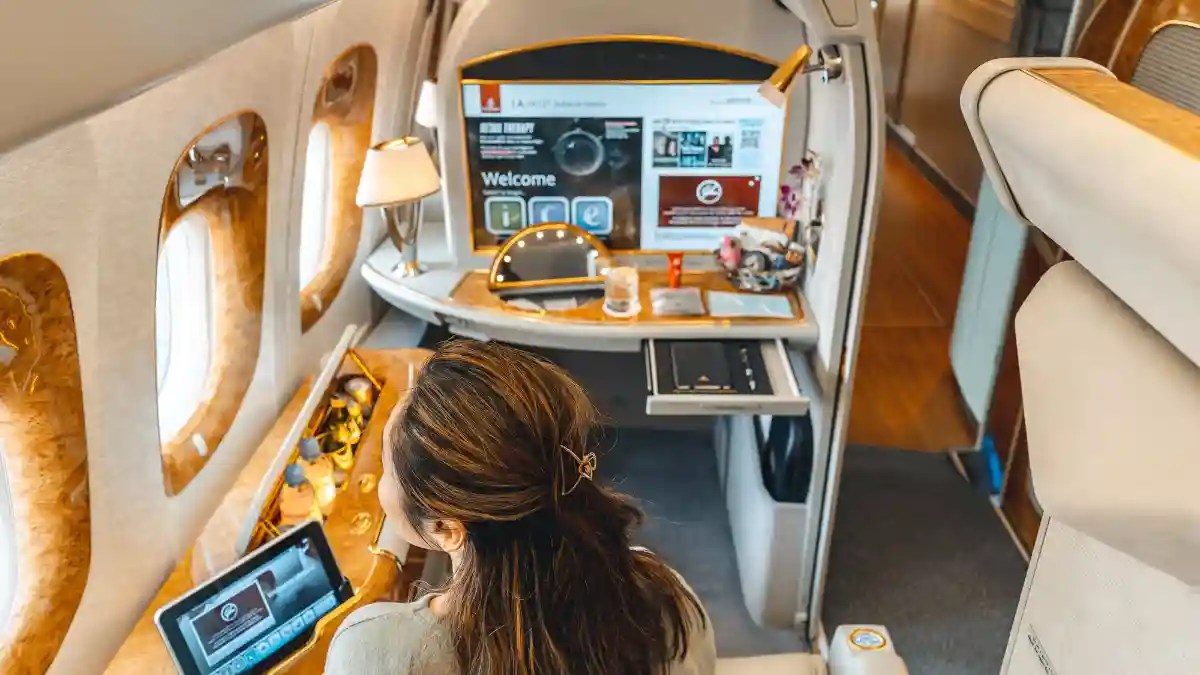
The traditional layout contains eight suites in a 1-2-1 configuration. Each suite provides a high degree of privacy, with a folding door and privacy screens. The seat converts into a fully flat bed measuring up to approximately 6 feet 7 inches, or 201 centimeters, while a 24-inch entertainment screen provides a substantial personal display.
Other details include a personal minibar and pop-up vanity mirror. Although this configuration is no longer the newest Emirates first class product, it remains an important part of the carrier’s 777 fleet and still represents a substantial upgrade over conventional premium seating.
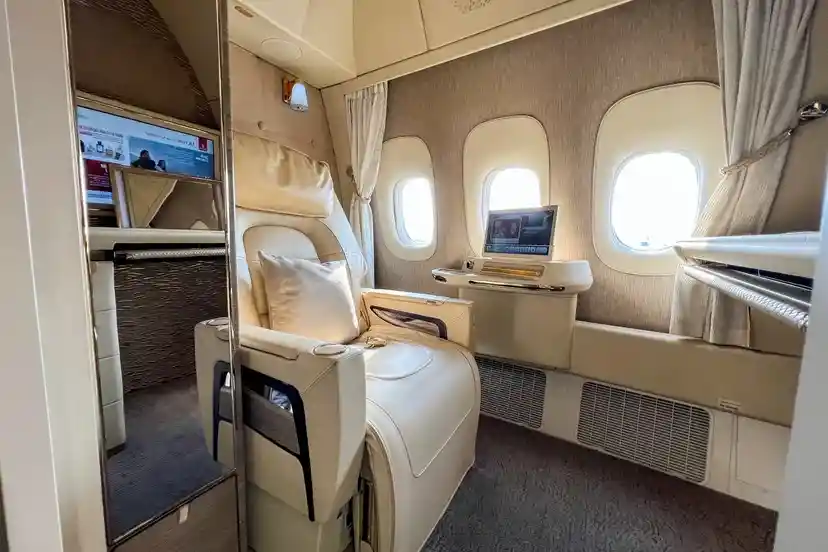
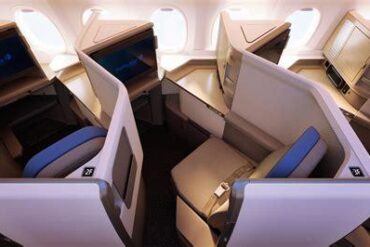
The Game Changer, introduced in 2017, takes privacy considerably further. Its six suites are arranged in a 1-1-1 configuration, and each suite features floor-to-ceiling sliding doors. Emirates gives each passenger as much as 40 square feet of personal space, making the suite feel closer to a compact private room than a conventional aircraft seat.
The center suites are particularly distinctive because they can use virtual windows that display high-definition views of the outside environment. Each suite also includes individual temperature and lighting controls, a personal minibar, and a seat capable of moving into a zero-gravity position.
The bed extends to approximately 6 feet 10 inches, or 208 centimeters, while the entertainment display grows to 32 inches. Emirates has described the suite as a “hotel room in the sky,” a description that reflects how dramatically the Game Changer differs from the carrier’s older 777 first class design.
However, passengers should not assume that booking an Emirates 777 automatically means receiving the Game Changer. Only nine Emirates aircraft currently feature the six-suite cabin, making aircraft assignment an important consideration for travelers specifically seeking that product.
What Comes With an Emirates First Class Ticket
The value of Emirates first class extends beyond the seat itself. Before departure, eligible passengers can use Emirates’ chauffeur-driven transfer service in more than 70 cities. The complimentary service covers journeys of up to 50 miles, while longer transfers can be arranged for an additional charge.
Airport treatment is another major component. Emirates operates more than 30 first class lounges worldwide, giving passengers dedicated spaces to relax, dine, and prepare for their flight before boarding. The experience is designed to make the premium journey begin well before the aircraft door closes.
Once onboard, the first class service includes an extensive dining program featuring caviar served with seven accompaniments, alongside a broader selection of premium food and beverages. Passengers also receive Bulgari amenity kits containing items such as a toothbrush, dental kit, shaving kit, mirror, hairbrush, and hair tie, together with Bulgari Le Gemme fragrances and lotions.
For a traveler paying $7,000, $10,000, or even $20,000 for a ticket, these details become part of the overall calculation. The fare is paying for substantially more than a wider seat: it encompasses ground transportation in eligible markets, lounge access, private space, premium dining, amenities, and the ability to travel in one of the airline industry’s most recognizable first class cabins.
Emirates 777 First Class in 2026: How Much Should You Budget?
There is no single answer to the question of how much an Emirates Boeing 777 first class ticket costs in 2026. The most useful way to think about the market is as a broad spectrum. Shorter 777 sectors can cost around $2,000 to $3,000 one way, while many European departures fall in the $5,000 to $10,000 range. London examples sit toward the upper portion of that European spectrum, while selected US routes can reach $20,000 to $25,000.
The fare type also matters enormously. A Flex Plus ticket can cost several thousand dollars more than Flex, particularly on long-haul flights, because passengers are paying for greater flexibility. Booking timing, demand, seasonality, and remaining first class inventory can then move the price further in either direction.
For travelers considering Emirates first class specifically for the 777 Game Changer, the aircraft configuration is just as important as the fare. Only a small portion of the 777 fleet carries the six-suite cabin, so the flight number and aircraft assignment deserve attention before booking.
Emirates is also preparing to carry its flagship first class concept into the next generation of aircraft. The airline plans to install its Game Changer suites on the Boeing 777X, extending the product’s evolution into its future long-haul fleet.
Ultimately, the 2026 Emirates 777 first class market shows why the phrase “first class ticket” does not correspond to one standard price. Depending on the route and fare, passengers might pay a few thousand dollars for a short sector or many times that amount for a long-haul journey from the United States. What remains consistent is the premium positioning: Emirates continues to treat first class as a comprehensive luxury experience built around privacy, space, personalized service, and one of the most distinctive suites in commercial aviation.