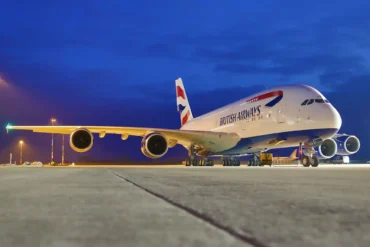
British Airways is preparing to transform its Airbus A380 fleet, and the most revealing part of the overhaul is not the new First Class suite or the much larger Business Class cabin. It is the decision to remove 88 Economy Class seats from every A380. The change will reduce each aircraft from 469 seats to 421, creating a dramatically more premium-focused cabin while giving British Airways fewer seats to sell on some of its most important long-haul routes.
The decision reflects a broader change in how major international airlines view premium cabins. For years, the Airbus A380 was associated with maximum capacity and the economics of moving hundreds of passengers between congested international hubs. British Airways, however, has consistently operated its Superjumbos with relatively low-density interiors. Its latest retrofit takes that philosophy considerably further, sacrificing almost 10% of total seating capacity to create more space for passengers willing to pay significantly higher fares.
The timing is also important. British Airways is entering a rolling retrofit program for its 12 Airbus A380s, with aircraft cycling through deep maintenance and cabin reconstruction rather than being removed from service simultaneously. The airline had originally indicated in 2024 that its first upgraded A380 would enter service in mid-2026, but the introduction has taken longer than initially expected. The winter schedule now provides a clearer indication of how extensively British Airways is preparing its fleet for the transformation.
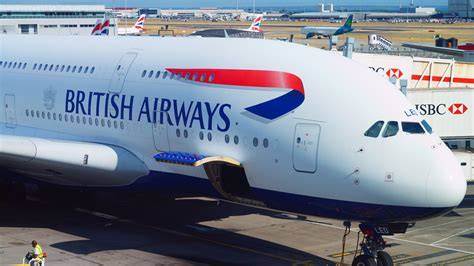
British Airways Airbus A380 Fleet Is Being Rebuilt Around Premium Demand
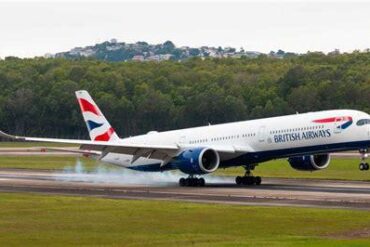
British Airways operates 12 Airbus A380s, giving it one of the largest remaining A380 fleets in the world. The aircraft remain particularly useful at London Heathrow, where demand is enormous but airport capacity is constrained. That combination is exactly the kind of environment for which Airbus originally designed the A380: carry very large numbers of passengers through airports where adding additional flights is difficult.
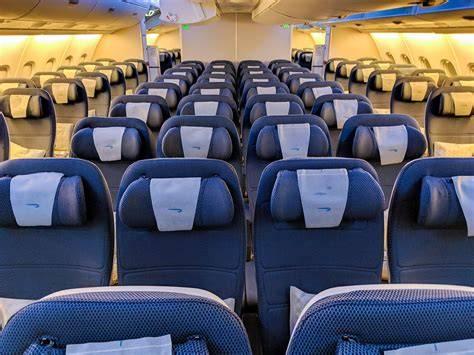
Yet British Airways has never treated the A380 simply as a high-capacity people mover. Its current configuration contains 14 First Class suites, 97 Business Class seats, 55 Premium Economy seats and 303 Economy seats, for a total of 469 passengers. That already gives the aircraft a relatively premium-oriented configuration compared with some higher-density A380 operators.
The retrofit will change those numbers substantially. First Class falls from 14 suites to 12, while Business Class increases from 97 to 110 seats. Premium Economy rises from 55 to 84 seats, and Economy drops from 303 to only 215 seats. The result is a 421-seat aircraft with a much greater proportion of passengers traveling in higher-value cabins.
This is not simply a matter of removing seats and installing new furniture. Every passenger cabin is being redesigned, requiring the aircraft to enter a substantial maintenance and refurbishment process. The project therefore represents a major investment in aircraft that British Airways has not indicated it intends to retire anytime soon.
Why British Airways Is Removing 88 Economy Seats
The arithmetic explains the headline. British Airways will remove 88 Economy Class seats, but the aircraft will not simply become less crowded. The space released by the Economy cabin is being redistributed across the premium sections, particularly Premium Economy and Business Class.
Premium Economy increases by 29 seats, from 55 to 84. Business Class gains 13 seats, rising from 97 to 110. First Class loses two suites. Taken together, the cabin changes reduce total capacity by 48 seats, from 469 to 421, while dramatically changing the revenue mix of the aircraft.
That distinction matters because an airline does not necessarily maximize profitability by filling every available seat. A passenger paying a substantially higher fare for Business Class or Premium Economy can generate far more revenue than an Economy passenger, even though the premium seat occupies more physical cabin space.
British Airways has spent decades developing this strategy. It introduced World Traveller Plus, its Premium Economy product, in 2000, making it one of the earlier major airlines to establish the cabin as a permanent part of its long-haul proposition. The current A380 retrofit is effectively an extension of that strategy: use scarce cabin space for products that can command higher yields while retaining enough Economy capacity to serve mass-market demand.
British Airways Is Expanding Business Class on the A380
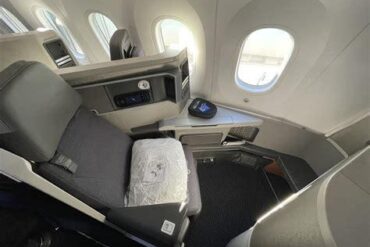
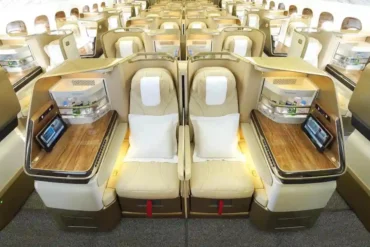
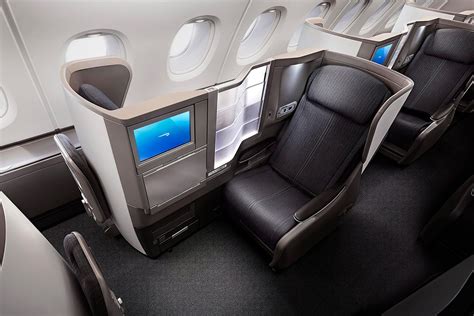
The most significant change for premium travelers may be the redesigned Club World Business Class cabin. British Airways will increase capacity from 97 seats to 110, but the increase in seat count is only part of the story.
The existing A380 Business Class cabin uses a 2-4-2 arrangement in its main configuration, while the new cabin will move to a 1-2-1 layout. Every Business Class passenger will therefore have direct access to the aisle, eliminating the need to climb over another passenger or ask a seatmate to move.
The new seats will also feature privacy doors and longer beds, addressing some of the long-standing expectations of modern long-haul Business Class passengers. For an airline competing on premium-heavy routes across the Atlantic and to major international destinations, these details can be more important than simply increasing the number of seats.
British Airways has been progressively updating its premium products as competitors have raised the standard for Business Class. A direct-aisle-access layout is now close to an industry expectation on many flagship long-haul aircraft, particularly on routes where airlines compete heavily for corporate travelers.
Premium Economy Gets an Even Bigger Role
The expansion of World Traveller Plus is arguably the clearest explanation for the 88-seat Economy reduction. British Airways will increase Premium Economy capacity from 55 to 84 seats, adding 29 seats to a cabin that has become increasingly important across the airline industry.
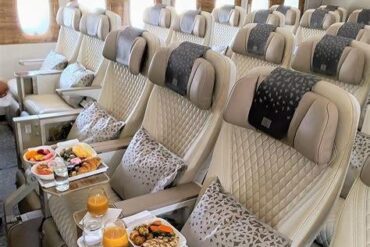
The new Premium Economy seats are designed around a more contemporary passenger experience, with shell-style seating, larger entertainment displays, USB-C connectivity and improved power outlets. Privacy features around the headrests are also intended to create a more separated environment than traditional Economy Class.
This is strategically important because Premium Economy occupies a middle ground that airlines can exploit effectively. Many passengers are unwilling or unable to pay Business Class fares, yet a meaningful number will pay considerably more than Economy for additional legroom, greater personal space, improved service and a more comfortable seat.
For British Airways, the A380 provides an unusually large canvas on which to exploit that market. The airline can retain 215 Economy seats while creating an 84-seat Premium Economy cabin, allowing it to target several different customer groups on the same aircraft.
Economy Class Will Still Have 215 Seats
The removal of 88 Economy seats sounds dramatic, but the reconfigured A380 will still offer 215 Economy Class seats. British Airways is therefore not abandoning the mass-market passenger; it is deliberately reducing the proportion of Economy travelers carried by each Superjumbo.
The new Economy cabin will also receive its own upgrades. Passengers can expect refreshed upholstery, large 4K entertainment screens, Bluetooth audio pairing and USB-C charging. Those improvements are important because reducing Economy capacity does not mean British Airways can afford to make the remaining seats feel like an afterthought.
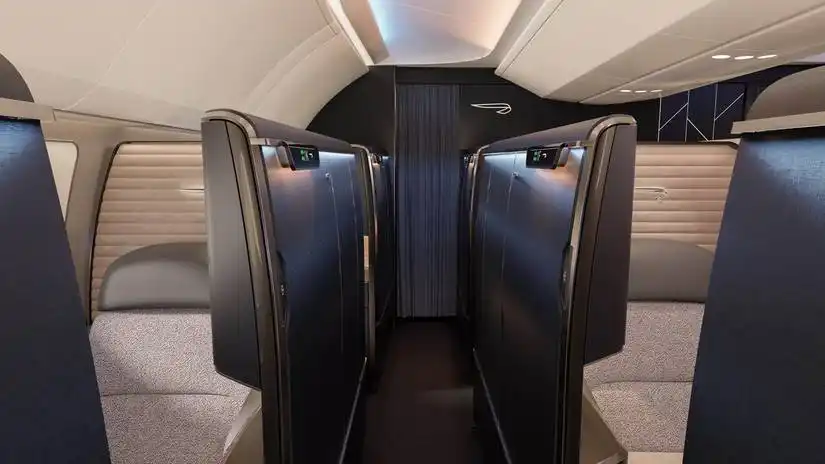
Instead, the airline is creating a more differentiated cabin structure. Economy becomes smaller but better equipped, Premium Economy becomes substantially larger, Business Class receives a major redesign, and First Class becomes smaller but remains available as a flagship product.
That final point is particularly revealing. British Airways will reduce First Class from 14 to 12 suites even while expanding the overall premium footprint. The airline appears to be prioritizing Business and Premium Economy, where demand and revenue opportunities may be broader, while retaining a limited First Class presence for customers who specifically seek the highest-end product.
Why the A380 Retrofit Is Affecting British Airways’ Winter Schedule
A major cabin reconstruction cannot happen without disrupting the aircraft’s normal schedule. British Airways is consequently reshuffling its A380 operations during the winter period, reducing A380 flying by roughly 28% between November and February as aircraft move through the retrofit process.
The airline is expected to remove the A380 temporarily from routes including Los Angeles and Johannesburg. Other aircraft will take over these services, including Boeing 777-300ERs and Boeing 787-9s. At the same time, British Airways will continue operating the A380 on important routes such as Miami and Dallas, while increasing A380 activity on selected services to Singapore and Melbourne via Kuala Lumpur.
This rolling approach allows British Airways to maintain its A380 network while individual aircraft are refurbished. Instead of grounding all 12 aircraft at once, the airline can rotate them through maintenance facilities and return each aircraft to service when the new cabin is ready.
The process also explains why schedule changes are appearing before the finished product becomes widely visible to passengers. The A380s need to be positioned, maintained, stripped internally and rebuilt before the new configuration can enter regular commercial service.
Lufthansa Technik Philippines Is Handling the A380 Work
The scale of the project requires specialized facilities capable of handling one of the world’s largest passenger aircraft. British Airways has been using Lufthansa Technik Philippines in Manila for the work, a facility with the hangar capacity and experience required for major A380 maintenance and interior projects.
Several British Airways A380s have passed through deep maintenance during 2026, generating speculation about which aircraft would become the first fully retrofitted example. Aircraft including G-XLEF and G-XLEJ have undergone substantial maintenance activity, while G-XLEC subsequently arrived in Manila in August for the retrofit.
The international nature of the work is an interesting contrast with British Airways’ emphasis on the British design credentials of the new cabin. The airline has highlighted designers and manufacturers from Great Britain and Ireland in describing the seats and interiors, while the physical installation is being performed by a specialist facility in the Philippines.
That is a common reality of modern aviation. An aircraft may carry one nation’s flag, belong to a multinational airline group and receive maintenance thousands of miles from its home base.
British Airways Is Betting on the A380’s Premium Future
The most important message from the retrofit is that British Airways still sees value in keeping its A380s relevant. Other airlines have begun accelerating A380 retirements as newer twin-engine aircraft offer better fuel efficiency and operational flexibility. Qantas, for example, is bringing forward elements of its A380 phase-out, while several other operators have already reduced their Superjumbo fleets.
British Airways has taken a different approach. Rather than immediately replacing the A380, it is investing in the aircraft’s strongest commercial advantage: its enormous cabin and ability to accommodate a large number of premium passengers.
That strategy fits neatly alongside the airline’s future fleet plans. British Airways has ordered 24 Boeing 777-9s, which are expected to enter service from 2027. The aircraft are expected to feature eight First Class suites, 68 Business Class seats, 45 Premium Economy seats and 206 Economy seats, for a total of only 325 passengers.
The comparison illustrates where British Airways believes long-haul aviation is heading. Its future flagship aircraft will not be configured for maximum density, and its existing A380s are moving in the same direction.
The 88 Economy seats disappearing from each British Airways A380 therefore represent much more than a seating adjustment. They are a visible expression of an airline choosing premium revenue over maximum passenger volume. By reducing capacity from 469 to 421, expanding Premium Economy and Business Class, modernizing Economy and retaining a smaller First Class cabin, British Airways is attempting to make the A380 better suited to the economics of modern long-haul travel.
For an aircraft once celebrated primarily for its size, the future British Airways A380 will be defined by something else: how much value the airline can generate from every square foot of its enormous cabin.