Long-haul flights compress time and space into a metal tube traveling nearly 900 km/h at 35,000 feet, and the exact seat you choose can shape the entire journey. On American Airlines’ Boeing 787 Dreamliner fleet, that choice becomes even more significant because the aircraft exists in multiple configurations, each with subtle differences that dramatically affect comfort.
American Airlines operates both the Boeing 787-8 and Boeing 787-9, and the larger -9 appears in two distinct cabin layouts. At first glance, the seat maps appear similar: lie-flat business seats in a 1-2-1 layout, premium economy arranged 2-3-2, and economy in the familiar 3-3-3 configuration. Yet the real story hides in quieter details—galley placement, lavatory traffic, bulkhead spacing, window alignment, and aisle exposure.
For travelers crossing the Atlantic to London, flying deep into the Pacific toward Tokyo, or tackling ultra-long sectors like Dallas–Sydney, understanding these seat nuances can mean the difference between a restless overnight flight and arriving genuinely refreshed.
In 2026, savvy passengers increasingly treat seat selection as a strategic decision. The Dreamliner itself provides advantages—higher cabin humidity, lower cabin altitude, quieter engines, and electronically dimming windows—but the exact seat location still determines how much of those benefits you truly enjoy.
What follows is a deep dive into the best seats in every cabin class across American Airlines’ 787 fleet, examining how layout, passenger flow, and real traveler experiences shape the ideal place to sit.
Understanding American Airlines’ Boeing 787 Fleet Layouts
American’s Dreamliner fleet is not uniform. Three primary cabin layouts are currently in service:
| Aircraft | Configuration | Business | Premium Economy | Main Cabin |
|---|---|---|---|---|
| 787-8 | 20J / 28W / 186M | 1-2-1 | 2-3-2 | 3-3-3 |
| 787-9 Version 1 | 30J / 21W / 234M | 1-2-1 | 2-3-2 | 3-3-3 |
| 787-9 Version 2 | 51J / 32W / 161M | 1-2-1 | 2-3-2 | 3-3-3 |
The variations are not cosmetic. They fundamentally change how crowded each cabin feels, how frequently passengers move through the aisles, and how isolated certain seats become.
For example, the premium-heavy 787-9 Version 2 dramatically expands the business class cabin to 51 seats, creating a longer premium section that alters passenger flow. Meanwhile, the 787-8 remains the most intimate layout, particularly in the forward cabin.
The practical implication is simple: the same seat number may feel very different depending on which aircraft variant operates your flight.
This is why frequent travelers often check the seat map immediately after booking and again before departure. Aircraft swaps are common in long-haul operations, and a well-chosen seat can suddenly transform into a less desirable one if the aircraft configuration changes.
The Philosophy Behind Choosing the Best Seat
Selecting the best seat is not just about legroom. In fact, legroom is often the least interesting variable once you enter premium cabins.
Three deeper factors define the best seats across American’s Dreamliner fleet:
Privacy
Seats shielded from aisle traffic create a calmer environment, particularly on overnight flights.
Noise Exposure
Proximity to galleys, lavatories, and crew workspaces often introduces light, conversation, and equipment noise.
Passenger Flow
High-traffic areas near lavatories or cross-aisles can feel surprisingly busy during long flights.
The Dreamliner’s engineering already improves the baseline passenger experience. The aircraft uses composite materials, which allow higher cabin humidity and reduce fatigue during long journeys. The engines are also quieter than older wide-body aircraft, meaning background cabin noise is lower.
But even with those advantages, seat positioning still shapes the experience.
Seats near bulkheads may offer extra legroom but also sit beside bassinet positions for infants. Exit rows provide impressive space but sometimes lose reclining capability. Window seats may offer privacy but occasionally misalign with the actual window.
Those tradeoffs form the real art of seat selection.
Best Flagship Business Class Seats on the Boeing 787-8
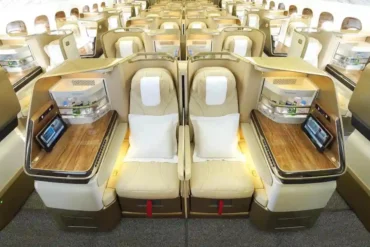
The Boeing 787-8 carries the smallest business class cabin in American’s Dreamliner fleet, with 20 lie-flat seats arranged across five rows.
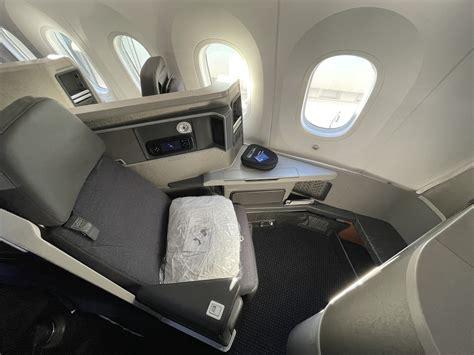
Each seat converts into a fully flat bed, features direct aisle access, and includes a personal entertainment screen, AC power outlet, and storage compartments. Yet not all seats feel equally private.
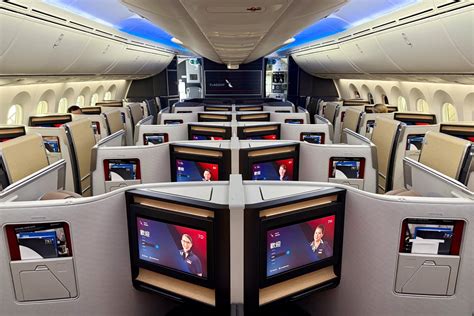
The most desirable positions are the true window seats in Rows 3 and 4, particularly 3A and 3L.
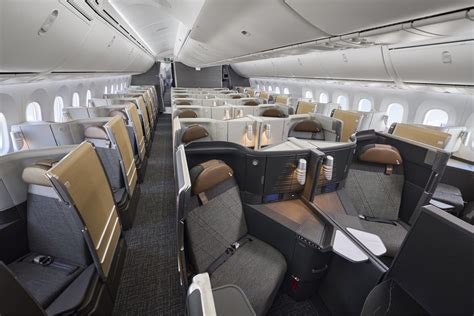
These seats sit closer to the aircraft wall than the aisle, creating a natural barrier from cabin traffic. The side console forms a cocoon-like shell that isolates the passenger from movement in the aisle.
Row 3 often strikes the perfect balance within the cabin.
It sits far enough from the forward galley to avoid early-morning meal preparation noise while remaining distant from lavatories behind the cabin. The result is a quiet zone in the middle of the aircraft, where disturbances are minimal.
Row 1, by contrast, has an undeniable convenience: it allows extremely quick service from the galley. Yet this proximity also means exposure to clattering dishes, conversation among crew members, and light during meal preparation.
Travelers sensitive to noise generally prefer the mid-cabin rows instead.
Interestingly, the alternating orientation of seats—some rear-facing and some forward-facing—often surprises first-time passengers. Rear-facing seats can feel unusual during takeoff, but once airborne the sensation disappears almost entirely. Many experienced travelers report that they quickly stop noticing the orientation.
Best Business Class Seats on the Boeing 787-9 Version 1
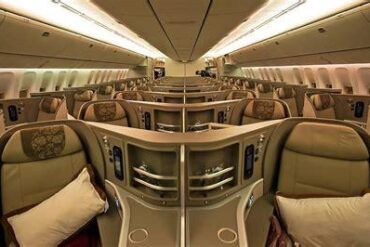
The 787-9 Version 1 configuration expands business class slightly to 30 seats, still arranged in the familiar 1-2-1 layout.
Despite the larger cabin, the best seats remain window positions located away from both galleys and lavatories.
The sweet spot here tends to be Row 4, especially seats 4A and 4L.
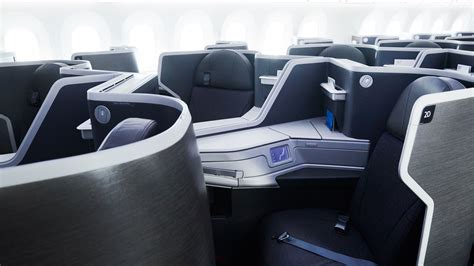
Row 4 sits comfortably in the middle of the cabin. It is distant enough from the front galley to avoid service noise, while also remaining far from lavatory traffic in the rear section.
Passengers seated here experience fewer interruptions from crew movement or other travelers moving through the aisle.
Another advantage of these mid-cabin seats lies in lighting conditions. The Dreamliner’s large electrochromic windows—which dim electronically rather than using physical shades—allow gentle ambient light to filter through the cabin. Mid-cabin seats tend to experience more balanced lighting compared with areas directly adjacent to galleys, where brighter task lighting often remains active during meal preparation.
This subtle environmental difference becomes noticeable on overnight flights when passengers attempt to sleep.
The Unique Challenge of the 787-9 Version 2 Business Cabin
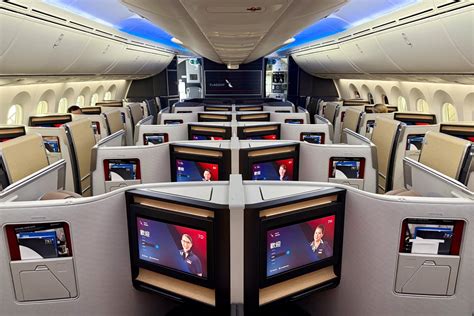
The 787-9 Version 2 configuration dramatically increases the number of premium seats.
Business class jumps to 51 seats, forming one of the largest business cabins in the American Airlines fleet.
That expansion creates a different seat-selection challenge.
Instead of one intimate cabin, passengers now sit within a much longer premium section where traffic patterns change significantly.
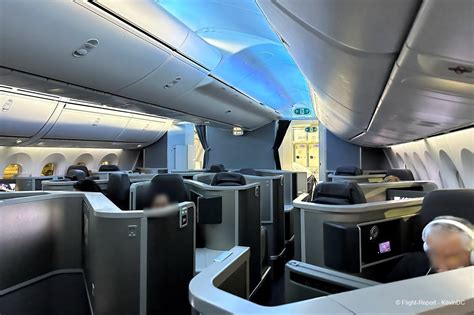
In this layout, the best seats are often found in the forward mini-cabin, particularly Row 5 window seats such as 5A and 5L.
These seats enjoy a boutique feel because they sit ahead of the main concentration of passengers, reducing aisle activity nearby.
Further back in the cabin, the experience becomes busier. Crew members move more frequently between galleys, and passenger foot traffic increases as travelers visit lavatories or stretch during long flights.
Choosing a seat in the forward section restores the quiet atmosphere that many travelers expect from long-haul business class.
Premium Economy: Where Space and Quiet Compete
Premium economy on American’s Dreamliner fleet occupies an interesting middle ground between luxury and practicality.
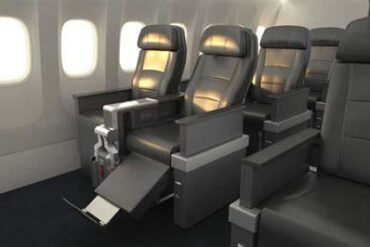
Seats are arranged 2-3-2 across the cabin with approximately 38 inches of pitch, noticeably more spacious than standard economy.
The most sought-after seats typically appear in Row 9, the bulkhead row on many 787-8 aircraft.
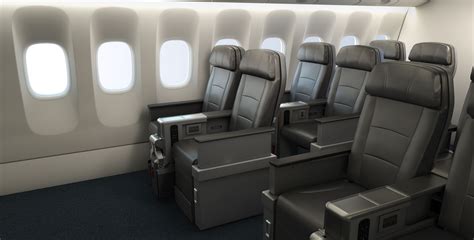
These seats offer remarkable legroom because there is no seat directly ahead. Passengers can stretch freely, and the extra space becomes especially valuable on flights exceeding ten hours.
However, the bulkhead introduces two important tradeoffs.
First, personal items cannot be stored under the seat during taxi, takeoff, or landing, forcing passengers to rely on overhead bins. Second, bulkhead positions often contain bassinet mounts for infants, meaning families with small children frequently occupy these seats.
For travelers seeking uninterrupted sleep, a standard row just behind the bulkhead may actually provide a quieter experience.
Interestingly, premium economy on the 787 often becomes one of the most consistent cabins across variants. Seat pitch and width remain similar regardless of configuration, meaning passengers experience fewer surprises compared with the more complex business cabin layouts.
Main Cabin Extra: The Hidden Comfort Zone
Economy class rarely receives attention in seat strategy discussions, yet Main Cabin Extra seats on American’s Dreamliner can significantly improve long-haul comfort.
These seats provide approximately 34 to 35 inches of pitch, several inches more than standard economy.
That difference may sound modest, but over an eight-to-twelve-hour flight, the additional knee room changes posture, circulation, and overall comfort.
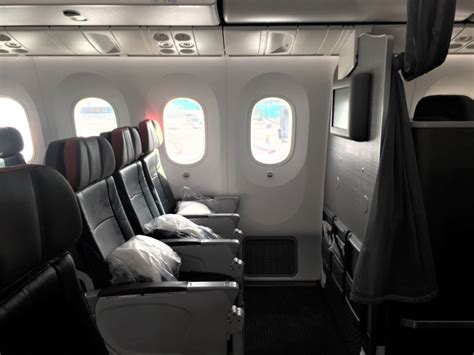
One of the most popular positions appears near the exit rows, often around Row 16 on the 787-8.
Exit rows offer the most legroom in the economy section, allowing passengers to fully extend their legs without obstruction.
However, exit rows carry several restrictions.
Passengers must meet safety requirements, cannot store bags beneath the seat in front, and may encounter fixed armrests or limited recline depending on the aircraft.
Even so, taller travelers frequently consider these seats the best value in the cabin.
Standard Economy Seats Worth Choosing
In the standard Main Cabin, the seating arrangement follows the classic 3-3-3 layout common to many Dreamliners.
Seat pitch averages 31 inches, which remains typical for long-haul economy travel.
Within this cabin, small positional differences still matter.
Seats located toward the front of the economy cabin tend to benefit from faster boarding and earlier meal service. Meanwhile, rows near the rear may experience increased foot traffic from passengers visiting lavatories.
Window seats remain popular because they allow passengers to lean against the cabin wall during sleep. On the Dreamliner, the larger windows enhance this experience, creating a slightly more open environment than older wide-body aircraft.
However, travelers should avoid the final rows of the cabin, where seats sometimes lose reclining ability due to proximity to the rear bulkhead.
A seat that cannot recline on a ten-hour flight quickly becomes one of the least comfortable positions onboard.
Real Passenger Experiences on American’s Dreamliners
Marketing materials often emphasize technological features, but traveler experiences add valuable context.
Passengers frequently praise the Dreamliner’s lower cabin altitude, which reduces fatigue compared with older aircraft such as the Boeing 777 or Airbus A330.
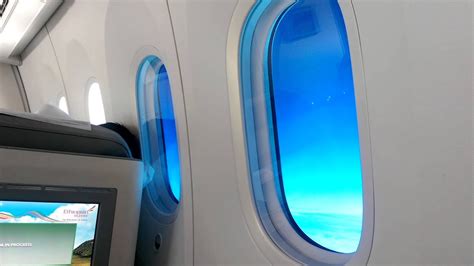
The electronic window dimming system also changes the atmosphere of the cabin. Instead of physical shades, windows gradually darken, allowing gentle light diffusion even when fully dimmed.
Some passengers initially feel uncertain about rear-facing business class seats, yet many report adapting quickly once airborne. In fact, turbulence can sometimes feel smoother when seated backward because the body experiences motion differently relative to the aircraft’s movement.
At the same time, reviews occasionally highlight signs of wear in older Dreamliner interiors. Cabin finishes, seat surfaces, and decorative elements may show age on aircraft delivered earlier in the fleet’s history.
Such differences do not necessarily affect comfort, but they remind passengers that aircraft interiors evolve over time.
How American’s 787 Seats Compare with Other Airlines
American Airlines competes with carriers such as United Airlines and Alaska Airlines, both of which operate Dreamliner fleets.
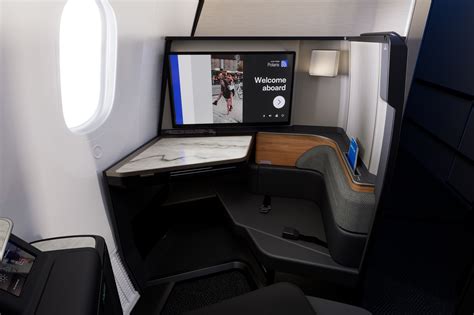
United’s Polaris Business Class also uses a 1-2-1 layout, though its seats include larger privacy partitions and often appear in denser configurations on aircraft such as the 787-10.
Alaska Airlines operates a smaller fleet of 787-9 aircraft, featuring modern lie-flat seats and a spacious premium cabin.
American’s strength lies in fleet scale and global reach. Its Dreamliners connect major hubs like Dallas, Chicago, and Los Angeles to destinations across Europe, Asia, and the Pacific.
The airline’s premium-heavy 787-9 Version 2 configuration also offers one of the largest business cabins among U.S. carriers, increasing the availability of premium seats on long routes.
Yet that very scale makes seat selection even more important, because larger cabins naturally create more passenger movement.
Final Thoughts: The Smart Traveler’s Dreamliner Strategy
The Boeing 787 remains one of the most comfortable long-haul aircraft flying today, thanks to its advanced composite structure, quieter engines, higher humidity levels, and large windows.
American Airlines has built its international network around this aircraft, making it a cornerstone of the airline’s Flagship long-haul experience.
But even within such a modern aircraft, the exact seat location dramatically influences comfort.
Mid-cabin true window seats in business class, bulkhead premium economy rows with extra space, and exit-row economy seats consistently rank among the most desirable positions.
Understanding the layout of each Dreamliner variant transforms seat selection from guesswork into strategy. Travelers who learn these small details often arrive at their destination feeling noticeably more rested.
Inside a machine designed to cross oceans overnight, a single seat choice can quietly redefine the entire journey.