United Airlines’ Boeing 787 Dreamliners are no longer just part of the fleet—they are the spine of the airline’s long-haul future. By 2026, the Dreamliner family will dominate United’s intercontinental network, replacing older widebodies and opening thinner long-range routes that reward efficiency and passenger comfort. For travelers, that means more flights on aircraft with higher humidity, larger windows, and quieter cabins. It also means that seat selection matters more than ever, because United’s 787s are not configured identically across variants.
Understanding where to sit—down to the row and letter—can transform a long journey from tolerable to genuinely excellent. Cabin consistency helps, but nuances between the 787-8, 787-9, and 787-10 define which seats offer the most privacy, the least noise, or the best sense of space. What follows is a class-by-class, aircraft-by-aircraft guide to the best seats on United Airlines’ Boeing 787 Dreamliners in 2026, written with precision and practical intent.
United operates 80 Boeing 787s today and has 141 more on order, ensuring that this aircraft family will remain central well into the next decade. All are powered by the General Electric GEnx-1B and share core cabin concepts, yet United subtly tailors each variant to its mission. The 787-8 is optimized for lower-demand long-haul routes, the 787-9 serves as the network workhorse, and the stretched 787-10 moves large volumes of passengers across high-density long-range markets.
Cabin layouts reflect those roles. The 787-8 seats 243 passengers, the 787-9 257, and the 787-10 a dense 318, making seat choice particularly consequential on the larger variant. Across all three, United offers Polaris Business Class, Premium Plus, and Economy, with Economy Plus layered on top of standard economy seating.
The Dreamliner’s quieter cabin and smoother pressurization already give it an edge, but knowing where to sit unlocks its full potential.
Where to Sit in United Polaris Business Class on the Boeing 787
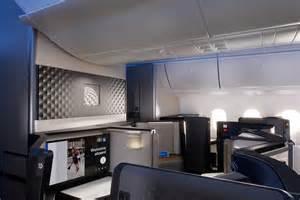
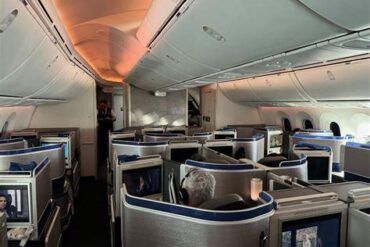
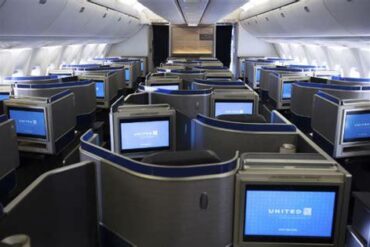
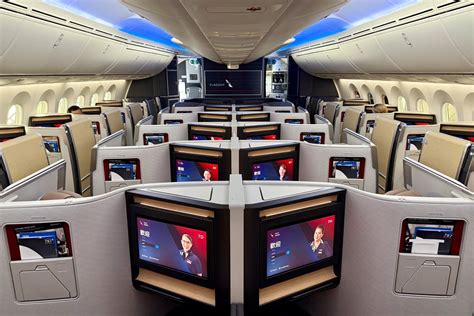
United’s greatest long-haul strength remains Polaris Business Class, and one of its most passenger-friendly decisions was standardizing the product across all international widebodies. On the 787-8, 787-9, and 787-10, Polaris uses the Safran Optima seat in a 1-2-1 layout, ensuring direct aisle access for every passenger.
The Optima is a staggered design, which creates meaningful differences between seats in odd and even rows. Odd-numbered window seats are positioned closer to the fuselage, forming a semi-enclosed nook that feels almost cocoon-like. These are the most private seats in the cabin, despite the absence of doors. Even-numbered window seats, by contrast, sit closer to the aisle and feel more exposed.
On all three 787 variants, the best Polaris seats for solo travelers are the odd-numbered window seats. They maximize privacy, reduce foot traffic, and take advantage of the Dreamliner’s curved sidewalls to create a sense of personal space that belies the aircraft’s density.
Center seats in odd rows form United’s so-called “honeymoon seats.” These are ideal for couples traveling together, as the consoles are closer and interaction is easier without leaning across barriers. Even-row center seats are better for solo travelers who still want aisle access without being fully isolated.
The 787-10 Polaris cabin is arranged as a single large section, with galleys and lavatories at both ends. This means seats toward the middle of the cabin—particularly odd-numbered window seats away from bulkheads—offer the quietest experience, shielded from galley noise and foot traffic.
The 787-8, by contrast, includes a small Polaris mini-cabin behind the second set of doors. While intimate, it sits close to a galley, making it less appealing for light sleepers. The 787-9 strikes the best balance, featuring a four-row Polaris mini-cabin that is genuinely secluded. Row 11 on the 787-9 stands out as one of the best business-class rows in United’s entire fleet: private, quiet, and far removed from both galleys and lavatories.
In all Polaris cabins, bulkhead rows offer marginally more footwell space, but they can feel more exposed. For most travelers, privacy and quiet outweigh the small gain in legroom, making mid-cabin odd-numbered rows the superior choice.
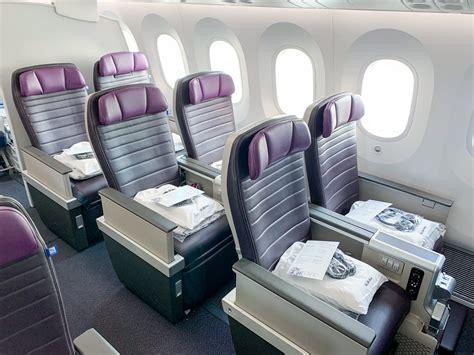
Premium Plus on United’s Boeing 787: Best Rows and Seat Positions
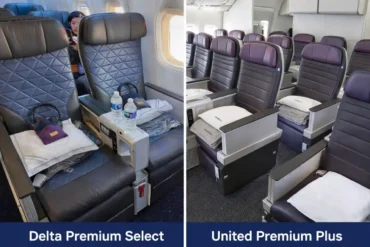
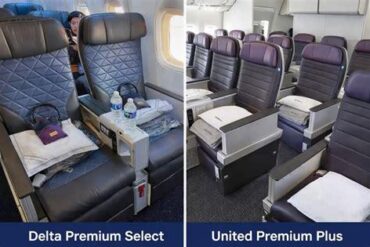
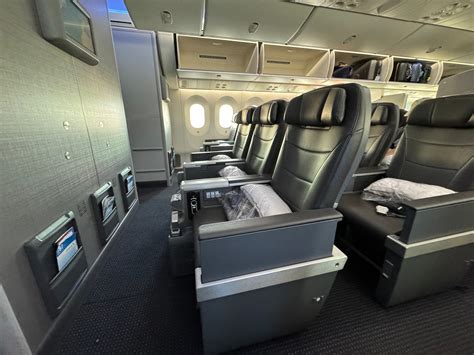
United’s Premium Plus cabin is one of the most consistent premium economy products in the sky, and on the 787 it benefits from the aircraft’s inherently calmer environment. Across the 787-8, 787-9, and 787-10, Premium Plus is arranged 2-3-2 using the Collins Aerospace MiQ seat, with 21 seats across three rows on current aircraft.
The MiQ offers 38 inches of pitch, generous recline, a footrest, and noticeably wider seats than economy at roughly 18.7 inches. For long-haul flights, this cabin hits a sweet spot between comfort and value, particularly for travelers unwilling to pay Polaris fares but eager to avoid the density of economy.
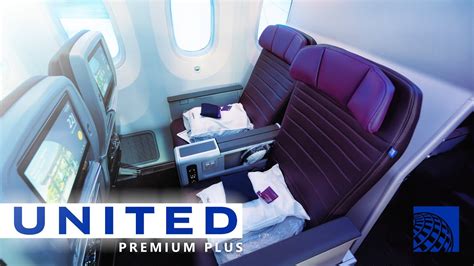
The best Premium Plus seats depend on priorities. Row 20, the first row of the cabin, offers extra legroom and an unobstructed sense of space. However, these seats lack under-seat storage, requiring overhead bin use during taxi, takeoff, and landing. On the 787-10, row 20 is positioned directly behind lavatories and a large galley, making it less attractive for those sensitive to noise or light.
For couples, the window pairs are ideal, offering privacy and a shared armrest zone. Solo travelers may prefer aisle seats in the side sections, which provide easy access without a middle-seat neighbor. The center block of three works well for families traveling together, as it contains only one middle seat per row.
On the 787-8 and 787-9, Premium Plus sits directly behind Polaris, benefiting from a calmer forward-cabin atmosphere. Choosing seats away from the aisle nearest the economy divider minimizes traffic from passengers queuing for lavatories during long flights.
Economy and Economy Plus: Smart Seat Choices on United’s 787 Fleet
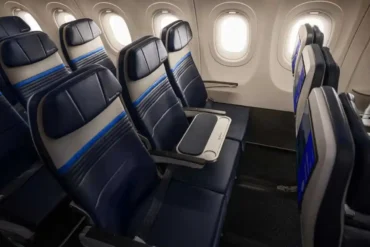
United’s economy cabins on the Boeing 787 vary more than the premium cabins, both in size and seat model. The airline uses a mix of Collins Aerospace Pinnacle and the newer Collins Aspire seats. All 787-8s use the Pinnacle, all 787-10s use the Aspire, and the 787-9 fleet is split depending on delivery age.
Seat width remains roughly 17 inches, with 31 inches of pitch in standard economy and 34 inches in Economy Plus, along with an extra inch of recline. Every seat features a personal screen—nine inches on most aircraft—and adjustable headrests.
The most valuable economy seats on the 787 are found in two categories: Economy Plus rows and pairs of seats near the rear of the cabin. On all Dreamliner variants, the final row—or in the case of the 787-9, the final two rows—features two-seat pairs by the windows, eliminating the middle seat entirely. For couples or solo travelers, these seats provide disproportionate comfort compared to standard rows.
Rows near lavatories should generally be avoided. On the 787-8, rows 39–40 and 51–53 experience heavy traffic. On the 787-9, rows 35 and 57 are similarly affected, while the 787-10 sees congestion around rows 39–40 and 59–60. Noise, light intrusion, and lingering queues detract from rest on long sectors.
Economy Plus seats near the front of the cabin offer quicker service and faster deplaning, but some are positioned close to lavatories separating Premium Plus and economy. The ideal Economy Plus seat balances extra legroom with distance from restrooms, typically found a few rows behind the cabin divider.
How Aircraft Variant Changes the Best Seat Choice
The 787-8 is the most intimate Dreamliner in United’s fleet, often deployed on thinner long-haul routes to leisure destinations. Its smaller economy cabin means fewer passengers overall, but also fewer lavatories. Choosing seats well clear of the mid-cabin restrooms is essential here.
The 787-9 is the most versatile and, from a passenger perspective, often the most pleasant. Its Polaris mini-cabin, balanced economy layout, and moderate density make it the variant where seat selection yields the greatest returns.
The 787-10, while offering the newest economy seats and a spacious feel in Premium Plus, carries significantly more passengers. This amplifies the impact of poor seat choice. On this aircraft, avoiding high-traffic zones matters more than chasing marginal legroom gains.
Looking Ahead: United’s New 787-9 “78L” Cabins
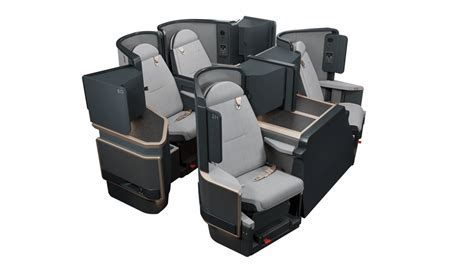
United will soon introduce a new subfleet of 787-9s coded “78L”, bringing meaningful changes to Polaris. These aircraft will debut Elevate Ascent seats with privacy doors and introduce Polaris Studio suites in rows one and nine, available for an additional fee.
In this new layout, most Polaris seats are effectively equal, reducing the penalty of choosing an “average” seat. However, rear-cabin Polaris seats will remain quieter, while center suites angled toward one another will continue to suit couples best. Premium Plus and economy will retain familiar seat models but gain larger screens and improved storage, subtly improving comfort across the cabin.
For travelers planning 2026 itineraries, checking the specific aircraft code during booking will become increasingly important, as the experience on a 78L will differ meaningfully from older 787-9s.
The Takeaway: Precision Matters on the Dreamliner
United’s Boeing 787s are among the most comfortable long-haul aircraft flying in 2026, but they reward informed passengers. Odd-numbered window seats in Polaris, mid-cabin Premium Plus rows away from lavatories, and two-seat economy pairs near the rear consistently deliver the best experience.
The Dreamliner already does the hard work—lower cabin altitude, smoother air, quieter engines. Choosing the right seat lets you enjoy those advantages without compromise, turning hours in the air into time well spent rather than time merely endured.