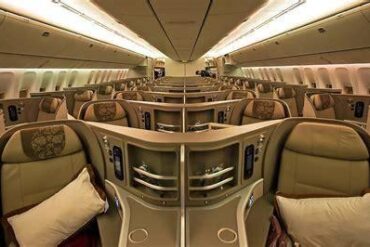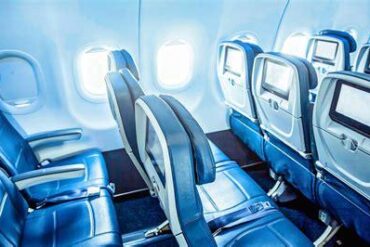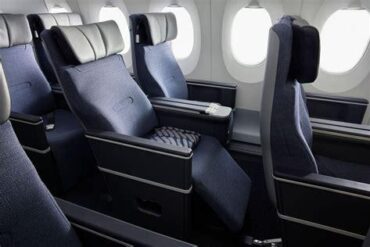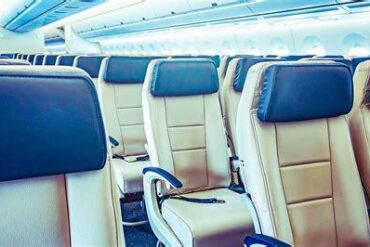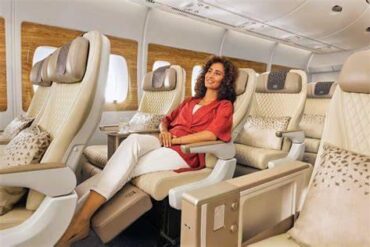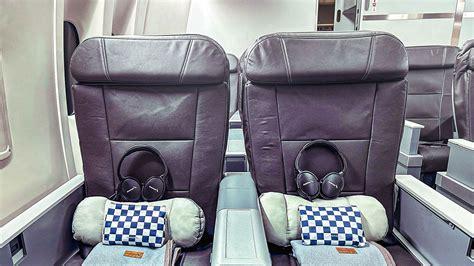
Long-haul economy travel has quietly evolved from a test of endurance into a carefully engineered passenger experience, where millimeters matter and cabin layouts define comfort. In a market saturated with similar pricing and routes, the real battleground is no longer just business class—it’s the economy seat where the majority of passengers spend 10, 12, or even 16 hours.
Seat pitch, width, recline, and cabin density are no longer trivial specs buried in seat maps. They are the difference between arriving refreshed or utterly drained. The airlines that truly stand out understand this—and have invested heavily in optimizing ergonomics, spatial efficiency, and psychological comfort.
What follows is a definitive deep dive into seven global airlines that have redefined long-haul economy seating, not through gimmicks, but through measurable, tangible improvements that frequent flyers immediately feel.
Qatar Airways: Balanced Comfort Across a Diverse Widebody Fleet
Qatar Airways has built its reputation as a premium global connector, but its economy cabin quietly delivers one of the most consistently comfortable baseline experiences in long-haul travel.
Passengers typically enjoy 31–32 inches of seat pitch, 18 inches of width, and around 5 inches of recline—figures that sit comfortably above industry averages. What elevates the experience isn’t just the numbers, but the fleet diversity that occasionally delivers unexpected upgrades.
Aircraft like the Airbus A380 stand out, offering a generous 7-inch recline, a rare feature in economy class that significantly improves sleep quality on ultra-long sectors.
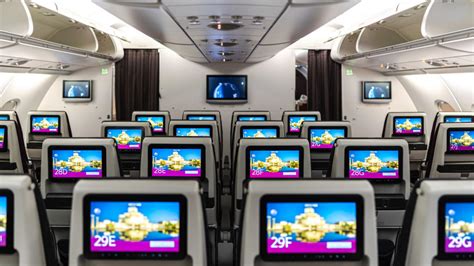
Despite operating leased aircraft from other carriers, Qatar maintains a tight standardization philosophy, ensuring passengers rarely encounter subpar configurations. The result is a reliable, premium-feeling economy product, particularly on routes connecting Europe, Asia, and North America.
Korean Air: The Power of Smart Cabin Layouts
Korean Air approaches comfort from a different angle: space optimization through smarter seating configurations.
With an average 33-inch seat pitch and 18-inch width, the airline already exceeds many competitors. But the real differentiator lies in its widespread use of 3-3-3 layouts on Boeing 777 aircraft, instead of the more cramped 3-4-3 arrangement.
This single design choice dramatically improves:
- Shoulder space
- Ease of movement
- Perceived cabin openness
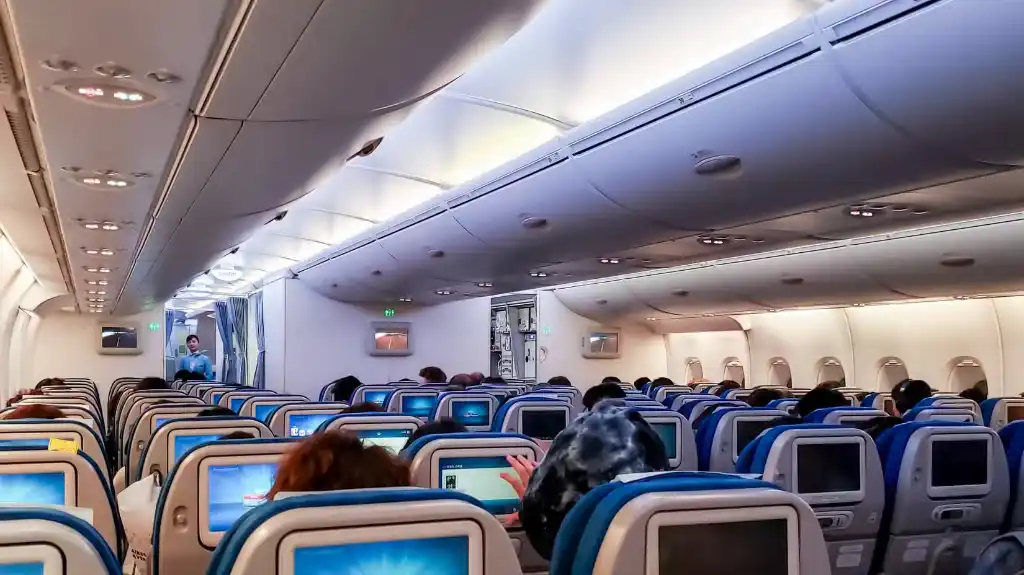
Passengers don’t just get more room—they feel less confined, which is critical on long-haul journeys exceeding 10 hours. Even subtle details like seat cushioning and recline mechanics are tuned for endurance rather than short-haul convenience.
While integration with Asiana Airlines introduces some variability, Korean Air’s core fleet maintains a consistently passenger-first philosophy, making it one of the most comfortable options in Northeast Asia.
Cathay Pacific: Consistency as a Competitive Advantage
Cathay Pacific excels not by pushing extremes, but by delivering remarkably consistent comfort across its long-haul fleet.
Passengers can expect:
- 32-inch seat pitch
- 18-inch width
- 6 inches of recline
These figures may not appear groundbreaking at first glance, but the execution is where Cathay shines. Its streamlined fleet of Airbus A350s and long-haul-configured A330s ensures a predictable, uniform experience, eliminating the uncertainty common with other airlines.

Even on Boeing 777-300ER aircraft, where seat width slightly narrows, the airline compensates with high-quality seat ergonomics and refined cabin materials. The result is a quietly premium experience that avoids the fatigue associated with inconsistent layouts.
Cathay’s philosophy is simple: remove surprises, deliver comfort every time.
Emirates: Comfort Through Scale and Standardization
Emirates operates one of the most recognizable long-haul fleets in the world, dominated by the Airbus A380 and Boeing 777. This scale allows the airline to standardize comfort across global routes.
Economy passengers benefit from:
- 32-inch seat pitch
- Up to 18-inch width
- Around 6 inches of recline
While some 777 configurations feature narrower seats, Emirates compensates with industry-leading cabin ambiance, including:
- Advanced mood lighting systems
- Spacious overhead bins
- Thoughtfully designed seat contours
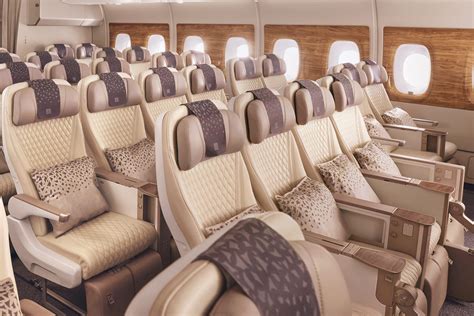
The A380, in particular, delivers a noticeably quieter and more stable cabin environment, which significantly enhances perceived comfort on long-haul flights.
Consistency is Emirates’ greatest strength—passengers know exactly what they’re getting, whether flying from Dubai to New York or Sydney.
Singapore Airlines: Precision Engineering Meets Passenger Comfort
Singapore Airlines represents the gold standard of refined economy travel, combining precise engineering with subtle luxury.
Typical long-haul configurations offer:
- 32-inch seat pitch
- 18 to 18.5-inch width
- 5–6 inches of recline
The slightly wider seats on Airbus A380 aircraft provide a noticeable upgrade in shoulder room, especially valuable on ultra-long-haul routes.
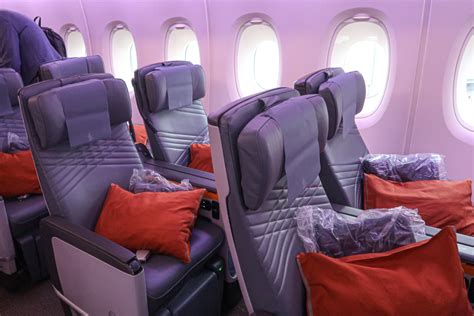
Even where constraints exist—such as on Boeing 787-10 aircraft—Singapore Airlines compensates with superior seat design, cushioning, and inflight service integration.
The airline’s philosophy extends beyond hardware. It focuses on holistic comfort, where seat ergonomics, cabin pressure, humidity, and service all combine into a seamless experience.
ANA (All Nippon Airways): Industry-Leading Seat Pitch
All Nippon Airways pushes economy comfort further with one standout metric: exceptional seat pitch.
With up to 34 inches of pitch, ANA offers one of the most legroom-friendly economy cabins in the sky. While seat width ranges between 17 and 17.3 inches, the additional legroom dramatically improves:
- Circulation
- Sleeping posture
- Overall fatigue levels
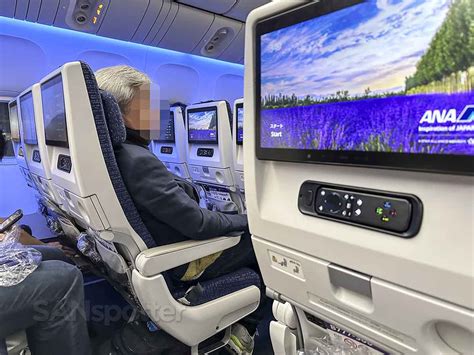
ANA also experiments with innovative layouts, including 2-4-3 configurations on select Boeing 777 aircraft, reducing passenger density without sacrificing capacity.
Adding to the experience is the ANA COUCHii, a couch-style seating option inspired by Air New Zealand’s Skycouch, available on Airbus A380 routes. It transforms standard economy rows into flexible resting spaces, redefining what’s possible without upgrading to premium cabins.
Japan Airlines: The Benchmark for Economy Comfort
Japan Airlines stands at the top by combining generous seat dimensions with intelligent cabin layouts.
Passengers routinely enjoy:
- 33–34 inches of seat pitch
- 18–18.9 inches of width
- 5 inches of recline
These figures place Japan Airlines firmly ahead of most global competitors. But the real advantage lies in its low-density seating philosophy.
Instead of maximizing capacity, the airline adopts:
- 3-3-3 layouts on Boeing 777s
- 2-3-2 layouts on Boeing 767s
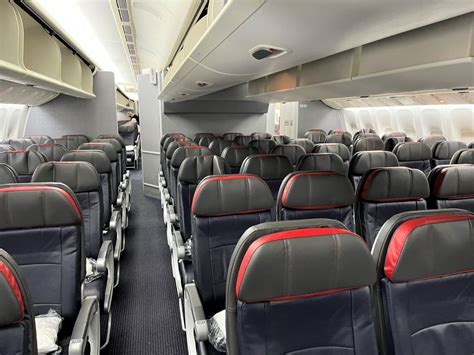
This approach creates a cabin that feels significantly less crowded, improving both physical and psychological comfort. The wider seats—approaching 19 inches in some configurations—further enhance long-haul endurance.
Japan Airlines doesn’t just optimize comfort—it prioritizes it at the structural level, making it arguably the best economy experience available today.
What Truly Defines Long-Haul Economy Comfort
Comfort in economy is no longer a vague concept—it is a measurable combination of four critical factors:
- Seat Pitch: Determines legroom and mobility
- Seat Width: Impacts shoulder space and personal comfort
- Recline Depth: Affects sleep quality and posture
- Cabin Layout: Influences crowding and psychological space
Airlines like ANA and Japan Airlines excel in pitch, while Korean Air and Japan Airlines dominate in layout efficiency. Meanwhile, Singapore Airlines and Emirates refine the overall experience through design consistency and service integration.
The Future of Economy Comfort Is Already Taking Shape
The competition is intensifying. Innovations like couch-style seating, adaptive lighting, and ergonomic seat shells are becoming more common, even in economy cabins.
Airlines are beginning to recognize that passenger loyalty is increasingly tied to comfort, not just price. The next frontier will likely include:
- Modular seating concepts
- Enhanced personal space without reducing capacity
- Smart materials that adapt to body pressure
For travelers, this means one thing: the gap between average and exceptional economy experiences will only widen.
Final Verdict: Choosing the Right Airline Changes Everything
A long-haul flight in economy doesn’t have to be endured—it can be strategically optimized. Choosing the right airline can mean the difference between exhaustion and arriving ready to perform.
If maximum space is the priority, Japan Airlines and ANA dominate. If layout and cabin feel matter most, Korean Air stands out. For consistency and refinement, Singapore Airlines, Emirates, and Cathay Pacific deliver reliably strong experiences.
And if you want a balance of all factors with occasional standout perks, Qatar Airways remains a formidable contender.
Because at 35,000 feet, comfort isn’t a luxury—it’s a competitive advantage you can feel every inch of the journey.