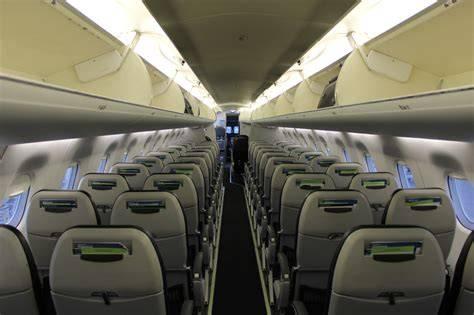
San Diego International Airport has long been one of Southwest Airlines’ strongest markets, but the balance of power is becoming more complicated. Alaska Airlines is steadily expanding its presence at SAN, and it is doing so with a strategy that Southwest cannot easily copy: using 76-seat Embraer E175 regional jets to build a much broader network without filling every flight with a large Boeing 737. The result is a quiet but significant shift in the competitive landscape of San Diego aviation.
Southwest remains the largest airline at San Diego, accounting for roughly 35% of passengers, while Alaska Airlines has reached about 21% when its Horizon Air and SkyWest-operated regional services are included. Those numbers still leave a meaningful gap between the two carriers. However, passenger share does not tell the entire story. Alaska has been expanding its destination network aggressively, and its smaller aircraft give it a way to compete for traffic that may not be sufficient to support a daily 737 operation.
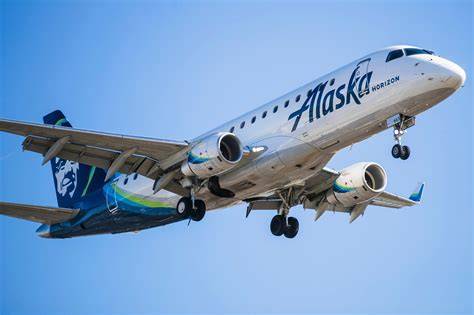
The importance of this strategy becomes clearer when looking at the fundamental difference between the two airlines. Southwest has historically built its strength around operating large numbers of Boeing 737s, creating substantial capacity on individual routes and using frequency to reinforce its presence. Alaska, meanwhile, can combine its 737 fleet with regional aircraft, allowing it to match capacity more closely with demand. At an airport such as SAN, where there are numerous medium-sized markets but intense competition for passengers, that flexibility can become a powerful weapon.
Alaska Airlines Is Building a Bigger Network at San Diego
Alaska’s relationship with San Diego is not new. The airline has served the airport for decades, but its role has changed considerably since the 2010s. What began as a focus-city operation has gradually evolved into something much more important within Alaska’s overall network. The carrier has continued adding flights and destinations, while its regional operation has provided the capacity flexibility needed to support that growth.
The expansion has accelerated sharply. Alaska’s San Diego operation grew by more than 35% compared with 2025, while its 2025 schedule had already been more than 40% larger than the previous year’s schedule. In June 2026, Alaska also established a Boeing 737 pilot base at SAN, an important sign that the airport is becoming more deeply integrated into the airline’s mainline operation rather than remaining simply a large spoke.
The regional side of the operation is equally important. Alaska’s regional network uses the 76-seat Embraer E175, an aircraft that occupies a sweet spot between a traditional regional jet and a full-size narrowbody. It can offer a first-class cabin, premium seating and main-cabin capacity while maintaining significantly lower capacity than most of Alaska’s 737s.
That distinction matters because a 178-seat Boeing 737-900ER requires considerably more demand to fill profitably than a 76-seat E175. Alaska therefore does not have to wait for a smaller market to become large enough for a 737 before entering it. The airline can establish service with a smaller aircraft, build customer awareness and adjust frequency according to demand.
The 76-Seat E175 Gives Alaska a Network Advantage
The E175 is perhaps the most important aircraft in Alaska’s San Diego strategy because it changes the economics of network expansion. Instead of asking whether a destination can support a large narrowbody, Alaska can ask whether it can support a smaller number of seats at a useful frequency.
That distinction opens up a much larger pool of potential routes. A city that might struggle to support a 159- or 178-seat 737 could still produce acceptable results with a 76-seat E175. Alaska can also operate multiple daily frequencies on stronger markets, giving passengers more scheduling choices without flooding the market with unnecessary seats.
The carrier’s passenger fleet includes 92 Embraer E175s, alongside Boeing 737-700s, 737-800s, 737-900ERs and 737 MAX aircraft. The combination creates a remarkably flexible capacity ladder. Alaska can use the E175 for thinner markets, larger 737s for established routes and different aircraft sizes as demand changes.
This is where the competition with Southwest becomes especially interesting. Southwest has an enormous advantage in simplicity and scale, but its all-737 operation gives it fewer opportunities to economically serve markets where demand is not strong enough for a full-size narrowbody. Alaska does not need to match Southwest’s aircraft count or daily seat capacity everywhere. It can instead target gaps in the network.
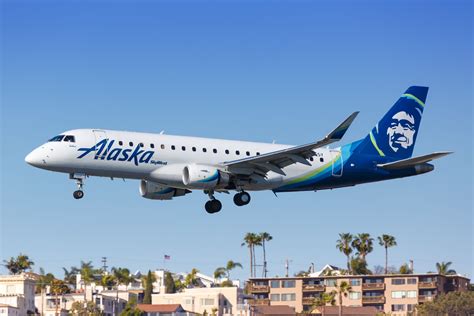
That means Alaska’s objective is not necessarily to beat Southwest flight for flight. It can challenge the incumbent by serving more destinations, maintaining useful frequencies and capturing passengers from markets where Southwest has no equivalent service.
Southwest Still Holds the Capacity Advantage
Despite Alaska’s rapid growth, Southwest remains the dominant carrier at SAN by passenger volume. During the summer of 2026, Southwest operated as many as 139 daily departures from San Diego, while Alaska averaged fewer than 100. That is still a substantial difference.
Southwest also has an enormous established customer base at the airport. Its long-standing operating base gives the airline considerable brand recognition, schedule depth and operational scale. Passengers who have flown Southwest from San Diego for years are unlikely to switch carriers simply because another airline adds a few regional routes.
Southwest has also shown that it is willing to defend its position. For the 2026 summer season, the airline added 11 new routes from San Diego, expanding an operation that was already one of its most important markets. The response demonstrates that Alaska’s growth has not gone unnoticed.
Yet adding flights does not necessarily eliminate the structural difference between the two networks. Southwest can add another 737 route, but Alaska can potentially add an E175 route where a 737 would be too large. This creates a different form of competitive pressure. Alaska can continue expanding around the edges of Southwest’s network rather than confronting every route directly.
San Diego Gives Alaska Room to Grow
The airport itself makes this contest unusually important. San Diego is a major metropolitan market, but it does not function like Los Angeles or San Francisco, where several large legacy carriers operate enormous hubs and compete for connecting traffic.
Instead, SAN has historically provided an environment where airlines with strong local customer bases can build substantial operations without having to fight every major airline for hub traffic. Southwest recognized this opportunity early and turned San Diego into one of its most important bases.
Alaska now appears to be pursuing a similar strategy, although its approach is different. Rather than attempting to recreate Southwest’s enormous 737 operation, Alaska is using its regional fleet to create a network that reaches into smaller markets while its mainline aircraft support the largest routes.
This creates what could be described as a two-layer network. The 737 fleet provides the capacity and range required for major markets, while the E175s provide the connectivity needed to make the broader San Diego operation viable.
The approach also allows Alaska to establish a stronger local customer base. Every additional destination gives travelers another reason to consider Alaska for future trips, particularly if the airline can provide convenient connecting options through San Diego.
Alaska’s Hawaiian Advantage Adds Another Layer
The competitive picture becomes even more interesting when Hawaii enters the equation. Southwest made one of its most important strategic expansions in 2019 when it entered the Hawaii market, launching flights from the mainland and inter-island services.
San Diego became an important part of that strategy because the airport has significant Hawaii demand. Southwest could leverage its established SAN customer base to feed flights to the islands, while also using its broader mainland network to support the market.
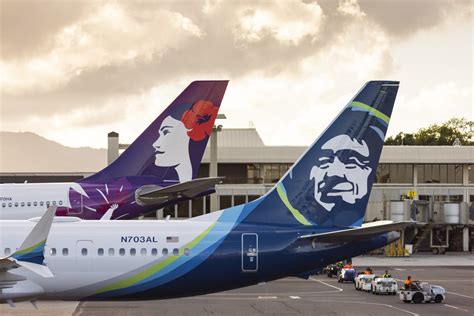
Alaska, however, now has a particularly strong position in Hawaii following its 2024 acquisition of Hawaiian Airlines. Although Alaska and Hawaiian continue to operate as separate brands, they are effectively part of the same airline group under a single air operator’s certificate.
That gives Alaska a powerful presence in both mainland-Hawaii flying and the inter-island market. Hawaiian brings a long-established brand, extensive Hawaii network and substantial customer loyalty, while Alaska brings its mainland network and frequent-flyer base.
For Southwest, this means that some of the most strategically important routes from San Diego are becoming more contested. Alaska does not need to defeat Southwest across the entire SAN network. It can compete strongly in selected markets where it has a natural advantage and use those markets to strengthen the overall value of its operation.
Alaska Is Shifting California Capacity Toward San Diego
There is another reason Alaska can continue investing in San Diego: the airline has been adjusting its broader California strategy.
The carrier inherited hubs at Los Angeles International Airport and San Francisco International Airport after its 2016 acquisition of Virgin America. Both airports presented significant challenges. Los Angeles is intensely competitive, with American, Delta, United and Southwest all maintaining major operations. San Francisco is even more difficult because United has an exceptionally powerful hub there.
Alaska therefore faces a classic network problem in both markets. It can operate substantial schedules, but competing against larger and deeply established carriers makes it difficult to achieve the same level of strategic influence.
San Diego offers a different proposition. Alaska does not have to be the largest airline to build a meaningful operation. It can grow organically, establish local loyalty and use smaller aircraft to create routes that larger competitors may not find attractive.
That helps explain why San Diego is becoming more important while Alaska’s California network elsewhere is being adjusted. The airline is not abandoning California. It is becoming more selective about where California capacity can produce the greatest strategic value.
The Battle Is About Network Design, Not Just Flight Counts
The emerging Alaska-Southwest contest at SAN should therefore not be judged simply by counting departures. Southwest still has more flights, more seats and more passengers. Those are significant advantages.
Alaska’s strength lies elsewhere. Its 76-seat E175s allow it to create a larger destination map, support markets with thinner demand and provide multiple daily frequencies without committing the capacity of a 737. That flexibility is difficult for an all-737 airline to replicate.
For Southwest, the challenge is that Alaska can expand without directly copying its strategy. Every additional E175 destination potentially gives Alaska access to a market that Southwest cannot serve economically with its existing fleet structure. Over time, those smaller markets can become part of a larger network that makes Alaska more relevant to San Diego travelers.
This is why Alaska’s growth can appear quiet even while becoming strategically important. There may be no single route announcement capable of transforming the airport overnight. Instead, the airline is adding destinations, increasing frequencies, expanding mainline operations and using regional aircraft to fill gaps.
San Diego Could Become One of Alaska’s Most Important Hubs
Alaska’s San Diego operation is still smaller than Southwest’s, but its trajectory is increasingly difficult to ignore. The combination of 737 growth, E175 regional flying, a new pilot base and Hawaiian’s powerful position in the Pacific gives Alaska several tools for challenging the incumbent.
Southwest remains firmly established, and its decision to add 11 routes and operate up to 139 daily departures demonstrates that it intends to protect its position. But Alaska does not need Southwest to surrender its leadership for the strategy to work.
The more important question is whether Alaska can continue expanding the range of markets available from SAN while maintaining enough frequency and capacity to make the network attractive. If it can, the airline could gradually transform San Diego from a large focus city into one of the most strategically important components of its national network.
The 76-seat E175 is central to that ambition. It allows Alaska to think smaller when Southwest must think bigger, and that difference can be surprisingly powerful. In a market where Southwest still holds the numerical lead, Alaska is quietly changing the rules of the competition by making destinations that once looked too small suddenly viable.
San Diego’s airline battle is therefore not simply a fight over who operates the most flights. It is a contest between two very different network philosophies. Southwest has the scale and incumbent advantage, while Alaska is using regional jets, targeted capacity and an expanding Hawaii presence to attack the market from multiple directions.
For passengers, that competition means more destinations, more frequencies and more choices. For the airlines, however, San Diego is becoming a test of whether network flexibility can challenge raw scale. Alaska’s E175s may carry only 76 passengers at a time, but their strategic impact could be considerably larger.