Alaska Airlines is preparing for a pivotal expansion move, announcing plans to open a new Boeing 737 pilot base in San Diego in June 2026. The development marks a strategic shift in the airline’s California footprint, redirecting operational strength toward a market where growth has proven both swift and profitable. While the carrier’s legacy hubs in Los Angeles and San Francisco continue to present operational and competitive challenges, San Diego International Airport has rapidly emerged as Alaska’s fastest-growing stronghold, setting the stage for a new era of network balance and West Coast dominance.
The new pilot base will initially host 150 pilots — 80 captains and 70 first officers — with bid allocations scheduled between December 15 and December 28, and final postings announced January 6, 2026. A second wave of pilot assignments will follow later that same year, projected to add at least 100 more flight crew members by fall 2026, pushing total staffing to an estimated 250 pilots. Alaska’s migration of crewmembers from Los Angeles and San Francisco further reinforces San Diego as a long-term operational anchor rather than a temporary overflow hub.
This isn’t just a staffing shuffle. It is a strategic rerouting of competitive focus, positioning San Diego as a high-value origin-and-destination market in contrast to the congested, aggressively contested skies farther north. The city’s favorable demand profile, combined with Alaska Airlines’ high customer loyalty and distinct brand identity, frames San Diego as an expansion corridor with both immediate revenue upside and long-term structural stability.
Alaska’s New Chapter: Why San Diego Matters
San Diego International Airport offers a unique competitive landscape. Unlike Los Angeles — crowded with giants like American, Delta, United, and Southwest — San Diego provides a calmer battlefield with fewer heavyweight adversaries. Southwest Airlines holds the largest market share at 34.1%, while Alaska currently sits in second place at 19.2%, ahead of United, Delta, and American. The market gap is significant, but so is the opportunity. With Southwest facing profitability challenges and loyalty inconsistencies, Alaska Airlines has a real chance to expand its share of the Southern California market, especially as flight volume rises alongside pilot relocation.
Alaska’s California network, originally inherited through its acquisition of Virgin America, was never designed as a traditional U.S.-style megahub web. Instead, its major bases serve primarily point-to-point demand rather than high-volume connection transfers. In this model, San Diego stands out as ideal ground for localized growth, offering strong origin passenger traffic and far less competitive saturation than the Bay Area or Los Angeles Basin.
A Shift Away from Los Angeles and San Francisco
Los Angeles and San Francisco remain notoriously difficult ecosystems for mid-sized carriers. Legacy network dominance by United in San Francisco and multi-airline parity warfare in Los Angeles leaves little runway for sustainable growth. Alaska’s decision to cut pilot staffing by roughly 25% at both airports, funneling crew capacity into San Diego, reflects a measured and decisive recalibration.
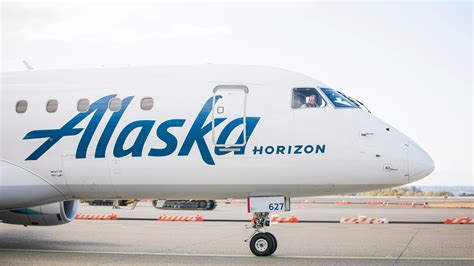
In San Francisco, United operates a sprawling Asia-focused international hub, supported by frequent domestic feeds and credit-card-driven loyalty economics. Competing head-to-head requires heft Alaska has not sought to match. In Los Angeles, the fight is brutal, crowded, and margin-thin. All four major U.S. network airlines — American, Delta, Southwest, and United — operate there at scale, locking the airport into a perpetual turf war where no carrier holds clear advantage.
San Diego shifts that equation. It’s not just a new pilot base — it’s a calculated retreat from overcrowded markets and a charge toward uncontested runway space.
The 2026 Outlook: Growth Trajectory and Market Power
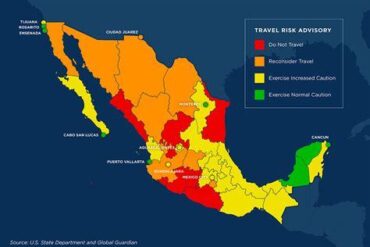
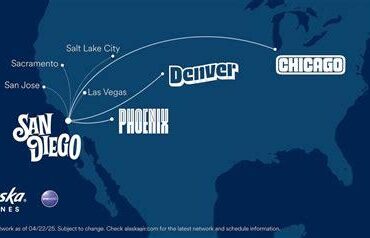
San Diego is shaping into a long-burn growth engine for Alaska Airlines. The additional pilot capacity paves the way for increased route frequency, new domestic transcontinental links, and potential cross-border expansion, particularly into Mexico. If market momentum continues, Alaska could establish San Diego as its most powerful California base within the next decade.
Building loyalty in a region where competition is less entrenched presents a clean runway for network maturity. Alaska consistently ranks among the nation’s most trusted airlines — an asset Southwest cannot currently claim with equivalent strength. Passenger preference is currency, and in San Diego, Alaska may be the one holding the heavier wallet.
This new pilot base signals a future where the airline’s West Coast network moves more fluidly — adjusting to demand, sidestepping congestion, and choosing cities where growth isn’t merely possible, but scalable. Many carriers fight for California dominance. Alaska appears poised to win strategically rather than through brute force.
San Diego is no longer just a station — it is the next major frontier in Alaska Airlines’ evolution.