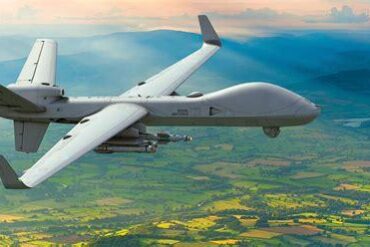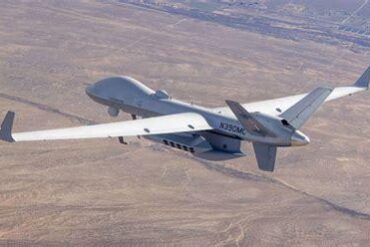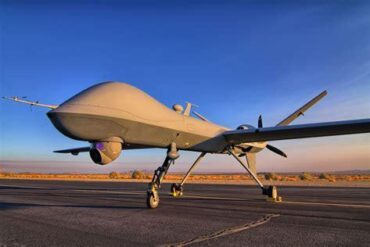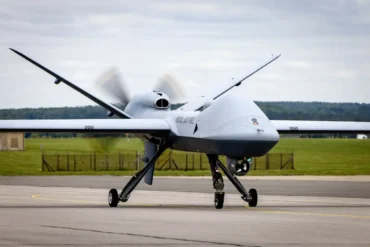
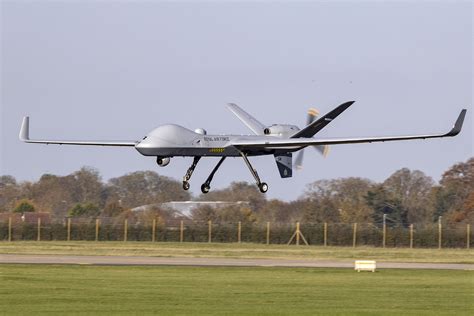
The United Kingdom has taken a significant step toward future-proofing its cutting-edge unmanned aerial capabilities with the Ministry of Defence (MOD) finalizing a strategic logistics and sustainment agreement with General Atomics Aeronautical Systems, Inc. (GA-ASI). This new contract, known as the UK Protector Availability and Support Solution (UK PASS), guarantees comprehensive long-term support for the Royal Air Force’s Protector RG Mk1 fleet, a remotely piloted aircraft (RPA) system based on GA-ASI’s MQ-9B SkyGuardian platform.
This milestone contract not only reinforces the UK’s investment in next-generation air power but also marks a critical transition from development to operational deployment, ensuring the RAF remains at the forefront of unmanned aerial systems (UAS) capability for years to come.
A Strategic Leap in Uncrewed Aviation Sustainment
The UK PASS contract establishes a Direct Commercial Sale (DCS) framework that will support not only the Protector RG Mk1 aircraft, but also its associated Certifiable Ground Control Stations (CGCS) and Synthetic Training Systems. These elements are crucial to the holistic operation of the RPA system, from mission control to simulation-based crew training. The agreement ensures uninterrupted support and technical assistance to maintain mission-readiness levels across the RAF’s fleet.
By integrating the RAF’s requirements into a single support package, the UK PASS provides a cohesive pathway to achieve full operational capability (FOC). As the RAF transitions from development and test flights to live missions and real-time operations, the importance of a reliable sustainment framework cannot be overstated.
“This contract marks an essential milestone in the fielding of the Protector RPA system for the RAF,” emphasized Chris Dusseault, Vice President of MQ-9B Europe at GA-ASI. “With the UK PASS contract in place, we can now transition from the test and development phase of the program to training the RAF flight crews for operations.”
Multi-National Efficiency Through the SkyGuardian Global Support Solutions
UK PASS is not an isolated initiative. It forms part of GA-ASI’s SkyGuardian Global Support Solutions (SGSS) — a groundbreaking model of shared Contractor Logistics Support (CLS) that spans multiple international MQ-9B operators. By pooling labour, inventory, materials, and overheads across customer nations, the SGSS model introduces unprecedented economies of scale. This collaborative logistics model delivers cost-effective solutions while boosting system availability and resilience.
This shared support ecosystem is especially vital as the MQ-9B continues to gain traction among key global defense players. Nations including Canada, Poland, Japan, Taiwan, India, and the United States are adopting or evaluating the platform for their respective air forces and naval services. Through the SGSS model, each of these countries can access a scalable and agile logistics framework while reducing operational costs and enhancing mission readiness.
According to Group Captain Rich Cameron, Uncrewed Air System 3 Team Leader at UK MOD: “The awarding of the PASS contract marks three years of intensive work between GA-ASI and UK MOD multidisciplinary teams to turn a concept into a reality. This has generated a first-in-class sustainment solution for the Royal Air Force Protector fleet, that exploits contractor-owned inventory from a global common spares pool.”
A New Generation of Operational Capability for the RAF
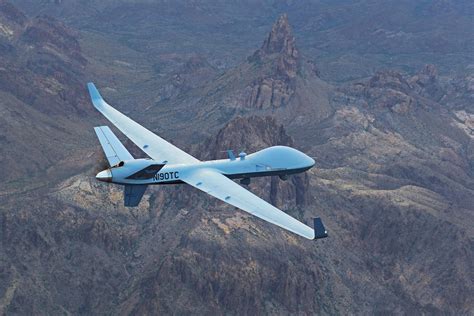
The Protector RG Mk1 represents a quantum leap in the RAF’s uncrewed ISR (Intelligence, Surveillance, and Reconnaissance) capabilities. Derived from the MQ-9B SkyGuardian, this aircraft offers extended endurance of over 40 hours, NATO STANAG 4671 compliance for airspace integration, and a state-of-the-art sensor suite enabling long-range reconnaissance and precision strike missions.
Unlike earlier RPA systems, the Protector has been engineered to comply with civilian airspace standards, meaning it can safely operate alongside manned aircraft within the UK and allied airspace. This airworthiness is critical for both domestic operations and overseas deployments where interoperability with allied forces is essential.
Key performance specifications of the Protector RG Mk1 include:
- Endurance: Over 40 hours per mission
- Payload Capacity: Up to 2,155 kg
- Operational Altitude: Up to 50,000 feet
- Satellite Communications (SATCOM): For beyond line-of-sight missions
- Airspace Integration: Fully compliant with ICAO and NATO standards
The platform is also equipped to carry advanced munitions, including precision-guided bombs and air-to-ground missiles, aligning with the RAF’s evolving needs for persistent surveillance and rapid strike capability in complex environments.
Operational Readiness and RAF Crew Training
With the UK PASS agreement now formalized, the focus shifts to training RAF personnel and achieving mission-ready status. The inclusion of Synthetic Training Systems within the UK PASS contract underlines a commitment to modern, immersive training methodologies. These simulators allow crews to experience mission scenarios in highly realistic virtual environments before conducting live flights, reducing risk and maximizing efficiency.
GA-ASI and the UK MOD have also jointly emphasized the importance of certifiable ground control stations, which serve as the nerve center for operating RPAs. These stations are designed to meet the same safety and interoperability standards required for manned platforms, further enhancing the system’s integration into the wider UK air domain.
Training is already underway at RAF Waddington, the future home of the Protector fleet, with initial operational capability (IOC) expected soon. Once fully operational, the squadron will provide persistent ISR support for UK and coalition forces worldwide, from counter-terrorism missions to humanitarian response.
Long-Term Strategic Implications for UK Defence
The signing of the UK PASS contract symbolizes more than just the acquisition of support services — it represents a paradigm shift in how the UK maintains and deploys its unmanned aerial capabilities. By leveraging commercial models of logistics sustainment, the MOD is modernizing its approach to defense readiness in a budget-conscious environment.
As global threats evolve and defense resources face increasing strain, collaborative models like SGSS offer a blueprint for how allied nations can collectively sustain cutting-edge technology. The RAF’s integration into this model not only secures national capability but enhances interoperability with allies using the same aircraft, particularly the Five Eyes nations and NATO partners.
Furthermore, this arrangement solidifies General Atomics’ role as a key industrial partner for UK defense. By embedding the RAF within a global logistics and training framework, GA-ASI ensures a steady pipeline of innovation, upgrades, and shared intelligence that can adapt to the evolving landscape of aerial warfare.
Conclusion: A Milestone in the Evolution of UK Aerial Capability
The execution of the UK PASS contract underscores the UK MOD’s forward-thinking approach to unmanned system sustainment and deployment. In aligning with General Atomics and tapping into a global logistics network, the RAF’s Protector program transitions from an ambitious acquisition to a fully supported and strategically viable component of Britain’s defense architecture.
As the world’s most advanced RPA takes flight under the Union Jack, the UK sends a clear signal: its airpower is evolving, and it is prepared to lead from the skies — unmanned and unstoppable.