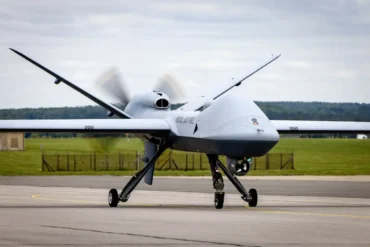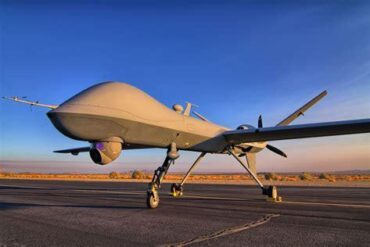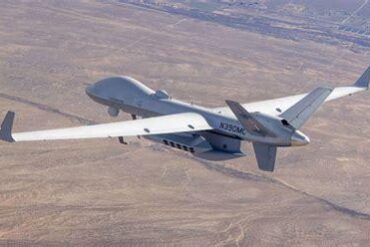
The United Kingdom’s Royal Air Force (RAF) has entered a significant new phase in its unmanned aerial capabilities, as General Atomics Aeronautical Systems Inc. (GA-ASI) has signed a landmark contract with the UK Ministry of Defence (MoD) to sustain its fleet of MQ-9B Protector RG Mk1 aircraft. Announced on 9 June 2025, the deal is more than just a procurement milestone—it represents a long-term strategic shift in how the RAF supports, operates, and evolves its remotely piloted aircraft systems (RPAS).
The Protector RG Mk1: A Leap Beyond the Reaper
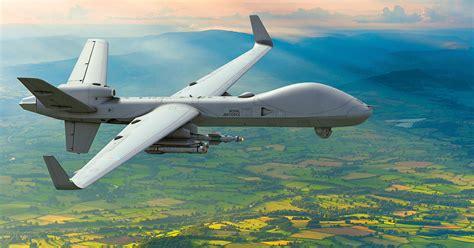
The MQ-9B Protector RG Mk1 is the latest in a lineage of successful unmanned systems that have served the RAF with distinction. It replaces the MQ-9A Reaper, a platform that has been central to UK operations in Afghanistan, Iraq, and Syria since 2007. The transition from Reaper to Protector is not merely a generational upgrade; it introduces a significant enhancement in endurance, altitude, payload capacity, and mission versatility.
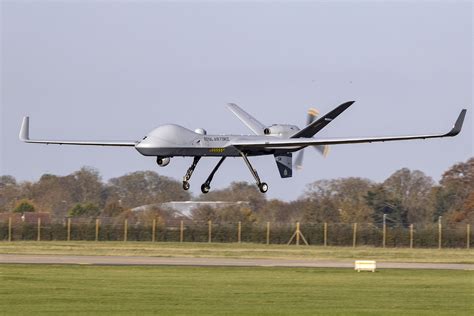
With an endurance of over 40 hours and an operational ceiling of 40,000 feet, the MQ-9B Protector is engineered for persistent Intelligence, Surveillance, Target Acquisition, and Reconnaissance (ISTAR) missions. It can be outfitted with precision strike weapons such as the Brimstone missile and Paveway IV laser-guided bombs, allowing it to perform both reconnaissance and strike missions with pinpoint accuracy. However, its primary role will remain focused on providing comprehensive situational awareness across complex theatres of operation.
Arrival and Operational Readiness
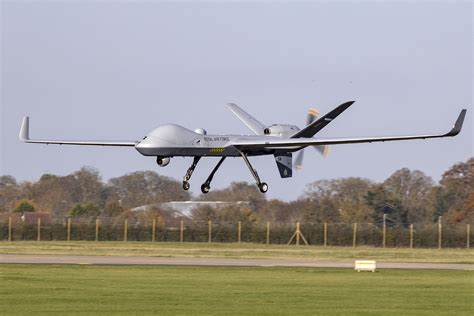
The first of the Protector aircraft landed at RAF Waddington in 2023, where No. 31 Squadron was reformed specifically to operate this new platform. The squadron is now preparing to move from its initial test and evaluation phase into full-scale operational training, supported by the newly signed contract known as the UK Protector Availability and Support Solution (UK PASS).
UK PASS is a Direct Commercial Sale (DCS) arrangement that ensures the RAF’s MQ-9B fleet is not only mission-ready but also maintained under the highest standards of operational availability and safety. According to Chris Dusseault, GA-ASI Vice President for MQ-9B in Europe, the contract enables the seamless transition from development to real-world operations.
Strategic Significance of UK PASS
The UK PASS agreement is more than a support contract; it is the lynchpin of the RAF’s evolving unmanned strategy. It provides long-term logistics, engineering, and supply chain support to the MQ-9B fleet, under the umbrella of GA-ASI’s SkyGuardian Global Support Solutions (SGSS) model.
This model is a shared contractor logistics support framework, where pooled resources—such as maintenance crews, spare parts, and overheads—are distributed across multiple international customers of the MQ-9B. This consolidated approach results in:
- Reduced overall maintenance costs
- Streamlined supply chain logistics
- Rapid response times for repairs and upgrades
- Improved aircraft availability rates
The model also ensures that RAF operations are future-proofed, allowing for interoperability with allied forces and shared intelligence networks, particularly those of NATO and Five Eyes partners.
Global Expansion and Interoperability
GA-ASI’s MQ-9B program extends far beyond the UK. The platform is also in service or on order with countries including Canada, Poland, Taiwan, India, and Japan, among others. Within the U.S., it supports Special Operations Command missions and has been integrated into multiple U.S. Navy exercises such as Northern Edge, Integrated Battle Problem, and Group Sail.
The global adoption of MQ-9B underlines its adaptability and performance across diverse operational environments. Its integration into multi-national exercises strengthens interoperability—a key goal of modern airpower strategies—and enhances real-time data sharing between allied nations.
Unprecedented Sensor and Reconnaissance Capabilities
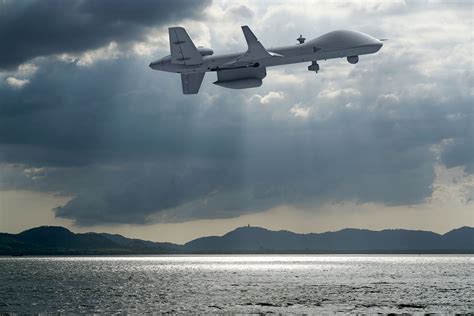
What sets the MQ-9B apart is not just its endurance or payload, but its advanced sensor suite that includes a high-definition electro-optical/infrared (EO/IR) camera, synthetic aperture radar (SAR), maritime surveillance radar, and wide-area motion imagery systems. These tools allow the Protector to maintain continuous surveillance across the electromagnetic spectrum, supporting decision-makers with real-time, actionable intelligence.
The EO/IR capability enables round-the-clock target detection, tracking, and post-strike assessment, even in contested or degraded environments. Its SAR payload allows for high-resolution imaging through clouds and darkness, which is crucial for ISR missions in northern climates and complex terrain. These attributes make the MQ-9B a force multiplier not only for kinetic missions but also for humanitarian assistance, disaster response, and maritime patrol roles.
Strategic Context: The RAF’s Dual Drone Fleet
Interestingly, despite the deployment of Protector, the RAF has opted to retain its 10-strong MQ-9A Reaper fleet well into 2025. Rather than transferring these assets to Ukraine—as had been speculated—the MoD decided to keep them operational. This dual-drone approach enhances mission flexibility and allows the UK to manage risk while phasing in a highly complex new system like the MQ-9B.
The ongoing use of Reapers provides a transitional buffer, ensuring ISR continuity and providing additional time for RAF personnel to fully adapt to the operational and technical differences introduced by the new platform. It also allows the MoD to hedge against emerging threats, especially as geopolitical tensions escalate across Europe and the Indo-Pacific.
Training and Workforce Development
With the new support contract in place, training RAF operators becomes the next critical step. The MQ-9B’s complexity necessitates a comprehensive training pipeline that includes simulated environments, live flight hours, and mission-specific scenario planning. GA-ASI will play a central role in this phase, working closely with RAF training commands to ensure that both aircrew and ground personnel are proficient in:
- Flight operations and emergency procedures
- Payload and weapons management
- Sensor interpretation and battlefield integration
- Maintenance and troubleshooting
This marks a significant upskilling effort, requiring both institutional commitment and cultural adaptation within RAF ranks to fully embrace the full potential of long-endurance RPAS platforms.
Economic and Industrial Impact
Beyond its strategic and operational importance, the UK PASS contract will also have tangible economic impacts. By integrating the MQ-9B into RAF service with sustained support from GA-ASI, it creates supply chain opportunities for British aerospace firms, especially those based near RAF Waddington, the hub of RPAS operations in the UK.
Local contractors may see increased demand for:
- Component manufacturing and supply
- Technical maintenance and logistics
- Training services and simulation technology
This not only strengthens the domestic defense industrial base but also reinforces the UK’s role as a leader in RPAS integration within NATO.
A Technological Milestone in Modern Warfare
As the RAF moves into an era increasingly defined by autonomous systems, artificial intelligence, and data-driven combat operations, the Protector RG Mk1 becomes a central pillar of the UK’s aerial dominance strategy. The signing of the UK PASS contract is a clear affirmation of the MoD’s commitment to fielding cutting-edge platforms with sustainable, long-term support architectures.
General Atomics’ shared support approach—backed by proven field data, multinational adoption, and flexible logistics—ensures that the MQ-9B Protector will remain combat-effective and mission-ready across a wide array of future conflict scenarios. Whether deployed for armed reconnaissance, maritime patrol, or ISR operations in contested environments, the MQ-9B is engineered to perform with unmatched precision and persistence.
Conclusion: A New Era for RAF ISR Capabilities
The integration of the MQ-9B under the UK PASS agreement is more than a routine defense contract—it’s a transformational leap into the next generation of persistent aerial surveillance, intelligence gathering, and precision engagement. As geopolitical challenges evolve, the RAF’s investment in a robust, globally supported, and technically advanced RPAS fleet will ensure that Britain remains at the forefront of unmanned aerial warfare and strategic intelligence for years to come.