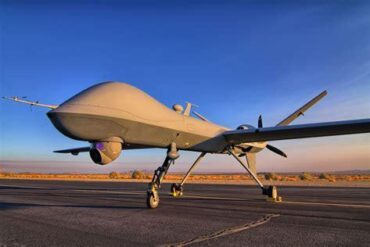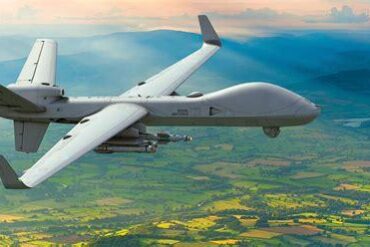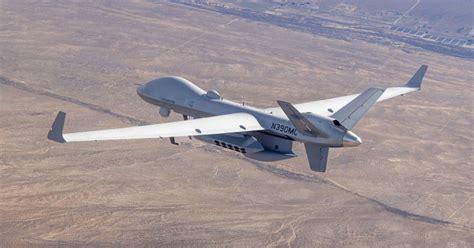
Saudi Arabia is accelerating its push into next-generation airpower, with discussions now underway for the acquisition of up to 200 Gambit Collaborative Combat Aircraft (CCA) and 130 MQ-9B drones from General Atomics. The conversations, confirmed at the Dubai Airshow 2025, represent one of the most ambitious unmanned aviation modernization efforts ever pursued in the Middle East.
Saudi Arabia Positions Itself for a Transformational Unmanned Airpower Leap
General Atomics’ leadership described the negotiations as a pivotal opportunity in the company’s regional history. Beyond simple procurement, Saudi Arabia is exploring domestic production of key systems, a step made viable by the scale of the order and aligned with the Kingdom’s defense-industrial expansion under Vision 2030.
Officials showcased a full-scale YFQ-42 model at Dubai Airshow, highlighting how the CCA is designed to fly alongside fifth-generation fighters—including the F-35, which the United States has indicated it intends to sell to Riyadh.
Inside the YFQ-42: The CCA at the Core of U.S. and Saudi Airpower Plans
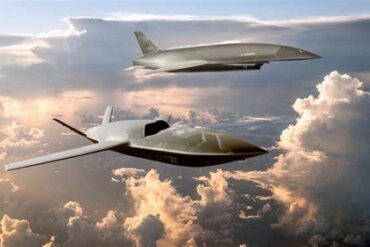
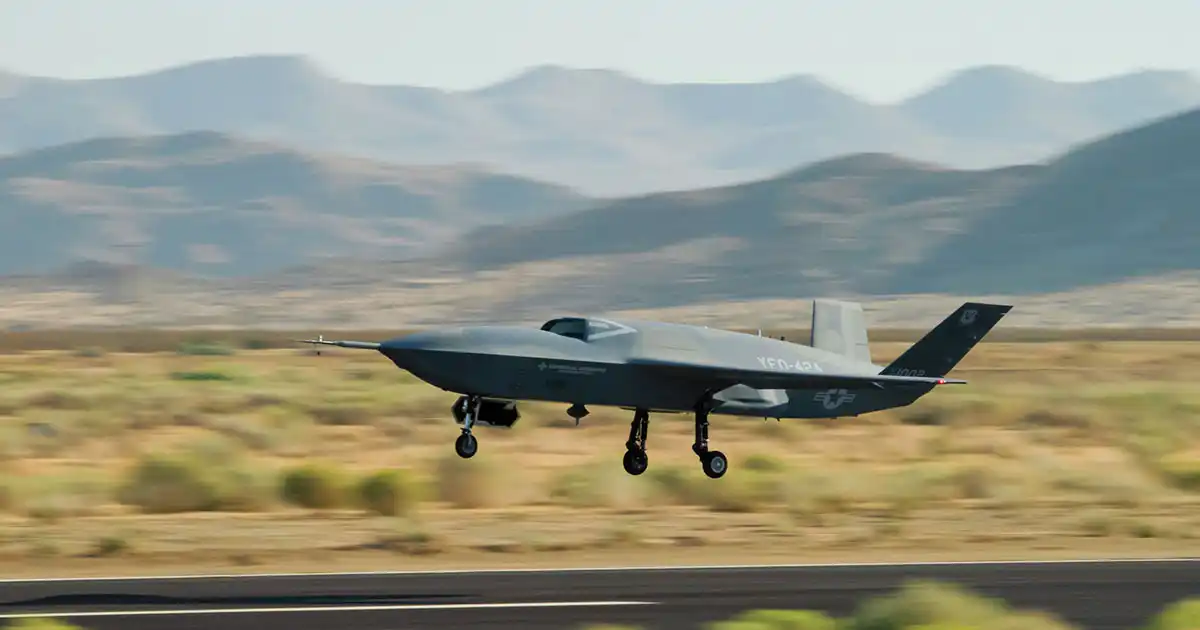
The YFQ-42A, already selected as one of the U.S. Air Force’s Increment 1 CCAs, integrates a suite of advanced features engineered for contested airspace. Its elongated fuselage, narrow wings, dorsal intake, and V-tail layout are paired with an internal bay designed for two AIM-120 AMRAAM missiles. This configuration positions the aircraft as an agile, stealth-leaning, air-to-air partner for elite fighters such as the F-22 and F-35.
The jet first flew in August 2025 and now forms part of a combined industry–government test ecosystem intended to validate autonomy, teaming algorithms, and mission-focused payload configurations.
Saudi Arabia’s negotiations include options for localized production of airframes or subsystems, reflecting the Kingdom’s ambition to secure advanced manufacturing capacity and reduce long-term dependence on foreign suppliers.
The CCA Concept: Expanding Fighter Power Through Autonomous Wingmen
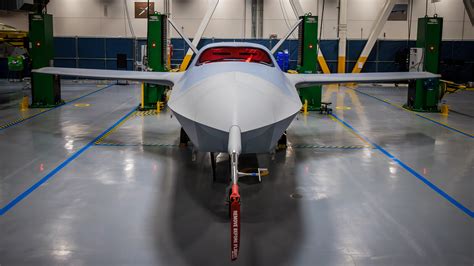
Collaborative Combat Aircraft are built around a simple but transformative idea: use autonomous jets to multiply the combat effectiveness of human-piloted fighters. CCAs fly ahead of or alongside crewed aircraft, absorbing risk, extending sensor reach, carrying weapons, and performing tasks that would otherwise put pilots directly in harm’s way.
Unlike traditional UAVs, CCAs are designed for high-speed, dynamic operations. Their autonomy allows:
- Independent or semi-independent mission execution
- Rapid repositioning in response to threats
- Large-formation operations that complicate enemy planning
- Real-time human supervision of multiple aircraft through simplified controls
These attributes make CCAs central to the U.S. Air Force’s next-generation air dominance strategy. For Saudi Arabia, they represent a path toward high-volume, high-tech airpower that remains cost-efficient compared to crewed fighter fleets.
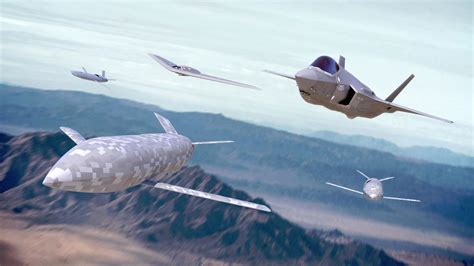
The Gambit Family: Modular, Multi-Role, and Built for High-Rate Production
General Atomics’ Gambit series is engineered around a shared chassis that allows rapid upgrades and specialization. Approximately 70% of components are common across all variants, enabling fast production at lower cost—precisely the economics attractive to Riyadh.
Each member of the Gambit lineup fills a distinct mission niche:
- Gambit 1: Long-endurance ISR for wide-area surveillance
- Gambit 2: High-maneuverability air combat platform
- Gambit 3: Adversary trainer to simulate enemy fighters
- Gambit 4: Low-observable reconnaissance aircraft
- Gambit 5: Carrier-capable variant for naval operations
- Gambit 6: Strike and electronic attack missions
This modularity allows Saudi Arabia to field a diverse, mission-flexible unmanned fleet based on a shared support infrastructure.
Strategic Implications: A Regional Arms Evolution Accelerates
Interest in CCAs has risen sharply across the Middle East. The Emirati Edge Jeniah program, along with Qatar’s growing participation in multinational defense exhibitions, underscores a broader shift: regional militaries are moving rapidly toward digitized, autonomous, distributed airpower.
General Atomics revealed that momentum increased after a successful demonstration in which a U.S. F-22 pilot controlled a CCA using a tablet—a powerful illustration of how simplified interfaces can drive pilot-drone teaming.
For Riyadh, an order of 200 Gambit-family aircraft would reshape the balance of airpower in the region. Large formations of autonomous jets could compress decision timelines, overwhelm adversary air defenses, and expand Saudi Arabia’s ability to sustain operations across dispersed bases.
The Road Ahead: Production, Localization, and Regional Demonstrations
General Atomics is preparing to highlight the Gambit family not only in the UAE but also in Qatar and Saudi Arabia during upcoming defense exhibitions. The company believes the Kingdom’s scale requirements make local production not only possible but economically advantageous.
If finalized, this multi-billion-dollar program would grant Saudi Arabia early access to one of the most significant shifts in modern air combat doctrine. CCAs promise mass, survivability, and adaptability—three pillars that define the future of aerial warfare.
The next phase of negotiations will determine whether Riyadh becomes the first international customer for the YFQ-42 and the broader Gambit ecosystem. Given the ambitions in play, the Kingdom could soon operate one of the world’s largest and most sophisticated autonomous air fleets.