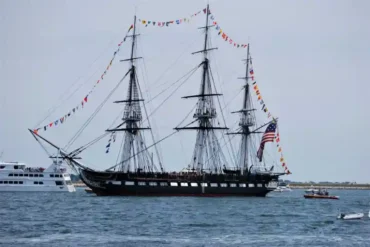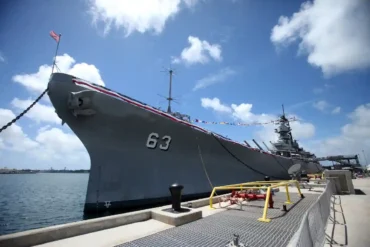
Floating titans of steel, U.S. Navy warships—from destroyers to Nimitz-class aircraft carriers—project power across the globe. These vessels are designed for combat, command, and control, yet beneath their sleek hulls lies an ancient but critical system: the anchor and its chain. While often overshadowed by jet fighters, radar systems, and nuclear propulsion, the anchors of Navy ships embody silent strength, securing these maritime giants when precision stationing is essential.
Anchoring the Giants: A Legacy of Naval Engineering
Anchors are among the oldest tools of seafaring, yet their fundamental design has stood the test of time. Modern Navy ships, no matter how advanced, still depend on these heavy implements to remain fixed in place, particularly during operations near coastal regions, moorings, or while conducting sensitive activities. The basic principle remains simple: a massive metal anchor, connected by a monumental chain, is deployed to the seabed, using sheer weight and embedded grip to counteract current and wind.
But the scale is anything but simple. In the world of naval architecture, size is paramount—and so are anchors.
Understanding the ‘Shot’: How the Navy Measures Anchor Chain
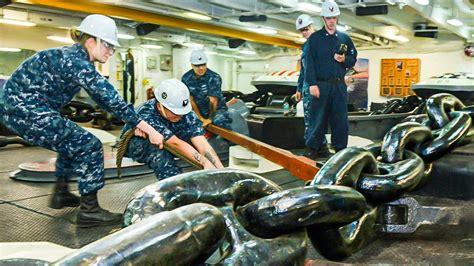
In the U.S. Navy, the chain linking ship to anchor is measured in standardized segments known as shots. Each shot spans 15 fathoms, or 90 feet, and consists of 57 massive steel links. These aren’t ordinary chains; each link weighs approximately 350 pounds, bringing the total weight of a single shot to 20,500 pounds, or 10.25 tons.
The importance of getting the chain length right cannot be overstated. Too short, and the anchor will drag, losing its grip on the seafloor. Too long, and the ship may swing dangerously with wind and current. To combat this, the Navy employs a color-coding system to mark each shot, allowing sailors to visually determine exactly how much chain has been deployed during anchor operations.
The Numbers Behind the Anchors: Sheer Mass in Metal
At the heart of every Navy ship’s anchoring system lies a monumental anchor, typically weighing around 60,000 pounds or 30 tons. To hold this weight and manage deployment, ships rely on mechanical systems housed deep within the vessel. But the gear doesn’t stop with just the anchor. Each one is accompanied by at least 12 shots of chain, extending the length of the anchoring system to 1,080 feet—longer than three football fields laid end to end.
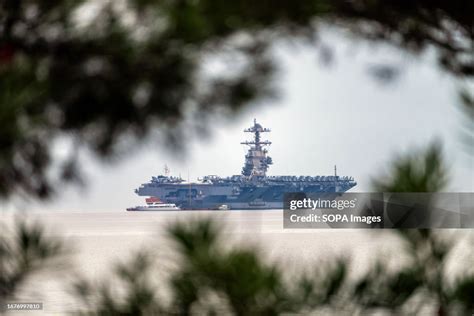
The Nimitz-class aircraft carrier, one of the largest and most advanced warships ever built, features two such anchors, port and starboard. In total, that means 24 shots of chain, culminating in a staggering 366,000 pounds of anchoring equipment.
Deployment and Recovery: Machines and Hazards Below Deck
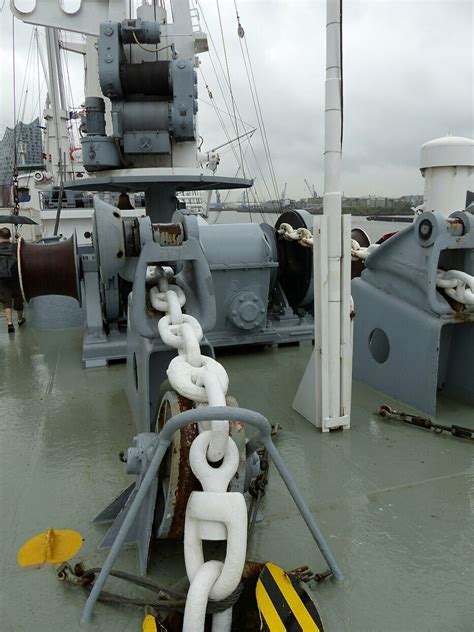
Deploying and retrieving an anchor of such size is no manual task. The Navy uses powerful winches and windlasses to raise and lower the anchor and its chain. These systems must handle both the immense weight and the tension exerted by the ship’s movement. While the machinery is robust and reliable, operating it comes with risks. Sailors working in the chain locker or along the hawsepipe must follow strict safety procedures. Accidents can occur due to snapped links, tension surges, or mechanical failure.
Within the chain locker, a cavernous steel chamber below deck, the shots are coiled and stored when not in use. Conditions here are hot, loud, and claustrophobic, especially during anchor retrieval when the chain slams against guide rollers and steel walls.
Tactical Application: Why Anchors Still Matter in a Nuclear Navy
Modern propulsion systems allow naval vessels to remain mobile under nearly all sea conditions. However, anchoring remains a tactical necessity. Coastal operations, humanitarian missions, and near-shore logistics support often require a ship to hold position without drifting. Additionally, in shallow or moderate-depth waters where GPS positioning or dynamic thrusters are either unavailable or inappropriate, dropping anchor becomes the only reliable method of station-keeping.
It’s important to note that even the full length of the anchor chain—1,080 feet—is not intended for deep-sea use. Instead, it’s optimized for littoral zones and coastal depths, typically ranging between 40 to 100 fathoms (240 to 600 feet), where the combination of scope and drag is most effective.
Anchor Comparison: Just How Big Are They?
To appreciate the sheer size of a Navy anchor and its chain system, comparisons help ground the numbers:
- A single anchor on a Nimitz-class carrier weighs more than five African elephants.
- The full anchoring system weighs more than a Komatsu D575A Superdozer, the heaviest production bulldozer in the world.
- The combined chain length per ship equals twelve city blocks, and if laid flat, could easily encircle a large stadium.
This size is necessary to counter the vessel’s own displacement. Nimitz-class carriers weigh approximately 100,000 tons fully loaded, and though propulsion systems keep them mobile, staying still requires formidable resistance.
Engineering Integration: Where the Anchor Lives
The anchoring system is seamlessly integrated into the ship’s architecture. The hawsepipe, located near the bow, serves as the passage for the chain and anchor. When not in use, the anchor is hauled snug against the hull, locked into place by a mechanical stopper. Below decks, the windlass machinery and capstan systems are positioned to guide the chain into the chain locker.
Engineers and naval architects must consider the stress loads these systems impose on the structure. Improperly anchored equipment or an under-engineered housing area could result in serious hull damage or catastrophic failure during storms or combat conditions.
Dual Anchors: Redundancy and Tactical Flexibility
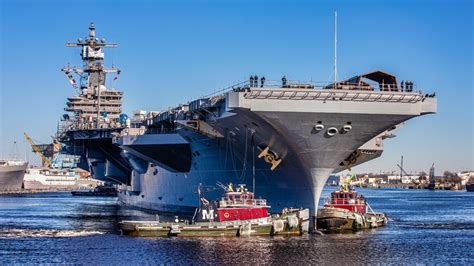
U.S. Navy carriers don’t rely on a single anchor. The presence of dual anchors—one on the port side and one on the starboard—provides multiple advantages. This redundancy ensures that if one system is damaged or inoperable, the other can still function. In narrow harbors or during precise maneuvering, deploying both anchors simultaneously can stabilize a ship against tide and wind.
This twin-anchor setup also allows for pivot anchoring, where the vessel can rotate slightly between two fixed points, useful for aligning to mission-specific angles or accommodating pier restrictions.
Why Not Anchor in the Deep Ocean?
A common misconception is that aircraft carriers and other warships drop anchor regardless of location. In reality, anchoring in deep ocean waters is rare and impractical. At such depths—often thousands of feet—the required chain length would exceed storage capacity, and the anchor’s grip would be unreliable. Instead, dynamic positioning systems or drift allowances are used to hold position.
Anchoring is reserved for areas where depth, seabed conditions, and tactical necessity align. Shallow continental shelves, bays, and operational staging zones are primary areas for anchor deployment.
Training and Protocol: Mastering the Anchor System
Handling a Navy ship’s anchor isn’t as simple as hitting a button. Sailors assigned to the deck division are trained extensively in anchor operation, safety procedures, and emergency recovery methods. During operations, communication flows tightly from the bridge, which commands the release, to the forecastle, where hands-on action occurs.
Anchor drops are timed, controlled, and monitored. Releasing the anchor too quickly risks damaging the chain or injuring crew. Too slowly, and the ship may drift dangerously close to hazards. Precision is everything.
The Future of Anchoring in Naval Warfare
While autonomous and dynamic systems grow more sophisticated, anchoring remains irreplaceable in many naval scenarios. Innovations are being explored, such as composite link materials, remote-controlled deployment, and automated diagnostics to detect chain fatigue or corrosion. But the fundamental elements—weight, scope, and grip—remain unchanged.
In a digital age dominated by satellites and unmanned systems, it’s the primitive yet powerful anchor that continues to tether the most advanced warships on Earth. Anchors may be out of sight, resting beneath the waves, but they are anything but out of mind. Their function is as vital today as it was centuries ago—only now, they do it at a scale that reflects the staggering power of the modern U.S. Navy.